Beyond barrier-free: universal design for every user
How inclusive, intuitive, and equitable design benefits everyone
Beyond barrier-free: universal design for every user
How inclusive, intuitive, and equitable design benefits everyone
©pexels
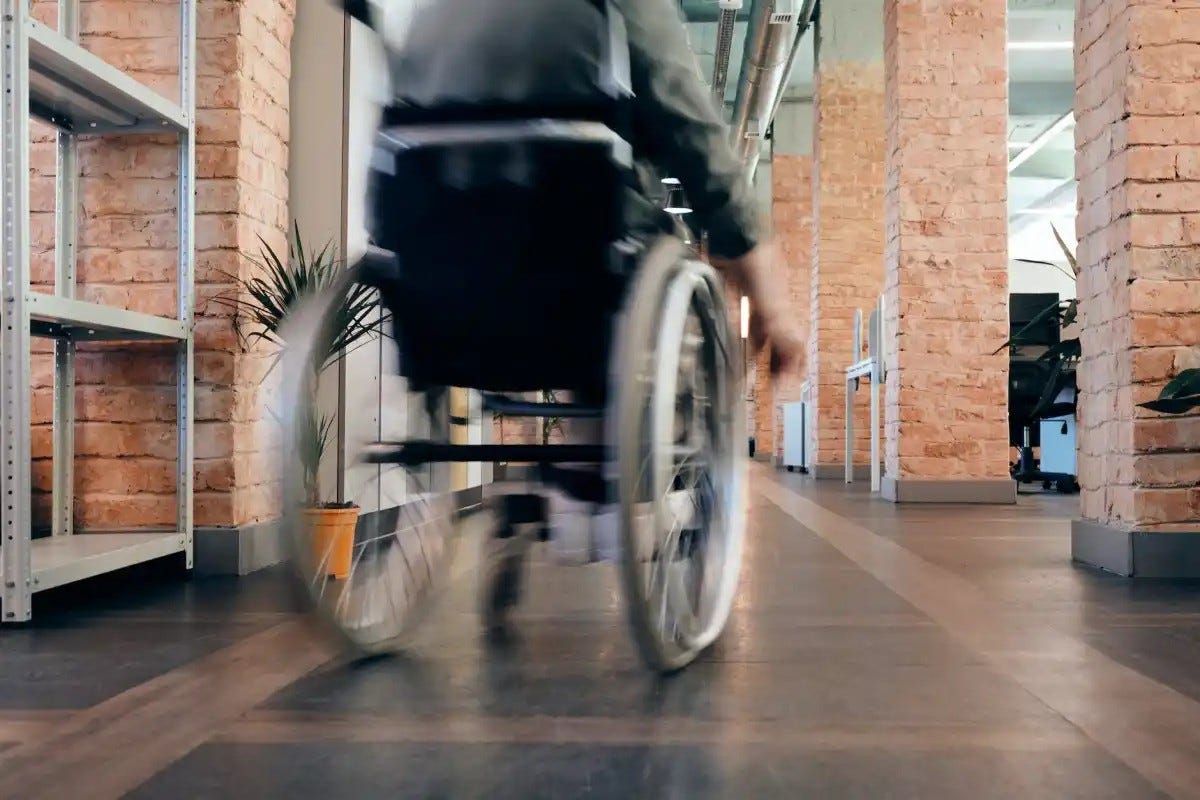
What’s the difference between barrier-free design and universal design? These two concepts share similar goals and contexts, so it’s not easy to draw a sharp line between them. However, there is a meaningful difference beneath the surface. While barrier-free design focuses on removing obstacles so that users with disabilities can access products or space with ease, universal design emphasizes the versatility of the design. In other words, the customer spectrum that universal design is considering goes beyond the users with disability. It includes older adults, parents with young families, and other users with no special needs.
In this article, we’d like to explore how we can go from barrier-free to universal design.
01 Consider ‘Independence’
Users usually access products or services of their own accord, and it’s called ‘independence,’ or ‘autonomy.’ Due to its influence on one’s self-esteem, it’s important to design products and services to be accessible by anyone. Of course, there are exceptional cases for safety reasons, but people with disabilities we have met so far have the same desire: ‘I’d like to do it by myself if I can.’
I still remember a young man who has severe muscular disorders. His parents helped him whenever he tried to use his computer by adjusting his body angle. He also needed help with basic daily life such as using the restroom, taking a shower or going to bed. However, with the voice assistant feature he was able to send messages, launch applications and even write essays. For him who had been dependent on his family or caregivers for decades, the ability to do something independently was proof that he was truly alive.
I’d call this independent self-esteem. It’s the confidence that grows by doing trivial things in daily life on their own. It’s not just for people with disabilities. Products that make such independence possible are essential for everyone. One research found that older adults become depressed when they begin to need help for basic activities such as using the bathroom.

One with muscular disorders uses a chair with wheels to take a shower on their own. It dramatically improves their indoor mobility. ©Missionit

One with neurological conditions face challenges to carry things, so they ride a trike to move things safely. ©Missionit

One who faces challenges to stand due to muscular disorders installed a handle to support themselves in the way to a restroom. It’s their effort to be independent. ©Missionit
02 Consider ‘equity’
Users should be able to use products or services fairly regardless of abilities or types of disabilities. There should be no discrimination within the same disability. If blind users can use a certain feature but users with low vision can’t, it’d be considered lacking inclusion. Having considered that only a handful of people are able to read Braille, the solution for the Blind and people with low vision shouldn’t be limited to it. Other forms of information such as audio, color or sensory should also be used to include all types of visual disabilities.
Equity among different types of disabilities also needs to be taken into account. Let’s look at an example from the Horniman Museum in London. The museum had planned to install digital screens in the exhibition halls to help visitors who are deaf or hard of hearing access information. But they realized that these unfamiliar screens could unsettle children with developmental disabilities. The team decided to look for alternative ways to make the space inclusive.
To enhance the equity, designers should aim to exclude as few users as possible. The fewer people left out, the fairer the outcome. Before launching, it’s important to identify who might be overlooked and to improve accessibility with their experience in mind.

A user with low vision adjusts the color and brightness of their home lighting through an app. The interface works for them because they can distinguish colors up close. But for someone who is completely blind, would an app-based color control system be usable at all? ©Missionit
03 Consider ‘versatility’
When designing products or services with disabled people in mind, the versatility (the solution can expand and include more people) is essential. It’s not a big deal for an artwork or a temporary exhibit. However, products for mass production or services for the public must be able to be adapted by a wide range of users.
For this reason, it’s helpful to design around the kinds of limitations users might experience through their senses. Instead of designing for a particular disability, we might design around a sensory experience such as vision or cognition. For instance, when a design centers on visual experience, it naturally includes people who might struggle to see clearly because of glare or age-related vision loss. It’s a good idea to include a step for considering versatility during product development.

Designs that accommodate wheelchair users almost always end up benefiting people pushing strollers as well. ©Missionit
04 Consider ‘intuitiveness’
An intuitive design aims to minimize the need for explanation. Ideally, we’d want a product that requires none at all, but in reality, some guidance is almost always necessary. The goal, then, is to reduce the amount of learning required and make the process of becoming familiar with the product as short as possible.
While intuitive design benefits everyone, it’s especially useful for people with disabilities. Most products are built with non-disabled users in mind, which means those with disabilities often face a steeper learning curve. For instance, a person who is blind might use a screen reader to navigate an app, but locating a single button can take significantly longer because they have to listen to multiple layers of alternative text. One user remembers the exact number of swipes it takes to reach a specific button. True intuitiveness in universal design means creating products that people with disabilities can learn and use with roughly the same ease and speed as anyone else.
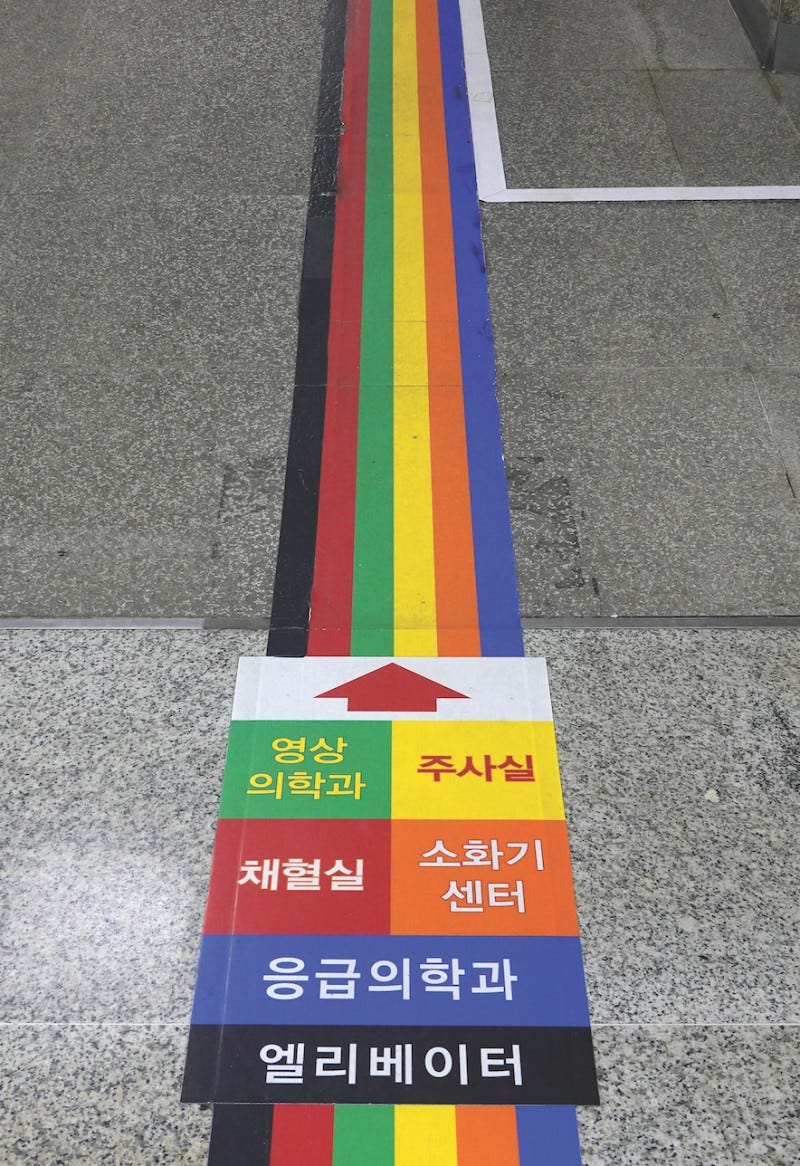
Intuitiveness isn’t limited to products alone. It’s just as essential in wayfinding systems. High-contrast, clearly differentiated signage, like in this image, helps older adults and people with low vision navigate spaces with confidence. ©Missionit
All my articles are grounded in real-world insights drawn from recent projects. Each piece is carefully crafted by me and thoughtfully edited by Andy Taekhyung Kim in the UK. By reading and sharing my stories, you’re supporting a genuine human effort to make the world a more inclusive place.
If you’re interested in insights on inclusive UX and accessibility, particularly in South Korea, the UK, or Southeast Asia, feel free to reach out (hello@missionit.co). I’d love to connect.
메타데이터
- post_id
- fdad3d21922e
- slug
- beyond-barrier-free-universal-design-for-every-user-fdad3d21922e
- url
- https://medium.com/design-bootcamp/beyond-barrier-free-universal-design-for-every-user-fdad3d21922e
- canonical_url
- https://medium.com/design-bootcamp/beyond-barrier-free-universal-design-for-every-user-fdad3d21922e
- author_url
- https://medium.com/@hello_37058
- status
- ok
- fetched_at
- 2026-07-09 20:10:33