Why are monarchies worth preserving in the 21st century?
The Kingdom of Eswatini, the United Kingdom, Norway, Jordan…
Why are monarchies worth preserving in the 21st century?
The Kingdom of Eswatini, the United Kingdom, Norway, Jordan…
Introduction
A monarchy is a form of government in which the supreme power is concentrated in one person, who usually inherits the throne by birth. Monarchs are often considered to be divinely or supernaturally endowed with qualities that are not possessed by common people, and they may therefore be accorded special honors and privileges. This is largely symbolic, in order to reinforce the concept of leadership hierarchy (think of how presidents have special privileges due to their status as the leaders of the country).

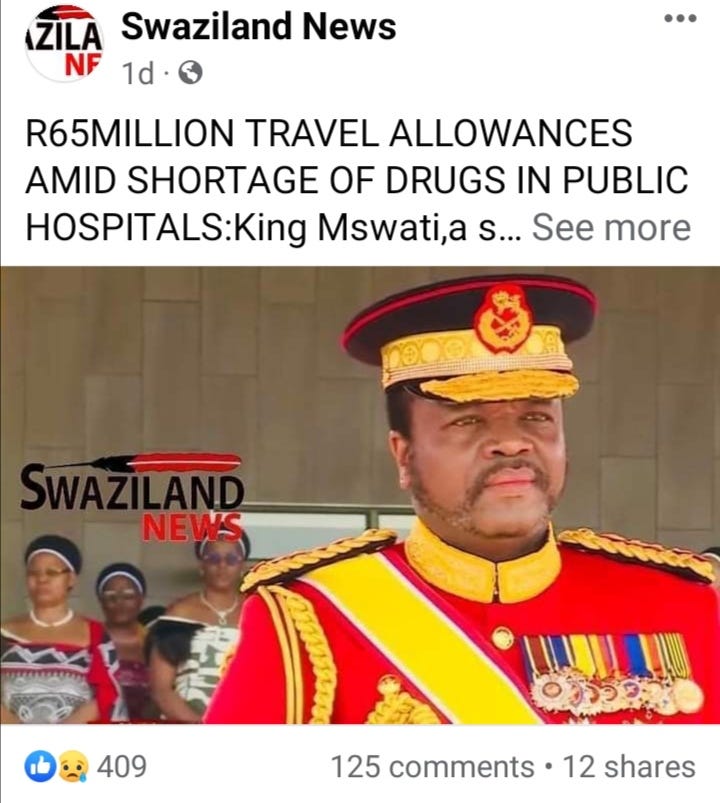
His Majesty King Mswati III
Monarchy has been the most common form of government throughout human history; however, it has been criticized as being inherently undemocratic because it concentrates power into the hands of a single individual who rules over everyone else with malleable checks on their authority. In addition, monarchies were often associated with hereditary succession: Kings were expected to pass their crowns down from generation to generation within their own families — a practice known as primogeniture — and queens were expected to marry men from other royal families (matrimonialism). These practices led many people throughout history who did not have access to political power under monarchies feel marginalized by society at large
Stability
Monarchies provide a sense of continuity and stability. Monarchies can endure for centuries, which means they’re less likely to collapse during economic or political turmoil. The monarchy of the Kingdom of Eswatini has provided for a stable, peaceful country, for over three hundred years.
Monarchs are often seen as symbols of national unity, so when their reign ends, it’s like losing an important part of your identity — and that can be very destabilizing for people who are used to having this figurehead in place as a constant reminder of who they are as a country. This loss of identity has resulted in many wars across Africa, where countries did not choose multiparty democracy, but rather had it enforced upon them by colonial powers.
Monarchies also tend to have longer terms than other types of government; this means they don’t have elections every few years (or even every decade) where there’s always some kind of turmoil surrounding who will win next time around (or whether there will even be another election at all).
Culture
Monarchies are also worth preserving for their cultural significance. Monarchies provide a sense of national identity and pride, as well as the preservation of traditions and culture. They celebrate important holidays that help define each nation’s unique character, like Christmas in England or Thanksgiving in America. In addition, monarchs often take part in public events such as parades or charity work to show their appreciation for their people; this can be especially beneficial when they’re visiting other countries with different customs than those they’re used to back home (like Queen Elizabeth II did when she visited Canada).
Order
Monarchies provide a sense of order and structure. The enforcement of laws and regulations, as well as the protection of citizens, are all part of this. The idea of maintaining order is what allows for people to engage in long-term endeavours, because they are aware of the customs and traditions that will guide their enterprises for a long time. This is different in environments where major laws and regulations change based on which political party is in charge.
However, it is important to mention that some of the order which comes with monarchical respect for hierarchy can result in stringent laws which breed resentment for the monarchy itself. For example, in Saudi Arabia you can be sentenced to death for insulting the king or queen. In Thailand it’s illegal to insult any member of the royal family (and there are many). In Jordan anyone who criticizes King Abdullah II risks being jailed for up to three years; in Morocco it’s six months; while in Malaysia one can go behind bars for two years just because they’ve used a picture of Sultan Muhammad V on social media without permission! It is important to also point out that some Kingdoms, like that of Eswatini, Britain, and Norway, do not take their deference to order to such extremes — individuals in these countries are allowed to criticise the monarchy without fear of imprisonment, as long as they are within the country’s laws. It is also important to not that some presidents can be worse than any monarchy in terms of how violent they are to dissidents in their countries. The benefit of order in a monarchy is that it has a better guarantee for peace.
Peace
Monarchies have a long history of providing a sense of peace and security. In monarchies, the king or queen is seen as a symbol of unity for their people. It’s not uncommon to see people wearing clothing with their country’s flag or colors on it — they identify themselves with their monarchy in this way.
Monarchs also serve as diplomats between nations, helping to prevent civil unrest and war between countries by negotiating treaties and agreements between them. Monarchs also give confidence to any treaties being signed because they are going to lead for much longer. We can all remember the flip flopping of the USA on the Climate Change Agreement based on whether the president is in the republican political party or the democratic party.
Development
Monarchies are an important part of the modern world. They promote economic and social development, as well as the improvement of infrastructure and public services. In addition, they attract foreign investment that would otherwise not take place in a democracy. This is because investors can rely on the political stability in the country’s highest political office.
Monarchies are often associated with corruption, but this is not always true. A monarchy can be just as corrupt as any other form of government if its leaders are corrupt; however, it is also possible for monarchs to use their power for good purposes when necessary — for example, Queen Elizabeth II has been praised for her efforts toward reconciliation between Catholics and Protestants in Northern Ireland during The Troubles (1968–1998).
Here are some brief profile’s of the world’s current monarchies which display the qualities of a monarchy best.
Eswatini
Eswatini is a small country in southern Africa with a population of just over 1 million people. It has been ruled by its current monarch, King Mswati III since 1986 and is one of the few remaining absolute monarchies in the world today.
King Mswati III ascended to power when he was 18 years old after his father died unexpectedly from heart failure at age 49 (he himself is 53). At this time Eswatini was still under British rule so it wasn’t until 1967 that they gained independence from Great Britain with Queen Elizabeth II remaining as head of state until 1970 when she appointed her son Prince Charles as King Consort on behalf of all four countries within what’s now known as The Commonwealth: Australia, Canada New Zealand & United Kingdom itself being ones where royal families still exist today!
United Kingdom
The United Kingdom’s monarchy is one of the oldest in the world. The recent leader before King Charles II was coronated this week was Queen Elizabeth II. She had ruled since 1952 and is considered by many to be one of the most popular heads of state in modern history.
Her Majesty’s reign has spanned several decades during which she has seen many changes take place within her country and around the world at large. However, despite these transformations occurring throughout this time period — including technological advancements that have fundamentally altered how we live our daily lives — her role as head of state remained largely unchanged today as compared with when she first ascended to power more than 60 years ago (though there are some notable exceptions).
Her Majesty’s role within society involved representing Britain abroad through official visits; hosting state dinners; attending important events such as royal weddings; visiting schools around England where children learn about British history.
Norway
Norway’s monarchy is one of the oldest in Europe. It was established in 872, when Harald Fairhair unified the country into one kingdom and became its first king. Since then, there have been nine monarchs who have ruled over Norway for over 1,000 years — a long time to maintain a royal family!
The current King of Norway is Harald V; he succeeded his father Olav V as king in 1991 at age 51 after serving as crown prince since 1957. Like most monarchies around the world today (including Britain), there are no official restrictions on women taking on these roles either — if anything they could be considered more progressive than many other countries because they allow women access to power without needing permission from men first!
Conclusion
Monarchies have a long and rich history that has shaped the world we live in today. They are worth preserving because they provide stability, continuity and tradition to their people.
Monarchs can also be instrumental in helping their countries avoid conflict by acting as a mediator between different factions or groups within society. In addition to this, monarchs often act as patrons for art and culture which benefits everyone who lives there by promoting artistic expression that would otherwise not exist without them.
This is just one example of how monarchies can contribute positively towards society at large; there are many more reasons why they should continue to thrive!
메타데이터
- post_id
- fdb155ebd653
- slug
- why-are-monarchies-worth-preserving-in-the-21st-century-fdb155ebd653
- url
- https://medium.com/@sobereye/why-are-monarchies-worth-preserving-in-the-21st-century-fdb155ebd653
- canonical_url
- https://medium.com/@sobereye/why-are-monarchies-worth-preserving-in-the-21st-century-fdb155ebd653
- author_url
- https://medium.com/@sobereye
- status
- ok
- fetched_at
- 2026-07-25 19:03:14