Eyes on Board: Documenting Harassment and Impaired Mobility
Harassment is a real, yet overlooked, issue for many regular riders of public transportation. While it can happen to any rider, it…
Eyes on Board: Documenting Harassment and Impaired Mobility
Harassment is a real, yet overlooked, issue for many regular riders of public transportation. While it can happen to any rider, it disproportionately affects women, people of color, and LGBT+ individuals. **Eyes on Board *is a volunteer-led project, aiming to highlight and combat these incidents. The project derives its name from Eyes on the Street*, a fundamental concept coined by urbanist Jane Jacobs. It describes how natural surveillance from residents, pedestrians, and passersby breeds safety and deters crime. The project consists of an anonymous survey, asking questions on the nature and details of the incident and a live map showcasing the locations of past reports.
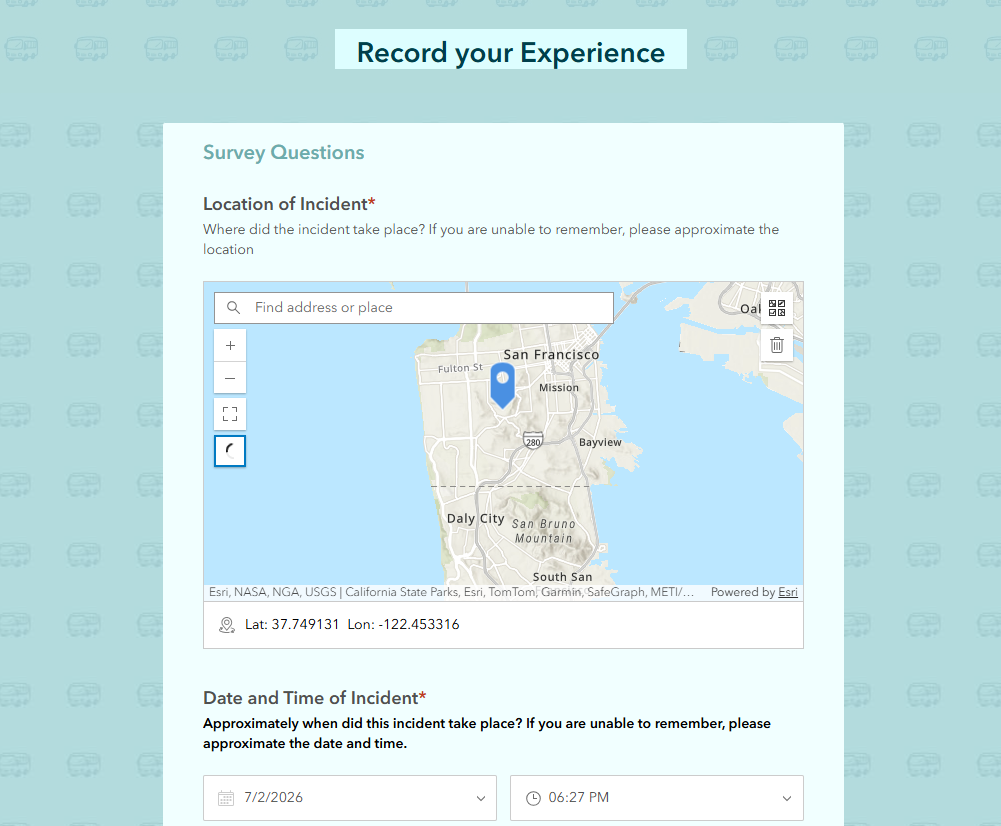
This project is significant for four crucial reasons. It is collecting crucial statistics on the factors that contribute to harassment — time of day, location, route, and the specific type of harassment. The live map was included as a space to promote solidarity between targets of harassment. Due to the vulnerable nature of these experiences, it can often feel humiliating to talk about, which is rather isolating. Additionally, the way this issue is normalized and accepted as part of the “female experience” makes it feel almost silly to report incidents that are less severe in nature.
Along with promoting solidarity, the map also aims to create a deeper understanding of the effects and scale of harassment for those who may not experience it frequently. For many city dwellers, harassment is a frequent problem. It is experienced on the street, on the train, and at work. It is experienced whether you are alone or surrounded, tying back to the concept of Eyes on the Street. By creating a deeper understanding of the severity of harassment, this project will hopefully inspire natural surveillance. It provides education and resources on how to handle witnessing harassment in a manner that keeps the person intervening, the victim, and the people nearby safe. It also details what constitutes harassment — this is important to know for women who brush off “minor” instances and for men who may not know that their behavior is damaging.
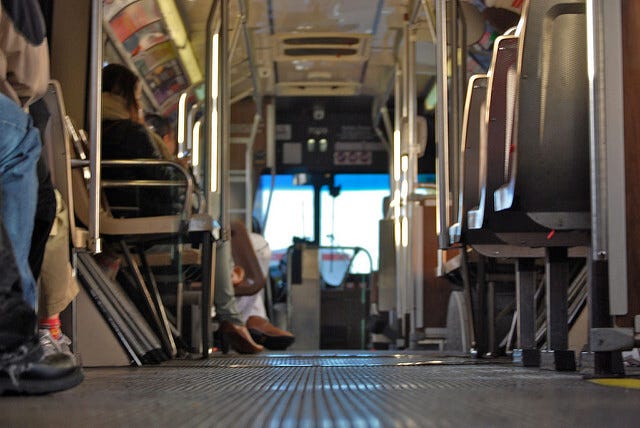
This project can appear to be demonizing public transit; however, it aims to do the very opposite. It is not suggesting that public transit is inherently unsafe — because it isn’t. In many instances, these incidents do not directly threaten the safety of victims. They are still uncomfortable, violating, and exhausting. They affect when and where we move around — our mobility.
For example, a personal anecdote: Earlier this year, I took a class at City College’s Chinatown campus, and I would walk up Grant Avenue because I loved the view. One day, one of the older storekeepers decided to follow me down the street so he could repeatedly ask me to get dinner with him. It happened the next time (and the time after that), so I walked on the opposite side of the street — he saw me and ran over to talk to me again, despite my only reply consistently being that I wasn’t interested. If I continued to walk down that street, I would continue to be harassed. I had to change my route, and my mobility was impacted.
Although this may seem like a minor example, these experiences are constant and exhausting, and compound to the point of reducing walkability. I don’t ride public transit late at night if I’m alone or in a group of only women. It’s not based on a preconceived notion that public transit is unsafe at night, but rather on the several alarming experiences that I had while riding. These issues are dissuading people from riding public transportation and pedestrianism.
I would like to emphasize that the problem isn’t public transportation or urban areas; it is societal — harassment also occurs in suburban and rural areas. The issue is simply magnified in urban spaces, where millions of people interact. It can also occur in any part of the city, but this project is focusing on just one aspect of urban living. Urbanism aims to create cities that promote pedestrianism and sustainable transportation. However, these are both hindered by impaired mobility — people are being pushed into car dependency.
To achieve these goals, the issues that restrict mobility must be acknowledged and addressed by both city officials and the community. Doing so also requires continued investment in the transit systems that the city depends on. As the Bay Area prepares to vote on the 2026 regional transit funding measure, it is important to recognize that the proposed budget cuts would have significant consequences for both safety and mobility. If these measures do not pass, the region could face reductions in safety precautions, the cancellation of future service expansions, and cuts to existing transit service.
These changes would disproportionately affect riders who already experience barriers to mobility. Longer wait times, fewer route options, and reduced staff presence can increase both the risk and fear of harassment when riding transit. To effectively address harassment and improve mobility, transit must remain reliable, accessible, and sufficiently funded.
We are often taught to simply “suck up” harassment and alter our own behaviors to avoid it, but that expectation must be challenged through educational and preventative measures supported by sustained investment in our transit systems.
Walkability should not be a luxury, and urbanism should be equitable.
![[Women commuting on a cable car], Time, 24 February 1947. Courtesy of Internet Archive.](https://miro.medium.com/v2/resize:fit:400/1*VahjI_YglXVG7702oz6MjQ.jpeg)
[Women commuting on a cable car], Time, 24 February 1947. Courtesy of Internet Archive.
If you’d like to directly lend support to this project, please reach out to me at indigo@streetcar.org, and inform people of this platform. You can find the platform at www.eyesonboard.sftransitriders.org. But most importantly, converse about this issue. It may feel uncomfortable to talk about, but emphasis is crucial to addressing the problem and attaining a truly walkable space.
메타데이터
- post_id
- fdb563083fc9
- slug
- eyes-on-board-documenting-harassment-and-impaired-mobility-fdb563083fc9
- url
- https://medium.com/san-francisco-transit-riders/eyes-on-board-documenting-harassment-and-impaired-mobility-fdb563083fc9
- canonical_url
- https://medium.com/san-francisco-transit-riders/eyes-on-board-documenting-harassment-and-impaired-mobility-fdb563083fc9
- author_url
- https://medium.com/@itssindigo
- status
- ok
- fetched_at
- 2026-07-08 19:15:55