The NAD⁺ Shift: Why Aging Was Redefined Around Cellular Energy
From Structural Damage to Functional Decline: The Scientific Turning Point.
The NAD⁺ Shift: Why Aging Was Redefined Around Cellular Energy
From Structural Damage to Functional Decline: The Scientific Turning Point.
SKIN SCIENCE Vol.4

Source: Vogue
“Why did NAD⁺ become central to aging?”
Why did a molecule discovered over a century ago suddenly move to the center of aging research?
Because NAD⁺ is not merely a molecule. It represents a turning point in how we understand aging itself.
For decades, aging was viewed primarily as a structural phenomenon — wrinkles, tissue degeneration, extracellular breakdown. The focus was on visible deterioration.
But modern biology began asking a deeper question: What happens before structure fails?
From Structural Damage to Functional Decline
Aging is no longer defined simply as the passage of time.
It is increasingly understood as the cumulative decline of cellular function.
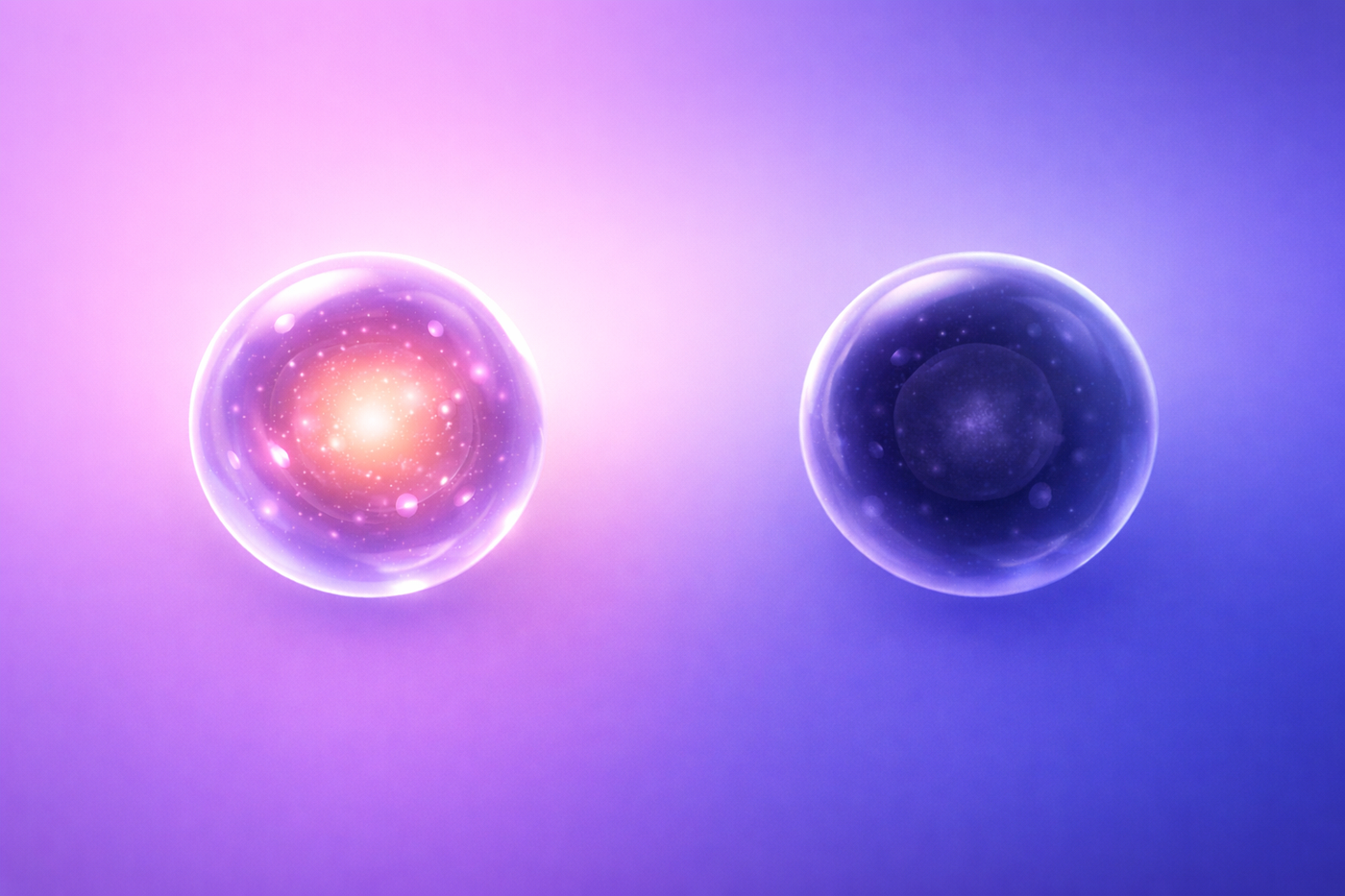
Cells remain alive. Yet they gradually lose the ability to generate energy, repair damage, respond to stress, and maintain structural integrity.
In this reframing, structure is not the starting point. Function is.
And at the center of cellular function lies a single metabolic regulator: NAD⁺.
NAD⁺ Is Not a New Molecule
NAD⁺ has been studied for over a century. It is fundamental to energy metabolism and cellular survival.
What changed was not the molecule itself — but the question we began asking.
Instead of asking,
- “How do we repair aging tissue?”*
We began asking, “What sustains the function of the cell?”
This shift placed NAD⁺ at the center.

The NAD⁺ Enhancement Compound: NAD⁺ Recovery, Inside the Cell.
NAD⁺: The Common Denominator of Cellular Performance
Consider what defines a functioning cell:
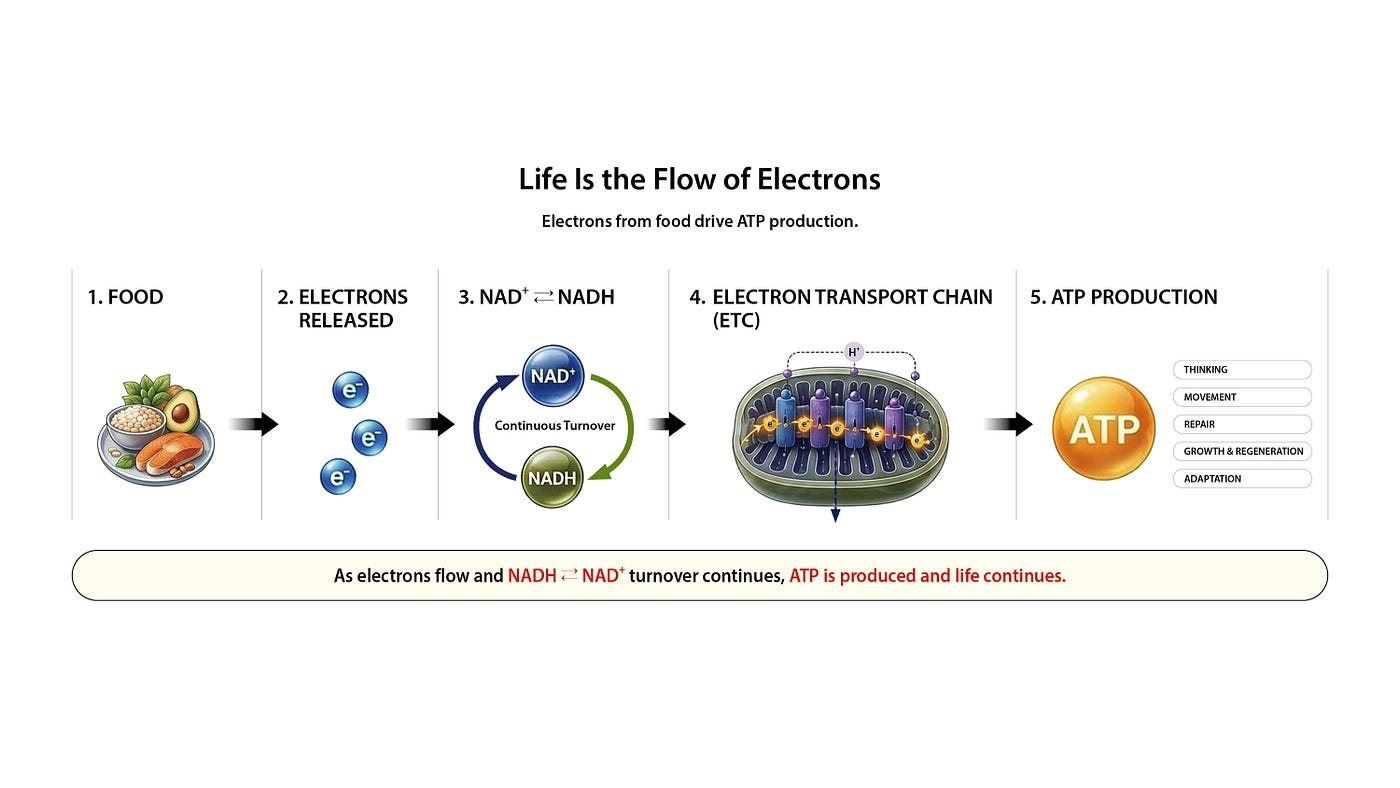
- Energy production (ATP synthesis in mitochondria)
- DNA repair and genomic stability
- Cellular stress response
- Intracellular signaling and adaptation
What connects all of these processes?
NAD⁺.
When NAD⁺ levels are sufficient, cellular systems operate in coordination. When NAD⁺ declines, performance degrades — even if structural components remain intact.
When NAD⁺ Declines, Function Slows
NAD⁺ levels naturally decrease with age.
As this occurs:
- Mitochondrial efficiency declines
- ATP generation diminishes
- DNA repair becomes compromised
- Cellular resilience weakens
The cell may still appear structurally present. But its internal engine begins to stall.
Aging, then, is not merely structural erosion. It is metabolic insufficiency.
Lifespan: Why We Age―and Why We Don’t Have To, Sinclair Phd, David A. , Laplante, Matthew D. )
The Scientific Reframing of Aging
As David A. Sinclair stated:
“Aging is a disease that can be treated. Enhancing NAD⁺ is one of the key therapeutic strategies.”
This reflects a deeper biological insight:
If aging is driven by functional decline, then restoring the metabolic conditions that sustain function becomes the rational strategy.
NAD⁺ sits at the crossroads of these conditions.
From NAD⁺ to Intracellular Restoration
If NAD⁺ regulates cellular performance, then the next question becomes inevitable:
Is aging a matter of replacing structures — or restoring the intracellular conditions that allow those structures to be built?
NAD⁺ is not simply something to add.
It is something to sustain within a dynamic intracellular system.
Conclusion
NAD⁺ did not become central to aging because it was newly discovered.
It became central because aging itself was redefined.
From time to function. From structure to metabolism. From surface deterioration to intracellular decline.
NAD⁺ marks the point where aging biology moved inward — from what we see to what sustains what we see.
Next
If NAD⁺ is central to cellular function, how do we preserve it within the living cell?
메타데이터
- post_id
- fdd53afc1571
- slug
- the-nad-shift-why-aging-was-redefined-around-cellular-energy-fdd53afc1571
- url
- https://medium.com/@covalttlab/the-nad-shift-why-aging-was-redefined-around-cellular-energy-fdd53afc1571
- canonical_url
- https://medium.com/@covalttlab/the-nad-shift-why-aging-was-redefined-around-cellular-energy-fdd53afc1571
- author_url
- https://medium.com/@covalttlab
- status
- ok
- fetched_at
- 2026-06-17 10:49:34