What the Research Really Says About Parent-Child Estrangement.
What the Research Really Says About Parent-Child Estrangement.
Most estrangements aren't caused by a single dramatic event: they result from years of unresolved hurt, misunderstanding, and failed attempts at repair.

A person’s question on Facebook inspired advice-columnist Becky Landers to comment.
Becky Landers is back. I found this question on a social media site in my area and felt compelled to answer it. By the time I posted my answer, the question had been deleted. It was too good to waste, so I copied the letter and am using it here to highlight a subject that I see more and more about, adult children who become estranged from at least one parent. The questioner’s letter was edited for clarity.
Dear Becky Landers,
It's not talked about much, but I'm learning more and more that some are experiencing some of the same pains I am. I have not publicly talked about it until now.
For seven years, I've been estranged from my oldest daughter. I'm not asking for sympathy nor blame, just prayer!
I love my daughter with all my heart. I've cried, I've begged, I've called, I've written, I've driven eight hours to her home, and more, only to be blocked and told she wants nothing to do with me.
Recently, I've learned this is going on everywhere, and more and more young adults are going “no contact” with their parents. It is a pain like no other! I constantly replay every single memory, questioning where I might have gone wrong. I think about them daily, hoping and praying they are OK. What is bad is that my daughter has not only cut me off, but also her sisters, her grandparents, and other family members, so we know nothing about her life.
As her mother, it is killing me inside. I'm grieving my child who is very much alive!!!
There's a kind of grief nobody prepares you for as a mother and a parent.
No funeral, no sympathy cards, and no one showing up at your door.
A phone that doesn't ring.
And a love that has nowhere to go.
It's the birthday that passes in silence.
The empty chair on Mother's Day.
I've learned to say "We're fine" when someone asks how my family is.
I've learned to carry something nobody around me really understands.
Because how do I explain it?
How do I explain grieving someone who is still alive?
There's no script for this.
Just me, the silence, and a love with nowhere to land.
What I carry is real.
It has a name.
It's called a living loss, and it's one of the most isolating kinds of grief there is.
I'm someone who loves a child that I cannot reach.
That is not a character flaw.
That is grief.
Are any of you experiencing estrangement from your adult child, and if so, how are you dealing with it? It is so hard. I'd give anything just to hear her laugh again, to see her smile, to hug her so tightly, to let her know how she is loved and greatly missed. 💔
Signed,
Estranged Mom.
Dear Estranged Mom,
I am so sorry you are experiencing this. I know it is very painful.
Here is a brutally honest truth from a therapist who has talked to hundreds of moms, daughters, and sons on both sides of the equation: In my experience, 95 percent of people I have personally known in your situation, and as a family therapist, are in denial about their part in the estrangement.
One person I have known for years has made her social media a victim-laced passive-aggressive campaign that appears to have no end. I've talked to her about it. She confesses that pretty much everyone she knows has begged her to stop, telling her it's a huge part of the problem, to no avail. I know if I were the child and my mom was doing that, it would affirm my decision to disappear from her life.
You have to ask what she gets out of that?
Is there any doubt that this alone shows she has a problem?
Personally, I once respected, admired, and deeply loved this woman until the dozens and dozens of sad Facebook memes began to appear. Now, I stand back in horror at who she has become. Do you think her child doesn't feel the same way?
The other thing is, she says, “My child won't tell me why, they won't talk to me about it — why won't they talk to me about it?”
I know why. Because clearly, you are not a safe person to have that conversation with.
Your child may think, "Mom won't accept that she is to blame, she is defensive and justifies her behavior. Then she posts something on Facebook that I see as a dig or meant to make me feel guilty, and I throw up my hands and say, “It's no use talking to her.”
Some people really thrive on all the comments they receive from their victim-themed posts; commenters sympathize and tell them how wonderful they are and that they don't deserve such awful treatment.
Give me a break. Please read what the research says about your situation below:
……………….
Parent-Child Estrangement.
I have spent quite a bit of time pondering why parent estrangements seem to be more common these days. Indeed, 20–30 percent of adults have been estranged from at least one parent at some point. [1]
After studying the research, here is my analysis:
For aeons that old Bible passage ‘honor thy father and thy mother’ influenced millions to stick it out with parents who have continually harmed them with their words and actions. But what does honor thy father and thy mother really mean?
– Does it mean allowing them to demean, abuse, and control?
– Does it mean accepting their favoritism of certain children, their neglect, and self-centeredness?
– Does it mean listening to their negativity and victim stories of how unfair life is until they take their last breath?
– Does it mean we must continue going out of our way to help them when there is zero appreciation of all that we do?
For the religious, I ask, would God really want one to subject themselves to a toxic situation forever? Is that what honoring bad parents is? Why isn't there a passage about parents honoring children?
We know more now.
Today, there are far more critical thinkers than ever before, and critical thinkers question things, including ideas like what 'honor thy father and thy mother' really means, what family is, and what my obligation to it is.
They often hit relational obstacles with loved ones, seek therapy, and learn the necessity of self-care and appropriate boundaries, and operate on a level of what is healthy for them. Sometimes the end result is long-overdue estrangement.
Research tells us most kids dump their parent or parents after years of cumulative relational injury. I know that's why I cut off my siblings. It's almost never just one thing, or one incident. As a therapist, the moms who are estranged from a child almost always blame anyone but themselves, and that is the main problem. Yes, I have seen mentally ill children who abused and cut off their parents, and it is terribly sad. But that is the exception.[2] Parental blindness to having any faults is quite common.
But the truth is, most adults are clueless relationally. They are not self-aware, know nothing about healthy relationship rules and guidelines, and often blow it with their kids. The biggest drivers of parent estrangement are:
· Chronic criticism, control, or invalidation.
· Emotional neglect or lack of attunement, ie, out of touch, in denial, minimizing what is going on with their child.
· Boundary violations (intrusiveness or over-involvement)
· Unresolved conflict patterns
· Value clashes (politics, religion, lifestyle).
Children of people like that experience their parents as unsafe, draining, or identity-threatening over time.
The difference in how an adult child and parent perceive the child's estrangement is also another issue. Parents often blame their child's friends, their therapist, or one incident long ago, and are unable to see the whole of why their child might, uninfluenced by any other human, pull away. It is really difficult for parents to accept that it is their child's decision alone.
You can probably visualize a parent telling a child, “You're mad at me because of what those friends of yours tell you, or that therapist has ruined you.”
Yes, estranged parents like to tell the tale that their child has lost their mind, when in fact, they have found it.
Most children try many things to improve their relationship with their parents before finally giving up and withdrawing from the family, and they often see estrangement as a sad but necessary last resort.
· "I tried to set boundaries.”
· "I tried to talk to them and explain how I felt, and what I wanted and needed."
· "I stayed until I lost all hope for change or understanding.”

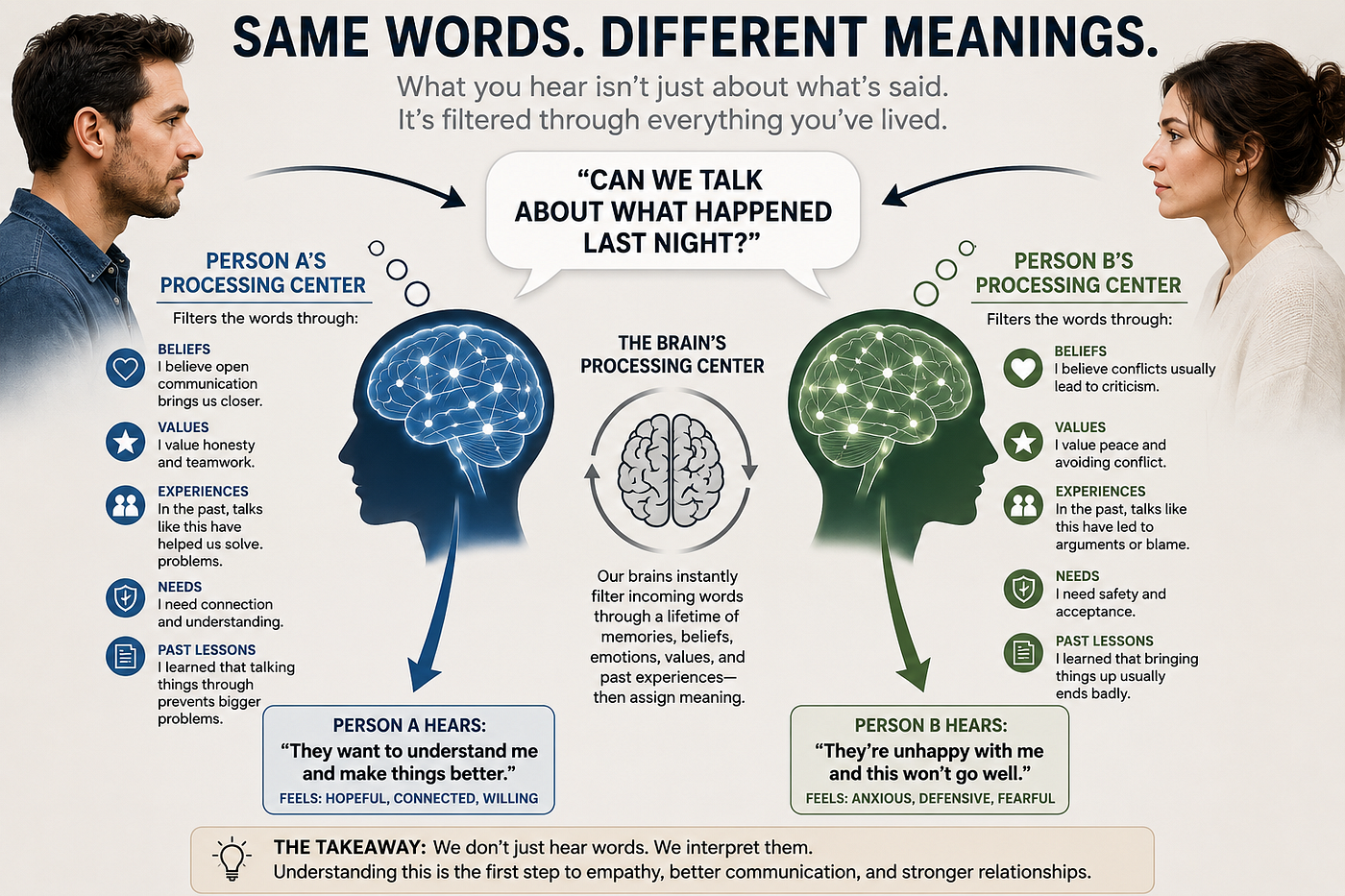
AI-created graphic on the basic tenets and research on parent and adult child estrangments.
Reconciliation.
According to the research [3], reconciliation is possible in some cases, but it won't happen in a healthy way if things are swept under the rug and left unaddressed. Adult children look for:
· The parent shows genuine accountability (not defensiveness, excuses, or justifications)
· There is behavioral change, not just words
· Boundaries are respected over time
What doesn't work is pressuring, playing the guilt card, minimizing the past, and demanding forgiveness without repair.
One more thing.
The woman who asked the question about adult child estrangement knows she is feeling grief; she calls it living grief, which is another name for something called Non-finite grief, which I wrote about in this article, Non-finite grief: The Grief That Has No Ending.
Recent podcast appearances:
Becky Whetstone is an author and marriage and family therapist with 25 years of experience helping individuals and couples. Although she is fully licensed, she works as a consultant and life coach via telehealth. She created the concept of marriage crisis management, the radically positive, amicable divorce plan, and the positive co-parenting plan, and seeks to take the nastiness out of anything to do with relationships. For more information, click here, or visit her website at www.marriagecrisismanager.com.
Read her books, I Think I Want Out: What to Do When One of You Wants to End Your Marriage, available in paperback, digital, and audio versions, and The Congressman’s Wife, available only on Substack. She may receive a small percentage of her first book if you click this link, at no extra cost to you.
[1] Prevalence (how common it is)
- Pillemer, K. (2020). Fault Lines: Fractured Families and How to Mend Them.
- Based on a large, representative U.S. survey (Cornell Family Reconciliation Project)
- Found ~27% of Americans report estrangement from a family member, most commonly a parent or child.
- Blake, L. (2017). Parents and children who are estranged in adulthood: A review and discussion of the literature. Journal of Family Theory & Review, 9(4), 521–536.
- Estimates a significant minority prevalence; highlights the lack of earlier research and the growing recognition.
- [2] Agllias, K. (2016). Family Estrangement: A Matter of Perspective. Routledge.
- Qualitative research showing estrangement develops from cumulative hurt, boundary violations, and emotional disconnection.
- Blake, L. (2017) (same review as above)
- Concludes estrangement is typically multi-causal and develops over time, not from a single घटना.
- Schoppe-Sullivan et al. (2020) (family relationship research broadly)
- Supports the idea that chronic relational dynamics predict distancing more than isolated conflict.
[3] Reconciliation factors
- Pillemer (2020)
- Reconciliation more likely when:
- One party takes clear responsibility
- There are behavioral change over time
- Gilligan, Suitor & Pillemer (2020) Estrangement and reconciliation in later-life families
- Emphasizes accountability and empathy as key variables
메타데이터
- post_id
- fddca76540c6
- slug
- what-the-research-really-says-about-parent-child-estrangement-fddca76540c6
- url
- https://medium.com/@doctorbecky/what-the-research-really-says-about-parent-child-estrangement-fddca76540c6
- canonical_url
- https://medium.com/@doctorbecky/what-the-research-really-says-about-parent-child-estrangement-fddca76540c6
- author_url
- https://medium.com/@doctorbecky
- status
- ok
- fetched_at
- 2026-06-09 15:37:30