Measles Can Be Deadly — But It’s Preventable
Disclosure: I wrote this article and used AI as a “professional editor” to refine and shorten overly long or complicated sentences.
Measles Can Be Deadly — But It’s Preventable
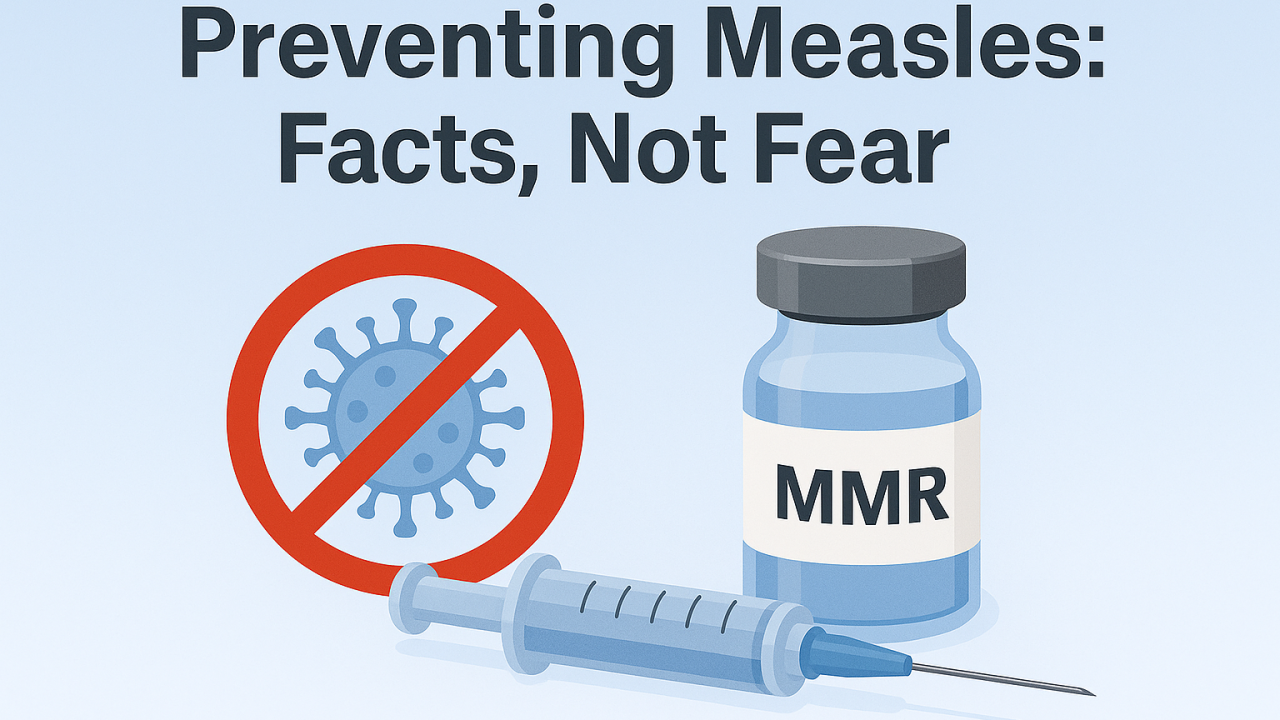
Image generated with the assistance of AI.
Disclosure: I wrote this article and used AI as a “professional editor” to refine and shorten overly long or complicated sentences.
According to the CDC, as of February 20, 2026, 982 confirmed measles cases have already been reported in the United States this year. In 2025, a total of 2,281 confirmed cases were reported nationwide.
There’s a clear pattern: low vaccination rates are the reason for outbreaks. For measles, a 95% vaccination rate is required to maintain herd immunity, the point at which disease spread is halted and outbreaks are suppressed.
Let’s Talk About the MMR Vaccine
MMR stands for measles, mumps, and rubella, which are the names of both the diseases and the viruses that cause them. All three viruses are highly contagious and can infect children and adults alike. While many people recover on their own without complications, that is not always the case. All three diseases can cause serious problems. Of the three, measles is by far the most dangerous.
Roughly 1 in 5 unvaccinated people in the U.S. who get measles end up hospitalized, often with pneumonia or brain inflammation (encephalitis). There is no specific treatment that eliminates the measles virus once infected. Medical care is supportive: fluids, fever control, and managing complications. Even in a hospital setting, measles can be fatal, especially in young children or immunocompromised patients.
That’s why prevention is everything.
The MMR Vaccine Works And Saves Lives
The MMR vaccine requires two doses and is highly effective:
- Measles: ~97% protection
- Mumps: ~88% protection
- Rubella: ~97% protection
If vaccinated individuals get infected (a rare occurrence), the disease is typically mild and less likely to spread.
The World Health Organization (WHO) estimates that over 60 million deaths were prevented globally between 2000 and 2023 due to measles vaccination. That’s not a small number; it’s a global health milestone.
But Is the MMR Vaccine Safe?
The short answer is yes. The long answer is still yes, but let’s talk about the details.
The MMR vaccine is a live attenuated vaccine, meaning it contains real viruses, but these viruses are “weakened” (attenuated) and cannot cause illness in healthy individuals. The first dose of the MMR vaccine is recommended between 12–15 months and the second dose at 4–6 years of age, but you can get the MMR vaccine at any age. Like with any vaccination, talking to your health care provider can help you understand what to expect. Like all vaccines, it can cause mild side effects, but serious complications are extremely rare.
Known Side Effects
Common side effects include mild redness or soreness at the injection site, low-grade fever, and a mild rash. These usually appear within a few days and go away on their own.
Less common side effects include:
-
Severe allergic reactions — These are extremely rare, estimated to occur in about 1 in 1,000,000 doses. Signs may include difficulty breathing, hives, or swelling of the face and throat. Fortunately, healthcare providers are trained and equipped to recognize and treat such reactions immediately.
-
Joint pain or stiffness — Temporary joint discomfort can occur, most often in teens or adults, particularly women. When it happens, it typically lasts only a few days and resolves without treatment.
-
Febrile seizures — These occur in about 1 in 2,000 to 4,000 children, usually 8 to 14 days after vaccination. A febrile seizure is a short, sudden shaking episode triggered by fever. While understandably alarming to witness, these seizures are brief (typically under two minutes) and do not cause long-term harm or lead to epilepsy. Children recover quickly, and most do not require further intervention beyond fever management.
-
Immune thrombocytopenic purpura (ITP) — ITP is a rare bleeding condition that may occur in about 1 in 25,000 to 40,000 children after MMR vaccination. It can cause easy bruising, nosebleeds, or small red spots (petechiae) on the skin due to low platelet counts. Post-vaccine ITP is typically mild and self-resolving, and most children recover without needing treatment.
Side Effects That Do Not Exist
When people hesitate to vaccinate, it’s often due to fear fueled by myths or misinformation. Some of the most persistent rumors about the MMR vaccine have been thoroughly investigated and scientifically disproven:
-
Autism: This widely circulated rumor originated from a now-discredited study published in 1998. The study involved only 12 children and was later found to contain manipulated data and unethical research practices. It was fully retracted, and the lead author lost his medical license. Since then, multiple large-scale studies, including one that analyzed over 600,000 children, have confirmed that there is no link between the MMR vaccine and autism.
-
Encephalitis (Brain Inflammation): There is no confirmed evidence that the MMR vaccine causes encephalitis in healthy (immunocompetent) individuals. While a few studies have explored this possibility, none have proven causation, and the estimated risk is less than 1 in 1 million doses. By contrast, the risk of encephalitis from measles infection is about 1 in 1,000. It’s worth noting that rare cases of vaccine-strain encephalitis have been reported in severely immunocompromised individuals, so people should speak with their healthcare provider before vaccination.
-
Autoimmune Disease: Claims that MMR causes autoimmune disorders have also been investigated and disproven. There is no credible scientific link between MMR vaccination and conditions like type 1 diabetes, multiple sclerosis (MS), or Guillain-Barré syndrome (GBS). The immune response triggered by the vaccine does not cause the body to attack its cells.
The Fetal Cell Line Concern
The rubella component of the MMR vaccine is grown in lab-maintained human cell lines that were initially derived from fetal tissue in the 1960s. These cell lines are used to grow the virus, which is thoroughly purified during the vaccine’s manufacturing process. Importantly, no fetal tissue is present in the vaccine. Ethical and religious groups (including the Vatican) have stated that its use is morally acceptable.
What About the “Live” Virus in a Vaccine?
It’s a fair question. The idea of injecting a “live” virus sounds unsettling. But rest assured, the viruses in the MMR vaccine are weakened so much they can’t cause disease in healthy people. However, those with severe immune suppression should not receive the MMR vaccine and must consult their physician.
And What About Mumps?
Some ask why we need the MMR vaccine if the mumps protection isn’t as high. While measles protection is ~97%, mumps protection is still about 88%. That’s not perfect, but far better than 0%. Mumps can lead to painful complications like testicular swelling, meningitis, and hearing loss. So yes, getting vaccinated for measles can save your life, and as a bonus, you get protection from mumps and rubella too.
Final Thoughts
I fully understand that “live vaccine”, autism, or fetal tissue stories can sound concerning, especially when rumors spread faster than measles. But just like vaccinating against viruses, we need to use scientific evidence to “vaccinate” our minds against misinformation.
The MMR vaccine is not only safe — it’s life-saving
If you’d like to keep reading:
Subscribe to my newsletter on **Substack** (free, email delivery)
If you’d like to follow my work professionally (and read articles there as well):
Connect with me on **LinkedIn**
If you find this writing useful and want to support independent science communication:
You can support my work on **Patreon** (optional)
메타데이터
- post_id
- fdeae97a94e6
- slug
- measles-can-be-deadly-but-its-preventable-fdeae97a94e6
- url
- https://medium.com/@scienceworthknowing/measles-can-be-deadly-but-its-preventable-fdeae97a94e6
- canonical_url
- https://medium.com/@scienceworthknowing/measles-can-be-deadly-but-its-preventable-fdeae97a94e6
- author_url
- https://medium.com/@scienceworthknowing
- status
- ok
- fetched_at
- 2026-06-12 18:14:10