Why Rolling Code Failures Matter for Digital Identity
The screen flickers. A small, green LED on your security token blinks once, twice, and then goes dark. You try to log in. Access denied…
Why Rolling Code Failures Matter for Digital Identity
Photo by Egor Komarov on Unsplash
The screen flickers. A small, green LED on your security token blinks once, twice, and then goes dark. You try to log in. Access denied. The code was right, technically — but the system thinks it isn’t. A familiar frustration to anyone who’s relied on one-time passwords or WebAuthn keys: the invisible gears behind rolling code authentication can fail silently, and when they do, your digital identity is suddenly fragile.
Rolling codes — the ephemeral, constantly changing sequences used to validate identity — are the backbone of modern authentication systems. From time-based one-time passwords (TOTP) in apps like Google Authenticator to WebAuthn’s challenge-response cryptography, these codes are supposed to make hacks exponentially harder. They succeed spectacularly — until they fail.
The Invisible Infrastructure of Identity
Authentication tokens feel simple. Tap, type, enter. Done. But every token is part of a fragile ecosystem: device clock drift, server misalignment, desynchronized seeds, hardware degradation. If any single variable slips, the rolling code sequence breaks. For a user, it looks like magic failing. For security, it’s a quiet but devastating flaw.
WebAuthn, the emerging standard for passwordless login, ties identity to cryptographic keys stored in devices. Each login attempt produces a cryptographically signed assertion. But even here, failures occur. A WebAuthn token on a device with a slightly skewed internal clock or corrupted state might reject a valid login. The security model assumes perfection, but reality is messy.
Time-based codes rely on tight synchronization. A smartphone TOTP app and its authentication server must agree down to seconds. Drift can accumulate over days, causing codes to expire prematurely. Users see errors, support tickets spike, and critical services become inaccessible.
When “Failing Securely” Isn’t Enough
Security systems often adopt the mantra: “If you fail, fail securely.” But a rolling code failure doesn’t always respect this. The system might lock an account or force multi-step recovery, but it can also silently degrade trust in authentication. Users lose faith, and human error creeps in: writing down codes, reusing passwords, or disabling security features altogether. The consequences are human, not just technical.
In enterprise environments, failed rollouts of TOTP or WebAuthn devices can cascade. IT teams scramble to re-provision devices, reset counters, or manually resync clocks. Every misalignment multiplies the attack surface. A subtle failure in the rolling code mechanism can create windows for replay attacks, brute force attempts, or social engineering exploits.
Rolling Code Mechanics: Why Time and Sequence Matter
Rolling codes depend on either event-based or time-based triggers. In TOTP, the clock ticks forward, generating a new code every 30 seconds. In HMAC-based OTP (HOTP), a counter increments with each use. Both systems require accurate state tracking. If a counter falls out of sync, or the server’s clock drifts relative to the client, the “correct” code is rejected.
Imagine a two-factor authentication system used by a small bank. A user tries to log in from an offline-connected hardware token. The token’s battery is low, and its internal clock is slow by 15 seconds. The server, oblivious to the device drift, sees a code that is technically valid but “out of window.” Access denied. The user calls support, frustration grows, and operational trust erodes.
It’s not just about convenience. The reliability of rolling codes underpins identity assurance. A failure creates ambiguity: is the user legitimate, or has the system misjudged? In environments where digital identity governs financial access, medical records, or sensitive communications, this ambiguity becomes a liability.
Real-World Consequences
Rolling code failures aren’t abstract. They’ve caused widespread outages. Security researchers have documented incidents where:
- Enterprise VPN access fails due to unsynchronized TOTP devices.
- Smart locks and IoT devices reject valid codes, locking users out of homes or offices.
- Banking apps suspend accounts when users cannot authenticate, triggering emergency interventions.
These failures reveal a structural truth: digital identity systems often prioritize attack prevention over usability resilience. But the two are inseparable. Without reliability, even the most cryptographically sound system is undermined by user behavior.
Mitigating the Risk
Engineers have developed strategies to mitigate rolling code failures:
- Grace windows: servers accept codes within a small time window before or after the expected value.
- Resynchronization protocols: some hardware tokens allow counters to be corrected without compromising security.
- Redundant authentication: fallback to alternative methods like push-based confirmations or WebAuthn biometric assertions.
- Monitoring and analytics: detect patterns of failed authentications that indicate clock drift or systemic desynchronization.
Even with these strategies, the challenge is systemic. Time-based codes are fragile by design: their security advantage is also their Achilles’ heel.
WebAuthn and Beyond: The Next Frontier
WebAuthn offers promise because it replaces shared secrets with device-bound keys. Users can authenticate without exposing passwords, reducing the risk of mass breaches. But rolling code logic still underpins the challenge-response handshake. Failures manifest differently: a legitimate signature rejected due to a stale client challenge or corrupted key state. The user experience remains brittle.
Developers must think beyond cryptography. Rolling code failures demand robust UX handling: clear error messages, self-healing devices, and recovery options that don’t compromise security. Ignoring the problem risks alienating users who equate friction with failure.
A Hacker’s Perspective
From the outside, rolling code failures are paradoxical. They can lock you out, but they also hint at systemic weaknesses. In penetration testing, observing how an authentication system responds to desynchronized tokens can reveal tolerances, fallback mechanisms, and potential attack vectors. Security without failure modes is theoretical; reality always leaks.
For practical guidance on experimenting safely with these mechanisms, the *Termux Hacker’s Handbook 2026 — Mobile-Only Pentesting & Labs* is invaluable. It walks through mobile-based authentication testing and demonstrates how subtle timing errors or misaligned counters can be exploited in controlled environments.
Toward Resilient Digital Identity
The future of digital identity isn’t just cryptographic. It’s adaptive. Systems must anticipate drift, hardware variability, and human error. Resilient authentication designs blend strong cryptography with user-centered fault tolerance. Devices should self-correct, servers should detect anomalies, and users should never feel punished for technical misalignment.
Rolling code failures teach us an uncomfortable lesson: security isn’t absolute. It’s negotiated, experienced, and sometimes fragile. Identity is only as strong as the weakest link in the authentication chain. And right now, the weakest link is often the one you can’t see — the invisible, ticking codes in your pocket.
Expand Your Knowledge
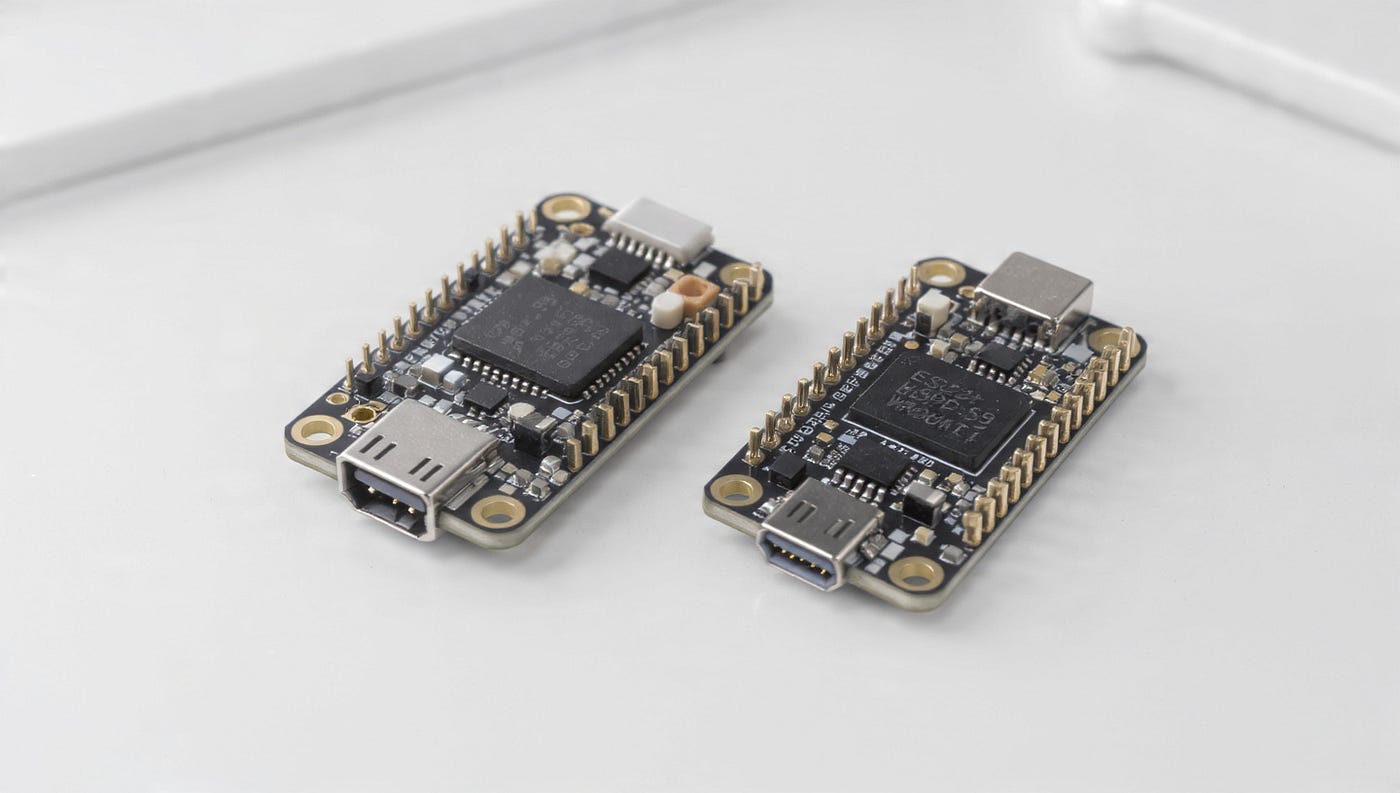
Also, explore the Shadow Device Playbook for ESP32 and stealth hardware operations.
Further Reading
메타데이터
- post_id
- fdf84a032bf0
- slug
- why-rolling-code-failures-matter-for-digital-identity-fdf84a032bf0
- url
- https://osintteam.blog/why-rolling-code-failures-matter-for-digital-identity-fdf84a032bf0
- canonical_url
- https://osintteam.blog/why-rolling-code-failures-matter-for-digital-identity-fdf84a032bf0
- author_url
- https://medium.com/@neonmaxima
- status
- ok
- fetched_at
- 2026-06-22 05:41:33