From Nation to Corporation: Where Identity and Belonging Are Moving in the 21st Century
How important is identity in organizations we lead
From Nation to Corporation: Where Identity and Belonging Are Moving in the 21st Century
✍️ Introduction
A while ago, I read an article by Rana Dasgupta, “The demise of the nation state”.
Provocative perhaps, but for sure impactful. It left a deep mark on me, as I grew up in the period of creation of one new/old “nation state”. Since then, I’ve read many analysis on that subject, some arguing nation state is dead, some it’s alive more than ever. Which one is it? And how that impacts productivity and organizational motivation?
🧭 The Human Need to Belong
One of the most basic human needs is the need to belong — to feel part of something larger, to be accepted, and to have a shared identity. Psychologist Abraham Maslow famously placed belonging in the middle of his hierarchy of needs. Later researchers like Baumeister and Leary (1995) proposed that the “need to belong” is a fundamental human motivation — not a luxury, but a deep driver of human behavior.
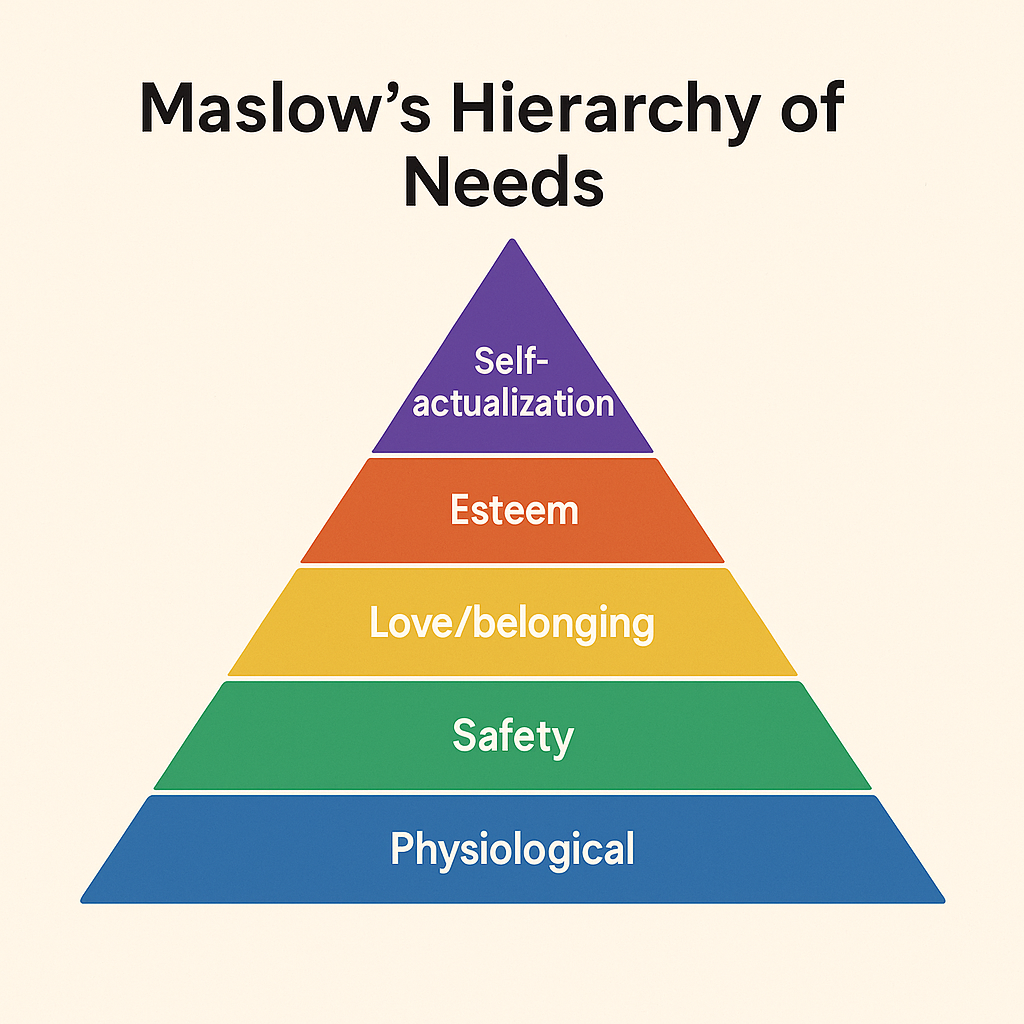
Belonging by Maslow is in the middle of his hierarchy of needs. But Baumeister and Leary (1995) proposed that such need is a fundamental human motivation — not a luxury
This became even clearer to me during my MBA at INSEAD, in a course called Global Strategy Management, taught by Professor **Subramanian Rangan. He shared a conceptual model I’ve carried with me ever since — a hierarchy of human motivation**, which goes like this:
Incentives → Motives → Ideas → Identity

Identity as a “top motivational” tool.
At the base, people are driven by incentives (money, rewards). Stronger motivators than that are motives (like revenge or fear — i.e. if someone wants to revenge, hardly you can pay him out of it — right?).
Above that are ideas — grand narratives like communism, capitalism, religion, or social justice (if someone believes that motives such as revenge are wrong, he will resist acting on them).
And at the top is identity: people will act because of who they believe they are. A Catholic. A Croat. A partisan. A nationalist. A member of something. These motives are not questioned and that’s why they can be very dangerous, hence today’s prevalence of nationalism and similar fanatic adherences to certain groups. It is always ok to belong, but as anything in life, we have to have critical continuous questioning mindset, otherwise we can be dragged into the “rabbit hole”, and behaviors and deeds otherwise unimaginable to ourselves.
This narrative (idea) of identity as an unquestioned motivation tool, helped me make sense of what I saw during the 1990s in what we call “Yugoslav wars”: how identity overpowered ideology. The idea of Yugoslavia was built on communist’s vision “brotherhood and unity” (that was the idea that was to overcome motives such as revenge, fear etc. — but in the 1990s, identity as Slovenian, Serb, Croat, or Bosniak proved to be a stronger motivator than the ideological foundation of the state. Hence, the wars and dissolution of regime.
Professor Rangan’s insight stuck with me: if you want to understand what drives people — look at identity.

🔄 Identity Is Malleable — Life in 4 Nations, Without Moving
For example, city of Zadar, coastal city on the Adriatic. A the time I was born, it was part of federal unit that was called “Socialist Republic of Croatia”, and that was in the federation called “Socialist Federal Republic of Yugoslavia” (recognized as a sovereign state by United Nations). As every country that country had national football team, basketball team, flag, anthem and many other “symbols” of identity and not surprisingly, in that country many people proudly identified as Yugoslavs and also atheists (as the country was ruled by a communist party). After the country broke up in the 1990s, the same people suddenly became proud Croatian and Catholic — a new story (new narrative) to believe in. In the 1990s, nationalism was heavily promoted by the government and as a consequence of wars, Croatian identity was enforced. Then after the year of 2000, more of international identities emerged. Today, many strongly identify as “die hard fans” of local football teams, e.g. Dinamo or Hajduk who often feel more loyalty to their club than to the nation (at that particular moment, game etc.)
But this shift isn’t new to anyone who tries to understand their past and digs a bit deeper in their own personal history. Everyone assumes they (and their ancestors) are today what they were “for centuries”.
For example, my grandfather was born in Zadar at the end of 19th century, which at the time was part of the Austrian half of the Austro-Hungarian Empire. He never left his neighborhood — and yet, he lived under five different countries:
- Austro-Hungary
- Italy (Zara was annexed after WWI)
- German occupation
- Socialist Federal Republic of Yugoslavia
- And when he passed away in January 1991 — he had already been living in what would soon become internationally recognized sovereign state of the Republic of Croatia.
He lived in one place, yet his “national” identity — at least on census papers — changed five times.
That tells you everything you need to know about how fluid national identity really is.

Is it first time in history we see changes in identity from states and corporations?
🏛️ The Nation-State: The Identity Provider of the 20th Century
The nation-state, especially in the 20th century, became the default identity structure for most people. It offered:
- A shared story of origin and purpose
- A passport and rights
- Protection (laws, police, army)
- Public goods: education, healthcare, infrastructure
- A place where one “belonged”
Generations born in the 1930s and 1940s, are typical of that “nation-state” mindset. They still expect the state to solve everything — from electricity bills to medical care to who’s to blame for potholes. In fact, in their view, everything is somehow “the state’s fault.”
It’s a bit of a running joke: If the TV breaks? “State’s fault.” If a neighbor parks wrong? “Where is the state?” If the cat runs away? … well, somehow, that’s the state’s fault too.
But what happens when that model no longer works or we realize that state (especially small ones like Slovenia, Croatia, and most of the European countries) does not really control much?

How is power divided?
🏢 The Rise of Corporations as Sovereigns
Increasingly, corporations are taking over roles once held by the state. Let’s name just a few:
- Maps — and the knowledge of what lies where within a country’s territory and how we define geography, was strictly controlled by states — government bodies issued official maps. Today, even when most powerful person in the world (President of the United States of America) decides that Gulf of Mexico will be called Gulf of America — it is not so, unless Google complies. Google Maps now defines geographic knowledge more than any school atlas issued by government body.
- SpaceX launches satellites — and will soon bring us global internet. Telecoms used to be government monopolies.
- Moderna and Pfizer, not states, developed the most advanced COVID vaccines.
- Amazon controls logistics infrastructure more effectively than many governments.
- Facebook (Meta), TikTok, and X (Twitter) shape public opinion more than state-run media ever did. It used to be that television defined who rules, even revolutions started by capturing “state TV” — today, it is capturing twitter (a private corporation).
- Further more, military protection and security — it is today supposed to be strictly government, but is it? — Blackwater (now Academi) and Wagner Group are privatized armies — not theoretical, but deployed on real-world battlefields.
We’re witnessing a world where corporate entities are becoming infrastructure — economic, digital, and even military.
In many ways, they already are the new states — but without elections, parliaments, or borders.

🌍 The Blurring of Borders — And Identities
In this context, identity becomes fluid and portable.
Today, people:
- Work remotely for foreign companies
- Live abroad but vote at home
- Switch citizenship for tax or legal reasons
- Create online personas with entirely new identities
- Travel easily across borders in unions like the EU
Meanwhile, some generations feel more attached to brands, movements, or ideologies than to their passport. For many, belonging to Tesla’s mission, or McKinsey’s elite, or the global crypto community, means more than national loyalty.
We are shifting into a post-territorial era, where function replaces geography as the source of belonging.
And in some cases, the emotional connection to a brand is so deep that people literally make it a part of their body. Harley-Davidson is the classic example — thousands of people around the world proudly tattoo its logo on their skin. That’s not just customer loyalty — that’s identity. They don’t just ride Harleys — they are Harley riders. It shapes their worldview, their values, and their community.
This kind of belonging was once reserved for nations, religions, or revolutionary ideologies. Now, in the 21st century, it can belong to a corporation.
We are shifting into a post-territorial era, where function replaces geography as the source of belonging.
🔦 Not a Crisis — But a Change That Needs Awareness
This shift, like any change, is neither good nor bad, but it is a change that cannot be ignored. It does require awareness. States, organizations, companies, who realize it on time and adjust, will be the winners. Like “empires” and corporations who were aware of that globalization of the world after Vasco de Gama’s discovery of the “alternative” road will change things and accepted it, did rule the world.
For example, one of the issues we have to address, is when nation-states weaken and corporations rise, the big question becomes: who is accountable? Governments, at least in theory, are answerable to citizens. Corporations answer to shareholders — and often to no one else.
What happens to:
- Democracy?
- Public interest?
- Rights and protections for those who don’t generate profit?
The danger isn’t in the shift itself — it’s in not realizing it’s happening. We must ask ourselves: who do we really belong to? And who belongs to us?

🧩 Closing Thought: Multipolar Belonging
We’re entering a world of multi-layered identity. You can be:
- A Croatian citizen,
- A European voter,
- An Apple user,
- A KK Zadar supporter,
- A remote employee of an American tech firm,
- A believer in climate activism or open-source software,
- A digital nomad in Thailand,
- A member of five WhatsApp groups that shape your worldview.
This isn’t chaos — it’s the (new) normal. The question isn’t will the nation-state survive — but can it still be the primary story we tell ourselves about who we are?
For me, I’ve learned that identity isn’t where you’re born — it’s the narrative you choose. And that narrative is changing faster than ever before.
메타데이터
- post_id
- fdfec3e0ee9a
- slug
- from-nation-to-corporation-where-identity-and-belonging-are-moving-in-the-21st-century-fdfec3e0ee9a
- url
- https://medium.com/@kresimirprofaca/from-nation-to-corporation-where-identity-and-belonging-are-moving-in-the-21st-century-fdfec3e0ee9a
- canonical_url
- https://medium.com/@kresimirprofaca/from-nation-to-corporation-where-identity-and-belonging-are-moving-in-the-21st-century-fdfec3e0ee9a
- author_url
- https://medium.com/@kresimirprofaca
- status
- ok
- fetched_at
- 2026-06-28 10:39:35



