Live Longer and Stay Sharp: The Critical Role of ApoB.
ApoB: A Critical Marker for Cardiovascular, Mental, and Brain Health
Live Longer and Stay Sharp: The Critical Role of ApoB.
ApoB: A Critical Marker for Cardiovascular, Mental, and Brain Health
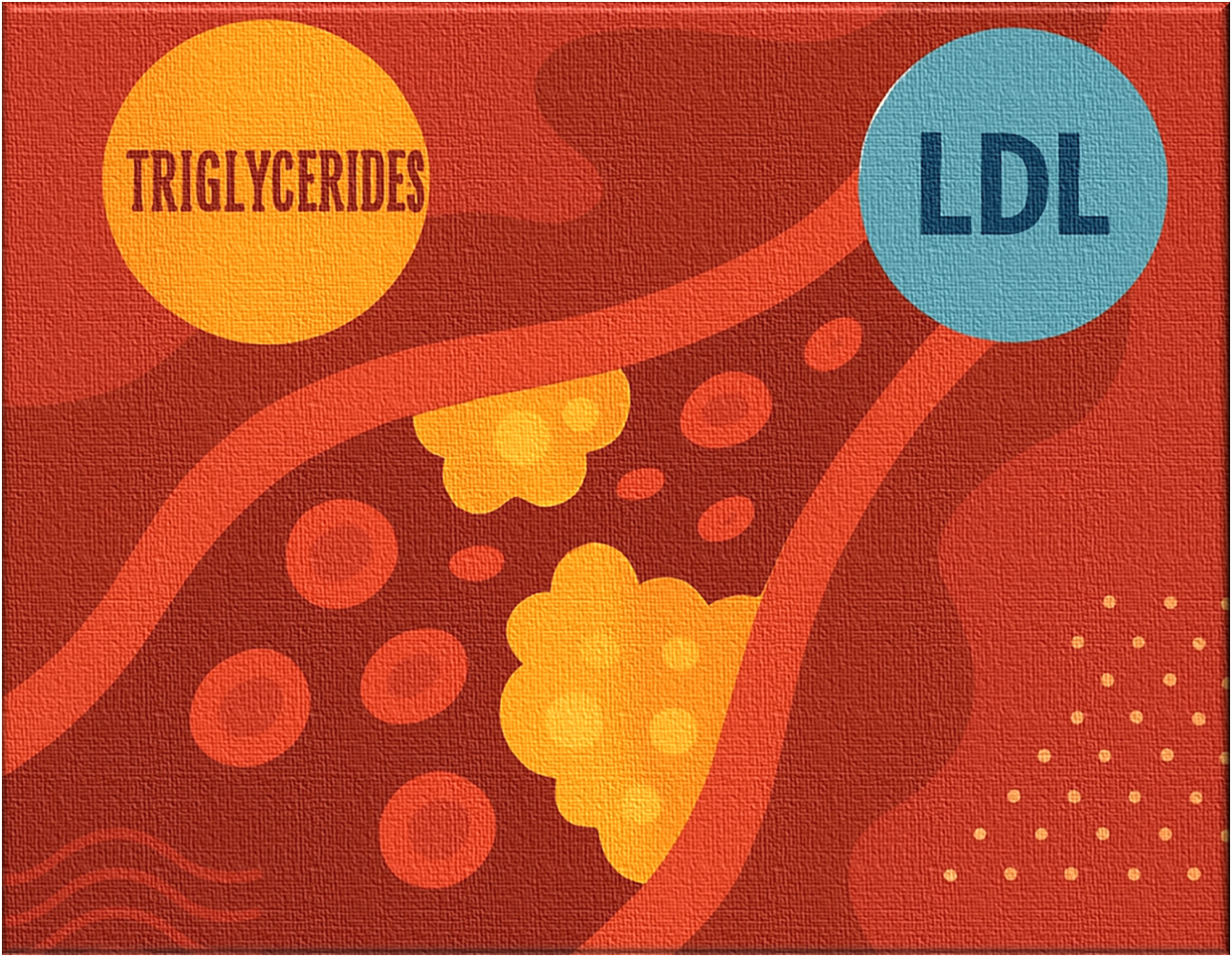
Apolipoprotein B (ApoB) is a fundamental structural protein found in atherogenic lipoproteins, including low-density lipoprotein (LDL), very-low-density lipoprotein (VLDL), and lipoprotein(a) [Lp(a)]. Unlike total cholesterol or LDL-C measurements, ApoB directly quantifies the number of these harmful lipoprotein particles, making it a superior marker for cardiovascular risk (Pokharel et al., 2019). Elevated ApoB levels are strongly associated with atherosclerosis and its complications, including heart attacks and strokes.

Studies indicate that PCSK9 inhibitors, such as evolocumab and alirocumab, can achieve a more significant reduction in ApoB compared to statins, making them a potent option for patients seeking enhanced cardiovascular protection.
The Cardiovascular Benefits of Lowering ApoB
Lowering ApoB has been identified as one of the most impactful strategies for reducing cardiovascular disease (CVD) risk. Dr. Peter Attia, a physician and longevity expert known for his work in preventive medicine, advocates for aggressively reducing ApoB levels below 60 mg/dL to minimize atherosclerotic cardiovascular disease (ASCVD) risk (Attia, n.d.). A useful discussion on ApoB and its importance can be found in his YouTube video: Peter Attia on the Importance of ApoB. Epidemiological studies support this approach, showing that high ApoB levels predict CVD more accurately than LDL-C alone (Pokharel et al., 2019).
Pharmacological Interventions to Reduce ApoB
- Statins (e.g., Rosuvastatin, Atorvastatin, Pravastatin) — These drugs inhibit HMG-CoA reductase, reducing cholesterol synthesis and lowering LDL-C and ApoB (Khan et al., 2020). While statins are effective in lowering low-density lipoprotein cholesterol (LDL-C) and ApoB, the degree of reduction is less pronounced than that achieved with PCSK9 inhibitors (Reyes-Soffer et al, 2017). It has also been demonstrated that for people already on statins, PCSK9 inhibitors could result in a dramatic reduction (about 55%) in ApoB (Zhang et al, 2022).
- PCSK9 Inhibitors — These monoclonal antibodies increase LDL receptor recycling, enhancing LDL clearance and significantly reducing ApoB levels (Reyes-Soffer et al., 2017). One practical concern is that they are still a bit pricey. That said, their benefit likely justifies their price tag. Common PCSK9 inhibitors include:
- Alirocumab (Praluent) — Costs approximately $500–$700 per month.
- Evolocumab (Repatha) — Costs around $450–$650 per month.
- Inclisiran (Leqvio) — A newer treatment that requires only twice-yearly injections, costing approximately $3,250 per dose.
- Bempedoic Acid (Nexletol) — This ACL inhibitor lowers LDL-C and ApoB by reducing hepatic cholesterol synthesis. While I mention it here, for the sake of completeness on the topic, PCSK9 inhibitors appear to provide more substantial reduction in ApoB compared to bempedoic acid (Rajendran et al., 2024). Retail cost is about $460 per month.
So in case it isn’t obvious, I would like to emphasize that of these available agents, PCSK9 inhibitors appear to offer the most potent ApoB reduction but can be expensive. However, many health insurers cover these medications for high-risk patients or those with familial hypercholesterolemia. Physicians typically prescribe them when statins alone fail to achieve target ApoB levels.
While cardiovascular risk does and should get most people’s attention as a health concern, in my experience, not as many people consider their brain health as they age, which in my opinion is unfortunate given that cardiovascular risk reduction can help to keep you alive longer, attending to brain health can be an investment in quality of life. That said, there’s good news with respect to the management of ApoB — lowering this level appears to benefit heart and brain!
ApoB and Brain Health: The Emerging Connection
Increasing evidence links ApoB levels to cognitive decline and mental health disorders. A study by Pokharel et al. (2019) found that optimal control of atherogenic lipoproteins in midlife correlates with better late-life cognitive health. High ApoB levels have been associated with increased amyloid-beta (Aβ) deposition, a hallmark of Alzheimer’s disease (Button et al., 2019). Lowering ApoB may:
- Suppress Aβ-induced vascular inflammation, reducing neurovascular damage (Button et al., 2019).
- Improve Aβ clearance, potentially slowing cognitive decline (Button et al., 2019).
- Induce endothelial nitric oxide production, enhancing cerebral blood flow and neuroprotection (Button et al., 2019).
ApoB and Mental Health
Beyond neurodegeneration, ApoB levels have been linked to psychiatric disorders. Depressive patients exhibit higher ApoB levels, and elevated ApoB correlates with greater cognitive deficits in delayed memory and language function (Hui et al., 2017). Managing ApoB may therefore play a role in improving cognitive function in individuals with depression.
The Importance of Vascular Health
Vascular health is crucial for both the heart and brain. Atherosclerosis not only increases the risk of heart attacks and strokes but also impairs cerebral blood flow, contributing to cognitive decline. By lowering ApoB, individuals can improve overall vascular function, benefiting both cardiovascular and neurological health.
Given its profound impact on cardiovascular, cognitive, and mental health, lowering ApoB represents one of the most effective health interventions. Whether through lifestyle changes, statins, PCSK9 inhibitors, or emerging therapies like pemafibrate, reducing ApoB can yield substantial health benefits.
References
- Attia, P. (n.d.). Early and aggressive lowering of ApoB. Retrieved from https://peterattiamd.com
- Button, E., Gilmour, M., Cheema, H., Martin, E., Agbay, A., Robert, J., & Wellington, C. (2019). Vasoprotective Functions of High-Density Lipoproteins Relevant to Alzheimer’s Disease Are Partially Conserved in Apolipoprotein B-Depleted Plasma. International Journal of Molecular Sciences, 20.https://doi.org/10.3390/ijms20030462
- Hui, L., Han, M., Du, X., Zhang, B., He, S., Shao, T., & Yin, G. (2017). Serum ApoB levels in depressive patients: associated with cognitive deficits. Scientific Reports, 7. https://doi.org/10.1038/srep39992
- Khan, S., Khan, M., Valavoor, S., Khan, M., Okunrintemi, V., Mamas, M., Leucker, T., Blaha, M., & Michos, E. (2020). Association of lowering apolipoprotein B with cardiovascular outcomes across various lipid-lowering therapies: Systematic review and meta-analysis of trials. European Journal of Preventive Cardiology, 27, 1255–1268. https://doi.org/10.1177/2047487319871733.
- Pokharel, Y., Mouhanna, F., Nambi, V., Virani, S., Hoogeveen, R., Alonso, Á., Heiss, G., Coresh, J., Mosley, T., Gottesman, R., Ballantyne, C., & Power, M. (2019). ApoB, small-dense LDL-C, Lp(a), LpPLA2 activity, and cognitive change. Neurology, 92, e2580 — e2593. https://doi.org/10.1212/WNL.0000000000007574
- Rajendran, R., Shafiq, N., & Malhotra, S. (2024). A Comparative Analysis of Low-Density Lipoprotein Cholesterol and Apolipoprotein-B Lowering Activities of Bempedoic Acid, Inclisiran, and PCSK9 Inhibitors: A Systematic Review. Cureus, 16(1), e39496. https://doi.org/10.7759/cureus.39496
- Reyes-Soffer, G., Pavlyha, M., Ngai, C., Thomas, T., Holleran, S., Ramakrishnan, R., Karmally, W., Nandakumar, R., Fontanez, N., Obunike, J., Marcovina, S., Lichtenstein, A., Matthan, N., Matta, J., Maroccia, M., Becue, F., Poitiers, F., Swanson, B., Cowan, L., Sasiela, W., Surks, H., & Ginsberg, H. (2017). Effects of PCSK9 Inhibition With Alirocumab on Lipoprotein Metabolism in Healthy Humans. Circulation, 135, 352–362. https://doi.org/10.1161/CIRCULATIONAHA.116.025253
- Yamashita, S., Arai, H., Yokote, K., Araki, E., Tanigawa, R., Saito, A., Suganami, H., Minamikawa, S., & Ishibashi, S. (2023). Pemafibrate has a novel mechanism of action to lower LDL-C and ApoB in patients with higher LDL-C levels: Insights from a phase 2 exploratory clinical pharmacology crossover study. European Heart Journal.https://doi.org/10.1093/eurheartj/ehad655.2807
메타데이터
- post_id
- fe07e7df85be
- slug
- live-longer-and-stay-sharp-the-critical-role-of-apob-fe07e7df85be
- url
- https://medium.com/@davidgeorge.gbs/live-longer-and-stay-sharp-the-critical-role-of-apob-fe07e7df85be
- canonical_url
- https://medium.com/@davidgeorge.gbs/live-longer-and-stay-sharp-the-critical-role-of-apob-fe07e7df85be
- author_url
- https://medium.com/@davidgeorge.gbs
- status
- ok
- fetched_at
- 2026-07-21 03:11:18