Melatonin and Magnesium Together: Is It Safe? Benefits, Dosage & When It Makes Sense
Two of the most commonly used sleep supplements. Different mechanisms. Different problems they solve. Here is how to use them together…
Melatonin and Magnesium Together: Is It Safe? Benefits, Dosage & When It Makes Sense
Two of the most commonly used sleep supplements. Different mechanisms. Different problems they solve. Here is how to use them together correctly.
Melatonin and magnesium are both widely used for sleep, but they work through entirely different pathways — and understanding that difference is what determines whether combining them makes sense for you.
The short answer is yes, they can be combined safely in most cases. The more useful answer is that the combination only makes sense when your sleep is affected by both problems these ingredients address.
How each one works
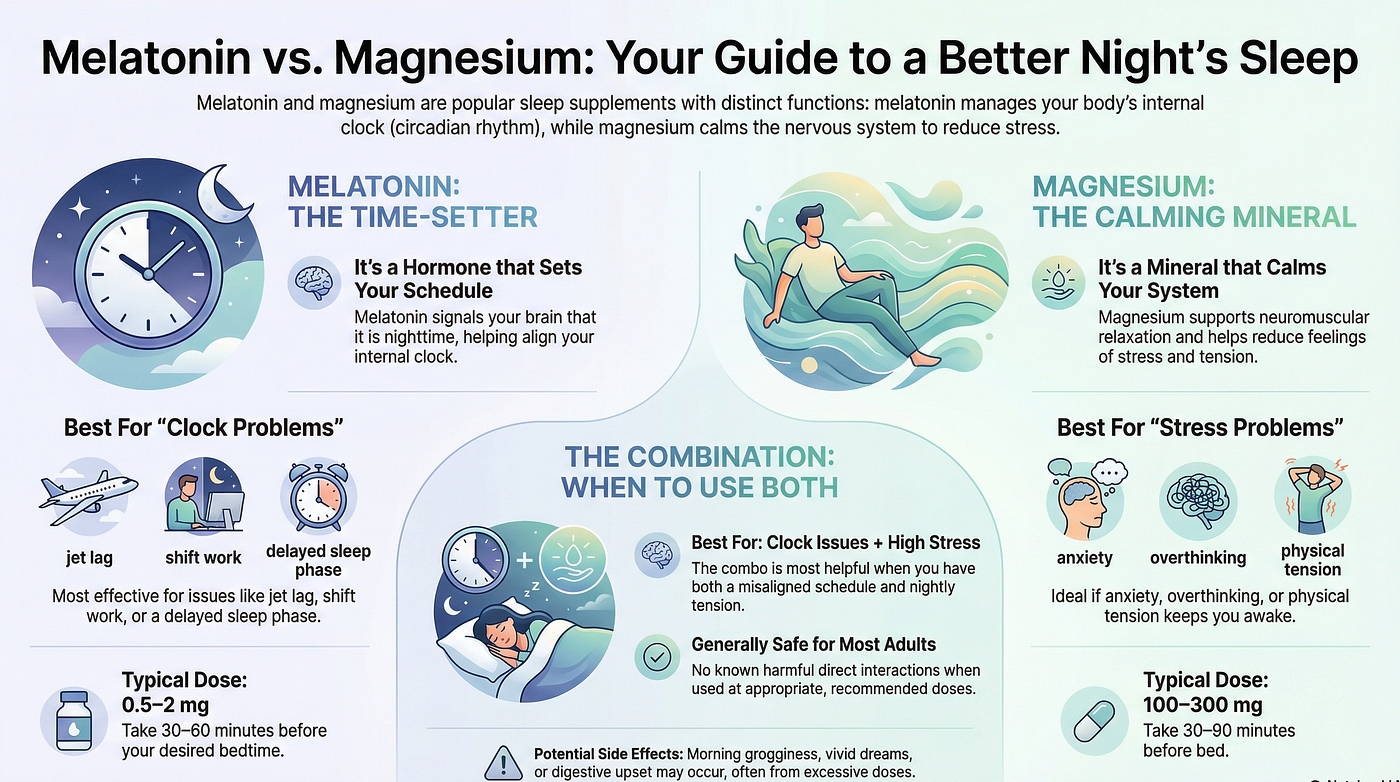
Melatonin is a hormone that tells the brain when it is night. It acts as a circadian timing signal — helping shift your internal clock earlier and supporting sleep onset when your rhythm is misaligned. It does not sedate. It signals.
Magnesium supports neuromuscular relaxation and stress modulation. It may help reduce physical tension, muscle restlessness, and the wired feeling that interferes with falling asleep. It does not shift your body clock. It calms the system.
Put simply: melatonin helps set the schedule. Magnesium helps calm the system. They complement each other because they address different parts of the sleep problem — which is exactly when combination makes sense.
When the combination makes sense
The combination is most logical when sleep is affected by both a shifted or disrupted circadian pattern and nighttime tension or nervous system overactivation. For example: someone dealing with jet lag who also has difficulty relaxing due to stress. Or someone with a delayed sleep phase who also experiences physical restlessness at bedtime.
If your sleep problem is purely circadian — you are tired but your timing is off — melatonin alone with light exposure management may be sufficient. If your problem is purely stress and tension — you are exhausted but wired — magnesium-focused or calming-based support is the better primary tool.
Use melatonin for clock problems. Use magnesium for stress-related tension. When both are present, the combination can make sense.
Dosage when combining
Magnesium — 100 to 300 mg of elemental magnesium, taken 30 to 90 minutes before bed.
Melatonin — 0.5 to 2 mg, taken 30 to 60 minutes before bed.
The timing difference is intentional: magnesium slightly earlier to allow the relaxation support to build, melatonin closer to the intended sleep window to act as a timing signal. Avoid high-dose melatonin of 5 to 10 mg or more unless supervised by a qualified professional — more is not better, and higher doses increase next-day grogginess without proportionally improving sleep.
Possible side effects of the combination
Morning grogginess — more likely with higher melatonin doses or late timing. Vivid dreams — reported by some users, particularly with melatonin. Headache. Digestive upset from magnesium — dose-dependent and typically resolved by splitting the dose or taking it with food.
Medication interactions
Use caution if taking antidepressants, blood pressure medication, thyroid medication, sedatives, or antibiotics. Both ingredients can interact with medications through overlapping physiological pathways. Anyone managing a medical condition or taking prescription medication should discuss supplementation with a healthcare professional before combining these.
Frequently asked questions
Can I take melatonin and magnesium every night? Magnesium can generally be used regularly within recommended intake ranges. Melatonin is better used strategically for circadian timing issues rather than indefinitely as a nightly habit without a clear reason.
Which should I take first — melatonin or magnesium? Timing matters more than order. Magnesium is often taken slightly earlier — 30 to 90 minutes before bed — while melatonin is typically taken closer to the intended sleep time.
Can melatonin and magnesium replace sleeping pills? They may support mild sleep issues for some people, but should not be used to replace prescribed medication without professional guidance.
Are melatonin and magnesium safe long-term? Magnesium is generally suitable for regular use within recommended ranges. Long-term daily melatonin use is more debated and is best reserved for clear timing-related sleep issues rather than habitual nightly use.
메타데이터
- post_id
- fe0b217fd8ee
- slug
- melatonin-and-magnesium-together-is-it-safe-benefits-dosage-when-it-makes-sense-fe0b217fd8ee
- url
- https://medium.com/@contact_26220/melatonin-and-magnesium-together-is-it-safe-benefits-dosage-when-it-makes-sense-fe0b217fd8ee
- canonical_url
- https://medium.com/@contact_26220/melatonin-and-magnesium-together-is-it-safe-benefits-dosage-when-it-makes-sense-fe0b217fd8ee
- author_url
- https://medium.com/@contact_26220
- status
- ok
- fetched_at
- 2026-06-23 17:05:31