How to Choose Fabric That Makes Your First Sewing Project Easier
Choosing fabric is one of the most exciting parts of sewing.
How to Choose Fabric That Makes Your First Sewing Project Easier
Choosing fabric is one of the most exciting parts of sewing.
You see a pretty print, imagine the finished piece, and suddenly the project feels real. Maybe it is a simple apron, a skirt, a loose top, or a small handmade project you have wanted to try for a while.
But fabric can also make sewing much harder than expected.
Sometimes the pattern is simple, and the instructions are clear, but the fabric keeps slipping, stretching, fraying, or refusing to sit flat. That is when a project starts feeling frustrating, even if the sewing itself is not very complicated.
This is why fabric choice matters so much, especially for early projects.
You do not need to understand every fabric type before you start. You only need to know which fabrics are easier to handle and which ones may be better saved for later.
A good fabric choice can make your first sewing project feel calmer, cleaner, and much easier to finish.
Start With Fabric That Is Easy to Handle
For your first sewing project, the best fabric is not always the prettiest fabric in the shop.
It is usually the fabric that behaves well while you work with it.
A good first fabric should lie fairly flat on the table, stay in place while cutting, press nicely with an iron, and move smoothly through the sewing machine. It should not slide around too much or stretch out of shape every time you touch it.
This matters because sewing already has several new steps to learn. You are reading instructions, cutting pattern pieces, sewing seams, pressing fabric, and trying to understand how everything fits together.
If the fabric is also difficult to control, the whole project can feel harder than it needs to be.
When you are still learning, choose fabric that supports the process instead of fighting against it.
Cotton Is Often the Easiest Place to Start
Cotton is one of the most forgiving fabrics for simple sewing projects.
It is usually easier to cut, pin, press, and sew compared with slippery or stretchy fabrics. It also comes in many prints and colors, so you still have plenty of creative choices.
Cotton works well for projects like:
- Aprons
- Tote bags
- Simple skirts
- Pajama shorts
- Small home sewing projects
- Children’s clothing
- Basic loose tops
For early projects, medium weight cotton is often easier than fabric that is extremely thin or very stiff.
If the fabric feels too thin, it may shift or wrinkle easily. If it feels too stiff, it may be harder to shape and press neatly. Something in the middle usually feels more manageable.
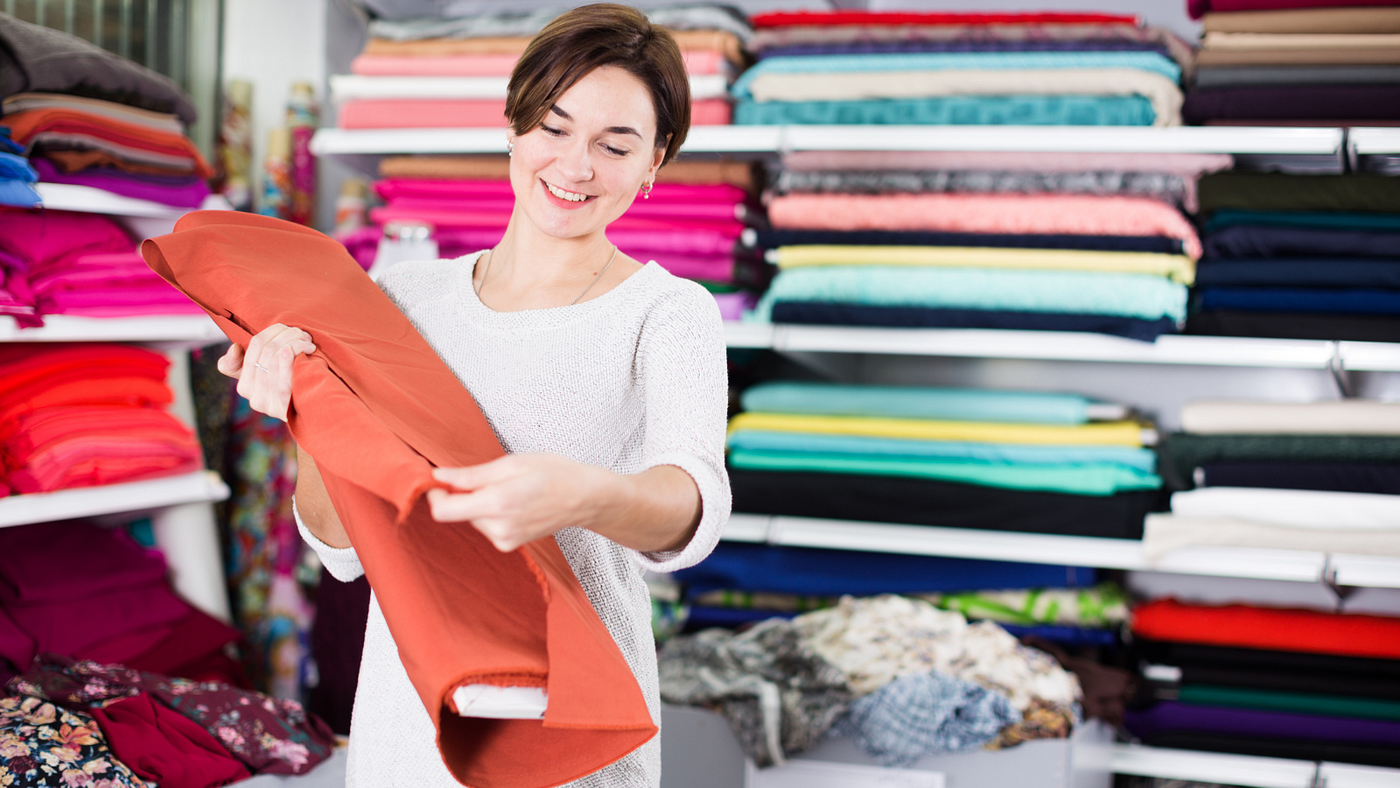
When shopping in person, touch the fabric and fold it in your hand. If it feels stable and easy to control, it is probably a better choice than something that keeps sliding away.
Linen Blends Can Be a Nice Option
Linen has a beautiful, handmade look, but pure linen can wrinkle a lot and sometimes shift more than expected.
A linen blend is often easier to work with.
Cotton-linen blends are especially nice for simple clothing and apron projects because they still have a natural look, but they may feel a little more stable than pure linen.
Linen blends can work well for:
- Relaxed aprons
- Loose tops
- Simple dresses
- Wide leg pants
- Summer skirts
The main thing with linen is pressing. Linen wrinkles easily, so it helps to press the fabric before cutting and pressing seams as you sew.
If you like that soft, natural sewing style, linen blends can be a lovely choice once you are comfortable with basic cutting and sewing.

Avoid Slippery Fabrics at the Beginning
Some fabrics look beautiful but are not easy for early sewing projects.
Satin, silk, chiffon, charmeuse, and very slippery polyester can be difficult to cut and sew because they move around so much. They may shift on the table, slide under the presser foot, or make seams harder to control.
That does not mean these fabrics are bad.
They just require more patience and experience.
If you choose them too early, you may feel like you are doing something wrong when the real problem is the fabric itself.
For your first few projects, it is better to choose fabric that stays where you place it. Once you feel more confident with cutting, pinning, pressing, and sewing, you can try more delicate fabrics later.
There is no need to make your first project more stressful than it has to be.
Be Careful with Stretch Fabric
Stretch fabric can be comfortable to wear, but it behaves differently from woven fabric.
Jersey, rib knit, and other stretchy fabrics can curl at the edges, stretch while sewing, or need different needles and stitch settings. If the pattern is not designed for stretch fabric, the finished item may not turn out the way you expect.
This is one of the most common fabric mistakes.
A pattern made for woven fabric should usually be sewn with woven fabric unless the instructions say otherwise.
Woven fabric and stretch fabric are not automatically interchangeable.
For early sewing projects, stable woven fabric is usually easier. Cotton, poplin, chambray, flannel, and linen blends are often calmer choices.
Stretch fabrics are useful and fun to sew later, but they are not always the easiest starting point.
Check the Fabric Recommendations on the Pattern
A sewing pattern usually gives fabric suggestions for a reason.
Those suggestions help the finished project look and feel the way it should.
If a pattern needs soft fabric and you choose something stiff, the garment may not drape properly. If a pattern needs structure and you choose fabric that is too thin, the finished item may look weak or shapeless.
Before buying fabric, look at the recommended fabric section of the pattern.
You may see words like:
- Cotton
- Linen
- Poplin
- Chambray
- Lightweight woven
- Medium weight woven
- Canvas
- Flannel
- Knit
You do not need to know every fabric name right away. Just try to stay close to what the pattern suggests.
If the pattern recommends cotton or linen blends, choosing one of those will usually make the sewing process smoother.
Think About Fabric Weight
Fabric weight can change how easy a project feels.
A fabric may be too light, too heavy, too stiff, or too delicate for the item you want to make.
For example, a simple apron usually works well in medium-weight cotton, cotton canvas, or a linen blend. If the fabric is too thin, the apron may not hold its shape. If the fabric is too thick, the seams may become bulky.
A loose summer top may work better in cotton lawn, poplin, or a soft woven fabric. A heavy upholstery fabric would make that kind of project uncomfortable and difficult to sew.
Here are a few simple examples:
- Apron: medium cotton, canvas, linen blend
- Skirt: cotton, chambray, lightweight linen blend
- Top: cotton lawn, poplin, soft woven fabric
- Tote bag: canvas, denim, heavier cotton
- Pajama shorts: cotton, flannel, soft woven fabric
You do not need perfect fabric knowledge. In the beginning, it is usually enough to avoid fabrics that are very slippery, very stretchy, too heavy for the project, or too delicate to handle comfortably.
That alone can make sewing feel much easier.
Small Prints Are Usually Easier Than Large Prints
Prints can make a project look beautiful, but some prints need more planning than others.
Large prints, stripes, plaids, and directional designs can be harder because you may need to match the design across seams or make sure the print faces the correct direction.
That can add extra pressure to a first project.
Small all over prints are usually easier.
Tiny florals, small dots, simple checks, and soft scattered patterns are more forgiving. If your cutting or seam matching is not perfect, small prints are less likely to show it.
Solid colors can also be a good option because they let you see seams and stitching more clearly.
A pretty fabric is still important. You should like what you are sewing. But for early projects, choose prints that do not create extra work before you even begin.

Prewash Fabric Before Cutting
Prewashing is not exciting, but it is worth doing for many sewing projects.
Cotton, linen, and several other washable fabrics can shrink after washing. If you sew first and wash later, the finished item may become smaller than expected.
A simple prewash routine helps:
- Wash the fabric the same way you plan to wash the finished item.
- Dry it according to the fabric care needs.
- Press it flat before cutting.
This step takes extra time, but it can save disappointment later.
Pressed fabric is also easier to cut accurately. Wrinkles and folds can shift the fabric slightly, which can affect your pattern pieces.
For a first project, anything that makes cutting cleaner and calmer is worth doing.
Use a Quick Fabric Test Before Buying
If you are shopping in person, a simple touch test can help.
Hold the fabric in your hand and gently scrunch it. Notice whether it wrinkles immediately, feels stiff, falls softly, or slides around too much.
Then let a little of it hang from your hand.
This gives you a basic idea of the drape, which means how the fabric falls.
For structured projects, you may want fabric with a little body. For loose clothing, you may want something softer.
You do not need technical fabric knowledge to make a better choice. Just ask yourself:
Will this fabric be easy for me to control while cutting and sewing?
If the fabric feels difficult in your hand, it may feel even harder once you start working with a full pattern piece.
Buy a Little Extra Fabric When You Can
For a first sewing project, having a little extra fabric can make the process feel less stressful.
Mistakes happen. A piece may be cut in the wrong direction. A small strap may need to be recut. A print may need extra fabric for better placement.
Buying a small extra amount gives you room to practice and adjust.
Extra fabric is also useful for testing:
- Stitch length
- Thread color
- Pressing temperature
- Buttonholes
- Seam finishes
- Topstitching
You do not need to buy a huge amount more than the pattern recommends. But a little extra can give you breathing room, especially when you are still learning.
It is much easier to relax when one small mistake does not ruin the whole project.
Do Not Choose Fabric You Are Afraid to Cut
This is something people do not always talk about.
If fabric is very expensive, rare, or emotionally special, it can make a first project feel more stressful.
You may hesitate before cutting. You may worry about every tiny mistake. You may put off the project because you do not want to waste the fabric.
For early sewing projects, choose fabric you like but are not afraid to use.
It should feel nice enough to motivate you, but not so precious that you freeze before starting.
Confidence grows faster when you are willing to cut, sew, make small mistakes, and keep going.
Save the expensive dream fabric for a project you feel more prepared for.
Choose Fabric That Helps You Keep Sewing
Your first sewing project does not need perfect fabric.
It needs fabric that helps you learn.
Cotton, cotton blends, linen blends, chambray, flannel, and other stable woven fabrics are often easier to handle than slippery, stretchy, or delicate materials.
Stay close to the pattern recommendations. Prewash when needed. Press before cutting. Choose prints that do not make matching difficult. Avoid fabric that feels too precious to practice with.
A good fabric choice will not make every seam perfect, but it can make the whole project feel calmer from the beginning.
And when the first project feels manageable, it becomes much easier to start the next one.
**If you enjoy calm, practical sewing ideas, you can find more through my Medium profile.**
메타데이터
- post_id
- fe1ae6e2b4b2
- slug
- how-to-choose-fabric-that-makes-your-first-sewing-project-easier-fe1ae6e2b4b2
- url
- https://medium.com/@muheet_k/how-to-choose-fabric-that-makes-your-first-sewing-project-easier-fe1ae6e2b4b2
- canonical_url
- https://medium.com/@muheet_k/how-to-choose-fabric-that-makes-your-first-sewing-project-easier-fe1ae6e2b4b2
- author_url
- https://medium.com/@muheet_k
- status
- ok
- fetched_at
- 2026-06-09 14:34:10