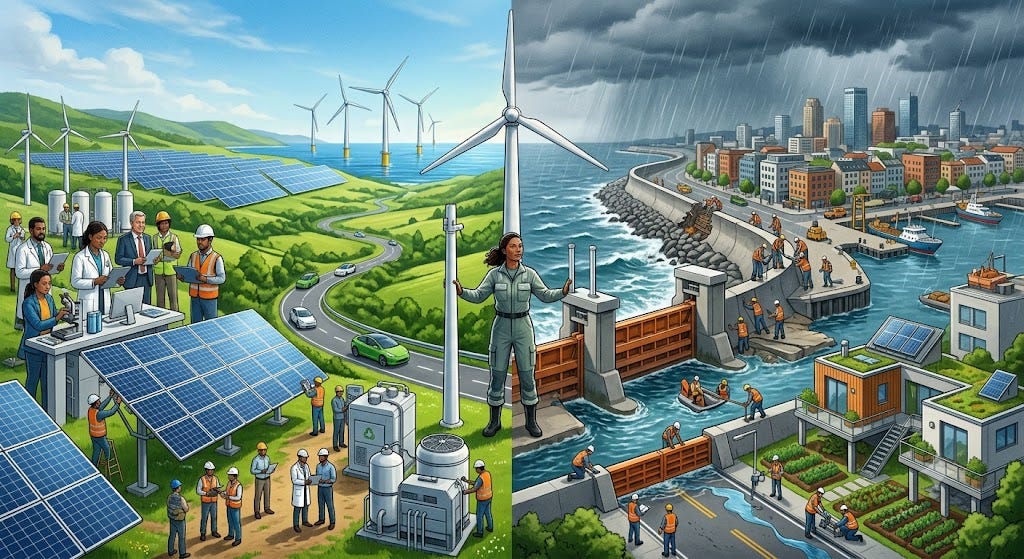
The Boiling Water and the Frog
There is an old story about a frog in a pot of water.
The Boiling Water and the Frog

There is an old story about a frog in a pot of water.
If you drop a frog into hot water, it jumps out right away. But if you put the frog in cool water and heat it up slowly, the frog stays inside. It does not notice the danger until the water is boiling. By then, it is too late.
Today, humanity is that frog. The Earth is the pot, and climate change is the rising heat.
Dangers of burning more fossil fuel
We all see the signs around us. Summers are getting hotter, and long droughts are drying out the land. Because of this extreme dryness, wildfires are getting bigger and worse every year. Entire forests burn, homes are destroyed, and the smoke fills the air we breathe.
At the same time, weather patterns are changing rapidly. When rain finally falls, it now comes in massive amounts over very short periods, making severe floods a new normal. We are caught in a destructive cycle where extreme droughts and heavy floods constantly alternate.
Even worse, these long droughts lead to failed harvests, creating a real threat of famine and hunger. The rich Western world will not feel this pain right away, as wealthy nations can afford to import food. But in developing countries, millions of people face immediate starvation. Are we really so blind that we ignore this human disaster just because it happens far away and because climate deniers keep inventing new arguments to downplay the causes and solutions?
Glaciers are melting, storms are getting stronger, and sea levels are rising. Scientists have warned us for decades that we need to change how we live.
To stop the planet from warming up, we must stop burning fossil fuels like coal, oil, and gas. We need structural changes to our energy, transport, and industry.
Yet, many powerful governments and companies do the exact opposite.
Instead of turning down the flame, they are adding more wood to the fire. Global use of fossil fuels is still going up, not down. New oil pipelines are built, new coal plants are opened, and short-term profits are chosen over long-term safety.
Clean Energy Is Ready, But Blocked
What makes this worse is that we already have the answers. Clean energy like wind and solar power is getting cheaper every day. In many places, green energy is now cheaper than fossil fuels.
Yet, clean energy is still actively blocked or delayed by slow bureaucracy and weak policies.
Even worse, governments around the world still give billions of dollars in subsidies to fossil fuels. They use public money to lower the cost of petrol cars, diesel engines, and oil heating. Instead of stopping these subsidies and spending that money to promote clean energy on a large scale, they keep paying to keep the dirty energy alive.
The Urgent Need to Upgrade the Energy Grid
The most important thing we can do in the short term to solve this crisis is to invest heavily in upgrading our power grid as fast as possible.
We need a strong grid to bring clean energy directly to where it is needed: fast-charging stations for electric vehicles, businesses, and homes. As long as this infrastructure falls behind, consumers are forced to keep using dirty energy.
Alongside a better grid, we must also invest heavily in energy storage to handle the peaks and drops of sun and wind power. This means building battery parks and pumped-storage reservoirs to store clean power for when we need it most.
The Culture of Big, Loud, and Dangerous
This reluctance to change is also fuelled by cultural and media messages. We see a lot of talk in the media about what it means to be a “real man.” This often includes driving big, loud cars that burn lots of fuel. In contrast, smaller, compact electric cars are sometimes mocked or seen as “uncool” or “sissy.” This idea pushes people to want larger, less efficient vehicles, making the problem even worse.
This same culture often glorifies other things that harm us, like war. War is portrayed as a heroic and strong act, another “manly” thing. But wars are extremely destructive and cost enormous amounts of money.
It is striking to see that today’s major conflicts — like the wars in Venezuela, Ukraine and the Middle East — are fundamentally connected to control over oil and fossil energy resources. If we do not change, the future will be even grim: the wars of tomorrow will not be fought over oil, but over food shortages, famine, and water.
This massive amount of money spent on wars and huge cars could be used for something much better. It could help build a cleaner, better lifestyle for everyone, ensuring there is clean energy, strong grids, and food on every table in every country. Instead, we are stuck with old ideas that harm our planet.
Why Is It So Hard to Change?
It seems unbelievable. Why would we worsen a problem through ignorance, and sometimes even intentionally?
- Short-term thinking: Leaders care about the next election or the next financial quarter, not what happens thirty years from now. We desperately need new Leadership.
- Money and power: The fossil fuel industry makes billions of dollars. They spend vast sums of money to protect their business and fight new rules. This includes the car industry that profits from big, inefficient vehicles.
- Fear of change: People and governments find it hard to change how systems work, even when better and cheaper alternatives exist. The culture of “big and manly” also creates a resistance to change.
Time to Jump
We cannot pretend we do not feel the water getting hotter. The signs — from dry lands and burning forests to failing crops and rising hunger — are everywhere, and the heat is rising fast.
If we keep waiting for someone else to turn off the stove, we will share the fate of the frog. It is time for governments and people to wake up, stop subsidizing the fire, invest in the power grid and storage, change our outdated cultural ideas, and make the big changes we desperately need.
Author’s Note & Disclaimer
This article reflects my personal thoughts and concerns regarding this man-made climate crisis. To express these ideas clearly and effectively in English, I used digital tools — including Google Translate, Google Docs, and Gemini AI — to assist with gathering sources, structuring the arguments, and formatting the text into smooth, clear sentences.
메타데이터
- post_id
- fe2380d03d2e
- slug
- the-boiling-water-and-the-frog-fe2380d03d2e
- url
- https://medium.com/@rmoretsoo/the-boiling-water-and-the-frog-fe2380d03d2e
- canonical_url
- https://medium.com/@rmoretsoo/the-boiling-water-and-the-frog-fe2380d03d2e
- author_url
- https://medium.com/@rmoretsoo
- status
- ok
- fetched_at
- 2026-08-12 07:04:24