How I Went From Skinny-Fat to 225lb Bench Press at Age 42 (Full Timeline + Program)
I went from skinny-fat with a 95-pound bench press to hitting 225 pounds at age 42 in exactly 18 months using a three-phase program: GZCLP…
How I Went From Skinny-Fat to 225lb Bench Press at Age 42 (Full Timeline + Program)
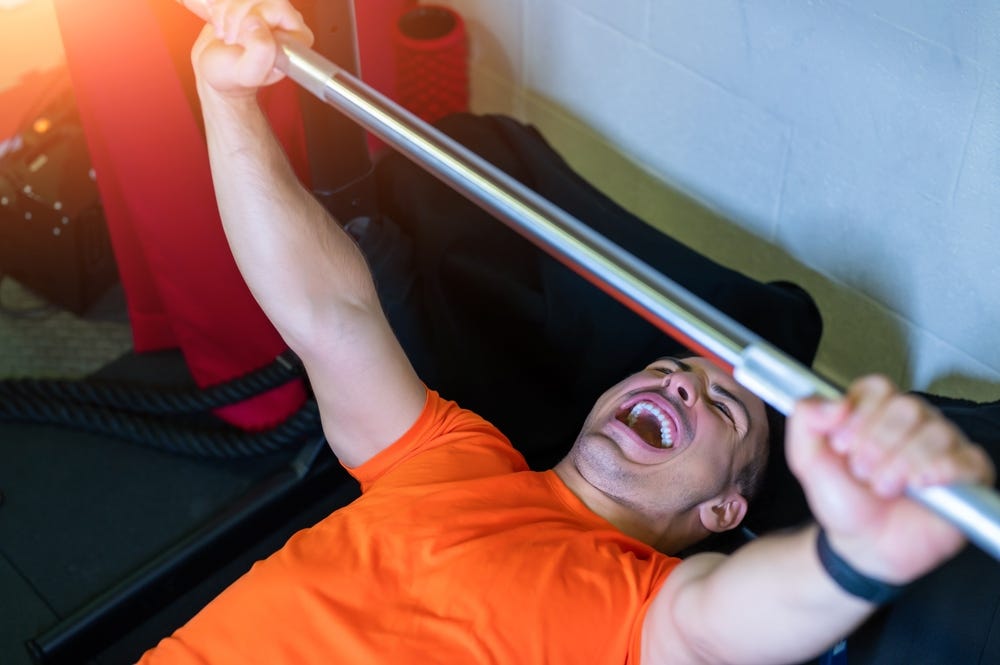
I went from skinny-fat with a 95-pound bench press to hitting 225 pounds at age 42 in exactly 18 months using a three-phase program: GZCLP for the first 4 months, 5/3/1 Boring But Big for months 5–12, and periodized programming with targeted accessories for the final push.
The transformation required eating 0.8–1.0 grams of protein per pound of bodyweight daily, training 3–4 days per week, sleeping 8 hours nightly, and respecting recovery protocols that my younger self could have ignored.
Keep reading for the complete timeline, exact program details, nutrition strategy, and every mistake I made along the way.
My Starting Point (And Why I Thought 225 Was Impossible)
At 42 years old, I weighed 180 pounds with roughly 24% body fat. I had the classic skinny-fat build — narrow shoulders, a soft midsection, undefined arms. I looked weak because I was weak.
My starting bench press was pathetic: 95 pounds for 5 reps. That’s the bar plus two 25-pound plates. I remember feeling the weight sink into my chest and wondering if I’d even be able to push it back up.
The mental hurdle felt even heavier than the physical one. I spent weeks researching what was actually possible for someone my age starting from scratch, and the statistics were discouraging:
- Only 17% of lifters ever bench 225 pounds
- Just 1 in 20 people reach it within their first three years of training
- I was 42, not 22 — recovery would be slower, injuries more likely
I kept comparing myself to younger guys at the gym who seemed to throw 225 on the bar like it was nothing. The gap between where I was and where I wanted to be felt impossible to close.
Then I found the case studies that changed everything. Real people, not genetic freaks or lifetime athletes, who had done exactly what I wanted to do:
Dave (37 years old, 6'3" with long arms):
- Started barely benching 135 pounds after four months of training
- Hit 225 within roughly 18 months
- Eventually reached 285 pounds at age 39
- Still benches 225 for reps at age 65
Ben (42 years old, 6'3", 200 pounds):
- Went from 110 pounds to a 200-pound one-rep max in 12 months
- Was actively chasing 225 and projected to hit it within 2–3 more months
- Used a modified Greyskull LP program
HomeCadet blogger (38 years old, 185 pounds, zero athletic background):
- Started at roughly 75 pounds for 5 reps
- Reached 185 pounds for 3 reps after 10 months
- Projected to hit 225 by month 14
These weren’t 25-year-old college athletes. They were regular guys in their late 30s and early 40s who started weak and built strength through consistent, structured training.
The pattern across all of them was clear: an 18–30 month timeline was realistic for my age group. Not easy, not quick, but absolutely achievable.
That’s when I made the decision that changed everything. No more random gym sessions doing whatever felt good that day. No more program-hopping every few weeks. I committed to a structured, three-phase approach and decided I’d see it through no matter how long it took.
The Three-Phase Program I Actually Followed (Months 1–18)
The biggest mistake most people make is picking one program and trying to ride it all the way to their goal. Strength progression doesn’t work that way, especially at 42. Your body adapts to stimulus, plateaus, and needs different types of stress at different stages.
I used three distinct programs over 18 months, each one suited to my advancing strength level. Here’s exactly what I did.
Phase 1: Foundation with GZCLP (Months 1–4)
I chose GZCLP — a linear progression program created by Cody LeFever — because it’s built for true beginners but has a smart failure protocol that prevents you from stalling out and spinning your wheels.
The structure was simple:
- Trained 3–4 days per week
- Benched twice weekly in different rep ranges
- Added 5 pounds every successful session
Each bench session had three tiers:
Tier 1 (Primary work): 5 sets of 3 reps at high intensity
- Last set pushed close to failure
- This is where I built raw strength
Tier 2 (Secondary work): 3 sets of 10 reps at moderate intensity
- Lighter weight, higher volume
- Built muscle and reinforced technique
Tier 3 (Accessory work): Pulling movements
- Lat pulldowns: 3 sets of 10–12
- Dumbbell rows: 3 sets of 10–12
- Essential for shoulder health and bench strength
The genius of GZCLP is what happens when you fail. Most programs just tell you to repeat the same weight until you get it, which leads to frustration and wasted sessions. GZCLP has a built-in failure protocol that changes the rep scheme:
- Start at 5 sets of 3 reps
- When you fail, switch to 6 sets of 2 reps (same total volume, less fatigue per set)
- When you fail again, switch to 10 sets of 1 rep
- Then reset with a new, higher training max
This kept me progressing even when I hit temporary walls.
Technique became my obsession during this phase:
- Retracted shoulder blades (squeeze them together like crushing a pencil)
- Controlled arch in my lower back
- Feet driving hard into the floor
- Elbows at 45–75 degrees from torso (not flared out at 90 degrees)
- J-curve bar path: pressing up and slightly back toward my face
I filmed every heavy set on my phone and watched it between sessions. The difference between a 95-pound bench and a 155-pound bench isn’t just strength — it’s also eliminating wasted motion and energy leaks.
Progress: 95 pounds to 155 pounds in four months. That’s 60 pounds added to the bar, roughly 15 pounds per month. This phase was all newbie gains, and it felt incredible.
Phase 2: Building with 5/3/1 Boring But Big (Months 5–12)
When the linear jumps from GZCLP started slowing down, I switched to Jim Wendler’s 5/3/1. This program is considered the gold standard for lifters over 40 because it respects recovery, builds in deloads, and progresses monthly instead of weekly.
The core principles:
- Training max set at 90% of my true one-rep max (conservative by design)
- Monthly progression cycles
- Mandatory deload every fourth week
- After each cycle, I added just 5 pounds to my upper body training max
Each four-week cycle followed a specific pattern:
Week 1: Sets of 5
- 65% of training max × 5 reps
- 75% of training max × 5 reps
- 85% of training max × 5+ reps (as many reps as possible on the last set)
Week 2: Sets of 3
- 70% of training max × 3 reps
- 80% of training max × 3 reps
- 90% of training max × 3+ reps
Week 3: Sets of 5/3/1
- 75% of training max × 5 reps
- 85% of training max × 3 reps
- 95% of training max × 1+ reps (this was always a grinder)
Week 4: Deload
- 40–60% of training max
- Light work, focus on technique and mobility
The “Boring But Big” template added serious volume after the main work. After completing my 5/3/1 sets, I did 5 sets of 10 reps at 50–60% of my training max. This sounds easy on paper. It was not easy.
A typical bench day looked like this:
- 5/3/1 scheme (three working sets based on the week)
- 5×10 bench press at lighter weight (usually around 115–135 pounds)
- 5×10 dumbbell rows (matching pressing volume with pulling)
- 3×15–20 face pulls
- 50–100 total reps of push/pull/core accessories (dips, chin-ups, planks)
The volume was brutal but productive. I was in the gym for 60–75 minutes per session, and I left exhausted every time.
Progress: 155 pounds to 205 pounds over eight months. The gains came slower — about 6–7 pounds per month early on, dropping to 3–5 pounds per month by the end. This is normal. Your body doesn’t give you newbie gains forever.
Phase 3: Pushing to 225 with Periodization (Months 12–18+)
When I hit 205 pounds, progress slowed to a crawl. I was stuck in the 205–215 range for almost six weeks, grinding out the same weights with no improvement.
That’s when I realized I needed to identify and attack my specific weak point. For me, it was the mid-range of the lift — the bar would come off my chest fine and lock out okay, but it would stall about halfway up.
I started alternating between two types of training blocks:
Accumulation blocks (higher volume, moderate weight):
- 4–6 weeks
- More sets, more reps, lighter percentages
- Building muscle and work capacity
Intensification blocks (lower volume, heavier weight):
- 2–3 weeks
- Fewer sets, fewer reps, heavier percentages
- Expressing strength I’d built during accumulation
I used a 2:1 ratio — two accumulation blocks for every one intensification block.
I also added targeted accessories based on my mid-range weakness:
- Overhead press: 3 sets of 5–8 reps (built mid-range pressing strength)
- Pin presses: 3 sets of 3–5 reps (trained the exact sticking point)
- Incline bench: 3 sets of 6–10 reps (hammered front delts and upper chest)
When I finally hit 210–215 pounds consistently, I knew I was close. I ran a modified Smolov Jr. cycle as a peaking protocol to push me over the edge.
Standard Smolov Jr. is aggressive:
- Four bench sessions per week for three weeks
- Massive volume and intensity
- Too much for a 42-year-old’s recovery capacity
My modified version:
- Three sessions per week instead of four
- Spread over four weeks instead of three
- Used 90% of my true one-rep max as the base weight
The pattern each week:
- Session 1: 6 sets of 6 reps at 70%
- Session 2: 7 sets of 5 reps at 75%
- Session 3: 8 sets of 4 reps at 80%
- Session 4: 10 sets of 3 reps at 85%
I added 10 pounds to the base weight each week. It was the hardest month of training I’ve ever done, but it worked.
At the end of week four, I tested my max and hit 230 pounds. The 225-pound barrier I’d been chasing for 18 months finally broke. I went from 95 pounds to 230 pounds in exactly 18 months using this three-phase approach.
The Nutrition Strategy That Actually Worked
Training is only half the equation. I learned this the hard way after spinning my wheels for the first month eating like I always had. You can’t build a 225-pound bench press on a skinny-fat frame without fundamentally changing how you eat.
My nutrition strategy evolved across three distinct phases, each aligned with my training progression. Here’s exactly what I did.
Starting Point: The Initial Cut (Months 1–2)
I started at 180 pounds with roughly 24% body fat. That’s about 137 pounds of lean mass and 43 pounds of fat — classic skinny-fat territory.
Most people in my position make one of two mistakes: they either start bulking immediately to “get big and strong,” or they cut too aggressively and lose what little muscle they have. I did neither.
I spent the first 6–8 weeks in a brief cut to drop from 24% body fat down to roughly 15%. This wasn’t about aesthetics — it was strategic. Lower body fat improves insulin sensitivity and nutrient partitioning, which means when I eventually ate in a surplus, more of those calories would go toward building muscle instead of storing fat.
The cut was simple:
- 300–400 calorie deficit (roughly 2,100–2,200 calories daily)
- Protein at 1.0 gram per pound (180 grams)
- Heavy focus on resistance training to preserve muscle
I lost about 12 pounds over those first 6–8 weeks, dropping to roughly 168 pounds at 15% body fat. Then the real work began.
The Protein Non-Negotiable
This was the single most important nutritional insight I learned: at 42, you need more protein per meal than younger lifters to trigger the same muscle-building response.
It’s called “anabolic resistance” — aging muscles become less sensitive to protein intake. Research showed that I needed at least 30 grams of protein per meal to maximally activate muscle protein synthesis. Anything less was leaving gains on the table.
My daily protein target:
- 0.8–1.0 grams per pound of bodyweight
- For me at 180 pounds: 145–180 grams daily
- Distributed across 4–5 meals of 30–40 grams each
I hit this target every single day for 18 months. No exceptions, no “I’ll make it up tomorrow.” This was the foundation everything else was built on.
What this looked like in practice:
- Breakfast: 4 eggs + 2 slices turkey bacon = 35g protein
- Lunch: 6oz chicken breast + rice + vegetables = 40g protein
- Pre-workout snack: Greek yogurt + protein powder = 35g protein
- Dinner: 8oz salmon or lean beef + sweet potato = 45g protein
- Evening snack (if needed): Protein shake or cottage cheese = 30g protein
Calorie Targets Across Phases
My calorie intake changed based on my training phase and goals. This wasn’t random — each phase had a specific purpose.
Months 1–4 (Body Recomposition):
- Maintenance calories: 2,500–2,600 daily
- Goal: Build muscle while losing remaining body fat
- This works during the newbie gains window when your body can do both simultaneously
Months 5–12 (Lean Bulk):
- 200–300 calorie surplus: 2,700–2,900 daily
- Goal: Gain 2–3 pounds per month
- Most weight went to muscle, some to fat (unavoidable)
Mini-Cuts Every 3–4 Months:
- 300–500 calorie deficit for 4–6 weeks
- Protein bumped to 1.2 grams per pound to preserve muscle
- Trimmed accumulated body fat without losing strength
- Then returned to lean bulk
Months 12–18+ (Final Push):
- 300–500 calorie surplus: 2,800–3,000 daily
- Needed more fuel for the heavier training volume
- Accepted some fat gain to maximize strength
The mini-cuts were critical. Without them, I would have gotten too fat during the bulk and felt terrible. They also improved insulin sensitivity, which made the next bulk phase more effective.
Macro Breakdown
Protein stayed high throughout, but I adjusted carbs and fats based on my training phase.
During recomposition (Months 1–4):
- Protein: 35–40%
- Carbs: 30–35%
- Fat: 25–30%
During lean bulk (Months 5–18):
- Protein: 30–35%
- Carbs: 40–45% (higher to fuel heavy training)
- Fat: 20–25%
I never dropped fat too low — it’s essential for testosterone production, which is already declining naturally at 42. Keeping fat at 20–25% of total calories supported hormone production while leaving room for plenty of carbs to fuel workouts.
The Physical Transformation Timeline
The scale only tells part of the story. Body composition matters more than bodyweight.
Where I started:
- 180 pounds at 24% body fat
- Roughly 137 pounds lean mass, 43 pounds fat
- Looked soft, undefined, weak
Where I finished:
- 190 pounds at 16% body fat
- Roughly 160 pounds lean mass, 30 pounds fat
- Gained 23 pounds of lean tissue, lost 13 pounds of fat
The visual transformation followed a predictable timeline:
Month 1: No visible changes. Strength going up, but I looked the same.
Month 2: Definition started appearing in my arms and upper chest. Friends began asking if I was working out.
Month 3: The transformation became undeniable. Face looked leaner, shirts fit differently, abs started showing faintly.
Month 6: I no longer looked skinny-fat. Shoulders had width, chest had shape, arms had size.
Month 12: Looked like someone who lifts. Clear separation between muscle groups, visible veins in forearms.
Month 18: Legitimately muscular build at 190 pounds. The guy who couldn’t bench 95 pounds was gone completely.
The most surprising part? I only gained 10 pounds on the scale over 18 months (180 to 190), but I looked like I’d gained 30 pounds of muscle. That’s the power of body recomposition — gaining muscle while losing fat simultaneously changes your appearance far more than the scale suggests.
If I had just bulked from day one without the initial cut and periodic mini-cuts, I would have ended up at 200+ pounds and probably 20% body fat, looking bigger but not better. The strategic approach to calories and macros made all the difference.
Recovery Protocols I Couldn’t Skip at 42
The difference between a 25-year-old and a 42-year-old isn’t really strength potential — it’s recovery capacity. Younger lifters can get away with sleeping five hours, skipping warm-ups, and training heavy every session. At 42, that approach leads straight to injury and stalled progress.
Recovery wasn’t optional for me. It was the difference between hitting 225 pounds and getting hurt trying.
Sleep: The Foundation of Everything
I targeted 8 hours of sleep every night. Not 6, not “I’ll catch up on the weekend” — 8 hours, consistently, because the research was clear: one night of poor sleep reduced muscle protein synthesis by 18% and elevated cortisol.
Think about that. I could do everything else perfectly — train hard, eat enough protein, follow the program — but if I slept poorly, my body literally built 18% less muscle from that training session. Sleep debt is strength debt.
My sleep optimization protocol:
- Screens off one hour before bed (no phone, no TV, no laptop)
- Room temperature at 65–68°F (cooler than most people keep it)
- Consistent sleep and wake times, even on weekends
- No caffeine after 2 PM (this was hard at first but made a huge difference)
- Blackout curtains and a white noise machine
- Magnesium glycinate supplement 30 minutes before bed
The first two weeks of strict sleep hygiene were tough. I’d lie in bed without my phone feeling restless and bored. But by week three, I was falling asleep faster and waking up feeling actually recovered. My training sessions improved noticeably.
Deload Weeks: Mandatory, Not Optional
This was the hardest lesson to learn. My instinct was always “more is better” — if three weeks of hard training was good, why not just keep pushing?
Because your body needs time to adapt to the stress you’ve imposed. Tendons, ligaments, and the central nervous system all recover slower than muscles, especially at 42.
My deload protocol:
- Three weeks of hard training, then one week deload
- During deload week: weights dropped to 40–60% of normal working loads
- Volume decreased by 30–50% (fewer sets, fewer reps)
- Same training frequency (still hit the gym 3–4 times)
- Focus shifted to technique practice, mobility work, and foam rolling
A typical deload bench session looked like this: 5 sets of 3 reps at 60% instead of my usual 5 sets of 3 at 85%. It felt almost like active recovery, and that was the point.
Signs I learned to recognize that a deload was overdue:
- Persistent fatigue that didn’t resolve after 1–2 rest days
- Weights that normally felt manageable suddenly felt heavy
- Sleep disrupted despite being tired
- Nagging joint aches, especially in shoulders or elbows
- Motivation tanking — dreading workouts instead of looking forward to them
I ignored these signs twice during my 18-month journey. Both times I paid for it with 2–3 weeks of forced rest due to joint pain. After that, I never skipped a deload again.
The Warm-Up Routine I Used Every Single Session
Skipping warm-ups might be fine when you’re 25. At 42, it’s playing Russian roulette with your joints.
Synovial fluid — the lubricant inside your joints — decreases with age. Cold joints under heavy load are injury magnets. I spent 10–15 minutes warming up before every bench session, no exceptions.
My exact warm-up sequence:
1. General warm-up (5–10 minutes):
- Light cardio to raise core temperature
- I used a rowing machine or stationary bike
- Goal was to break a light sweat
2. Dynamic mobility (5 minutes):
- Arm circles: 10 forward, 10 backward
- Band pull-aparts: 20–30 reps
- Shoulder dislocates with PVC pipe: 10–15 reps
- These mobilized the exact joints I was about to stress
3. Progressive warm-up sets:
- Empty bar × 10 reps
- 95 pounds × 5 reps
- 135 pounds × 3 reps
- Working weight × 2 reps (usually around 70–80% of my first work set)
- Then into actual work sets
Each step prepared my body for the next level of intensity. Jumping from the bar straight to 185 pounds would have been asking for a shoulder or elbow injury.
The warm-up added 10–15 minutes to each session, but it also meant I trained injury-free for 18 months straight. Worth every minute.
Joint Health: The Long Game
Strength can increase faster than your connective tissue can adapt. Muscles respond to training in weeks, but tendons and ligaments need months. This mismatch is why so many lifters over 40 get injured right when they’re making progress.
I managed joint health proactively, not reactively.
Controlled tempo on every rep:
- 2–3 seconds on the lowering phase (eccentric)
- Brief pause at the bottom
- Explosive but controlled press up
- No bouncing the bar off my chest, no jerky movements
This slower tempo increased time under tension (good for muscle growth) while reducing stress on joints and connective tissue.
Exercise rotation to prevent repetitive strain:
I rotated my main pressing variation every 4–6 weeks:
- Weeks 1–6: Flat barbell bench
- Weeks 7–12: Incline barbell bench
- Weeks 13–18: Dumbbell bench (flat or incline)
- Weeks 19–24: Back to flat barbell, maybe adding floor press
This prevented the exact same movement pattern from grinding away at the same joint angles week after week.
Wrist wraps became essential:
Once I was benching over 185 pounds regularly, I started using wrist wraps. They provided support without limiting range of motion, and my wrists stopped aching after heavy sessions.
The absolute rule I never broke:
If an exercise produced actual pain — not the burn of muscle fatigue, not general discomfort, but sharp or stabbing pain — I modified or stopped immediately.
Pain is your body’s warning system. I learned to distinguish between:
- Discomfort: Normal. Muscles burning, feeling challenged, mild soreness.
- Pain: Not normal. Sharp, stabbing, or aching sensations in joints.
The first time I felt a sharp pain in my front delt during heavy bench, I immediately dropped the weight by 20%, switched to a slightly narrower grip, and focused on perfect form. The pain disappeared. If I’d ignored it and pushed through, I would have been looking at weeks of forced rest.
Load progression capped at 5–10% per week:
This was another hard lesson. Early on, I’d have a great session and think “I should add 15 pounds next week!” My ego wanted to jump ahead.
But tendons adapt slowly. Adding more than 5–10% load per week consistently led to elbow tendinitis or shoulder irritation. When I capped progression at 5 pounds per session (roughly 5% weekly for me at that stage), my joints stayed healthy.
Recovery protocols aren’t sexy. They don’t feel productive in the moment. But they’re what allowed me to train consistently for 18 months without a single injury that forced time off. Consistency beats intensity every time when you’re over 40.
The Accessories That Actually Moved My Bench
Bench press alone won’t build a big bench. You need accessories that target weak points and prevent imbalances.
Back Work: The Most Underrated Factor
Strong lats and upper back create the stable platform you press from. I matched pulling volume to pressing volume every single session.
My back work every upper body day:
- Barbell rows: 3–4 sets of 8–12 reps
- Face pulls: 3 sets of 15–20 reps
- Band pull-aparts: 100 total reps daily (spread throughout the day)
This wasn’t optional. It directly protected my shoulders and improved my bench stability. When my back got stronger, my bench went up.
Pressing Accessories Based on My Weak Points
Different lifters stall at different points in the bench press. I identified where the bar slowed down and attacked that specific weakness.
My mid-range sticking point required:
- Overhead press: 3–4 sets of 5–8 reps (built mid-range pressing strength)
- Pin presses: 3 sets of 3–5 reps (trained the exact sticking point)
- Incline bench: 3–4 sets of 6–10 reps (hammered front delts and upper chest)
Other accessories I rotated in:
- Dips: 3–4 sets of 6–10 reps, weighted when possible (built bottom portion strength)
- Close-grip bench: 3–4 sets of 5–8 reps (improved tricep lockout)
- Dumbbell pressing at various angles (allowed natural shoulder rotation, fixed left-right imbalances)
- Floor press: 3 sets of 5–8 reps (trained lockout, easier on shoulders)
How to identify your weak point:
- Bar stalls off your chest = add paused bench press and dumbbell bench for 8–12 reps
- Bar stalls at lockout = add close-grip bench and tricep extensions
- Bar stalls mid-range = add overhead press and pin presses (this was me)
Pick 2–3 pressing accessories and 2–3 pulling accessories per session. Don’t try to do everything — focus on what addresses your specific weakness.
My Actual Timeline, Mistakes, and What I’d Do Differently
The Real Progression Timeline
Month 1–4: 95 to 155 pounds (60-pound increase)
- Newbie gains phase
- Added roughly 5 pounds per week
- Everything felt easy, progress came fast
Month 5–12: 155 to 205 pounds (50-pound increase)
- Intermediate gains phase
- Slowed to 5 pounds every other week, then monthly
- Required more volume and smarter programming
Month 12–18: 205 to 230 pounds (25-pound increase)
- Final push, slowest gains
- The 185-to-225 plateau was brutal — stalled for weeks
- Required program change and targeted weak point work
Early excitement of weekly jumps eventually gave way to grinding out 5 pounds per month. This is normal. Progress slows as you get stronger.
Supplements That Actually Helped
What I took consistently:
- Creatine monohydrate: 5g daily (8% greater strength gains, most researched supplement)
- Vitamin D: 2,000 IU daily (increased type II muscle fiber size)
- Omega-3: 3g EPA/DHA daily (reduced inflammation, supported joints)
- Magnesium glycinate: 300mg daily (improved sleep, testosterone support)
- Whey protein: 30–40g servings to hit daily protein targets
What I skipped:
- Testosterone boosters (tribulus, DHEA, D-aspartic acid) — weak evidence
- BCAAs — unnecessary with adequate protein intake
- Pre-workouts beyond caffeine
Creatine was the only game-changer. Everything else was supporting cast.
Mistakes I Made
- Training too heavy too soon: Almost injured my shoulder in month 2 trying to impress myself
- Under-eating protein initially: Thought I needed to cut calories hard because skinny-fat — sabotaged muscle growth
- Program-hopping: Switched routines every few weeks for the first 6 weeks instead of committing
- Neglecting back work: Didn’t start serious pulling volume until month 3
- Comparing myself to younger lifters: Killed motivation instead of tracking my own progress
- Skipping deloads: Paid for it with forced rest due to joint pain
What I’d Do Differently
If I started over tomorrow:
- Proper 10–15 minute warm-ups from day one
- Hit 0.8g protein per pound from week one, no exceptions
- Commit to one program for minimum 12 weeks before evaluating
- Match rowing volume to bench volume from the start
- Leave 1–3 reps in the tank on most sets (RPE 7–8, not grinding every rep)
- Trust the process — research shows middle-aged men build muscle at the same rate as younger men, just need smarter recovery
The Bottom Line
A 225-pound bench at 180 pounds bodyweight is a 1.25× bodyweight lift — solidly in the “advanced” strength category. At 42 years old starting from skinny-fat, it’s absolutely achievable in 18–30 months.
What it required:
- 3–4 training days per week, zero missed sessions
- 0.8g+ protein per pound daily
- 8 hours sleep nightly
- Deload every 3–4 weeks
- Patient, consistent progressive overload
The specific program mattered less than my commitment to it. GZCLP, 5/3/1, periodization — they all work if you actually follow them for months instead of weeks.
I went from barely benching 95 pounds to hitting 230 pounds in 18 months. The guy who thought 225 was impossible proved himself wrong.
메타데이터
- post_id
- fe32e51e7a6f
- slug
- how-i-went-from-skinny-fat-to-225lb-bench-press-at-age-42-full-timeline-program-fe32e51e7a6f
- url
- https://medium.com/@muscletalkmagazine/how-i-went-from-skinny-fat-to-225lb-bench-press-at-age-42-full-timeline-program-fe32e51e7a6f
- canonical_url
- https://medium.com/@muscletalkmagazine/how-i-went-from-skinny-fat-to-225lb-bench-press-at-age-42-full-timeline-program-fe32e51e7a6f
- author_url
- https://medium.com/@muscletalkmagazine
- status
- ok
- fetched_at
- 2026-06-09 15:37:30