I Thought It Was Just Another Self-Help Bestseller
I picked it up for the hype. It turned out to be simple.
I Thought It Was Just Another Self-Help Bestseller
I picked it up for the hype. It turned out to be simple.
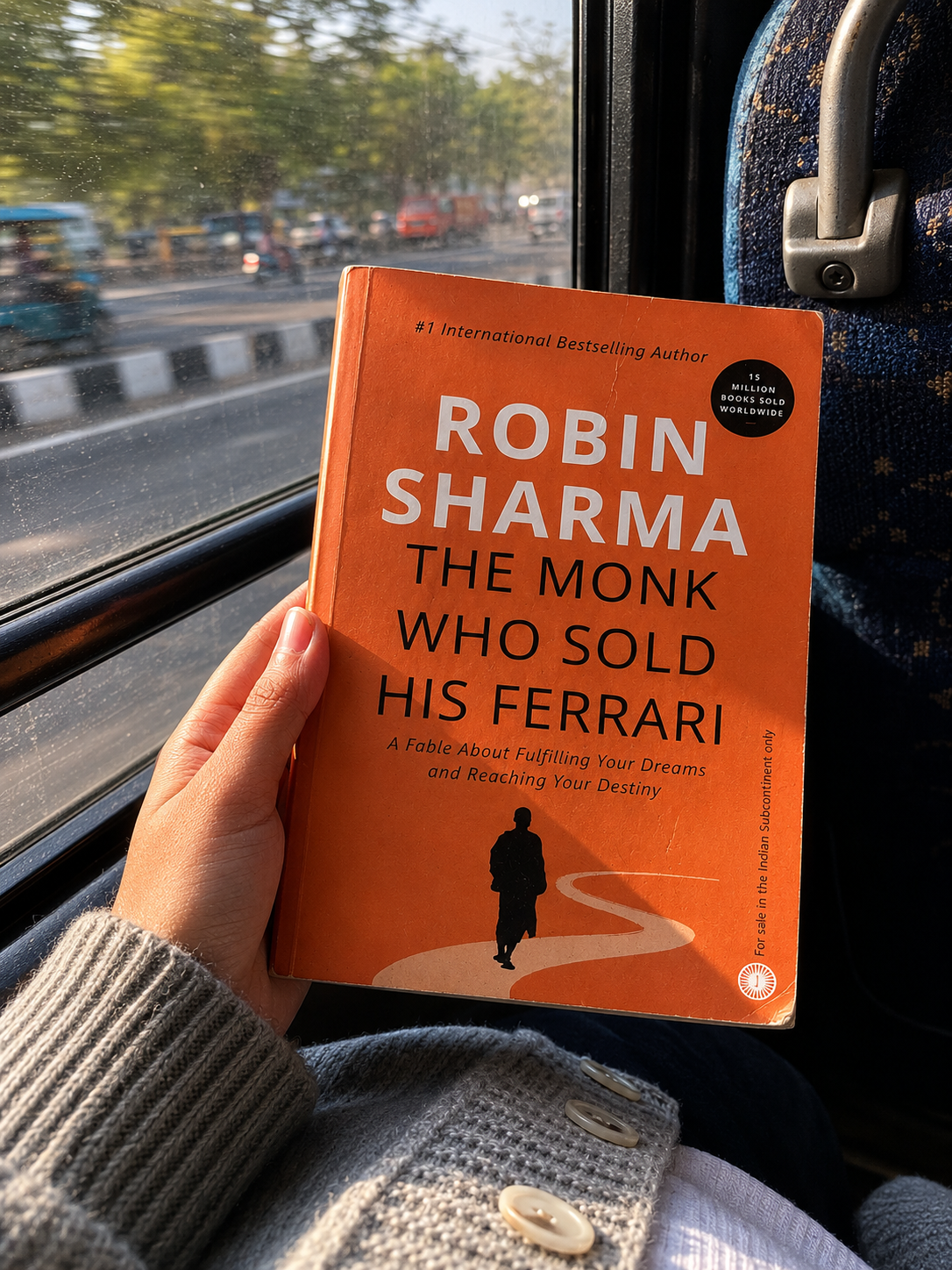
Image from Pinterest
This piece is a personal reflection on the relationship between timing, perspective, and the quiet impact some books leave behind long after their lessons fade.
Some books get recommended so often that you eventually become more familiar with their reputation than the book itself.
The Monk Who Sold His Ferrari was one of those books for me.
A dramatic title. Endless recommendations. Bold promises about changing the way you think and live. The kind of book people either swear by or roll their eyes at.
From a distance, it felt like the sort of book I already knew before opening it.
And honestly, that assumption wasn’t entirely unreasonable.
The book has been recommended, criticized, praised, mocked, and quoted for decades. By the time I picked it up, I was already familiar with the conversation surrounding it.
So when I finally started reading it, I wasn’t searching for wisdom.
I was mostly curious to see what all the noise was about.
Coincidentally, I happened to be reading it during one of the busiest periods of my college life.
Those days felt like an endless cycle of lectures, assignments, travelling, deadlines, and constantly thinking about what needed to be done next. Looking back, I think I spent most of that period functioning rather than living. There was always something waiting for my attention, and very little space left for silence.
And somehow, in between crowded travel routes and stressful college days, this became the book I kept returning to for four days straight.
Not because it was intellectually complex.
Actually, the opposite.
Because it slowed things down.
What surprised me was how quickly I stopped thinking about its reputation and started paying attention to what it was actually trying to say.
At its heart, the book follows a surprisingly simple premise.
Julian Mantle, a highly successful lawyer, suffers a heart attack in the middle of his career and begins questioning the life he has built around achievement. His search for answers eventually takes him to the Himalayas, where he learns a different way of looking at success, purpose, discipline, and inner peace.
That’s it.
No shocking plot twists. No groundbreaking philosophy. And no dense intellectual writing trying to sound important.
What I appreciated was that Robin Sharma never presents these ideas through dense philosophy. Instead, he chooses a story. The lessons arrive through conversations, symbols, and a fable-like structure that keeps the book approachable even when it touches on larger questions about life.
And I think that’s important.
Because I don’t believe this book survives because of its story.
It survives because it speaks to a feeling many people quietly carry:
“I’m functioning, but I don’t feel peaceful.”
That feeling felt familiar to me then, and honestly, it feels even more relevant now.
We live in a time where productivity is often treated like a personality trait. Being busy is worn almost like a badge of honour. Burnout gets normalized, comparison never really pauses, and exhaustion is sometimes mistaken for ambition.
The book understands that emptiness surprisingly well.
Not dramatically.
Quietly.
Under all the monks, rituals, Ferrari symbolism, and Himalayan wisdom, the core message of the book actually feels surprisingly simple, like someone gently saying:
slow down enough to notice your own life again.
That’s really it.
The book repeatedly returns to ideas like self-awareness, mindfulness, discipline, purpose, and intentional living. But years later, those aren’t the words I remember most.
What stayed with me was something simpler.
The importance of silence. The importance of rest. The importance of having an inner life- that exists independently of achievements, deadlines, and expectations.
I think people misunderstand the book when they treat it as:
“this is THE correct way to live.”
That’s where reactions become extreme.
Some people blindly worship it. Others aggressively dismiss it.
That doesn’t mean I think every lesson in the book is universally applicable.
In fact, I understand many of the criticisms people have about it. Some readers find it idealistic. Others think it simplifies problems that are far more complex in real life.
Those reactions make sense.
What doesn’t make sense to me is treating the book as either a perfect guide to life or something that deserves to be dismissed entirely.
I don’t think Robin Sharma was trying to write universal truth.
It feels more like one person’s understanding of peace, purpose, and balance. What works for Julian Mantle may resonate deeply with one reader and feel unrealistic to another.
Both reactions are valid.
Sometimes I think simple books are judged more harshly than complicated ones.
Not every meaningful book needs to sound intellectually sophisticated. Not every book has to reinvent how we think. Sometimes a book matters because it arrives during a particular phase of life and offers a perspective we were ready to hear.
Maybe that’s why this one stayed with me.
Not because it changed my life. Not because I suddenly became calmer, wiser, or more enlightened after reading it. But because it gave me an emotional pause during a period when everything felt loud.
I don’t know if this book contains profound wisdom. I don’t know if every lesson in it works. I don’t know if Julian Mantle’s transformation would feel realistic to everyone. What I do know is that during one of the busiest and noisiest phases of my life, this book repeatedly pointed me toward something I wasn’t paying enough attention to:
my own inner life.
And years later, that’s the part I still remember — the feeling the book left behind far more clearly than the lessons it tried to teach.
메타데이터
- post_id
- fe53f54dcbe4
- slug
- i-thought-it-was-just-another-self-help-bestseller-fe53f54dcbe4
- url
- https://medium.com/hooked-on-books/i-thought-it-was-just-another-self-help-bestseller-fe53f54dcbe4
- canonical_url
- https://medium.com/hooked-on-books/i-thought-it-was-just-another-self-help-bestseller-fe53f54dcbe4
- author_url
- https://medium.com/@ms.whatsit
- status
- ok
- fetched_at
- 2026-06-13 00:08:42