Eliminating Technical Debt: The Mechanics of 2–4 Week Modular Platform Integration
For years, the standard architecture for enterprise B2B integration was defined by heavy, monolithic middleware layers and rigid…
Eliminating Technical Debt: The Mechanics of 2–4 Week Modular Platform Integration
For years, the standard architecture for enterprise B2B integration was defined by heavy, monolithic middleware layers and rigid point-to-point connections. When an operator needed to scale into a new territory or integrate a new data vertical, the development pipeline ground to a halt. Teams spent months rewriting core databases, managing version conflicts, and manually mapping data fields.
But as we navigate the hyper-accelerated market of 2026, that slow, cumbersome approach is a relic of the past.
The widespread shift toward modular API architecture has fundamentally transformed how B2B operators approach platform integration. By decoupling the core engine from edge services, forward-thinking enterprises are compressing integration timelines down to a predictable 2–4 week window — all while achieving zero-latency data synchronization and native, rapid jurisdictional scaling.
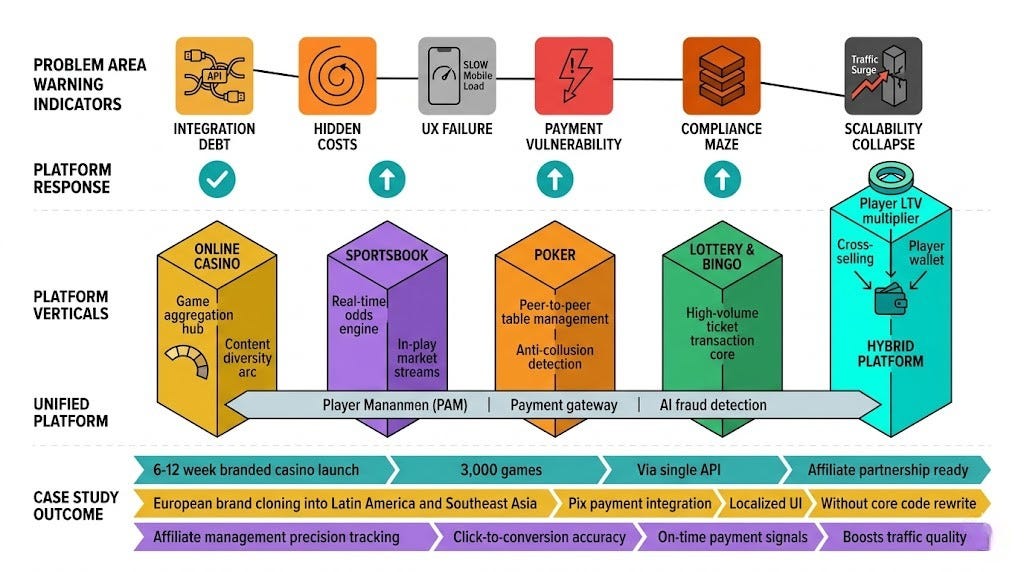
The Core Problem: The Compounding Cost of Legacy Technical Debt
Before looking at the mechanics of a modern 2–4 week deployment, it is critical to diagnose why legacy integrations take months.
In a traditional monolithic setup, the system behaves as a singular, tightly coupled entity. When data moves between a secondary feed, a payment vault, and a primary accounting ledger, it must pass through deep, centralized processing layers.
This layout introduces two fatal flaws:
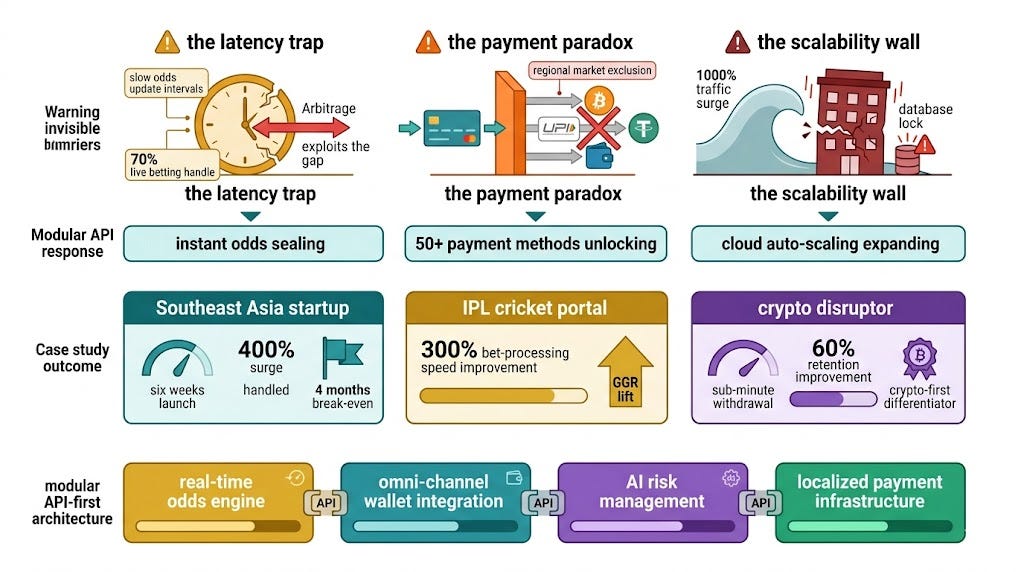
- Slippage and Internal Latency: Massive database locks occur when thousands of real-time payloads hit a unified system simultaneously.
- Brittle Code Dependency: Altering a single line of code to comply with a specific regional regulation risks breaking an unrelated functional module elsewhere in the platform.
This brittle structure creates compounding technical debt, forcing engineering teams to spend more time writing patches and fixing regressions than shipping revenue-generating features.
The Anatomy of a 2–4 Week Modular Deployment
Achieving an elite integration in under a month requires moving away from heavy, manual configurations toward an architecture designed around pre-synchronized, event-driven microservices.
A rapid, institutional-grade integration relies on three core pillars:
1. Achieving Zero-Latency Data Synchronization
To eliminate data processing queues during peak concurrent traffic windows, modern B2B platforms separate the core transaction processing unit from the high-velocity data pipelines.
By utilizing persistent WebSocket connections and gRPC streaming protocols rather than legacy HTTP polling, data is pushed instantly across the ecosystem. When an edge service generates a transaction or a data update, the event is immediately broadcasted to an asynchronous messaging queue (such as Apache Kafka or RabbitMQ). This setup allows independent modules to consume the data simultaneously with sub-millisecond delivery, achieving true zero-latency synchronization without overloading the primary backend database.
2. Standardized API Schemas and Pre-Mapped Handshakes
The primary bottleneck in any deployment pipeline is the translation layer — mapping data fields from Provider A to match the internal structure of Operator B.
Modular architecture solves this by enforcing strict, Unified API Schemas (typically utilizing protocol buffers or highly optimized JSON layouts). Because the entry points to the core engine are completely standardized and pre-mapped, connecting a new external vertical becomes a plug-and-play operation. This standardized approach allows developers to bypass weeks of exploratory mapping and jump straight into system validation.
3. Isolated, Rule-Based Sandbox Environments
A 2–4 week timeline demands concurrent workflows. Instead of waiting for backend databases to be fully provisioned, frontend engineers and third-party integrators can build against production-ready, virtualized sandbox environments on day one. These smart sandboxes mirror real-world API responses and latency conditions, allowing integration testing, UI/UX optimization, and QA validation to happen simultaneously.
The Bottom Line for Decision-Makers
In a fast-paced market, technical agility is your ultimate competitive edge. Relying on legacy, monolithic infrastructure ensures that your expansion plans will always be bottlenecked by long, unpredictable development cycles.
Transitioning to a modular API architecture is more than just an engineering upgrade — it is a vital strategic shift. By compressing deployment timelines down to 2–4 weeks, eliminating technical debt, and building on a zero-latency foundation, B2B operators secure the operational speed and flexibility needed to scale globally and dominate the modern market.
Conclusion: Securing an Agile Operational Future
Ultimately, transitioning to a modular API architecture is far more than just a routine engineering upgrade — it is a vital strategic shift that defines long-term market survivability. By moving away from rigid, monolithic legacy infrastructure, B2B operators can effectively eliminate compounding technical debt and replace it with a system designed for frictionless scalability. Compressing deployment timelines down to a reliable 2–4 week window allows enterprise brands to remain highly responsive to shifting global regulations and immediate market opportunities. Prioritizing zero-latency data pipelines, standardized schemas, and isolated compliance microservices ensures that your technology remains a powerful catalyst for international expansion rather than a structural bottleneck.

메타데이터
- post_id
- fe62d1bd69bc
- slug
- eliminating-technical-debt-the-mechanics-of-2-4-week-modular-platform-integration-fe62d1bd69bc
- url
- https://medium.com/@microbeekorea/eliminating-technical-debt-the-mechanics-of-2-4-week-modular-platform-integration-fe62d1bd69bc
- canonical_url
- https://medium.com/@microbeekorea/eliminating-technical-debt-the-mechanics-of-2-4-week-modular-platform-integration-fe62d1bd69bc
- author_url
- https://medium.com/@microbeekorea
- status
- ok
- fetched_at
- 2026-06-09 15:37:30