The UK could be set to lose its first bird species due to climate change.
Results from the latest national Dotterel survey have revealed stark declines of almost 90% since monitoring began in 1988.
The UK could be set to lose its first bird species due to climate change.
Results from the latest national Dotterel survey have revealed stark declines of almost 90% since monitoring began in 1988.
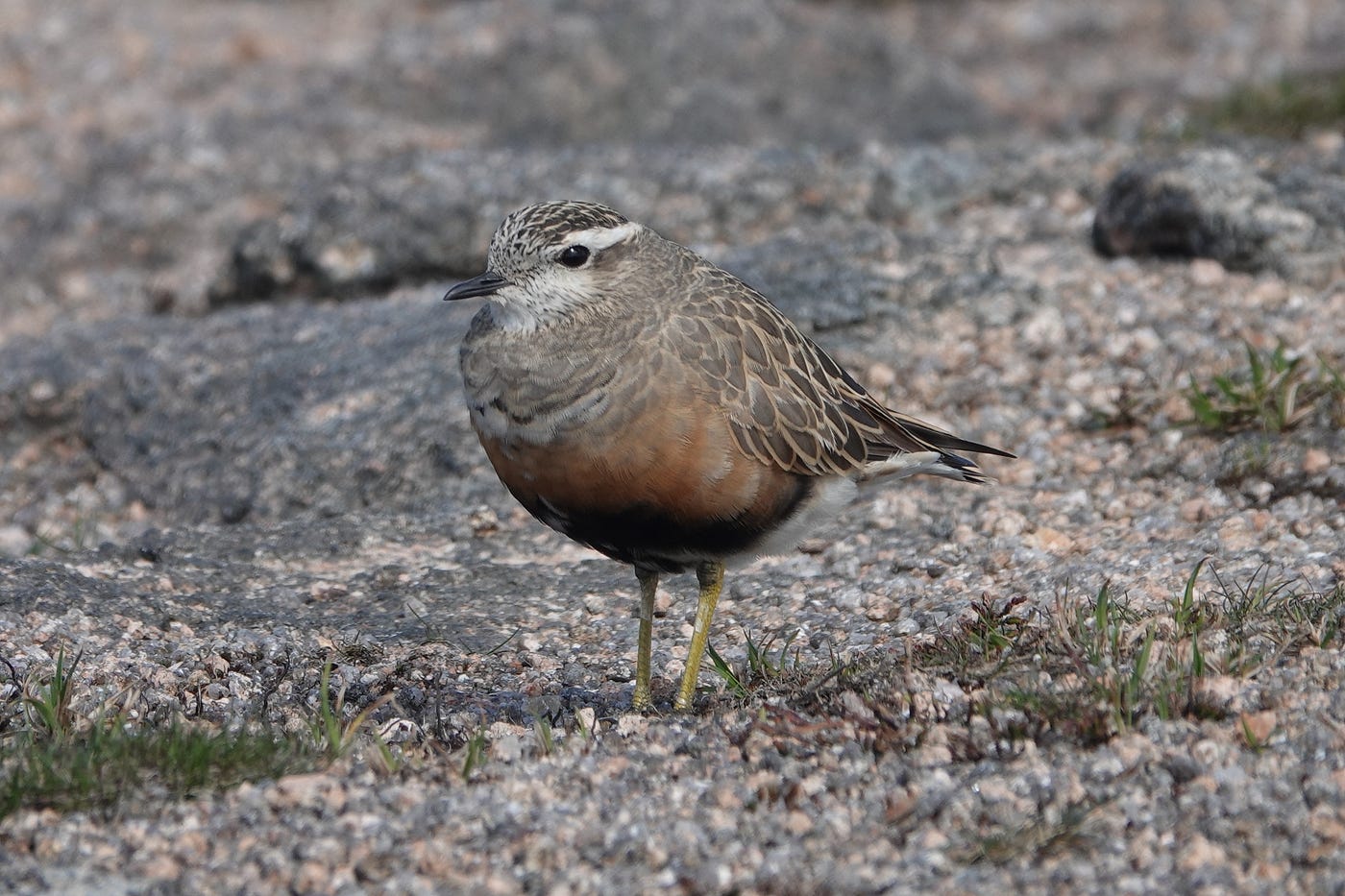
Male Dotterel © AllanPerkins
For those who don’t know (and I’m sure there are quite a few), Dotterel are small wading birds that migrate to mountainous regions in the UK each summer to breed. However, in recent decades they have experienced significant reductions in both range and population size, with most of the remaining population now restricted to the eastern and northern Highlands of Scotland. Despite the best efforts of conservationists, it would seem that this negative trend was even mirrored within protected areas. This leads researchers to conclude that climate change to be one of the potential causes of decline.
Dotterel have rusty-orange chests, and are adapted to breed on the rocky plateaus and sparse vegetation of mountain environments. They spend their winters in Northern Africa, and every year migrate to mountain ranges across Northern Europe and Asia to breed. Whilst the global population of Dotterel is classified as Least Concern by the IUCN, their future in the UK appears increasingly dire.
Montane habitats are particularly vulnerable to climate change, with hotter and drier conditions pushing specialist species like Dotterel to higher altitudes until they have nowhere left to go. The latest survey may be the first time the UK has documented a species being driven toward extinction locally by a changing climate.
Dr Leah Kelly, RSPB conservation scientist and one of the key scientists on the project, said: “Dotterel are in steep decline, and we are seeing them disappearing before our very eyes. The fact they need mountain tops to breed has made them particularly susceptible to habitat loss as climate change alters their montane environment”.
Declines in Dotterel numbers were first noted in the 1900s, raising concerns about the species. Before 2025, three national Dotterel surveys had been conducted (1988, 1999, and 2011), revealing a worrying contraction in the species’ range and a population decline of 57% (1987/88–2011). As a result, the species is included on the UK’s Birds of Conservation Concern (BoCC) Red List. The fourth national Dotterel survey, led by RSPB in 2025, sought to identify whether these losses had continued, and where breeding Dotterel remained within the UK.
Unlike most birds, male Dotterel stay with the nest and incubate the eggs while females move on; therefore, sightings of male Dotterel were used to estimate breeding population size. To help surveyors find breeding males, they looked and listened out for anxiety calls, agitated behaviour, and distraction displays, which suggest nesting nearby.
Results of the survey revealed only 22 (10%) of the 217 sites surveyed contained any breeding male Dotterel. No breeding Dotterel were detected in England, Wales or southern Scotland. Across the surveyed areas, only 33 males were recorded, which extrapolates to an estimated total UK population of 112 breeding males. This decline of 89% since 1987/88 shows an acceleration in losses since the 2011 survey, with evidence of decline in previously stable areas such as the Cairngorms.
Concerningly, a similar rate of decline was found inside Special Protection Areas as outside (74% since 2011), suggesting the main cause of decline is universal across the UK’s mountains. Climate change is therefore likely to be one of the key drivers. In combination with overgrazing, changes in climate degrade the low-growing, alpine vegetation favoured by Dotterel. Dotterel’s preferred food, cranefly larvae, also appear to have undergone declines in UK montane sites based on the number of adult craneflies observed.
Whilst the fate of the Dotterel does not look promising, supporting them to be more resilient to the impacts of climate change through, for example, grazing management to keep habitat in good condition and reducing disturbance by hillwalkers and dogs, may help protect Dotterel in the UK.
NatureScot ornithologist Dr Nicola Largey said: “The striking Dotterel has long been a special sight for those who spend time in Scotland’s uplands and mountains, but sadly the evidence shows the species is now in precipitous decline. The potential loss of this distinctive bird from our hills demonstrates the urgent need to tackle the twin crises of climate change and biodiversity loss that are threatening our wildlife and the habitats they depend on. At a local level, managing pressures on Dotterel habitat such as overgrazing can give us the best chance to retain them.”
Let’s hope that the Dotterel’s situation improves quickly and that it doesn’t become the first bird in the UK to disappear due to climate change. But judging by the look of the current crop of world leaders, it would seem to be highly doubtful that any meaningful changes will be made to the relentless rise in global temperatures, said the writer currently enduring the UK’s third heatwave so far this summer!
메타데이터
- post_id
- fea049d95192
- slug
- the-uk-could-be-set-to-lose-its-first-bird-species-due-to-climate-change-fea049d95192
- url
- https://medium.com/gardening-birding-and-outdoor-adventure/the-uk-could-be-set-to-lose-its-first-bird-species-due-to-climate-change-fea049d95192
- canonical_url
- https://medium.com/gardening-birding-and-outdoor-adventure/the-uk-could-be-set-to-lose-its-first-bird-species-due-to-climate-change-fea049d95192
- author_url
- https://medium.com/@phil.pickin
- status
- ok
- fetched_at
- 2026-07-13 06:23:13