Resume Mistakes That Get Rejected by AI Recruiters
Landing your dream job is no longer just about having the right qualifications. Today, many employers use AI recruiters and AI hiring…
Resume Mistakes That Get Rejected by AI Recruiters
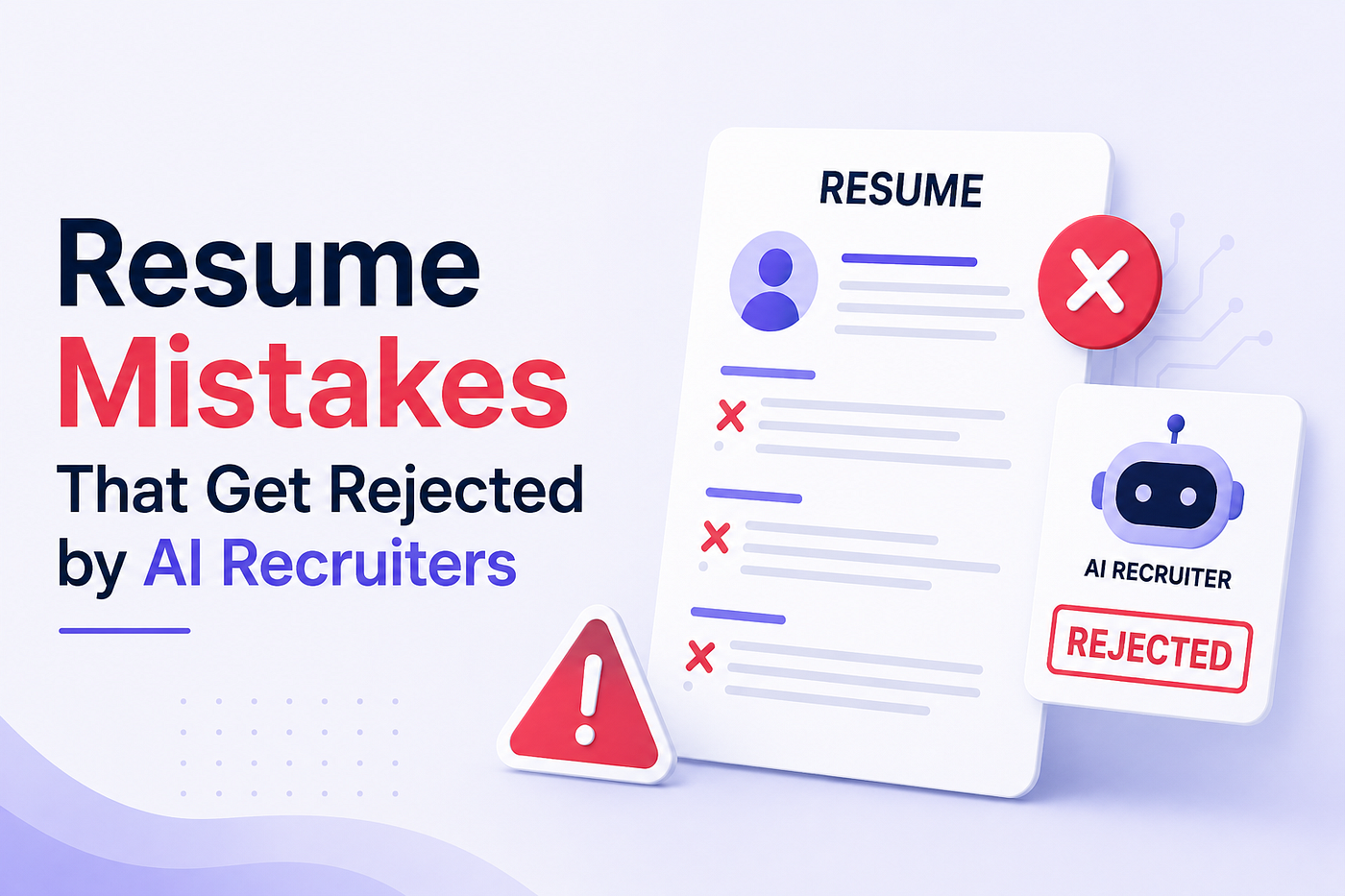
Landing your dream job is no longer just about having the right qualifications. Today, many employers use AI recruiters and AI hiring software to screen resumes before they ever reach a hiring manager. If your resume doesn’t meet the required standards, it could be rejected automatically, regardless of your skills or experience.
Many job seekers lose opportunities because of simple resume mistakes such as poor formatting, missing keywords, or using a generic resume for every application. The good news is that these mistakes are easy to fix once you understand how AI evaluates resumes.
In this guide, we’ll explore the most common reasons a resume gets rejected by AI, explain how AI resume screening works, and share practical tips to help you create a recruiter-friendly resume that performs well with both AI systems and human recruiters.
How AI Recruiters Screen Resumes
Before a recruiter reviews your application, AI often performs the first evaluation. It scans your resume for relevant skills, keywords, experience, and formatting to determine whether you’re a suitable candidate. Understanding this process helps you create a resume that is easier for AI to analyze and rank.
Companies receive hundreds or even thousands of applications for a single position. To manage this volume efficiently, they use an Applicant Tracking System (ATS) along with AI candidate screening tools.
These systems evaluate resumes based on factors such as:
- Relevant skills
- Job titles
- Work experience
- Education
- Certifications
- Resume keywords
- Resume structure
- Overall relevance to the job description
If your resume doesn’t meet these requirements, it may be filtered out before a recruiter even sees it.
1. Using Poor Resume Formatting
Your resume’s design plays an important role in whether AI can read it correctly. Even highly qualified candidates can be rejected if their resume contains layouts that ATS software cannot process. Keeping the format simple improves both readability and compatibility.
Many candidates create visually impressive resumes filled with graphics, icons, multiple columns, and tables. While these may look attractive, they often confuse ATS software.
To build an **ATS-friendly resume**, follow these formatting practices:
- Use simple fonts like Arial or Calibri.
- Stick to a single-column layout.
- Use standard section headings.
- Keep spacing consistent.
- Use bullet points instead of long paragraphs.
Avoid adding:
- Images
- Icons
- Charts
- Text boxes
- Decorative elements
Clean resume formatting ensures better resume parsing, allowing AI to accurately read and organize your information.
2. Missing Important Resume Keywords
Most AI recruitment systems compare your resume with the job description to find matching skills and qualifications. If essential keywords are missing, your application may receive a lower ranking. Including relevant terms naturally can improve your chances of being shortlisted.
For example, if you’re applying for a Software Developer role, the job description may include keywords like:
- Java
- Python
- AWS
- REST API
- Docker
- Kubernetes
If these skills match your experience, include them naturally throughout your resume.
Adding the right resume keywords improves ATS optimization and helps AI understand your qualifications.
3. Sending the Same Resume for Every Job
Every employer has different hiring requirements, so using a single resume for every application is rarely effective. Tailoring your resume for each position helps highlight the skills and experience most relevant to the role. This also improves your ATS matching score.
Review each job description carefully before applying.
Update your:
- Professional summary
- Skills section
- Work experience
- Certifications
- Keywords
Even small changes can significantly improve your chances of passing AI resume screening.
4. Ignoring ATS Optimization
A visually appealing resume is not always ATS compatible. Proper ATS optimization ensures that your resume can be scanned accurately and ranked correctly by recruitment software. Small adjustments can make a significant difference in your application’s success.
Many job seekers focus only on design while ignoring technical compatibility.
A well-optimized ATS resume should include:
- Standard section headings
- Relevant keywords
- Clear formatting
- Professional language
- Consistent structure
Running your resume through an ATS resume checker before submitting applications helps identify potential issues early.
5. Writing Generic Job Descriptions
Recruiters want to understand the impact you’ve made in previous roles, not just your daily responsibilities. Strong, achievement-based descriptions help your resume stand out and provide better context for both AI systems and hiring managers.
Instead of writing:
Managed customer support.
Write:
Improved customer satisfaction by 30% while reducing response times through process improvements.
Specific accomplishments make your resume more valuable and help AI recognize measurable experience.
6. Overusing Keywords
Keywords are important, but using them too frequently can make your resume look unnatural. AI hiring systems are becoming smarter and can recognize keyword stuffing. Focus on writing clear, meaningful content while naturally incorporating relevant terms.
Rather than repeating the same keyword multiple times, include it where it makes sense within your experience, projects, and skills.
Balanced keyword usage improves both ATS performance and readability.
7. Leaving Out Important Skills
Your resume should clearly showcase the skills that employers are looking for. If critical technical or professional skills are missing, AI may assume you don’t meet the job requirements. Reviewing each job description helps ensure nothing important is overlooked.
Always compare your resume with the job posting before applying.
If you possess required skills, make sure they appear clearly in your:
- Skills section
- Work experience
- Certifications
- Projects
An AI resume analyzer can help identify missing skills and suggest improvements.
8. Including Unnecessary Information
Every section of your resume should add value to your application. Irrelevant details can distract recruiters and reduce the effectiveness of your resume. Keeping your content focused makes it easier for both AI systems and hiring managers to evaluate your qualifications.
Avoid including:
- Irrelevant hobbies
- Outdated technical skills
- Personal information that employers don’t require
- Lengthy descriptions without measurable results
A concise and focused resume performs better during **AI candidate screening**.
Read more — Top 10 Best AI Hiring Platforms in 2026
9. Using Unprofessional Language
Professional language creates a stronger first impression and reflects your communication skills. Clear, concise wording also improves how AI interprets your resume. Avoid informal phrases and focus on action-oriented, professional descriptions.
Use strong action verbs such as:
- Developed
- Designed
- Implemented
- Managed
- Improved
- Led
- Delivered
Professional writing helps create a more polished and recruiter-friendly resume.
10. Skipping an AI Resume Review Before Applying
Submitting a resume without reviewing it can lead to avoidable mistakes. An AI-powered review helps identify formatting issues, missing keywords, and content improvements before you apply. Spending a few minutes reviewing your resume can significantly improve its quality.
A thorough **AI resume review** helps identify:
- Grammar errors
- Formatting problems
- Missing keywords
- Weak summaries
- ATS compatibility issues
- Low relevance to the job description
Reviewing your resume before every application can greatly improve your success rate.
How an AI Resume Checker Can Help
An AI resume checker provides detailed feedback that goes beyond grammar and spelling. It evaluates your resume against ATS standards and hiring trends to identify opportunities for improvement. This allows you to submit a stronger and more competitive application.
An effective AI resume checker can help you:
- Improve ATS compatibility
- Increase your resume score
- Optimize keywords
- Improve formatting
- Strengthen your professional summary
- Identify missing skills
- Enhance readability
Using an **AI resume analyzer** saves time while making your resume more competitive.
Why Resume Parsing Matters
Resume parsing is the process AI uses to extract information from your resume. If important details are not recognized correctly due to formatting or structure, your application may lose valuable ranking points. A well-structured resume ensures your experience is interpreted accurately.
Good resume parsing depends on:
- Clear headings
- Simple layouts
- Standard fonts
- Proper spacing
- Logical organization
The easier your resume is to parse, the better your chances of passing automated screening.
How Xipp.ai Helps You Create a Recruiter-Friendly Resume
Building a resume that appeals to both AI and recruiters can be challenging. **Xipp.ai **simplifies the process by analyzing your resume, identifying improvement areas, and providing intelligent recommendations. This helps you create a professional resume that’s ready for modern hiring systems.
With Xipp.ai, you can:
- Check your resume using an AI resume checker
- Perform a detailed AI resume review
- Improve ATS compatibility
- Optimize your resume for specific job descriptions
- Increase your resume score
- Build a stronger ATS-friendly resume
Whether you’re applying for local opportunities or international roles, Xipp.ai helps you prepare a resume that stands out.
Best Practices to Pass AI Resume Screening
Passing AI screening requires more than simply listing your experience. A combination of strong formatting, relevant keywords, and tailored content gives your resume a better chance of moving to the next stage. Following proven best practices helps improve both ATS performance and recruiter interest.
Here are a few best practices:
- Customize your resume for every application.
- Include relevant resume keywords naturally.
- Keep your formatting simple and professional.
- Highlight measurable achievements.
- Use standard section headings.
- Review your resume using an ATS resume checker.
- Update your skills and certifications regularly.
- Perform an AI resume review before applying.
These simple habits can dramatically improve your chances of getting shortlisted.
Conclusion
Many resumes are rejected before reaching a recruiter because of avoidable resume mistakes rather than a lack of qualifications. Poor formatting, missing keywords, weak achievements, and limited ATS optimization are among the most common reasons candidates fail to pass automated screening.
By understanding how AI recruiters, Applicant Tracking Systems (ATS), and **AI hiring software evaluate resumes, you can make smarter improvements that increase your chances of success. Using an AI resume checker, optimizing your content, and maintaining an ATS-friendly resume** will help you create a stronger application for every job.
With **Xipp.ai, you can analyze your resume, improve keyword relevance, boost your resume score**, and confidently apply for jobs with a resume that’s optimized for both AI screening and human recruiters.
Frequently Asked Questions
Why is my resume rejected by AI recruiters?
AI recruiters may reject your resume due to poor formatting, missing keywords, low ATS compatibility, irrelevant content, or because it doesn’t closely match the job description.
What is AI resume screening?
AI resume screening is the automated process where AI hiring software evaluates resumes based on skills, keywords, experience, education, and ATS compatibility before a recruiter reviews them.
How does an ATS resume checker help?
An ATS resume checker identifies formatting issues, missing keywords, and optimization opportunities to improve your resume’s chances of passing Applicant Tracking System screening.
What is resume parsing?
Resume parsing is the process of extracting information from your resume so AI systems can organize and evaluate your qualifications accurately.
How can I improve my resume score?
You can improve your resume score by using relevant resume keywords, highlighting measurable achievements, maintaining ATS-friendly formatting, customizing your resume for each application, and reviewing it with an AI resume checker before submitting it.
메타데이터
- post_id
- fea1eca4e84b
- slug
- resume-mistakes-that-get-rejected-by-ai-recruiters-fea1eca4e84b
- url
- https://medium.com/@devstree-info/resume-mistakes-that-get-rejected-by-ai-recruiters-fea1eca4e84b
- canonical_url
- https://medium.com/@devstree-info/resume-mistakes-that-get-rejected-by-ai-recruiters-fea1eca4e84b
- author_url
- https://medium.com/@devstree-info
- status
- ok
- fetched_at
- 2026-08-13 00:03:50