High-Bandwidth Memory (HBM) Market: Powering the AI Supercycle
The High-Bandwidth Memory (HBM) Market was valued at USD 9.50 billion in 2025 and is projected to reach USD 30.41 billion by 2030…
High-Bandwidth Memory (HBM) Market: Powering the AI Supercycle
The High-Bandwidth Memory (HBM) Market was valued at USD 9.50 billion in 2025 and is projected to reach USD 30.41 billion by 2030, expanding at a remarkable CAGR of 26.2% (2026–2030). The market is at the center of the global AI and high-performance computing (HPC) boom, acting as the critical enabler of next-generation compute architectures.
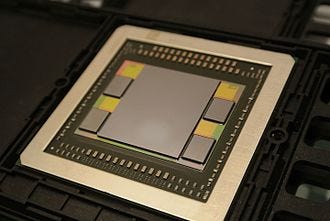
Unlike traditional DDR memory that resides on a motherboard, HBM leverages 3D stacking technology using Through-Silicon Vias (TSVs) to vertically stack memory dies alongside processors (GPUs, ASICs, or AI accelerators) on a silicon interposer. This advanced architecture delivers ultra-high bandwidth, lower latency, and superior power efficiency, making it indispensable for training and inference of large AI models.
Market Overview: The Supply-Constrained Supercycle
In 2025, the HBM industry is experiencing what analysts describe as a “supply-constrained supercycle.” Demand from hyperscalers and AI chip manufacturers significantly exceeds available manufacturing capacity. The rapid expansion of AI workloads — particularly large language models (LLMs) such as GPT-5 and Gemini Ultra — has created unprecedented pressure on memory supply chains.
The industry is transitioning from HBM2E to HBM3 and HBM3e, with HBM3e becoming the preferred memory standard for the latest AI accelerators. A single top-tier AI GPU in 2025 may integrate over 144GB of HBM3e, with memory costs alone running into thousands of dollars per unit.
This shift marks a structural transformation: memory is no longer a commoditized component — it has become a strategic performance determinant for AI systems.
Technology Evolution: From HBM2 to HBM4
By Type
- HBM2 & HBM2E: Legacy standards that powered earlier HPC and GPU systems.
- HBM3: Dominant in terms of installed base and 2025 revenue, widely used in flagship GPUs from 2023–2024.
- HBM3e: The fastest-growing segment (2026–2030), delivering speeds up to 9.6 Gbps and higher stack capacities. It is critical for architectures such as Blackwell.
- HBM4: The next-generation roadmap product expected to push bandwidth and efficiency further, potentially leveraging hybrid bonding techniques.
Yield improvement in 3D stacking and commercialization of hybrid bonding are pivotal to scaling production and meeting demand.
Application Landscape
1. Artificial Intelligence (AI) — Dominant Segment
AI consumes the majority of global HBM supply in 2025. Training clusters and inference farms require massive bandwidth to move data between GPUs efficiently, making HBM indispensable.
2. High-Performance Computing (HPC)
Scientific simulations, climate modeling, and defense research applications continue to rely heavily on HBM-enabled supercomputers.
3. Graphics & Networking
Advanced GPUs for professional visualization and high-speed networking switches integrate HBM for throughput-intensive tasks.
4. Automotive — Fastest Growing
Autonomous driving systems require processing of real-time data from LiDAR, radar, and multi-camera arrays. As automotive SoCs approach server-grade performance, HBM integration is increasing.
Deployment Trends
Cloud — Market Leader
The majority of HBM is deployed in hyperscale data centers operated by:
- Amazon Web Services (AWS)
- Microsoft Azure
- Google Cloud
These providers rent AI compute instances globally and are locked in a capital expenditure race to dominate generative AI infrastructure.
On-Premise — Fastest Growing
Driven by concerns over data sovereignty and privacy, enterprises and governments are investing in private AI supercomputers and sovereign cloud initiatives, fueling demand for HBM-powered servers.
End-User Insights
- Cloud Service Providers (CSPs): The largest consumers due to aggressive AI infrastructure expansion.
- Enterprise: The fastest-growing segment, as Fortune 500 companies fine-tune open-source models on proprietary datasets.
- Telecommunications: Leveraging AI for network optimization and edge analytics.
- Government: Investing in national AI initiatives and defense HPC capabilities.
Competitive Landscape
The HBM market is highly concentrated, dominated by three memory manufacturers:
- SK Hynix — Market leader in HBM3/3e shipments.
- Samsung Electronics — Aggressively scaling advanced packaging capabilities.
- Micron Technology — Expanding HBM production footprint.
The broader ecosystem includes:
- NVIDIA Corporation — Primary AI GPU ecosystem driver.
- Advanced Micro Devices (AMD)
- Intel Corporation
- Taiwan Semiconductor Manufacturing Company (TSMC)
- Amkor Technology
- ASE Technology Holding
- Rambus Inc.
The competition has intensified into an “arms race” as companies convert legacy DRAM fabrication lines into advanced HBM packaging facilities.
메타데이터
- post_id
- fea2a22e0666
- slug
- high-bandwidth-memory-hbm-market-powering-the-ai-supercycle-fea2a22e0666
- url
- https://medium.com/@prathyusha_11561/high-bandwidth-memory-hbm-market-powering-the-ai-supercycle-fea2a22e0666
- canonical_url
- https://medium.com/@prathyusha_11561/high-bandwidth-memory-hbm-market-powering-the-ai-supercycle-fea2a22e0666
- author_url
- https://medium.com/@prathyusha_11561
- status
- ok
- fetched_at
- 2026-08-05 21:11:17






