Japan’s Great-power Illusion
- What the Netherlands teaches Japan about national scale
Japan’s Great-power Illusion
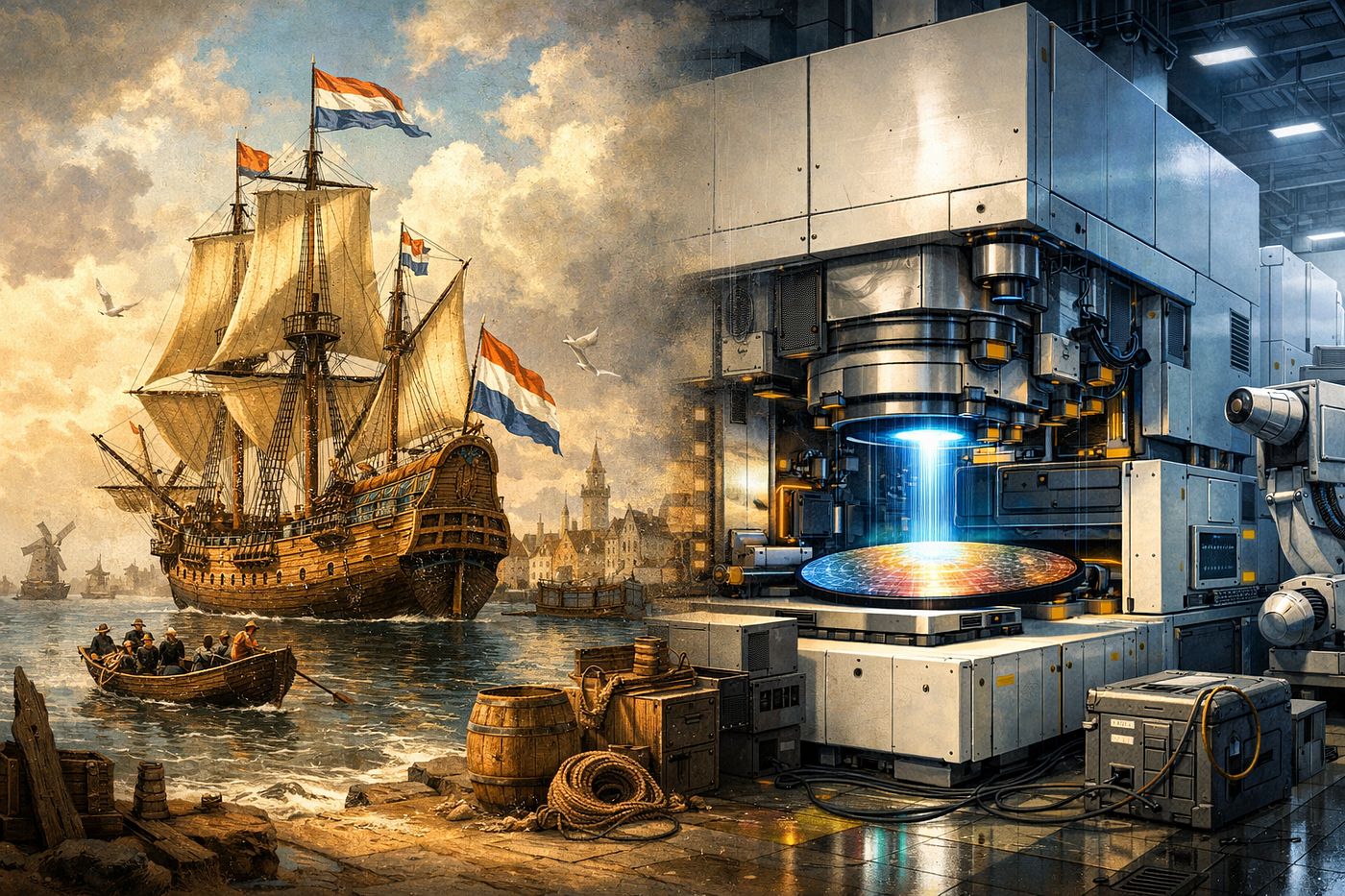
AI-generated illustration combining a 17th-century Dutch ship and a modern lithography machine.
My earliest memory of the Netherlands goes back to middle school. I learned that in the 17th century, it was the only European country permitted to trade with Japan under the Tokugawa shogunate.
I also learned that Spain and Portugal had once been global hegemons before being overtaken by the Netherlands. Even as a little boy I felt the Dutch approach was clever.
My interest in the Netherlands rests on two observations.
First, they rose to global dominance after Spain and Portugal.
Second, even after losing that position to Great Britain, they remained relatively prosperous well into the 21st century.
Today, the Netherlands hosts globally indispensable companies such as ASML, whose lithography machines are essential for advanced semiconductor production.
This leads to a simple but important question:
Why didn’t the Netherlands decline after ceasing to be a superpower?
Accepting Smallness
One possible answer is that the Dutch accepted being a small country early.
After losing global dominance, the Netherlands did not cling to imperial nostalgia. Instead of pursuing military prestige or symbolic grandeur, it focused on what small countries do best: trade, logistics, finance, engineering, and rule-based cooperation. Being small was not treated as a humiliation, but as a condition to be managed intelligently.
This does not mean the Netherlands was free from contradiction. It built colonies, participated in the Atlantic slave trade, and experienced economic stagnation after its golden age. The shift toward pragmatic small-state strategy was not a smooth moral evolution, but a gradual adjustment shaped by limits. What makes the Dutch case interesting is not purity, but recalibration.
When Did Japan’s “Great-Power Illusion” Begin?
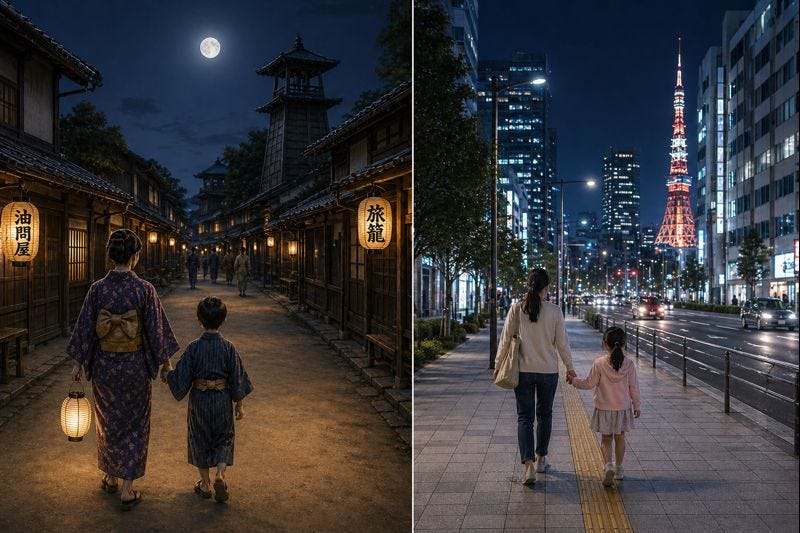
This perspective casts Japan in a different light.
Japan briefly pursued imperial expansion, but it never maintained long-term global hegemony. In fact, some European visitors in the 16th century described Japan as one of the poorer regions in Asia. Japan’s economic success came much later, primarily during a few decades in the late 20th century.
Yet in the 21st century, many Japanese still seem haunted by a lingering “great-power illusion.”
This illusion likely emerged not from long historical dominance, but from a short and intense postwar economic miracle — combined with Cold War geopolitics that temporarily positioned Japan as an exceptional case. When growth slowed, the self-image did not adjust as smoothly as the reality.
A Quiet Contrast
The contrast:
The Dutch adjusted their national self-image gradually — often imperfectly — yet managed to remain stable.
Japan achieved remarkable success — and then struggled to redefine itself afterward.
Perhaps the real question is not why Japan’s GDP ranking fell, but why adjusting one’s sense of national scale is so difficult.
메타데이터
- post_id
- fea47923025a
- slug
- japans-great-power-illusion-fea47923025a
- url
- https://medium.com/@takashimatsumoto_55323/japans-great-power-illusion-fea47923025a
- canonical_url
- https://medium.com/@takashimatsumoto_55323/japans-great-power-illusion-fea47923025a
- author_url
- https://medium.com/@takashimatsumoto_55323
- status
- ok
- fetched_at
- 2026-07-27 15:36:22