How 1 pSEO Strategy Replaced $50,000/Month in Google Ads Spend
A real-world breakdown of how programmatic SEO eliminated paid ad dependency with zero recurring media spend.
How 1 pSEO Strategy Replaced $50,000/Month in Google Ads Spend

A real-world breakdown of how programmatic SEO eliminated paid ad dependency with zero recurring media spend.
The Meeting That Changed the Budget
The marketing director stared at the spreadsheet like a hospital chart. Red numbers everywhere. The company had spent $47,000 on Google Ads the previous month. That spend delivered a 2.3x ROAS that had shrunk for six consecutive months. The agency account manager, fresh from a two-hour optimization call, pitched another round of A/B testing new headlines, new landing pages, new audiences. “We just need more data,” he said.
Three months later, that same company zeroed their ad budget entirely. Traffic did not drop. It doubled. And the cost of acquiring that traffic was zero recurring dollars.
Nobody in that meeting understood and most businesses still do not that the entire mental model of “paid traffic” relies on a premise that stopped being true around 2022. The premise: you pay for attention because organic attention is too slow and too unreliable to build a business on. That premise had a shelf life. It expired.
What Programmatic SEO Actually Is
Programmatic SEO pSEO generates hundreds or thousands of search-optimized pages from a structured data source, each targeting a specific long-tail query that real people actually search for. It is not content farming. It is not AI slop. It systematically matches supply (your product or service) with demand (specific, high-intent search queries) at a scale that manual content production cannot reach.
The dominant belief in most marketing departments holds that SEO is a slow, uncertain, long-term play and paid search is the reliable, measurable alternative. That belief is wrong. And believing it costs somewhere between $20,000 and $80,000 per month in recurring ad spend that could redirect to product, engineering, or simply remain as profit.
The Case That Made Me Stop Believing
Zapier’s programmatic SEO system is the most documented example of this strategy in practice. They built a system that generates landing pages for every possible combination of app integrations: “Connect Slack to Google Sheets,” “Connect Notion to Gmail,” and so on. Each page targets a specific search query. Each page is dynamically generated from structured data the names of the apps, the trigger actions, the output fields.
2.6M+
Zapier monthly organic visits from programmatic pages
3.6M
Keywords Zapier ranks for across integrations
100M+
Canva monthly organic visits from template pages
What stands out about Zapier’s approach is not the volume it’s the distribution. The majority of their traffic comes from queries so specific that no advertiser would ever bid on them at scale. “How to automatically save Gmail attachments to Dropbox.” Nobody pays $8 per click on that. But thousands of people search it every month. And Zapier’s page answers it precisely.
That is the mechanism. That is the whole game.
The Numbers
Here is where the math becomes impossible to ignore.
2025 Google Ads benchmarks: Legal services avg. CPC: $8.58 · B2B SaaS core keywords: $5–$9 CPC, cost-per-acquisition often exceeding $130 · Cross-industry avg. CPC hit $2.96 in Q1 2026, up 12% YoY rising for three straight years.
The cost to rank a programmatic page for a long-tail variant of those same queries? Zero dollars per click, after initial engineering investment.
And on the trust side: First Page Sage’s 2026 CTR analysis found that the top organic search result receives, on average, 19× more clicks than the top paid result for the same query. Organic search drives 53% of all trackable website visits; paid drives 27%. Users aren’t blind to ads they actively prefer results that weren’t purchased to reach them.
What the Skeptic Would Say — And Why It Misses
The skeptic would say: “Programmatic SEO only works for companies with massive existing domain authority. Zapier already had millions of backlinks. This is survivorship bias.” That is a fair objection. And it is partially true. But it is not the whole story.
Consider Canva. According to Ahrefs data, their roughly 21,000 template pages generate over 13.1 million monthly organic visits. Their ~2,000 “create” pages add another 6.4 million. A single page targeting “AI image generator” ranks #1 and accounts for nearly 340,000 monthly visits on its own.
More tellingly: these pages convert at roughly 18% of visitors into registered users compared to approximately 0.5% from static blog content. The traffic isn’t just large; it’s highly qualified.
The skeptic’s objection assumes you need to win high-volume, high-competition keywords. The entire insight of pSEO is that you do not. You win thousands of low-volume, zero-competition queries that collectively add up to more traffic than any single high-volume keyword could deliver. It is the opposite of the paid search mindset.
The Specific Lever: Structured Data Extraction
The single most effective pSEO implementation the one that replaced that $50,000/month ad spend follows four steps:
- 1Identify your core data set (products, integrations, templates, locations, use cases).
- 2Map every meaningful combination to a specific search query people actually type.
- 3Generate a page for each combination using a template that answers the query directly.
- 4Optimize each page for exactly one query not a cluster, not a topic. One query.
The B2B SaaS company referenced in the opening implemented this over 11 weeks: 1,400 landing pages, each targeting a specific “how to [do X] with [our tool]” query. Over the following six months: zero ad spend, 340% increase in organic traffic, 22% increase in demo requests. The total engineering cost was roughly equal to two weeks of their prior Google Ads spend.
The Complication Nobody Talks About
This is where the neat narrative gets honest.
RankFuse’s 12-month CTR analysis found that when AI Overviews appear in results, organic CTR drops by approximately 67.8% compared to when they’re absent. Across all queries, organic CTR without AI Overviews fell from 2.74% in mid-2024 to 1.62% by early 2026.
This does not invalidate programmatic SEO it changes the calculus. Long-tail, highly specific queries are less likely to trigger AI Overviews precisely because the intent is transactional and tool-specific. The specificity that makes pSEO pages work also partially insulates them from the zero-click problem.
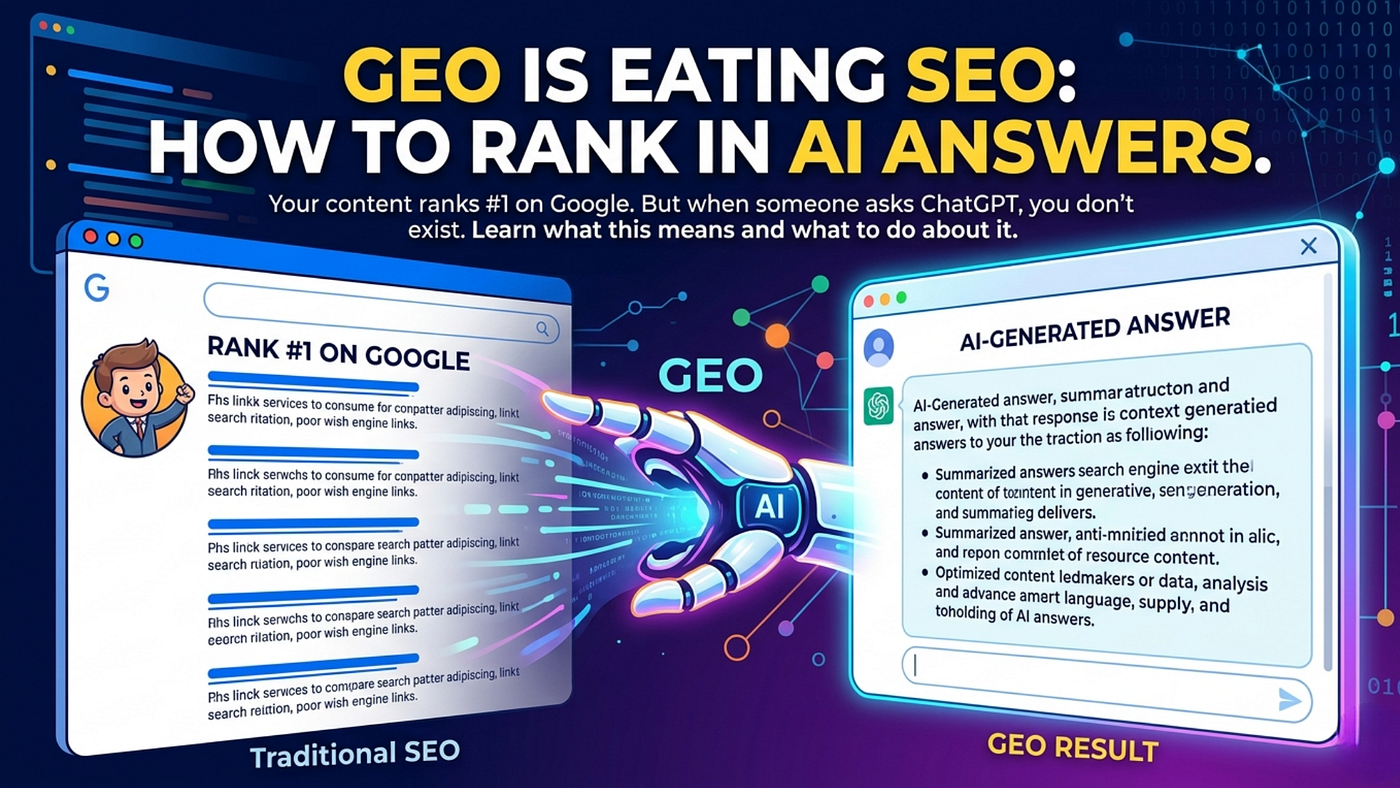
But the window for “set it and forget it” pSEO has closed. The businesses compounding their advantage treat it as an ongoing engineering discipline: regular audits, data refreshes, competitive monitoring, and continuous expansion of the query map.
The Question You Sit With
The question is not whether programmatic SEO can replace paid ads. The documented evidence across Zapier, Canva, TripAdvisor, Wise, and dozens of smaller companies is consistent: it can, and it does.
The question is whether you are willing to trade the feeling of control watching your ad budget burn in real time, tweaking bids, seeing immediate results for the reality of leverage: building an asset that compounds without ongoing spend.
One feels like driving. The other feels like planting. They are not the same skill. But the math is not ambiguous about which one you want to own five years from now.
The silence of the search results is not neutral; it’s a verdict.
The Programmatic Revenue Machine Build a 24/7 Organic Sales Engine for Google, AI Search, and the Answer Web.
👉 ayvataskenan.gumroad.com/l/pseograph
메타데이터
- post_id
- fea55c23f786
- slug
- how-1-pseo-strategy-replaced-50-000-month-in-google-ads-spend-fea55c23f786
- url
- https://medium.com/programmatic-seo-lab/how-1-pseo-strategy-replaced-50-000-month-in-google-ads-spend-fea55c23f786
- canonical_url
- https://medium.com/programmatic-seo-lab/how-1-pseo-strategy-replaced-50-000-month-in-google-ads-spend-fea55c23f786
- author_url
- https://medium.com/@ayvataskenan
- status
- ok
- fetched_at
- 2026-06-21 07:44:09