Intelligent Finance: AI and ML Innovations in Wealth Management
The financial industry is undergoing a massive transformation driven by artificial intelligence (AI) and machine learning (ML). Traditional…
Intelligent Finance: AI and ML Innovations in Wealth Management

The financial industry is undergoing a massive transformation driven by artificial intelligence (AI) and machine learning (ML). Traditional wealth management strategies that relied on human expertise and historical data analysis are now being enhanced by AI-powered tools, offering more precise insights, predictive analytics, and automation. These advancements are reshaping how financial advisors and investors approach wealth management, risk assessment, and portfolio optimization.
This article explores the role of AI and ML in wealth management, their applications, benefits, challenges, and the future of intelligent finance.
1. Portfolio Optimization using Mean-Variance Model (Markowitz Model)
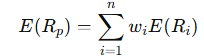
The Role of AI and ML in Wealth Management
AI and ML are revolutionizing wealth management by enabling automated decision-making, predictive analytics, and personalized financial strategies. These technologies analyze large volumes of financial data, identify patterns, and generate insights that were previously difficult or impossible to uncover with traditional methods.
Some of the key areas where AI and ML are transforming wealth management include:
Automated Portfolio Management
- AI-driven robo-advisors are offering automated investment strategies tailored to individual risk preferences and financial goals.
- These platforms use ML algorithms to analyze market trends, rebalance portfolios, and optimize asset allocation in real-time.
Predictive Analytics for Investment Decisions
- Machine learning models analyze past financial data, news sentiment, and macroeconomic indicators to predict stock movements.
- Hedge funds and institutional investors are leveraging AI to gain a competitive edge in high-frequency trading and risk management.

Personalized Wealth Advisory Services
- AI-powered chatbots and virtual financial assistants provide personalized financial planning based on user preferences, income, and spending habits.
- By analyzing real-time financial data, these tools can suggest savings plans, investment options, and tax strategies.
Risk Management and Fraud Detection
- AI models detect anomalies in financial transactions, reducing fraud risks for both individuals and institutions.
- ML algorithms assess portfolio risks by analyzing historical market trends and stress-testing different financial scenarios.
Applications of AI and ML in Wealth Management
1. Robo-Advisory Platforms
Robo-advisors like Betterment, Wealthfront, and Schwab Intelligent Portfolios use AI and ML to automate investment decisions. These platforms assess an investor’s financial goals, risk tolerance, and market conditions to create diversified investment portfolios.
Key features of robo-advisors include:
- Low-cost financial advisory services
- Tax-loss harvesting for optimized returns
- Automated rebalancing of portfolios

2. Sentiment Analysis for Investment Strategies
AI models analyze news articles, social media sentiment, and earnings reports to predict market sentiment. Hedge funds and asset managers use natural language processing (NLP) techniques to gauge investor sentiment and make data-driven investment decisions.
For example, if AI detects positive sentiment around a company’s financial performance, it can recommend increasing exposure to that stock.
3. Algorithmic Trading
High-frequency trading (HFT) firms utilize AI-driven trading algorithms to execute thousands of trades per second. These ML-based strategies analyze market microstructure, liquidity levels, and order book dynamics to maximize profits.
4. Risk Assessment and Portfolio Optimization
AI-driven models assess market risks and suggest asset allocation strategies that minimize volatility while maximizing returns. Portfolio managers use ML-powered risk assessment tools to:
- Identify optimal investment combinations
- Reduce exposure to high-risk assets
- Adapt portfolios based on market fluctuations
5. Personal Finance Management Tools
Apps like Mint, YNAB (You Need a Budget), and Cleo use AI to help users track their spending habits, create budgets, and manage savings. By analyzing transaction patterns, AI can provide personalized financial insights and recommend smart spending habits.
Benefits of AI and ML in Wealth Management
The adoption of AI and ML in wealth management provides several advantages:
Enhanced Decision-Making
AI-driven insights enable financial advisors to make data-backed decisions, reducing reliance on intuition.
Cost Efficiency
Robo-advisors offer lower fees compared to traditional financial advisors, making wealth management accessible to a wider audience.
24/7 Monitoring and Automation
AI-powered platforms continuously monitor portfolios, execute trades, and rebalance assets in real-time without human intervention.
Improved Risk Management
ML models identify market risks early, helping investors mitigate losses and protect their wealth.
Personalized Financial Planning
AI tailors investment strategies based on individual financial goals, risk tolerance, and spending patterns.
2. AI-Driven Stock Price Prediction using Linear Regression

Challenges and Limitations
Despite its advantages, AI-driven wealth management also presents challenges:
Data Privacy and Security
The use of AI requires vast amounts of personal and financial data, raising concerns about cybersecurity and data breaches.
Regulatory and Compliance Issues
Financial institutions must ensure AI-driven investment strategies comply with regulations and transparency standards.
Bias in AI Models
If trained on biased data, ML algorithms can make skewed investment recommendations, leading to unfair financial outcomes.
Market Volatility and Black Swan Events
AI models may struggle to predict extreme market events (e.g., financial crises), requiring human intervention in crisis scenarios.
The Future of AI and ML in Wealth Management
The future of AI-driven wealth management looks promising, with advancements in:
- Explainable AI (XAI): Enhancing transparency in AI decision-making for financial advisors and clients.
- Quantum Computing: Improving financial modeling and risk assessment capabilities.
- Blockchain Integration: Securing financial transactions and AI-driven wealth management solutions.
As AI continues to evolve, financial institutions will adopt more sophisticated AI models to enhance investment strategies, optimize risk management, and provide intelligent financial services to clients.

Conclusion
AI and ML are revolutionizing wealth management by enabling smarter investment decisions, reducing costs, and improving financial planning. From robo-advisors to predictive analytics, these technologies are transforming how investors and financial advisors navigate the complex world of finance. However, challenges related to data security, regulatory compliance, and AI biases must be addressed to fully unlock the potential of intelligent finance.
With continuous advancements in AI, the future of wealth management will be increasingly automated, data-driven, and personalized, offering greater efficiency and precision in managing financial assets.
메타데이터
- post_id
- feaa6f6e2cb4
- slug
- intelligent-finance-ai-and-ml-innovations-in-wealth-management-feaa6f6e2cb4
- url
- https://medium.com/@srinivas.r.challa.sm/intelligent-finance-ai-and-ml-innovations-in-wealth-management-feaa6f6e2cb4
- canonical_url
- https://medium.com/@srinivas.r.challa.sm/intelligent-finance-ai-and-ml-innovations-in-wealth-management-feaa6f6e2cb4
- author_url
- https://medium.com/@srinivas.r.challa.sm
- status
- ok
- fetched_at
- 2026-06-15 20:49:13





