I Thought the Everest Base Camp Trek Would Break Me. Here’s What Actually Happened.
I am not an athlete. I do not run marathons. I had never been above 3,000 metres in my life before I set foot on the trail to Everest Base…
I Thought the Everest Base Camp Trek Would Break Me. Here’s What Actually Happened.
I am not an athlete. I do not run marathons. I had never been above 3,000 metres in my life before I set foot on the trail to Everest Base Camp.
And yet I made it.
That is the thing nobody tells you about the Everest Base Camp trek for beginners: the fear before you go is almost always worse than the trek itself. Almost.
The Altitude Is the Only Real Enemy
The trail is not technical. There are no ropes, no climbing skills required, nothing you need to learn before you arrive. You walk. That is it. You walk uphill for about 5 to 7 hours a day on a well-worn path that thousands of people have walked before you.
What gets people is the altitude.
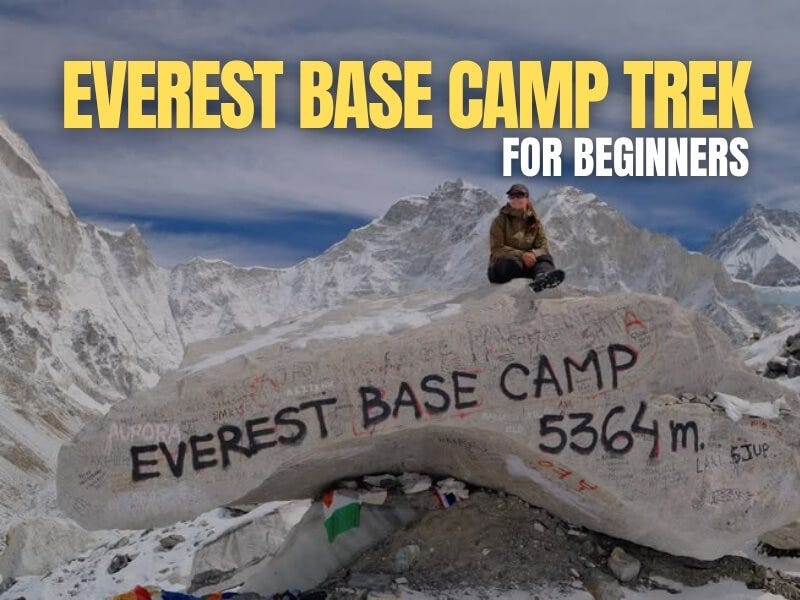
Everest Base Camp sits at 5,364 metres above sea level. At that height, the air has roughly half the oxygen of a sea-level city. Your body needs time to adjust to this, which is exactly why the standard itinerary is built around gradual ascent and two mandatory rest days.
Skip those rest days, and you will likely turn back sick before you reach base camp. Take them seriously and your chances of making it go from uncertain to very high.

What the Trail Actually Looks Like
Day one starts with a tiny aircraft landing on one of the world’s most unusual runways at Lukla airport, a short strip carved into a mountainside at 2,846 metres. From there you walk.
The first two days are gentle. Forest trails, suspension bridges, yaks on the path, teahouses every few kilometres. By Day 3, you are in Namche Bazaar, the main town of the Khumbu region, and you take your first rest day.
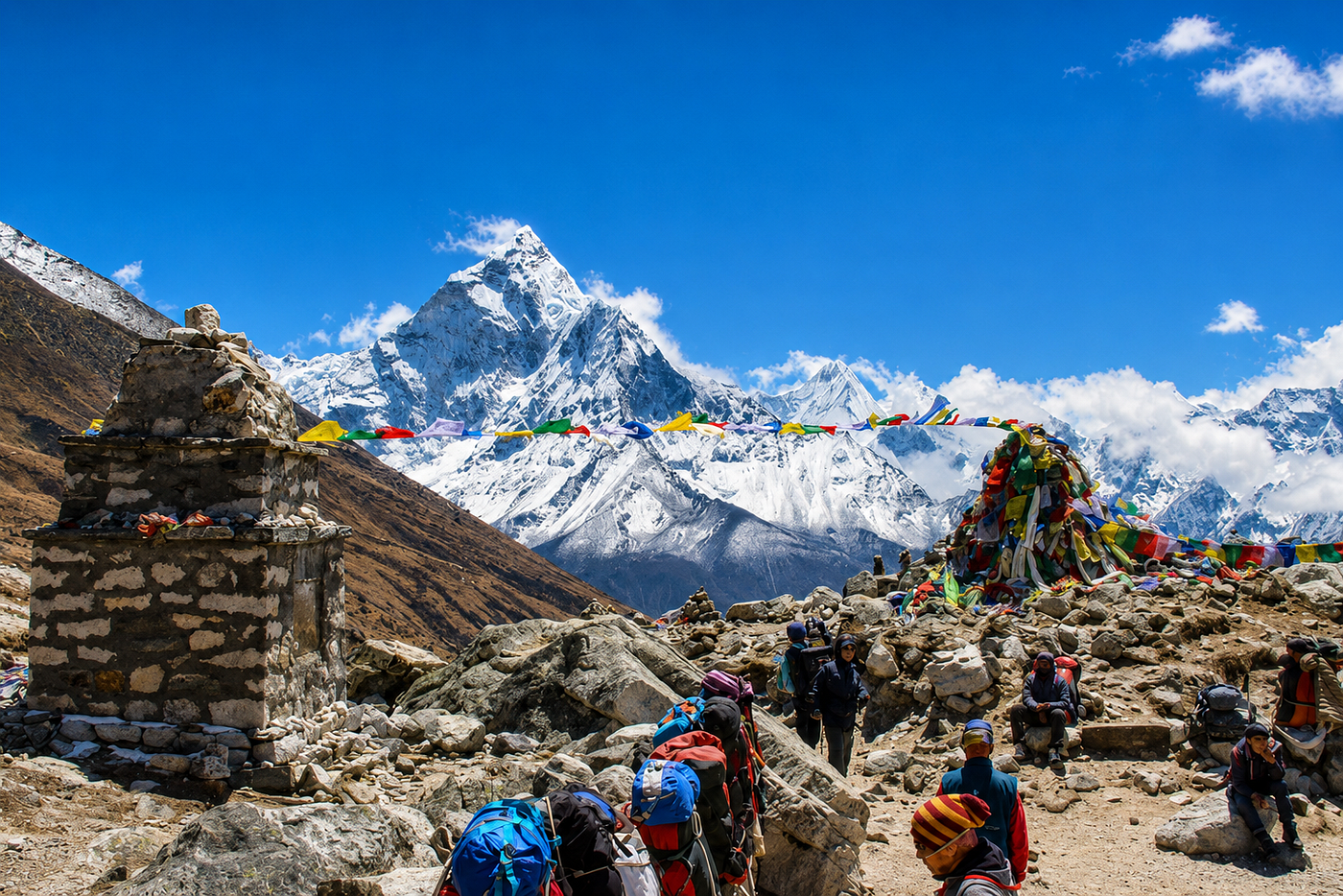
By Day 7 the landscape has changed completely. It is stark, rocky, treeless, silent. The mountains are enormous and close. Your body feels the altitude with every step.
Day 8 you reach Everest Base Camp.

The One Thing I Wish I Had Known
From Base Camp itself you cannot actually see the summit of Everest. The Khumbu glacier blocks the view completely.
The best view of Everest, the one that makes every photo you have ever seen, comes from Kala Patthar at 5,545 metres, the morning after Base Camp. Wake up at 4 am, climb for 90 minutes in the dark, and watch the sun hit the summit of the world’s highest mountain from directly in front of you.
Do not skip it.
Should You Do It?
If you can walk uphill for 2 to 3 hours without stopping, you are physically capable of this trek. The mental part, patience, pace, and listening to your body is harder than the physical part for most people.
The best resource I found for planning the whole thing from scratch itinerary, budget breakdown, packing list, and altitude sickness guide is this beginner’s guide from Nepal Mountain Adventure, a local trekking agency in Kathmandu that has been running this route for over 15 years:
👉 Everest Base Camp Trek for Beginners: Itinerary, Budget and Packing List
If you are on the fence about whether you are ready, read that first. It answered every question I had before I booked.
메타데이터
- post_id
- feaa9dbaa03f
- slug
- i-thought-the-everest-base-camp-trek-would-break-me-heres-what-actually-happened-feaa9dbaa03f
- url
- https://medium.com/illumination/i-thought-the-everest-base-camp-trek-would-break-me-heres-what-actually-happened-feaa9dbaa03f
- canonical_url
- https://medium.com/illumination/i-thought-the-everest-base-camp-trek-would-break-me-heres-what-actually-happened-feaa9dbaa03f
- author_url
- https://medium.com/@samikshya.rexon
- status
- ok
- fetched_at
- 2026-06-09 15:37:30