Why Creamy Lobster Alfredo Pasta Can Turn Heavy
Lobster Alfredo sounds like a special-occasion dinner, but its success depends on a few gentle decisions.
Why Creamy Lobster Alfredo Pasta Can Turn Heavy
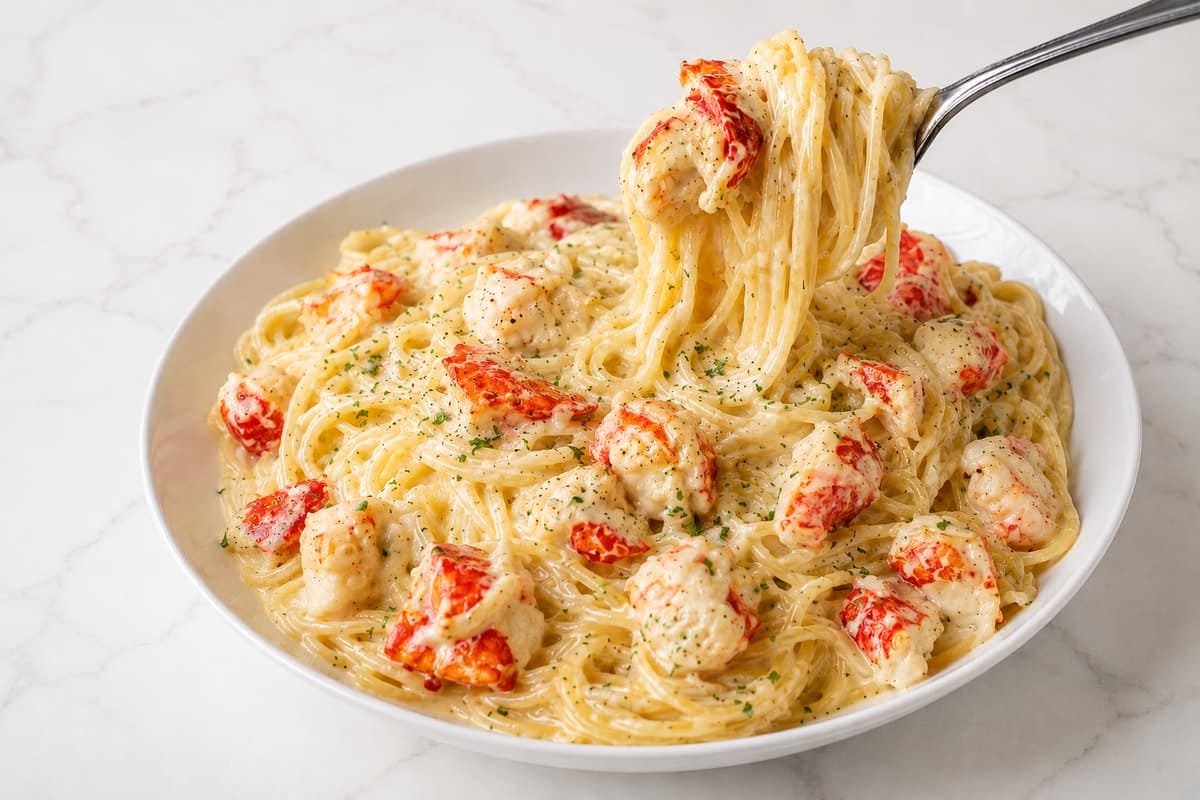
Photo: Updated Recipes
Lobster Alfredo sounds like a special-occasion dinner, but its success depends on a few gentle decisions.
The sauce can become thick or grainy. The pasta can absorb more sauce than expected. And lobster that was already cooked can turn firm if it spends too long in the skillet.
The goal is not the thickest Alfredo. It is a smooth, glossy sauce that lightly coats the spaghetti and lets the lobster stay tender.
A Good Alfredo Should Still Move
Cream and Parmesan create richness, but they can also make a sauce feel heavy when the balance is off.
The finished sauce should look a little looser in the skillet than it will on the plate. Hot pasta keeps absorbing sauce as it sits, so a pan that looks perfectly thick can become tight and sticky by the time it is served.
Reserved pasta water helps keep the sauce glossy as the pasta continues to absorb it.
It does more than loosen the sauce. Added gradually, it helps the cream and cheese become a smooth coating that clings to the noodles instead of collecting at the bottom of the skillet.
A useful visual cue is to lift the spaghetti with tongs. The sauce should coat the strands evenly and still move easily, rather than looking dull, dense, or clumped.
Parmesan Needs Gentle Heat
Parmesan melts most smoothly when the heat is kept low and the cheese is incorporated gradually. Rushing that step with high heat can make the sauce look grainy instead of silky.
Freshly grated Parmesan also helps the sauce stay smooth, while shelf-stable grated cheese can make it saltier and less cohesive.
The garlic and gentle seasonings should support the lobster while keeping the sauce balanced rather than heavy.
Cooked Lobster Only Needs Warming
Lobster is what makes this pasta feel special, but it does not need much time in the sauce.
Once the pasta is coated, cooked lobster only needs enough warmth to heat through. Letting it simmer for too long can make the meat firm and take away its tender texture.
Generous pieces also help the lobster stay noticeable in the finished dish rather than disappearing into the sauce.
Each serving should show contrast: glossy spaghetti, creamy Parmesan sauce, tender lobster, and fresh parsley.
Serve It While the Sauce Is Glossy
Creamy lobster Alfredo is at its best right after it comes together.
That is when the sauce is still loose enough to coat the pasta, the noodles have not absorbed too much sauce, and the lobster is warm without being overcooked.
For the full ingredient list, exact proportions, and printable instructions, see Creamy Lobster Alfredo Pasta.
메타데이터
- post_id
- fead94ce10ec
- slug
- why-creamy-lobster-alfredo-pasta-can-turn-heavy-fead94ce10ec
- url
- https://medium.com/@UpdatedRecipes/why-creamy-lobster-alfredo-pasta-can-turn-heavy-fead94ce10ec
- canonical_url
- https://medium.com/@UpdatedRecipes/why-creamy-lobster-alfredo-pasta-can-turn-heavy-fead94ce10ec
- author_url
- https://medium.com/@UpdatedRecipes
- status
- ok
- fetched_at
- 2026-06-27 18:20:27