The Bond Market Just Collapsed And Your Wallet Could Be Next
Uncover the hidden forces behind the breakdown and why everyday investors should be paying attention.
The Bond Market Just Collapsed And Your Wallet Could Be Next
Uncover the hidden forces behind the breakdown and why everyday investors should be paying attention.

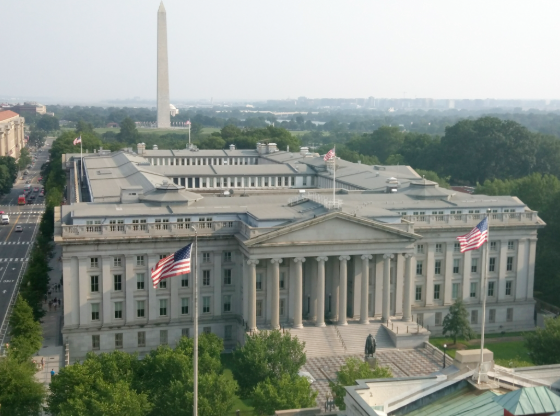
Image used from shutterstock
Let me be honest with you I didn’t fully understand what a “treasury yield” meant until it started showing up in conversations about mortgages, job losses, and grocery prices.
And when the 30-year Treasury yield broke past 5% recently for the first time since 2007, something clicked for me. This isn’t just a Wall Street headline. It’s something that reaches into your paycheck, your savings, and the price of everything you buy.
So, let me walk you through what’s happening no finance degree needed. We’re going to talk about the U.S. government’s borrowing decisions, a costly mistake made back in 2020, and what all of this means for people like you and me right now in 2026.
First, What Even Is a Treasury?
Here’s the simplest way I can explain it. The U.S. government collects money through taxes. But it also spends far more than it collects and it’s been doing this for decades.
To fill that gap, the government borrows money. When it borrows, it issues what’s called a “treasury.” Think of it as a loan that you can actually give to the government. In return, the government pays you back over time, with interest.
These loans can be short-term a few months or a year or long-term, like 10-year or 30-year loans. And just like a home mortgage, longer loans usually come with higher interest rates because the lender is waiting longer to get their money back.
Mortgage analogy: Imagine you have a $500,000 mortgage at 2% interest your monthly payment is around $1,850. Now your bank calls and says rates are going to 5%. Overnight, you’re paying $2,700 a month. That’s essentially what’s happening to the U.S. government right now.
The Costly Decision Made in 2020 and 2021
Here’s where it gets interesting and frankly, a little maddening. Back in 2020 and 2021, interest rates were at historic lows. Never in living memory had it been so cheap to borrow money. At the exact same time, the government was borrowing more money than ever before funding stimulus checks, unemployment benefits, PPP loans, business bailouts, and more.
The government had a genuine choice to make. They could lock in a 30-year loan at around 2% per year essentially freezing that interest rate for decades. Or they could opt for shorter-term loans, say five years, at closer to 1% per year, saving money in the short term but leaving themselves exposed when those loans came due.
“We had the chance to lock in the lowest rates in history for thirty years. Instead, we chose to save a little money today and now we’re paying for it.”
They chose the shorter route. In hindsight, many economists are calling it one of the biggest financial blunders in U.S. Treasury history. Because now, in 2026, those short-term loans are coming due and they’re being renewed at some of the highest interest rates we’ve seen in nearly twenty years.
The Numbers That Should Make You Stop Scrolling
In 2024, roughly $7 trillion worth of U.S. government debt had to be renewed at higher interest rates. In 2025, that number jumped to $9.2 trillion. Now in 2026, we’re looking at approximately $9.7 trillion being rolled over and at higher rates than either of those previous years.
Let that sink in for a second. Nearly $10 trillion. Being refinanced. At the highest rates since 2007.
And here’s the part that I think most people miss entirely: interest payments are now the fastest-growing expense in the entire federal budget. More than the military.
More than Medicare. More than Social Security. Right now, about 20 cents of every dollar you pay in federal taxes goes directly toward paying interest on old debt. It doesn’t fix a road. It doesn’t pay for your healthcare. It just services yesterday’s borrowing.
Why Are Other Countries Backing Away?
There’s another layer to this story that rarely gets told clearly. For decades, large foreign governments particularly China and Japan have been among the biggest buyers of U.S. Treasury debt. It was considered one of the safest investments in the world. But that’s changing.
China has shifted from being a net buyer of U.S. debt to a net seller. Other countries are increasingly choosing to hold gold instead of U.S. treasuries, partly because of concerns about inflation and the long-term strength of the U.S. dollar. When the traditional buyers step back, the government has fewer places to turn.
So what’s left? The government can raise taxes but that seems unlikely given the largest tax cut bill in a century was just signed into law. It can cut spending but cutting Social Security or Medicare is politically toxic. Or it can have the Federal Reserve print money and lend it to the government. That last option is the one that worries me most as an ordinary person trying to protect my savings.
Echoes of 2008 And What’s Different This Time
I want to be fair here. Not everyone agrees a crisis is imminent. But it’s hard to ignore the parallels. Before the 2008 financial crash, the warning signs were there too unusual stress in private credit markets, overleveraged institutions, and a general sense that the music would keep playing forever. It didn’t.
Today, financial regulators are openly flagging similar concerns. The private credit market which has ballooned from almost nothing to $2.5 trillion in under two decades is under scrutiny.
Major funds from BlackRock, Blackstone, and Apollo have faced massive withdrawal requests. The Bank of England’s deputy governor has described it as having “echoes of the global financial crisis,” pointing to complex layers of borrowed money stacked on top of more borrowed money.
A banker’s warning: “There is leverage on leverage on leverage,” said Sarah Breeden, Deputy Governor of the Bank of England. The concern isn’t just that debt exists it’s that nobody fully understands how the layers of risk add up until something breaks.
What This Means for Your Paycheck and Savings
This is the part I want you to actually feel, not just intellectually understand. When the government prints more money to cover its debts, inflation rises.
When inflation rises, the $100 in your wallet buys less than it did last year. Your salary might go up a little but historically, wages have not kept pace with the actual rise in prices over time. That gap is where ordinary people quietly lose ground.
Think about what’s happened to the cost of groceries, housing, and energy over the past five years. A lot of that pain traces back to exactly the kind of government spending and money-printing dynamics we’re now seeing deepen in 2026.
The people who tend to come out ahead in inflationary environments are those who own assets stocks, real estate, businesses. The people who tend to fall behind are those who hold cash, earn fixed wages, and don’t invest. That divide doesn’t happen overnight. It accumulates slowly, year by year, until one day you realize your savings have quietly shrunk in purchasing power without a single dollar leaving your account.
My Honest Take on All of This
Look, I’m not here to tell you the economy is about to collapse. That kind of doom-and-gloom framing gets clicks but rarely helps real people make real decisions. What I genuinely believe, after looking at all of this, is that understanding how the system works is no longer optional.
The government’s decision in 2020 to prioritize short-term savings over long-term stability was short-sighted. The consequences are now playing out in real time. And while policymakers will debate solutions, you and I don’t have the luxury of waiting for them to sort it out.
What we can do is get educated. Understand what’s driving inflation. Understand why yields matter. Understand the difference between storing money in cash versus putting it to work in assets that hold or grow their value even when the dollar doesn’t. None of this requires being wealthy to start. It requires paying attention which you’re already doing by reading this far.
What Can You Actually Do?
Here are a few things worth thinking about right now. First, if you have savings sitting in a low-yield account, inflation is silently eating them.
High-yield savings accounts and Treasury bonds themselves (the short-term kind) are paying meaningful rates right now worth looking into. Second, if you’ve been putting off learning about investing, this is the moment.
The gap between those who invest and those who don’t is widening, and it will keep widening as inflation stays elevated. Third, pay attention to how government spending evolves over the next twelve to twenty-four months. Decisions made now will shape the economic environment for years.
You don’t have to become a financial expert overnight. But you do need to understand the basics of what’s happening because what happens in the bond market doesn’t stay in the bond market. It eventually shows up in your rent, your groceries, your paycheck, and your retirement.
The Bottom Line
Something real is shifting in the financial system right now. The 30-year Treasury yield crossing 5% is not an abstract data point it’s a signal of underlying pressure that has very direct consequences for borrowing costs, government spending, inflation, and your financial life. The decision made in 2020 to borrow short rather than lock in long was a gamble, and it’s now coming due at the worst possible time.
History doesn’t repeat exactly, but it does rhyme. The warning signs that preceded 2008 are echoing again not identically, but unmistakably. The best thing you can do is understand what’s happening, learn how to position yourself ahead of it, and refuse to be caught off guard when these shifts finally show up at your door.
Because they will. They always do. The only question is whether you’ll be ready.
Reference
메타데이터
- post_id
- feb1dd5fafea
- slug
- the-bond-market-just-collapsed-and-your-wallet-could-be-next-feb1dd5fafea
- url
- https://medium.com/geopolitics-beyond/the-bond-market-just-collapsed-and-your-wallet-could-be-next-feb1dd5fafea
- canonical_url
- https://medium.com/geopolitics-beyond/the-bond-market-just-collapsed-and-your-wallet-could-be-next-feb1dd5fafea
- author_url
- https://medium.com/@nairsahil08
- status
- ok
- fetched_at
- 2026-06-09 22:10:26