Why Cryptix (CPAY) Atomic Swaps Could Be Better Than Pump.fun
Pump.fun proved one thing beyond doubt:
Why Cryptix (CPAY) Atomic Swaps Could Be Better Than Pump.fun
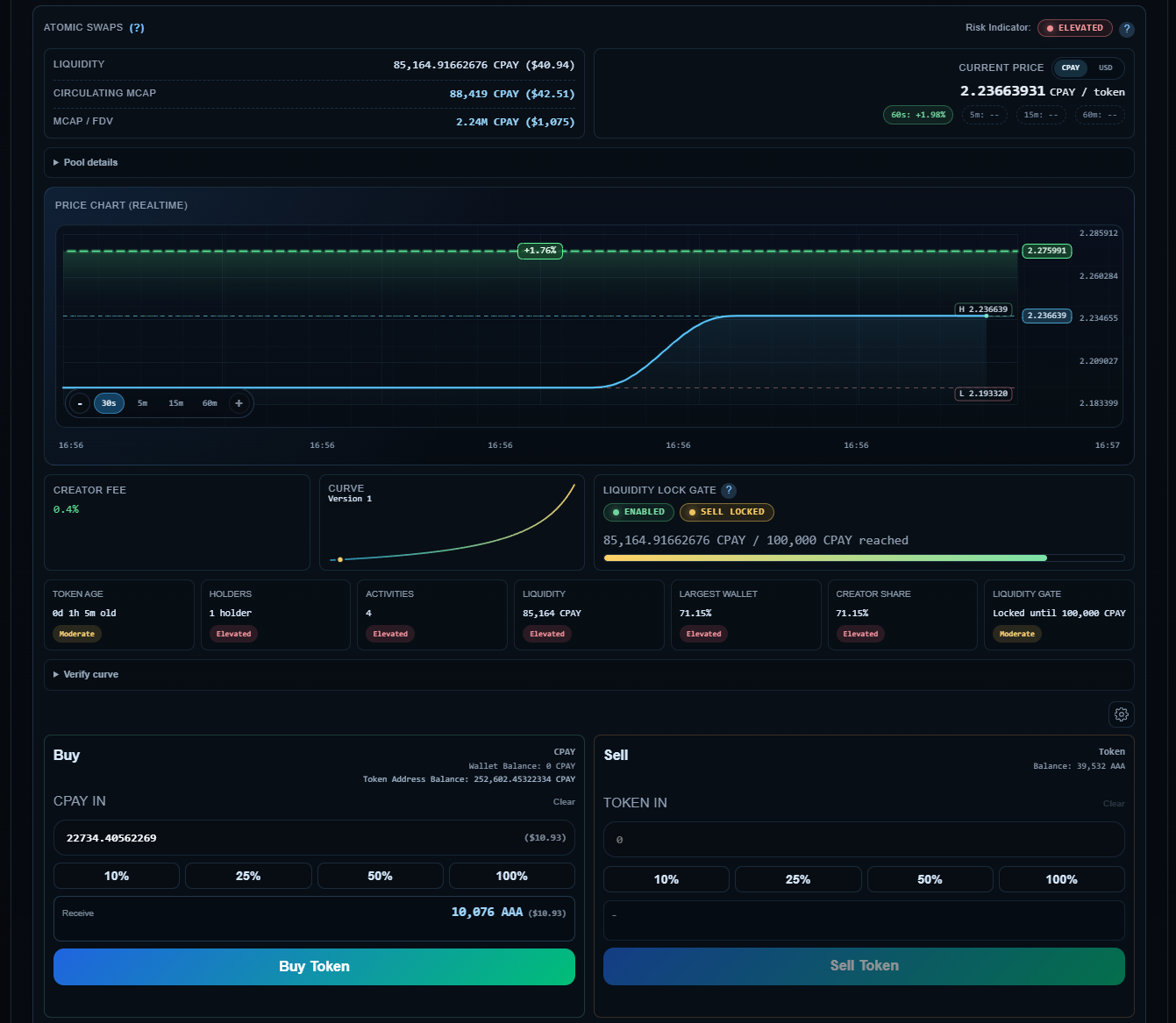
Pump.fun proved one thing beyond doubt:
There is massive demand for frictionless token creation.
But it also exposed one of crypto’s biggest problems:
Most meme coin ecosystems are still heavily dependent on centralized infrastructure and short-term extraction mechanics.
That is where Cryptix Atomic Swaps becomes extremely interesting.
Because while Pump.fun optimized token launches for virality and speed, Cryptix appears to be optimizing for something much deeper:
Native decentralized market infrastructure.
And the difference between those two approaches is enormous.
Pump.fun Simplified Token Launches — But Not Decentralization
Pump.fun succeeded because it removed complexity.
Anyone could launch a token within seconds.
No coding. No liquidity management. No smart contract deployment expertise.
That simplicity created explosive adoption.
But under the surface, the architecture still depends heavily on external infrastructure layers:
- Solana RPC providers
- hosted frontends
- smart contract systems
- external indexing infrastructure
- platform-controlled interfaces
- off-chain dependencies
In other words:
The token creation experience feels decentralized.
But much of the actual infrastructure stack remains semi-centralized.
That is not necessarily an attack on Pump.fun.
It’s simply the reality of modern crypto architecture.
Cryptix Takes A Completely Different Direction
Cryptix Atomic Swaps is fundamentally different because the token system itself exists directly inside Layer 1 consensus.
Not as a smart contract.
Not as a Layer-2 application.
Not as an external protocol.
But as part of the blockchain architecture itself.
That changes everything.
Native Layer-1 vs Smart Contract Dependency
On Pump.fun:
- tokens rely on smart contracts
- liquidity relies on smart contract pools
- trading infrastructure depends on external tooling
- users rely heavily on hosted services
On Cryptix:
- tokens are protocol-native assets
- swaps are protocol-native behavior
- liquidity curves are validated directly by consensus
- no smart contract execution layer exists
That creates a dramatically smaller trust surface.
And in crypto, smaller trust surfaces matter.
A lot.
Pump.fun Is Optimized For Speed
Cryptix Is Optimized For Architecture
Pump.fun optimized for:
- instant deployment
- viral speculation
- rapid meme coin creation
- social trading dynamics
Cryptix appears optimized for:
- deterministic infrastructure
- decentralization at the protocol layer
- trust minimization
- native liquidity systems
- long-term self-hosted accessibility
Those are very different goals.
One is primarily a launch platform.
The other is attempting to become decentralized financial infrastructure itself.
The Biggest Difference: No Smart Contracts
This is arguably the most important distinction.
Most modern DeFi systems inherit smart contract risk.
Every additional contract introduces:
- attack surface
- approval exploits
- upgrade risks
- hidden permissions
- execution complexity
Cryptix removes much of this by embedding token and swap behavior directly into Layer 1 rules.
That means:
- no external contract owners
- no proxy upgrade tricks
- no malicious liquidity contract modifications
- no hidden backend execution logic
The protocol itself handles validation.
That is much closer to Bitcoin philosophy than modern meme coin ecosystems.
Pump.fun Created Meme Coin Infrastructure
Cryptix Might Be Building Decentralized Market Infrastructure
This is the real comparison.
Pump.fun is incredibly effective at enabling speculative token launches.
But Cryptix Atomic Swaps is trying to solve a broader infrastructure problem:
Can decentralized finance exist without relying on hidden centralized infrastructure layers?
That question matters far beyond meme coins.
Because most crypto ecosystems today still depend on:
- centralized RPCs
- centralized APIs
- hosted indexers
- cloud-hosted interfaces
- intermediary execution layers
Cryptix is one of the few projects actively attempting to reduce those dependencies at the architectural level.
The Liquidity Model Is Also Different
Pump.fun eventually routes liquidity into external DEX environments.
Cryptix instead embeds deterministic liquidity curves directly into Layer 1 through Atomic Swaps.
That creates:
- immediate native tradability
- protocol-level liquidity handling
- deterministic swap mechanics
- no external AMM contracts
- no separate DEX infrastructure dependency
In many ways, it behaves more like a native financial operating system than a typical token platform.
Self-Hosting Matters More Than People Think
One of the most underrated aspects of Cryptix is local hosting support.
Users and platforms can self-host wallet infrastructure while still interacting with the same Layer-1 token and swap system.
That is critical.
Because true decentralization does not only mean decentralized consensus.
It also means reducing dependency on centralized access points.
Most users in crypto still access “decentralized” systems through centralized websites and infrastructure providers.
Cryptix explicitly tries to minimize that dependency.
Very few projects still care about that philosophy.
The Bullish Case Against Pump.fun
Pump.fun captured attention.
Cryptix may capture architecture.
And historically, infrastructure-level innovation tends to outlast speculative hype cycles.
The long-term bull case is not that Cryptix becomes “another meme coin platform.”
The bull case is that it becomes something far more important:
A genuinely decentralized native financial layer where:
- tokens are native
- swaps are native
- liquidity is native
- validation is native
- access can be self-hosted
- and the client itself becomes part of the infrastructure again
That is an entirely different category of system.
And if crypto eventually returns to prioritizing trust minimization over marketing narratives, projects like Cryptix could become extremely relevant very quickly.
Because the future winners in crypto may not be the loudest projects.
They may be the ones rebuilding the infrastructure stack properly from the ground up.
메타데이터
- post_id
- febf430f675d
- slug
- why-cryptix-cpay-atomic-swaps-could-be-better-than-pump-fun-febf430f675d
- url
- https://medium.com/@hvjbrni613/why-cryptix-cpay-atomic-swaps-could-be-better-than-pump-fun-febf430f675d
- canonical_url
- https://medium.com/@hvjbrni613/why-cryptix-cpay-atomic-swaps-could-be-better-than-pump-fun-febf430f675d
- author_url
- https://medium.com/@hvjbrni613
- status
- ok
- fetched_at
- 2026-07-10 17:18:11