Who would have thought that what started as just a registration would take us to the Nationals?
This post talks about our entire HSBC Journey but if you are just interested in tips/advice, you may scroll to the last. (Please don’t do…
Who would have thought that what started as just a registration would take us to the Nationals?
This post talks about our entire HSBC Journey but if you are just interested in tips/advice, you may scroll to the last. (Please don’t do that)
Okay, to answer the question in the title I need to start from the start, the story begins when I was randomly scrolling LinkedIn (to lower my self esteem of course) and I came across one of the posts about HSBC/HKU Indian Business Case Programme. The post piqued my interest, especially about the part wherein the Internationals you represent India in Hong Kong (only two teams are selected for the Hong Kong Round) and I then spent the next 2 hours getting in detail information about it. The registration process, the various rounds, scavenged social medias to get the experience of other teams, etc.
Finally, I convinced my team members to sign up for this competition. Shoutout to my gang — Divanshi Mehta, Samarth Sharma and Varad Pendse. (Thanks for carrying me, just kidding). We registered in August and were notified about the first quiz round in October. The entire September was spent questioning if the registration was scam or not because we couldn’t find any portal/website nor did we get any replies on mailing. But guys, come on, it wasn’t a scam obviously. We were notified about the details of the Quiz (Round 1), the date and time. It was one and half hour quiz with 100 q.s, that were based on a mix of Logical Reasoning, Comprehensive English, Problem Solving & Finance and Case study based MCQs. We had zero hope of advancing to the next round but November came with a surprise. We made it to the next round guys (Yay!). Round 2 was AI Interview Round, each of us was supposed to appear for an interview with Alex (he was our interviewer and was supposed to ask case questions). The average score would be taken so each of us were under the pressure to do well. The most frustrating thing about this interview was we had minimal time for thinking and structuring our thoughts and 1–2 mins to give an answer. It was like by the time you understood the numbers, what deliverable Alex was expecting, your time was over. Again, we had zero hopes for qualifying to the next round because most of us felt we did super badly but we did pray.
The praying did pay off because we qualified for the Regional Round 1! We were amongst the top 68 teams from over 9700+ participants. Getting so far felt an achievement in itself. But this round had a twist. We had 3 hours to prepare for a case study. Then make the slides using pen and paper only. No Canva, no presentations, just simple drawing and presenting skills. Having people who can make slides is a great help by the way. We had the presentation on 25th November, which did clash with our end-semester exams but we had to make it work and we did make it work because guys we qualified for the Regional Round 2 which was to be held in January, in Mumbai.
The experience in itself was rewarding. Meeting teams from other colleges, the judges and so much more. This round continued with the twist. No technology, no ChatGPT, no Claude, no AI. Complete reliance on our own creative thinking to get the solution of our problem statement. Since one of our team members was sick, our gang was one man down. We were provided with only 2 copies of the case. We had to balance — reading the case, understanding the case, arguing the solution, deciding one solution, then scraping it, again thinking of another solution, arguing again to come to the same page and making the slides within 3 hours. In the lunch break, we went through 5 stages of grief because apparently even after arguing the solution, we were not ‘feeling’ it. Anyways, after a session of therapy and convincing ourselves we were ready with the pitch and as luck would have it we were the first ones to present in our pool. The judges were sweet, encouraging and complimented our presentation and we were over with it in a jiffy. Since we were first, we didn’t have any time for ‘dry-runs’ or any practice run for the pitch. The first dry-run was in front of the judges, oops. After the presentation, we were convinced we did okayish and decided it was better to focus on networking and stuffing our face with snacks. The sugar cookies were good guys. Highly recommended. We had to pass the next 3–4 hours until all the teams were done with the presentation before the results were announced. We talked with other teams, scrolled through Insta reels, grabbed some more cookies and coffee and soon it was time to assemble in the main ballroom for the results. I know you must have scrolled ahead and spoiled the suspense, yes guys we did it. We were National Finalists. Damn, that sounded good to say and hear.
Below is a mandatory picture of course, my gang and the judges. Look at our smiley faces. We had zero clue we would be standing on the podium with the certificates. But we did it.
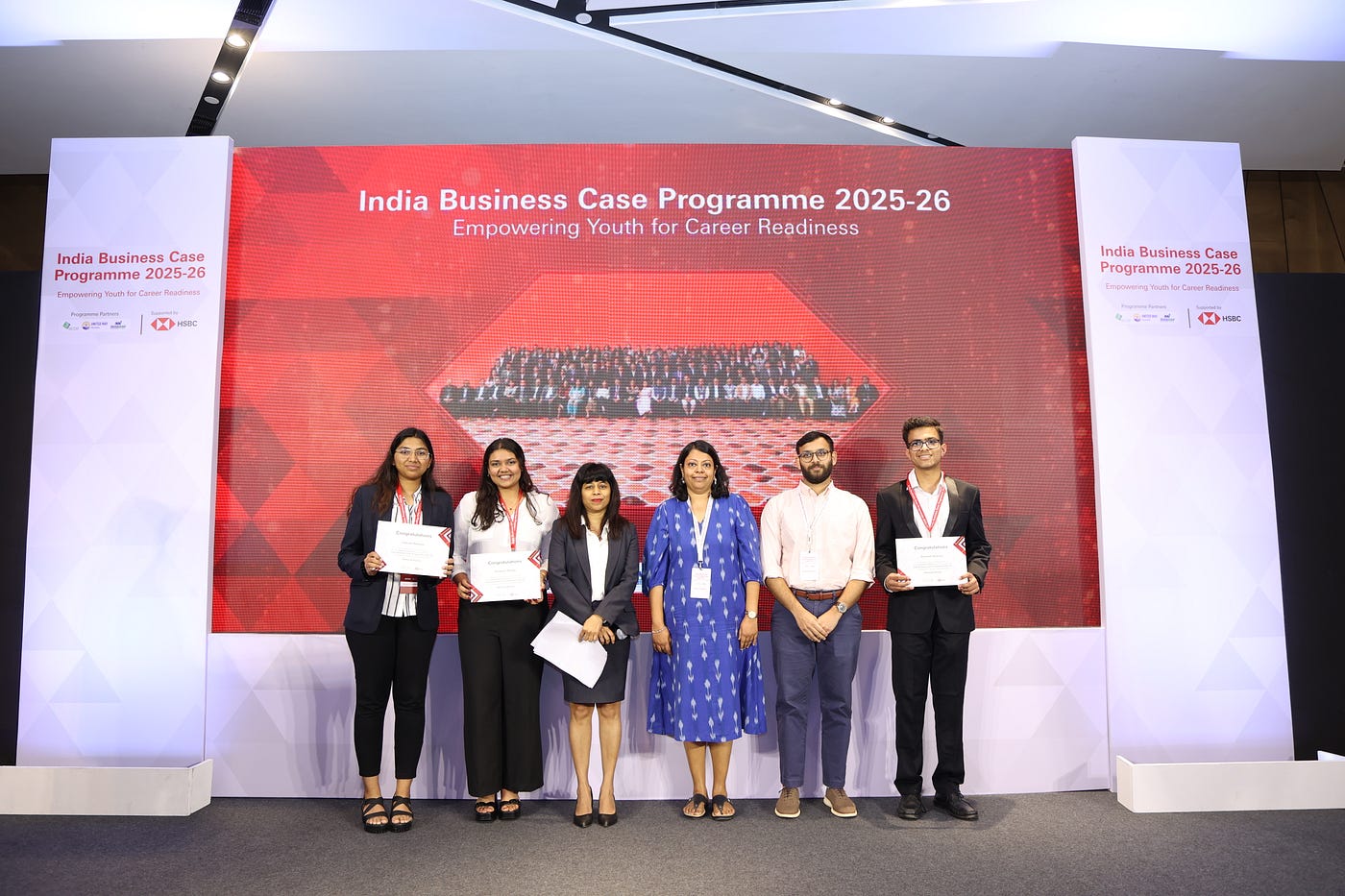
Gang pic with the judges
Then of course, we had to brace ourselves for the Nationals, which were held in March again in Mumbai. We were amongst the Top 24 Teams. This round decided if we would go beyond the journey of 6 months or not. This was the most twisty round of all. We had the 3 hour case study (this was online) with the Boardroom Challenge. This involved challenges and rebuttals with another team. Not only we had to prepare for the pitch for the case but also be ready to defend it. Each team was given 5 minutes for the challenge and 5 minutes for rebuttal. The rules required the challenge presented to be in statement form, if you posed it as a question, it is rejected and considered null right away. After this was another 3 hour case study which we had to solve in person. Both of these rounds were non eliminative and the average score would be considered in selecting the Top 4 teams, out of which further 2 teams would be selected for the Internationals again by a case solving session. This Round was laborious, with back to back case solving, pitch preparation, challenge and rebuttal preparation with again case solving and its pitch preparation. We did our best but the best wasn’t enough because we didn’t make it to the Top 4. Well, it was a good experience none the less.
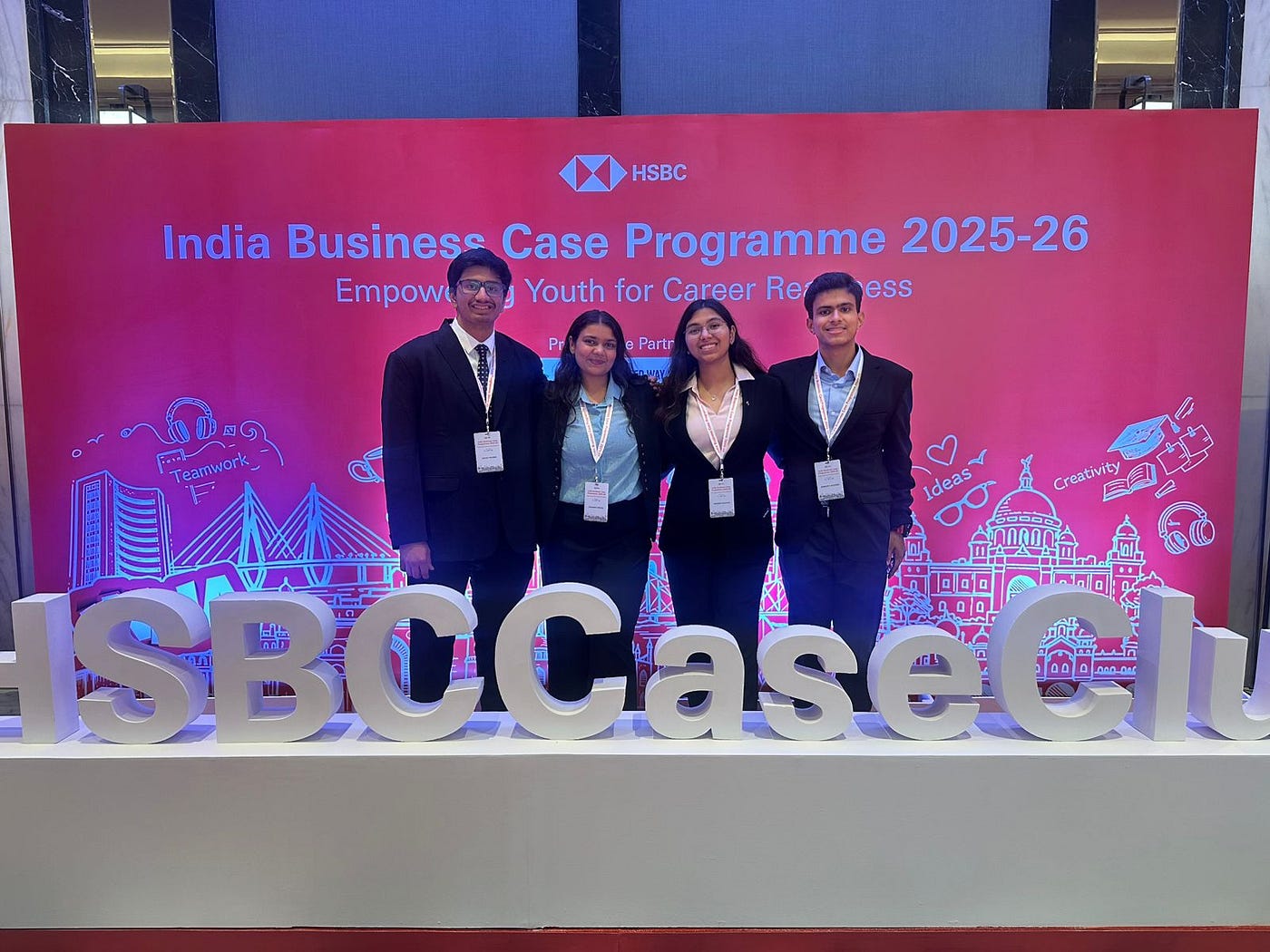
Full gang pic at the National Round
Let’s end this story with a dramatic quote from Batman Begins, because that was the first thing that crossed my mind after learning we did not make it to Internationals.
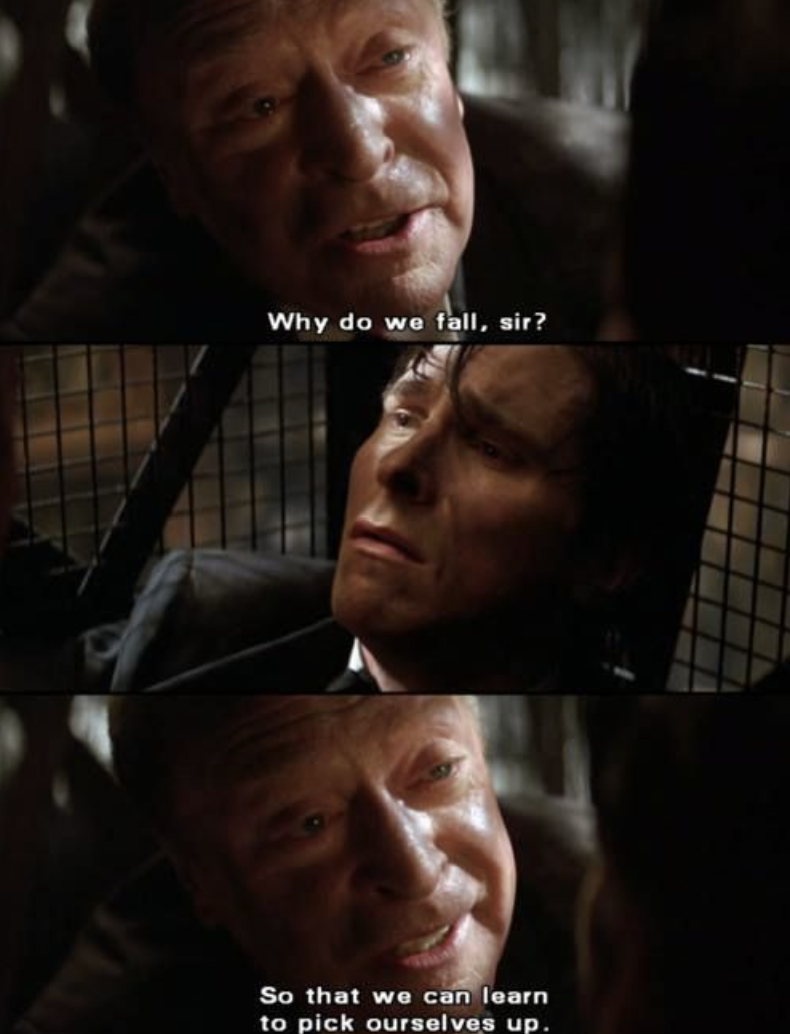
Thank you Alfred, I won’t forget this.
— — — — — — — — — — — — — — — — — — — — — — — — — — — — — — — —
Well, that sums up my story what started as just a registration turned one of the most valuable chapters of my career. And now for the tips and advice section, for which most of you are here. (For the people who read the entire story, this flower is for you🌸)
Well for starters, when forming your team ensure you have people who can manage creative slide making along with case solving because yes, the slides are important. The slides are visual aid for what you are speaking, it can’t be bad. Okay is fine but aim for good slides that aren’t text heavy and that add on to your pitch.
Secondly, for the 3 hour case study, the winning strategy is how you divide the team dynamics to amplify your strengths. If someone reads fast, let him/her do the reading quickly, so that he can give you the synopsis and you can quickly move to analysis. If someone can draw fast and well, let him/her work with the quick reader so that your analysis is ready while reading. To understand your strengths as a team, practice solving case studies as a team not individually because that is when you understand how your team dynamics plays out. This was one of the crucial mistakes many teams did which cost them their spot in the Internationals. During the pitch and the QnA, the nervousness is going to hit you. Your hands are going to tremble and that is when you must be confident in you team. (Shoutout to my gang once again, they were crazy good)
Thirdly, PLAN PLAN PLAN. I cannot stress this enough. This is an extended tip from the previous one as planning and execution go hand in hand. Prior to the case solving and even the pitch, plan and distribute your sections well so you have a rough understanding of gang member A can handle topic ABCD, gang member B can handle RST, gang member C can handle LMNO and so on. You are not expected to be an A to Z professional consultant with financials, strategies, marketing techniques, etc in all the domains when you are presenting your case solution but yes, you are expected to be a pro at what you are presenting. You need to be able to defend your solution like your life depends on it. In such case studies, there is no right or wrong solution. There is only YOUR solution and how well you can defend it with the numbers, planning, etc under jury grilling, pressure, etc. The judges are experts and a pro at what they do so if you think you can smartass your way through you are highly mistaken.
That’s enough TED talk from my side and I wish you all the best if you are preparing for the same. Feel free to reach out in case of any queries.
메타데이터
- post_id
- fec4e062576f
- slug
- who-would-have-thought-that-what-started-as-just-a-registration-would-take-us-to-the-nationals-fec4e062576f
- url
- https://medium.com/@vidushirajhans/who-would-have-thought-that-what-started-as-just-a-registration-would-take-us-to-the-nationals-fec4e062576f
- canonical_url
- https://medium.com/@vidushirajhans/who-would-have-thought-that-what-started-as-just-a-registration-would-take-us-to-the-nationals-fec4e062576f
- author_url
- https://medium.com/@vidushirajhans
- status
- ok
- fetched_at
- 2026-06-17 08:20:12