The Great Decoupling: Reclaiming the Means of Production of Life
By Tomas Diez | Fab City Newsroom
The Great Decoupling: Reclaiming the Means of Production of Life
By Tomas Diez | Fab City Newsroom
The world is currently witnessing a failure of the industrial paradigm in slow motion. We are living in a “magic state” of global logistics, a geological lottery where fertile soil and creative potential have been traded for the illusion of infinite, cheap resources. As the “Product In, Trash Out” (PITO) model disintegrates, we face a choice: fracture under the weight of collapsing supply chains or reclaim the material foundations of our existence.

The material reality of Life: Nutrients, Soil, and Water
To speak of “reclaiming the means of production” is no longer just a political statement; it is a biological necessity. Life is fueled by a material reality that is being systematically degraded. Our current extractive model treats nutrients, air, soil, and water as “externalities” to be consumed rather than the very fuel for living beings.
- The nutrient cycle: we have replaced complex, localized food webs with chemical nitrogen cycles dependent on global gas markets. When the “energy jugular” of the Strait of Hormuz trembles, the soil in our backyards starves.
- The quality of commonality: Air and water quality are the ultimate indicators of a failing system. When a city “imports” its survival through long-distance shipping, it exports its pollution to the oceans and the atmosphere.
- The soil trap: We have suffocated our land with concrete to facilitate the flow of global tourism and logistics, forgetting that the soil is a living technology capable of carbon sequestration and life support.
Uncovered colonialism: resource shadows
The systemic crisis we face is fueled by the pursuit of minerals that are supposed to “save” us. The transition to a green economy is currently being written in the scars of the Earth:
- The extraction nightmare: In the Democratic Republic of the Congo, the race for cobalt and lithium — essential for our “smart” devices — is fueling a cycle of displacement and violence.
- The Amazonian trade-off: From Venezuela to Brazil, ancient rainforests are being cannibalized for gold and minerals, trading life-giving ecosystems for temporary wealth.
- The rivers of plastic: We are cannibalizing the planet to feed a supply chain that returns to us as microplastics in our food and toxins in our water.
The automation paradox: the human displacement
While material supply chains crumble, our internal human landscape is being hollowed out. We are entering a “productivity paradox” where corporations invest billions in AI to optimize extraction while the human workforce — and specifically the cognitive surplus of our youth — faces an acute crisis of relevance.
Automation is no longer confined to the factory floor; it is targeting the very creative spirit that defines humanity. If we do not control the technology, it will simply become a more efficient tool for the same extractive systems. We must use AI not to displace humans, but to manage the complex “bits” of information required to fuel a localized, regenerative economy.
A necessary evolution: Data In, Data Out (DIDO)
Addressing these systemic failures requires a fundamental shift in urban logic. The move is away from a model that merely consumes the world toward one that regenerates it — a transition from “Product In, Trash Out” (PITO) to a framework of **Data In, Data Out (DIDO)**. This approach, which is being prototyped across a global network of cities, seeks to decouple human progress from environmental degradation by focusing on three essential pillars:
1. Technology sovereignty: AI for the Commons
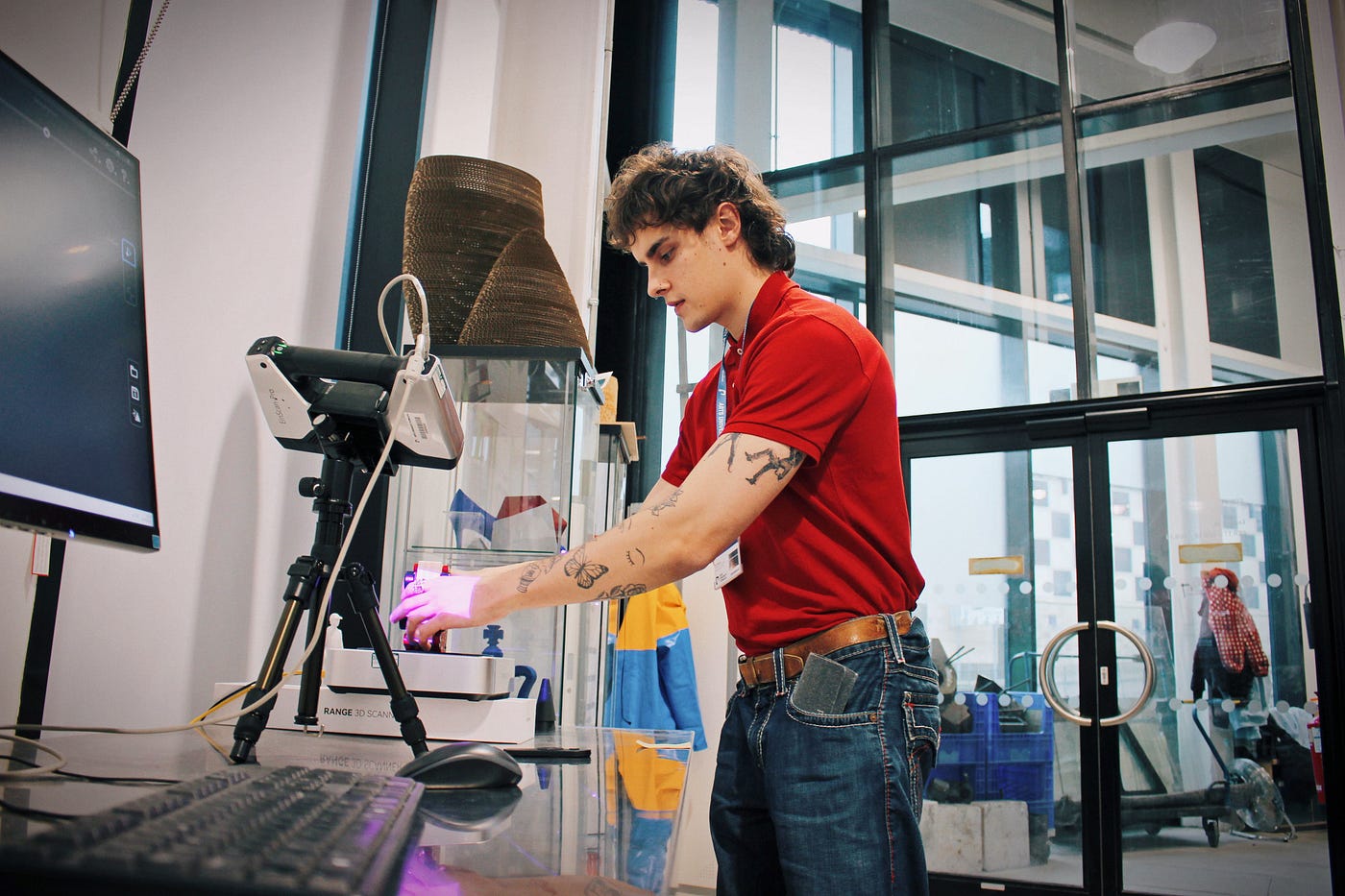
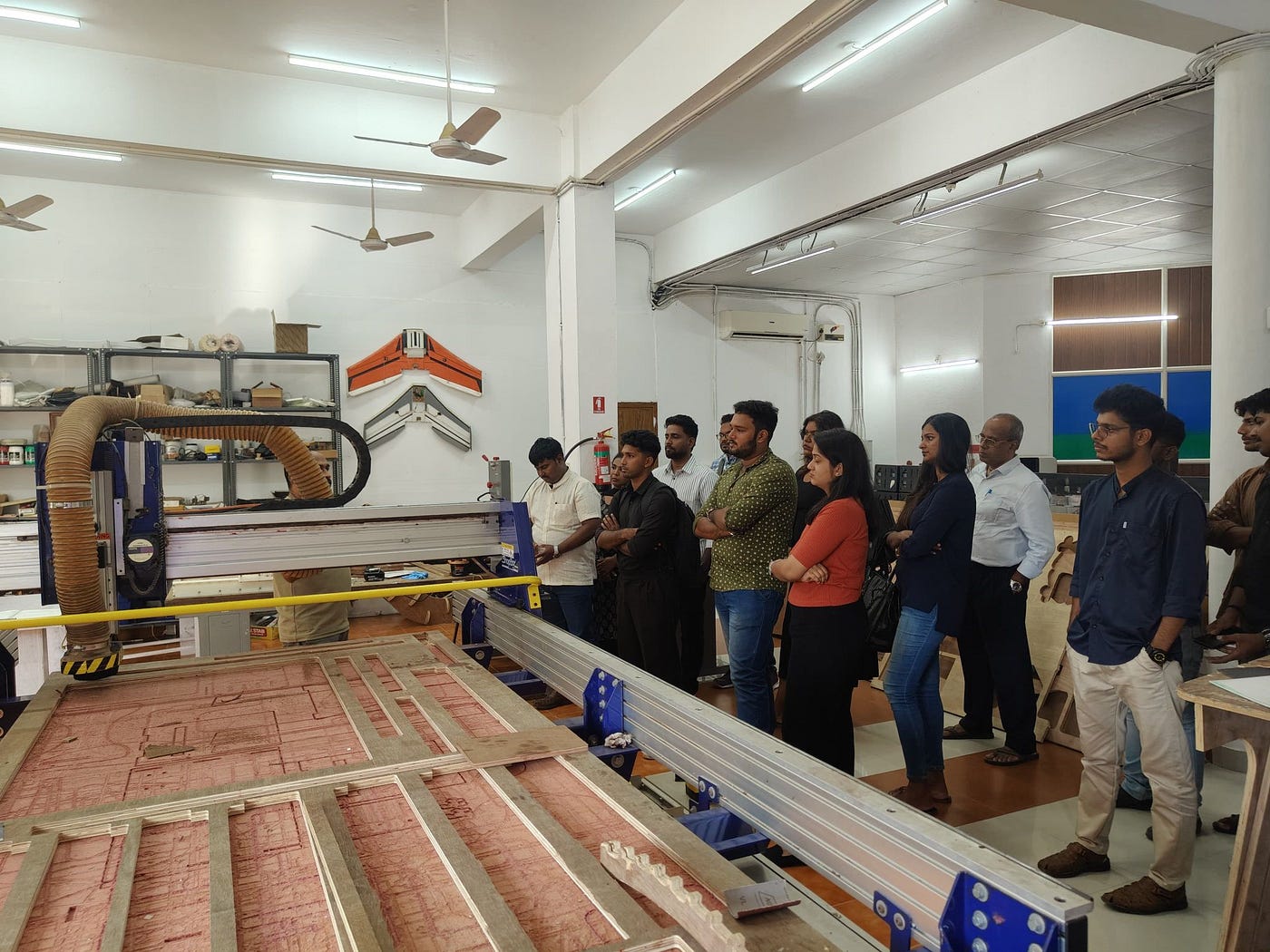
We must reclaim the means of production of technology. Instead of AI-driven hollowing, we utilize distributed and contextualised AI, owned by local organisations, trained for specific needs, following the principles of local wisdom and global “repositories of recipes.” This allows communities to manufacture essential tools locally using digital fabrication. AI becomes the architect of the commons, optimizing local material flows and reducing the need for destructive global mining.
⭢ ex: Fab City OS, Interfacer project | Collection of tools designed to promote, assist and incentivize distributed and collaborative practices, offering an implementation of fair and equitable compensation schemes, throughout the whole design and manufacturing lifecycle.
2. Energy independence: Severing the Energy Jugular
Localized production of clean energy — from green hydrogen experiments to decentralized solar grids — is the only way to sever our dependence on geopolitical conflict zones. Energy must be produced where it is consumed, turning every city from a drain on the grid into a productive node.
⭢ ex: Hydrogen village — Fab Lab Bali
3. Regenerative Bioregionalism: Reclaiming Soil and Nutrients
Cities must recognize their bioregional limits. This means understanding the flow of matter within a 100km radius. We reclaim the soil from concrete, utilizing urban agriculture and closed-loop nutrient cycles to bypass global fertilizer shocks. By restoring our local water and air, we restore the biological capacity of the city to support all living beings.
⭢ ex: Hylo Platform
A Big Moment for Humans
We are at a crossroads. We can remain passive “users” of failing, extractive systems, or we can become makers of our own resilient ones. Every act of local production — whether it is 3D printing a spare part, harvesting solar power, or regenerating a patch of urban soil — is an act of rebellion against a dying paradigm.
The atoms must stay local; the data must travel the planet. We must reclaim the means of life before the machine finishes consuming the foundations we stand on.
The future is not something to be predicted; it is something to be fabricated.
The Fab City Newsroom, curated by founding member Tomas Diez, draws its content from over a decade of knowledge nurtured within the Fab City ecosystem. We utilize various Language Models to amplify our perspectives and produce human-supervised content that articulates our reflections on navigating current global uncertainties. This process helps to contextualize our work and incrementally engage our diverse audiences in the broader transition we are advocating for.
메타데이터
- post_id
- fecf830cd20f
- slug
- the-great-decoupling-reclaiming-the-means-of-production-of-life-fecf830cd20f
- url
- https://blog.fab.city/the-great-decoupling-reclaiming-the-means-of-production-of-life-fecf830cd20f
- canonical_url
- https://blog.fab.city/the-great-decoupling-reclaiming-the-means-of-production-of-life-fecf830cd20f
- author_url
- https://medium.com/@fabcityfoundation
- status
- ok
- fetched_at
- 2026-06-12 07:40:50