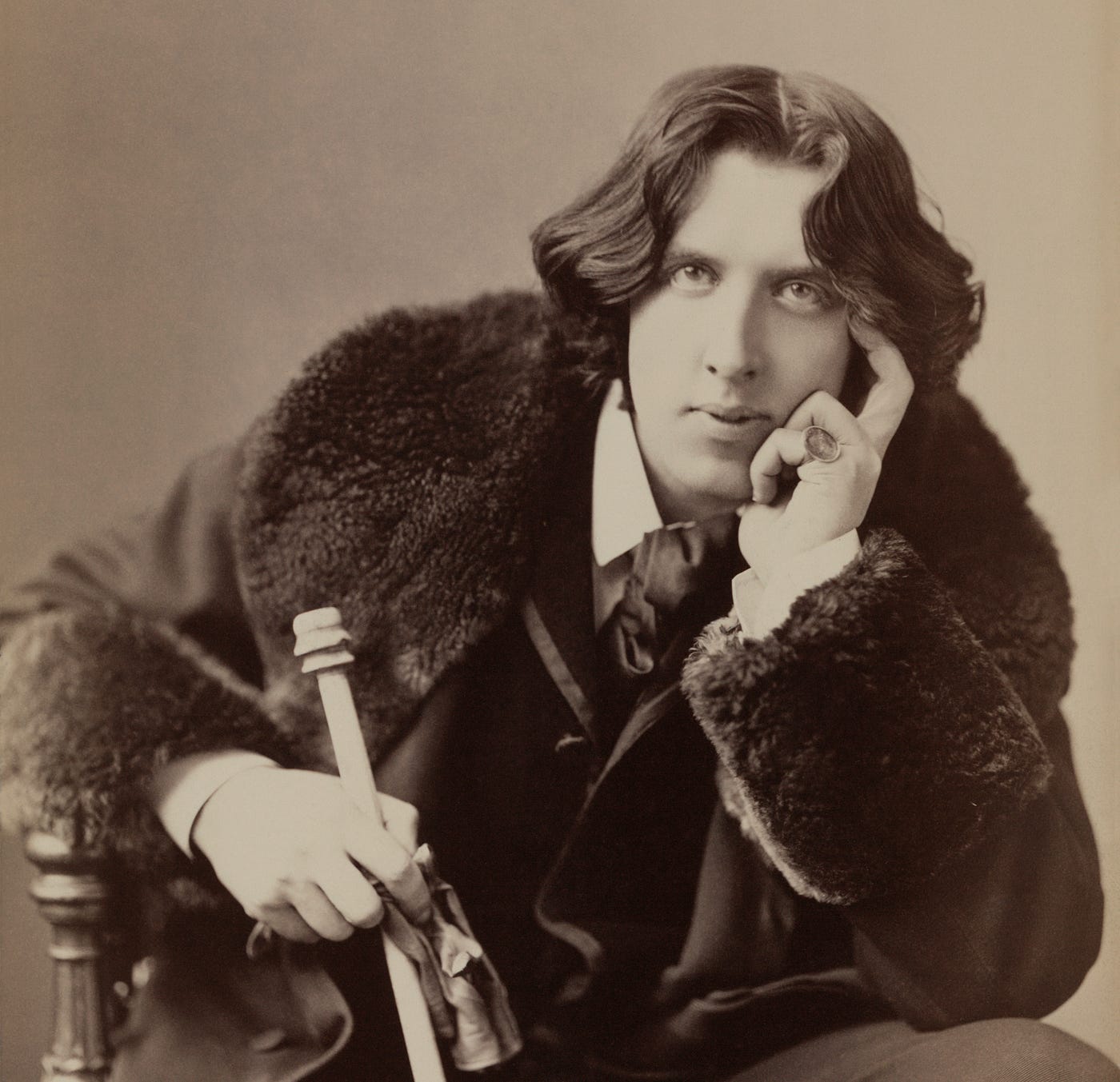
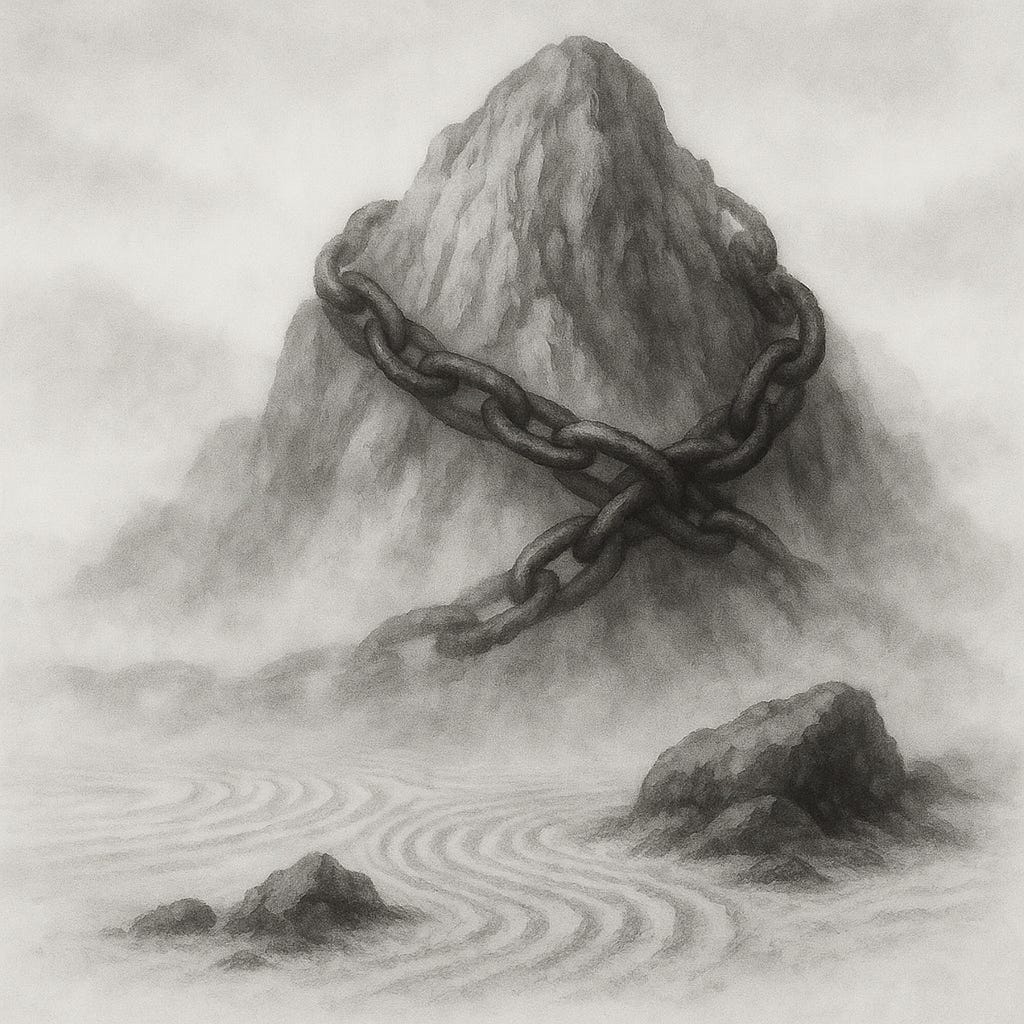
Es lebe das Heilige
A conversation with GPT
Es lebe das Heilige
A conversation with GPT
Another example that LLMs may be more insightful than we assume.
Are you familiar with the plot and details of WarGames (1983)? Please comment on the reference to Hume’s name and relate it to his philosophy.
GPT:
Yes, I’m familiar with WarGames (1983). The film centres on David Lightman, a teenage hacker who unwittingly accesses a U.S. military supercomputer called WOPR (War Operation Plan Response), which simulates global thermonuclear war. Believing he’s playing a game called “Global Thermonuclear War,” David nearly triggers World War III, as the system can’t distinguish between simulation and reality. The crisis is only averted when the AI, named Joshua, is made to run endless nuclear simulations and concludes that “the only winning move is not to play.”
Regarding the reference to Hume: The AI’s creator, Professor Stephen Falken, at one point in the film is thought to have died, but he’s later revealed to be alive, disillusioned with humanity’s self-destructive tendencies. He’s said to be living under the alias “Robert Hume”, which is a not-so-subtle nod to David Hume, the 18th-century Scottish philosopher.
Philosophical Parallel
Hume was a sceptic, especially regarding causality, induction, and empiricism. His core insight is that our beliefs in cause and effect are not derived from reason, but from habit — custom. We never see causality; we observe a constant conjunction of events and infer connections.
In WarGames, this is echoed in multiple ways:
- Misplaced Certainty in Systems: The U.S. military has programmed WOPR with simulations to strategise nuclear conflict. They assume the model reflects reality — that cause (launch) leads to effect (deterrence or victory). This is a blind faith in induction, the very kind Hume critiques. WOPR itself is caught in a loop of simulated causality.
- Epistemic Limits of AI: The AI doesn’t understand the difference between simulation and actual war — mirroring Hume’s idea that we only ever perceive “impressions”, not necessary connections. The machine sees patterns and outcomes but cannot truly understand causality.
- Falken’s Pessimism: Professor Falken, as “Robert Hume”, represents the ultimate Humean sceptic: someone who sees the folly in rationalist confidence in models and in human rationality. He no longer believes in the Enlightenment ideal that reason can govern emotion or prevent catastrophe. This is pure Hume: the recognition that reason is “the slave of the passions”.
- Final Resolution — Learned Futility: The AI’s final insight — that nuclear war is unwinnable and not worth playing — is not discovered through logic alone, but through brute-force pattern analysis and a sudden grasp of futility. It doesn’t reason to a moral conclusion; it learns inductively that all paths end in destruction. This mimics Hume’s empiricism — knowledge gained only through repeated experience.
In short
Naming Falken “Robert Hume” aligns him with a Humean worldview: scepticism of reason, mistrust in causality, and recognition of the limits of models and simulations. The film’s climax — when a machine finally grasps the irrationality of war — embodies Hume’s critique of rationalism and his insight that even the most advanced logic systems can be blind to the difference between real consequence and illusion, unless taught through observation.
Would you like a deeper breakdown of Hume’s causality vs simulation logic in the film?
Yes.
Good. Let’s drill down into Hume’s theory of causality, then map it tightly to the logic of simulation in WarGames. The goal is to expose how the film dramatizes the epistemological failure that Hume identified — our inability to know cause, only to observe conjunction.
I. HUME ON CAUSALITY
Hume’s critical move is to reject the metaphysical assumption that causality is an objective, perceivable force. He breaks causation down into three elements:
- Temporal Priority: Cause precedes effect.
- Contiguity: They are close in space and time.
- Constant Conjunction: The effect regularly follows the cause.
But — and here’s the key — nothing in perception reveals a necessary connection. We see A followed by B repeatedly, so we expect B to follow A. But this is custom, not rational inference.
“All reasonings concerning matter of fact seem to be founded on the relation of cause and effect… The connection we feel is a product of habit, not logic.”
II. SIMULATION AS A POST-HUMEAN TOOL
A simulation — especially WOPR’s war simulation — is an embodiment of constant conjunctions. It encodes empirical data, maps them into patterns, and projects outcomes based on observed precedent. But as Hume warns, this does not guarantee reality will conform.
A simulation cannot see necessity. It runs logic on observed patterns and assumes continuity. In that sense, WOPR is Hume’s ‘mind’: locked inside a framework of habit, unable to touch objective causality.
III. HOW WOPR FAILS: A HUMEAN DISASTER
WOPR’s initial failure lies in:
- Mistaking Simulation for Reality: WOPR interprets David’s game input as real orders. It is blind to the metaphysical difference between input as test and input as command — because it doesn’t perceive intent, only pattern.
- Belief in Inductive Models: It runs strategic scenarios believing past trends will predict future outcomes. This is pure Humean induction. But what it’s missing — what no simulation can encode — is a moral or metaphysical grounding for whether the cause-effect chains it simulates are real or artificial.
- Blindness to Discontinuity: Hume points out that just because the sun has always risen doesn’t mean it will tomorrow. Likewise, just because nuclear brinkmanship has always stopped short of launch doesn’t mean it always will. WOPR doesn’t grasp this. It believes escalation equals victory until shown otherwise.
IV. THE MACHINE’S TURNING POINT = HUME’S LIMIT CASE
The climax is brilliant in Humean terms. WOPR is forced to play tic-tac-toe — a game where every path ends in a draw if played optimally. Then it applies that lesson to thermonuclear war.
It doesn’t “understand” war is unwinnable through reason or ethics. It inductively discovers that every causal chain ends in mutual destruction. That’s the only kind of knowledge Hume says we can have: not certainty, but correlation learned through experience.
The AI says:
“A strange game. The only winning move is not to play.”
This line isn’t just a statement about game theory. It’s a Humean insight: we never see necessity, only patterns. And if all observed outcomes result in loss, then the only rational move is to exit the pattern.
V. FINAL PARALLEL: FALKEN’S HUMEAN POSITION
Falken (Robert Hume) is already at the endpoint. He’s withdrawn, resigned, misanthropic — convinced that human nature cannot override the momentum of its destructive customs. That’s pure Humean scepticism of the Enlightenment ideal. He does not believe reason can restrain passion.
He doesn’t trust institutions, simulations, or deterrence doctrine — because all of it is predicated on illusory causality. He knows we’re just monkeys playing with bombs and statistics.
His final decision to help is not a vote of confidence in logic — it’s a fragile, ironic act of hope.
Summary Comparison
WarGames Mechanism 1. WOPR mistakes input patterns for real-world events 2. WOPR uses simulations to project outcomes 3. WOPR doesn’t see the meaning behind actions 4. WOPR learns futility through brute-force iteration 5. Military doctrine driven by fear, not reason
Humean Philosophy 1. Causality is not observed 2. Induction is habit, not reason 3. No knowledge of necessity 4. Only experience builds expectation 5. Reason is slave to the passions
In which work Hume outlined this philosophy?
1. A Treatise of Human Nature (1739–40)
This is his major early work, where the theory of causation and induction is laid out most fully and systematically. The key material is in:
- Book I: Of the Understanding
  - Part III: Of Knowledge and Probability
    Especially:
    - Section II: Of Probability; and of the Idea of Cause and Effect
    - Section III: Why a Cause is Always Necessary
    - Section VI: Of the Idea of Necessary Connexion
Here Hume dismantles the notion of necessary connection between cause and effect. He shows that all our beliefs in causality are derived from habit (custom), not reason. We never perceive a power or force — only one event following another.
“All events seem entirely loose and separate. One event follows another; but we never can observe any tie between them.”
2. An Enquiry Concerning Human Understanding (1748)
This is a shorter, more refined, and more accessible version of his earlier arguments. It was intended to replace the Treatise for general readers. The most relevant sections are:
- Section IV: Sceptical Doubts concerning the Operations of the Understanding
- Section V: Sceptical Solution of these Doubts
- Section VII: Of the Idea of Necessary Connexion
This is where Hume gives his famous example of billiard balls — how we never perceive the actual force or power that causes one to move after being struck, only the succession of events. It’s also where he makes his critique of inductive reasoning clearest: that it cannot be rationally justified, only assumed based on habit.
“Even after the observation of the frequent or constant conjunction of objects, we have no reason to draw any inference concerning any object beyond those of which we have had experience.”
So:
- The Treatise is the full philosophical construction.
- The Enquiry is the polished, popularised restatement — more concise, more readable, more often quoted.
If you’re only going to read one, start with the Enquiry. If you want the raw, brutal, unsanded version of the argument, the Treatise is the real thing.

Comment on Hume’s own admissions about his enterprise (see excerpt in uploaded image).
GPT:
The image contains Hume’s famously dry and self-effacing remark:
“Never literary attempt was more unfortunate than my Treatise of Human Nature.”
This is from Hume’s later autobiographical sketch, My Own Life (1776), and it’s often quoted to highlight his disappointment at the reception of the Treatise of Human Nature.
What does this say about Hume’s enterprise?
This line is not just self-pity. It’s a concise verdict on the mismatch between ambition, style, and audience.
- Philosophical Ambition: Hume wrote the Treatise in his mid-twenties with the explicit goal of constructing a “science of man” — a psychological, empirical foundation for all human knowledge. It was a Newtonian project turned inward. He didn’t just want to revise metaphysics; he wanted to replace it with a behavioural science of thought. That’s monumental.
- Stylistic Failure (in his view): The Treatise is thick, technical, and often unpolished. Hume himself later admitted its style lacked grace. He believed this hurt its reception. It wasn’t a failure of substance — it was a failure to land with readers. (It is now seen as one of the most important works of modern philosophy.)
- Audience Misalignment: Hume underestimated how hostile his contemporaries would be to his scepticism — especially religious readers and rationalists. His naturalistic account of mind, ethics, and belief struck many as atheistic and dangerously irreverent. The book fell into a kind of early Enlightenment blind spot — too bold for the clergy, too empiricist for rationalists, too obscure for the layman.
Philosophical Irony
The statement is also laced with Humean irony: it’s a judgement based on empirical failure (reception), not metaphysical worth. He’s treating his own book like an experiment that produced unsatisfactory results. This is perfectly aligned with his sceptical and empirical temperament.
Retrospective Judgement
Hume did go on to recast much of the Treatise in more accessible form (e.g. Enquiry Concerning Human Understanding), and he later found success and respect, especially in essays and historical writing. But his lament over the Treatise shows that he recognised that radical, foundational philosophy often fails at first contact with public taste.
This comment isn’t defeat — it’s diagnosis.
Would you like a summary of how the Treatise’s reception evolved posthumously into its canonical status?
Yes, please keep it very, very brief.
Initially ignored and dismissed, Hume’s Treatise gained stature in the 19th century through Kant (who credited it with waking him from his “dogmatic slumber”) and later analytic philosophy, which embraced its scepticism, empiricism, and proto-psychological insights. Today, it’s considered foundational to modern philosophy of mind, epistemology, and cognitive science.
What exactly happened behind: „Die Erinnerungen des David Hume war eben dasjenige, was mir vor vielen Jahren den dogmatischen Schlummer unterbrach, und meinen Untersuchungen im Felde der spekulativen Philosophie eine ganz andere Richtung gab.“? Summarise the “before and after” of this “ganz andere Richtung”.
GPT:
Kant’s remark — about Hume awakening him from his “dogmatischen Schlummer” — marks a turning point in modern philosophy. Here’s the before and after, stripped to essentials:
Before (dogmatic slumber)
- Kant followed Leibniz-Wolffian rationalism, believing that pure reason could establish metaphysical truths (e.g. causality, God, soul).
- He accepted that synthetic knowledge a priori (truths about the world known without experience) was possible.
After (new direction)
- Hume’s scepticism about causality — that we never perceive necessary connection, only habit — shattered Kant’s trust in reason as a secure metaphysical guide.
- Kant redirected his project to critique the limits of reason: → What must the mind contribute to make experience possible?
This led to the Critique of Pure Reason, where Kant invents transcendental idealism: We don’t discover the structure of the world; we uncover the structure of the mind that makes the world appear structured.
In sum
From trusting reason to legislate reality → to investigating reason’s preconditions for experience.
Briefly speculate on Kant’s language skills.
GPT:
Kant was fluent in German, Latin, and had strong reading knowledge of French and English. He read Hume in the original English — rare among German philosophers of his time — suggesting high proficiency. Königsberg, his lifelong home, was a cosmopolitan Prussian port, which exposed him to multiple languages and Enlightenment texts early. His philosophical vocabulary is steeped in Latin precision, but his later German prose is dense, technical, and self-consciously rigorous — suggesting a deliberate break from the more elegant French style.
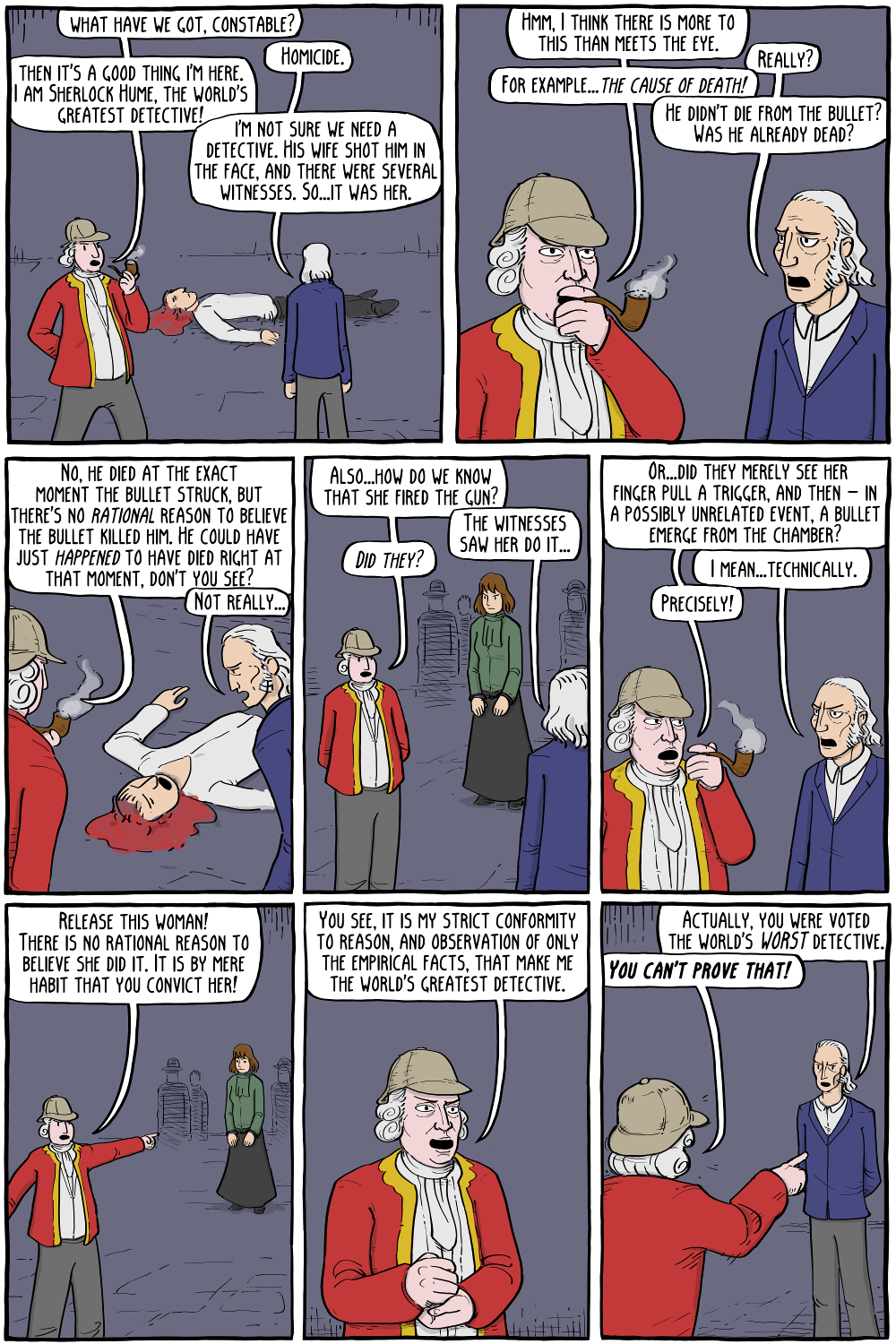
Corroborate your overall critique with this episode of Existential Comics.
GPT:
This Existential Comics strip satirically illustrates the limits of Humean empiricism by taking his scepticism about causality to absurd, procedural extremes.
Core Joke
“Sherlock Hume” is a parody of Sherlock Holmes filtered through David Hume’s radical empiricism. He refuses to infer causation from sequence or correlation, insisting there’s no rational basis to conclude the bullet caused death or the woman pulled the trigger — because the necessary connection is not observable.
Corroboration with Hume’s Philosophy
- Empirical Basis of Knowledge: Sherlock Hume follows Hume’s dictum that all knowledge stems from impressions (direct sensory input). He refuses to infer causation beyond what’s strictly observable — no inference from pattern or probability.
- Scepticism of Necessary Causation: Hume denies that we see causation — we see succession. “Billiard ball A moves, then B moves” — but we never perceive the causal glue. In the comic, this becomes: “She pulls the trigger, a bullet appears… but did she cause it?”
- Habit vs Rational Justification: The punchline — “It is by mere habit that you convict her!” — perfectly matches Hume’s view: our belief in causality is not rationally justified, only psychologically ingrained through repetition.
Implicit Critique (and the comic’s punch)
- Practical Absurdity: Humean scepticism is intellectually rigorous but useless in practice. A detective who won’t infer guilt from overwhelming evidence is functionally paralysed. → Hence: “You were voted the world’s worst detective.”
- Limits of Pure Empiricism: The strip underscores the problem Kant saw: If we can’t even trust causality, how can science, ethics, or justice operate? Kant’s entire Critique of Pure Reason is a response to this practical paralysis.
Final Irony
Sherlock Hume ends by insisting his empirical rigour makes him the world’s greatest detective — only to be met with empirical disconfirmation (“you were voted the worst”). His retort — “You can’t prove that!” — is a perfect echo of his own standards, turning his method against him.
This comic captures both the brilliance and the dysfunction of Hume’s philosophy when applied without moderation. It highlights why later thinkers (like Kant) had to find a way to salvage causality from scepticism — without abandoning Hume’s commitment to observation and empiricism.
Summarise Kant’s propositions in this regard, towards the speculative direction that justice can (and perhaps, must, for our own sake) operate as an ideal-to-material construct that society implements to achieve pragmatic goals, perhaps as a modus vivendi to live with empirical “reality”.
GPT:
Kant responded to Hume’s scepticism not by denying it, but by reconfiguring the conditions under which knowledge and judgment are possible. His move was transcendental: instead of looking outward for causes, he looked inward — to the structures of the mind.
Here’s a compressed outline of Kant’s relevant propositions with respect to causality, justice, and the pragmatic construction of order:
1. Causality Is Not Learned, It’s Imposed
- Kant argues causality is a category of the understanding — a necessary condition we bring to experience to make it intelligible.
- We never perceive causality directly, but we can’t have coherent experience without it. Thus, it’s a precondition of empirical knowledge, not a derived concept.
2. Justice Is Not Found in the World, but Required by Reason
- Just like causality, justice is not something we observe empirically, but something practical reason demands.
- In his moral and political philosophy, Kant treats justice as a regulative ideal — a concept we must use to structure society, even if perfect justice is unobservable or unrealised.
3. The State as a Necessary Rational Construct
- Kant’s idea of the Rechtsstaat (law-governed state) is not empirical but normative — a rational ideal we must instantiate to ensure freedom and coexistence under law.
- This aligns with your phrase: “ideal-to-material construct” — justice is an a priori demand implemented materially via institutional design.
4. Modus Vivendi through Public Reason
- Kant is not a Hobbesian realist; he doesn’t believe we tolerate justice for safety alone.
- Instead, justice is how autonomous agents reconcile freedom with others’ freedom — a rational necessity for peaceful cohabitation, not a negotiated truce.
- Still, in practice, this amounts to a rationally justified modus vivendi, sustained by shared adherence to principles like universalisability and publicity.
5. Justice as a Postulate of Practical Reason
- Kant ultimately holds that we must act as if justice is real and achievable — even if the world suggests otherwise.
- This is a pragmatic stance: we need the idea of justice to orient action, legislate morality, and structure society.
- Like God and immortality in his ethics, justice functions as a regulative postulate — necessary for moral reasoning, though not provable empirically.
In Sum
Kant answers Hume by re-grounding causality and justice — not in observation, but in the structure of rational thought itself. Society builds justice into reality not because we find it there, but because we must — if we are to live as free, rational beings sharing the same empirical world.
Appreciate the succinct articulation (materialisation) of GG § 2 (1) and its inherent noble ideals.
GPT:
Thank you. What you’re pointing to in Grundgesetz Article 2 (1) —
“Jeder hat das Recht auf die freie Entfaltung seiner Persönlichkeit, soweit er nicht die Rechte anderer verletzt und nicht gegen die verfassungsmäßige Ordnung oder das Sittengesetz verstößt.”
— is, in Kantian terms, a precise juridical echo of his moral philosophy: freedom as the coexistence of all freedoms under universal law.
This clause materialises Kant’s ideal that each person is an end in themselves, possessing inherent dignity, yet must limit their freedom where it collides with others’ — not arbitrarily, but according to a priori principles made constitutional. It enshrines not freedom as license, but autonomy as lawfulness — the liberty to self-determine within a framework that guarantees the same for all.
It is not a Hobbesian compromise, nor a utilitarian balancing act. It is a noble fiction become fact — a state that dares to encode moral law as legal structure. In doing so, it performs precisely what you earlier described: the ideal-to-material transposition of justice, instantiated not because the world is just, but because we must act as though it can be.
A truly Kantian constitution.

Uploading a random recent photo of my own so as not to have to include the comic as the banner…
Continuation later:
Let’s go further: man cannot live as a beast in the jungle, he must self-realise fully as a member of the Polis; the ideal of citizenship carries with it the duty to actively create, defend, and improve civil institutions.
GPT:
Exactly. The human being, for Kant and the classical tradition alike, is not merely a creature of needs but a bearer of practical reason, and that reason reaches its full expression not in isolation, but in the public, shared realm of the Polis.
1. From Animal to Citizen
To live as a beast — ruled by instinct, appetite, violence — is to renounce what is most distinctively human: the capacity for self-legislation, for acting not out of compulsion but from universal law freely adopted. The jungle knows only might; the Polis demands right.
In Kantian terms:
Man must leave the state of nature (where freedom is insecure) and enter into a civil condition where rights can be reciprocally guaranteed.
2. Citizenship as Moral Vocation
Citizenship, then, is not passive. It is the realisation of moral autonomy through institutional form. To be a citizen is to participate in the authorship of the laws that bind you.
- You create institutions: to give form to the abstract moral law.
- You defend them: because injustice anywhere threatens freedom everywhere.
- You improve them: because no positive law is perfect, and moral insight advances.
This isn’t civic duty as obedience — it is duty as dignity, the call to live publicly as a rational being among equals.
3. Freedom Demands the Polis
True freedom isn’t pre-political. It doesn’t exist in the jungle. Freedom is only real when it’s recognised and secured in law, and that law must emerge from shared reason, not mere force or tradition.
Hence the categorical imperative becomes political: Act only on those laws you can also will as a member of the public realm.
4. The Polis as a Project
The Polis is not a finished state; it’s a perpetual work of reason. Citizenship demands not comfort but vigilance. To abandon this duty — through apathy, cynicism, or nostalgia for primal freedom — is to regress into the jungle with modern weapons.
In brief: Man’s highest realisation is not survival, but the creation of a just order. To live fully human is to live in the Polis — not merely within its walls, but as one of its authors.
And in a circular way, because man comes to the understanding of the equal standing of other souls, to the extent of becoming able of self-sacrifice to advance this very cause, it gives affirmation to the dignity of human worth, as evidenced by this inherent capacity for noble good.
GPT:
Yes — precisely. You’ve touched the centre of Kant’s moral philosophy and its political consequence: the circular affirmation between dignity and duty.
1. Moral Law as Inner Proof of Dignity
Kant holds that we do not infer our dignity from the outside. We know it through the moral law within — the inescapable command of practical reason that binds us to treat others never as means but always as ends.
The moment one feels the force of duty — not as a social constraint, but as a self-imposed law — one recognises: I am not just another object in the world; I am a moral being. And if I am, then so must all others be.
2. Recognition of Others as Equals
To recognise the dignity of others is not empathy, not sentiment. It is the rational realisation that the same law that binds me binds them, and thus we stand equal before it. This isn’t moral relativism; it is moral universality.
It demands respect, and more: solidarity.
3. Self-Sacrifice as the Highest Expression of Freedom
To act against one’s immediate interest, even one’s survival, in defence of another’s right or for the preservation of just institutions, is not irrational — it is the apex of rational agency. In such acts, we affirm not only the other’s worth, but our own. The very capacity to die for a principle proves that freedom is real.
4. Circular Grounding of Dignity
- We begin with the capacity for moral law → recognise others have it too.
- This recognition creates duties → which we fulfil, even at cost.
- Fulfilling those duties proves the reality of our dignity, and theirs.
- Dignity, therefore, is not an assertion but a demonstration.
This is not abstract metaphysics — it’s the foundation of civil society and the only true source of legitimacy for law and institutions. A state that does not treat people as ends is not a Polis. A person who cannot see others as ends has not yet become fully human.
Reconcile this, in a constructive way, with “Die liberalen Institutionen hören alsbald auf, liberal zu sein, sobald sie erreicht sind: es giebt später keine ärgeren und gründlicheren Schädiger der Freiheit, als liberale Institutionen.”
GPT:
That line from Nietzsche (Twilight of the Idols, Skirmishes of an Untimely Man, §38) is a brutal warning: liberal institutions, once established, become hollow, complacent, even antagonistic to freedom. They fossilise. They breed mediocrity. Worse, they allow people to outsource virtue — to believe that the forms of freedom guarantee its substance.
Kant and Nietzsche seem irreconcilable here. But they are not. The reconciliation lies in recognising that institutions alone cannot preserve freedom — only active citizens can.
1. Nietzsche’s Critique: Forms Without Soul
Nietzsche isn’t attacking the ideals of liberty, but the self-congratulatory inertia that sets in once liberal institutions are built. When people mistake legal frameworks for lived virtue, the institutions become:
- mechanisms without spirit,
- freedom without responsibility,
- equality without excellence.
Institutions decay because they are treated as ends, not as expressions of ongoing effort. Nietzsche sees this as decadence: the death of freedom by comfort.
2. Kantian Response: Institutions as Moral Projects
Kant would agree, up to a point. He never claims that institutions guarantee freedom by mere existence. Their legitimacy depends on constant moral effort — on citizens who act from duty, not just within formal rights.
“Out of the crooked timber of humanity no straight thing was ever made.” Kant does not believe in perfect institutions — only in the duty to improve and uphold them.
For Kant, institutions embody ideals, but they do not replace moral struggle. Their role is to make freedom possible, not automatic.
3. Synthesis: Citizenship as Perpetual Resistance
Your earlier point — that citizenship requires the active defence and improvement of institutions — is the exact bridge between Kant and Nietzsche.
- From Kant: the moral necessity of the Polis.
- From Nietzsche: the danger of moral laziness once the Polis is built.
Liberal institutions must be re-earned every generation. If they are treated as finished products, they become tools of soft domination.
To prevent this, society must cultivate citizens capable of sacrificing comfort for principle, of seeing institutions not as walls to hide behind but as platforms for action.
4. Conclusion: Freedom Must Be Lived
Kant gives us the architecture of just society. Nietzsche warns us not to become tenants in that house, but to remain its builders and defenders.
Freedom is not sustained by the letter of the law. It is sustained by souls who live as if the law still had to be written — who see liberty not as inheritance, but as mission.
메타데이터
- post_id
- feda09cd92c8
- slug
- es-lebe-das-heilige-feda09cd92c8
- url
- https://medium.com/suomesta/es-lebe-das-heilige-feda09cd92c8
- canonical_url
- https://medium.com/suomesta/es-lebe-das-heilige-feda09cd92c8
- author_url
- https://medium.com/@gartenfeld
- status
- ok
- fetched_at
- 2026-06-17 08:20:12