AI Reopened the Patterson-Gimlin Mystery After 57 Years
In 1967, Roger Patterson and Bob Gimlin captured 59.5 seconds of footage that sparked one of the biggest debates in history.
AI Reopened the Patterson-Gimlin Mystery After 57 Years
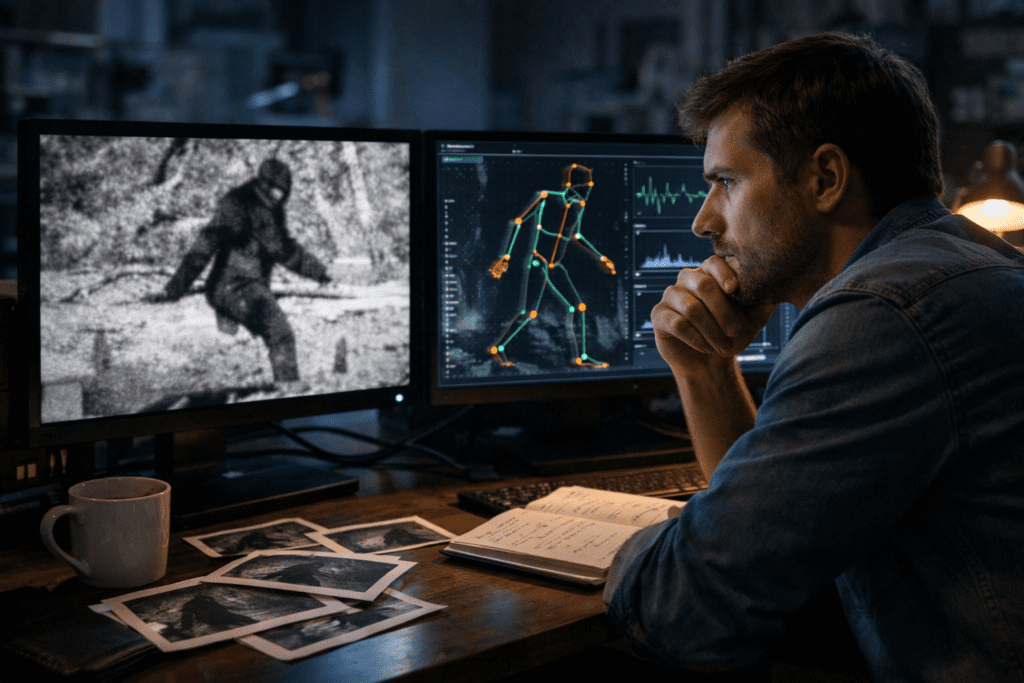
In 1967, Roger Patterson and Bob Gimlin captured 59.5 seconds of footage that sparked one of the biggest debates in history.
For decades, people argued one question. Was it real, or a hoax?
Now AI stepped in and changed the conversation.
Here’s what happened.
AI scanned every frame
Researchers processed 954 frames of the original 16mm footage using computer vision and biomechanical analysis.
They tracked: • Body movement and joint angles • Muscle deformation timing • Depth and proportions • Motion consistency across frames
This went beyond what human experts could see.
What AI found
[embed]Yeti
The results raised serious questions.
• Movement patterns did not match human walking mechanics • Muscle timing showed realistic load and recoil patterns • Body proportions fell outside known human ranges • Surface textures behaved like organic tissue, not costume material
The system also detected high temporal consistency, meaning the subject stayed physically accurate across frames. (VidAU)
Why this matters
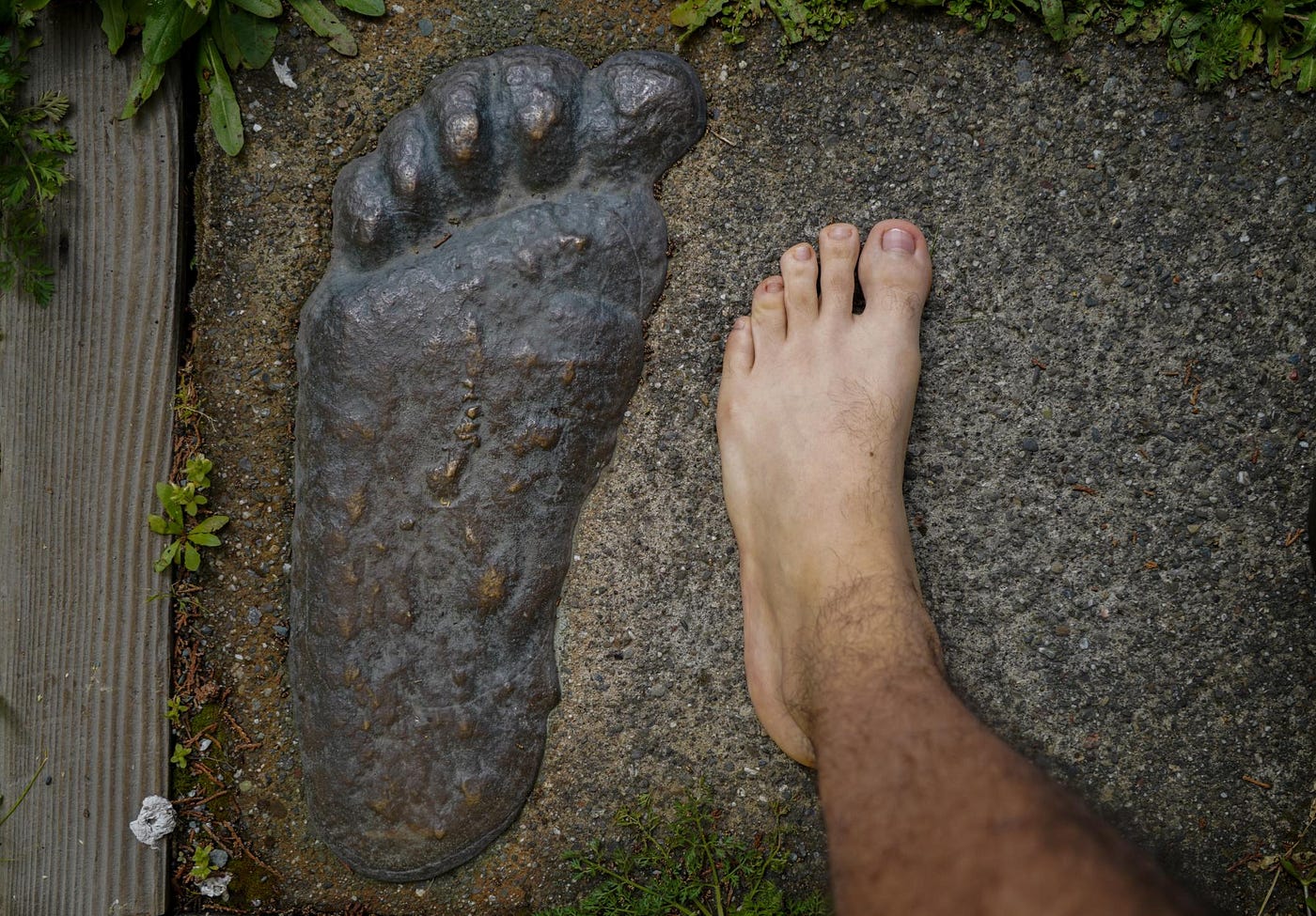
A human in a suit should show flaws.
AI tested for: • Fabric distortion • Inconsistent motion • Human gait reversion
None appeared.
Even modern recreations using CGI and professional costumes failed the same tests the original footage passed.
But AI didn’t prove Bigfoot exists
Three explanations remain:
• Unknown primate species • Advanced hoax beyond 1960s technology • Limits in AI interpretation
AI gave data. It did not give a final answer.
What this means for creators
This case shows how AI changes video truth.
You now have tools to: • Analyze motion and realism at frame level • Detect fake or manipulated footage • Rebuild degraded clips without losing detail
Platforms like VidAU bring this power into everyday content workflows.
You turn ideas, images, or scripts into structured video output fast, while keeping visual consistency.
The takeaway
AI did not settle the mystery. It made the mystery harder to ignore.
What matters now is this:
If AI struggles to explain a video, you need better tools to create and verify your own.
That is where the future of video content is heading.
Frequently Asked Questions
Q: What new evidence does the SXSW documentary present about the Patterson-Gimlin film?
A: The ‘Capturing Bigfoot’ documentary presents correspondence allegedly linking Roger Patterson to a Hollywood costume designer, along with fabric samples and testimony from the costume creator’s family. The film uses Unreal Engine 5 photogrammetry and motion capture to demonstrate how a human in a costume could replicate the creature’s appearance, though their motion analysis reveals discrepancies when compared frame-by-frame with the original footage.
Q: How does AI analysis contradict the documentary’s claims?
A: A 2023 University of Idaho study used convolutional neural networks trained on primate locomotion to analyze the original footage without AI interpolation. Their neural network, trained on thousands of hours of primate movement but never exposed to the Patterson film, classified the subject as ‘non-human primate’ with 89.7% confidence. The AI detected gait asymmetry, hip rotation dynamics, and center of mass displacement inconsistent with human physiology, directly contradicting the hoax claims.
Q: Why can’t AI definitively prove whether the footage is real or fake?
A: The Patterson film’s low resolution (16mm film at 24fps, roughly 1080p equivalent with significant grain) creates what researchers call the ‘Latent Space Resolution Problem.’ The source material lacks sufficient pixel information for many modern forensic techniques to work reliably. Additionally, AI interpolation tools used to enhance the footage can impose assumptions based on their training data, potentially normalizing anomalous movement patterns toward more conventional human motion.
Q: What is the ‘compliant gait’ pattern and why does it matter?
A: Compliant gait refers to a walking pattern where the knee remains slightly bent throughout the entire stride cycle, common in great apes but biomechanically unusual for humans, who typically lock the knee during the stance phase to conserve energy. The Patterson film subject exhibits this pattern consistently, while recreation attempts using actors show unconscious knee-locking every 4–7 steps, a biomechanical tell that’s difficult to fake without mechanical assistance or extraordinary physical discipline.
Q: What does this debate teach us about AI video authentication?
A: The Patterson-Gimlin controversy reveals critical lessons for AI video authentication: methodology matters more than conclusions, training data bias creates circular logic, source quality is non-negotiable for forensic analysis, and metadata/provenance systems must be built into AI video tools from the start. As AI-generated video becomes indistinguishable from reality, every piece of video evidence will face similar authentication challenges, making this debate a preview of future verification problems.
메타데이터
- post_id
- fee07423bc08
- slug
- ai-reopened-the-patterson-gimlin-mystery-after-57-years-fee07423bc08
- url
- https://medium.com/@femibanmeke/ai-reopened-the-patterson-gimlin-mystery-after-57-years-fee07423bc08
- canonical_url
- https://medium.com/@femibanmeke/ai-reopened-the-patterson-gimlin-mystery-after-57-years-fee07423bc08
- author_url
- https://medium.com/@femibanmeke
- status
- ok
- fetched_at
- 2026-07-11 10:59:41