How to Get Fitness Clients to Reply to Weekly Check-Ins
A simple communication system for personal trainers and online fitness coaches who want better client replies, less chasing and a more…
How to Get Fitness Clients to Reply to Weekly Check-Ins
A simple communication system for personal trainers and online fitness coaches who want better client replies, less chasing and a more organised coaching workflow.

Fitness Coach Check-In System
Getting clients to reply to weekly check-ins should be simple.
But for many personal trainers and online fitness coaches, it quickly becomes one of the most frustrating parts of the job.
Some clients reply late.
Some reply with one word.
Some forget completely.
And some only message you when something goes wrong.
This creates a problem: if you do not get clear information from your clients, you cannot coach them properly.
A weekly check-in is not just a progress update. It is one of the most important communication tools in online coaching.
It helps you understand training consistency, nutrition habits, recovery, motivation, obstacles and what needs to change next week.
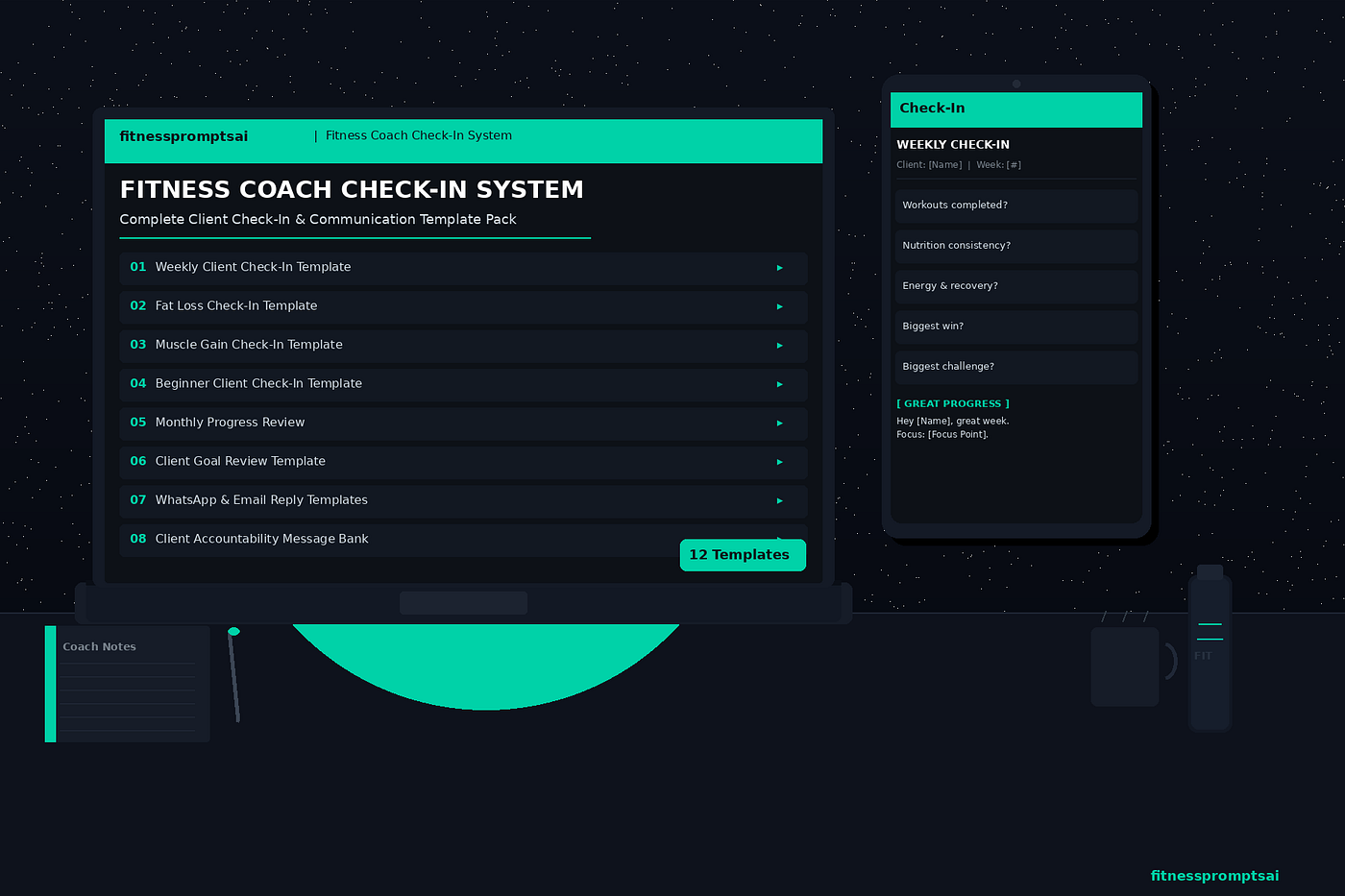
If you prefer a ready-to-use system, I created a Fitness Coach Check-In System with client check-in templates, coach replies and progress tracking tools.
View the ready-to-use Fitness Coach Check-In System
Why Clients Do Not Reply to Check-Ins
Most clients do not ignore check-ins because they are lazy.
Many ignore them because the process is unclear.
They may not know:
• When they should reply • What information you actually need • How detailed their answer should be • Why the check-in matters • What happens after they reply
If the check-in feels random, too long or too vague, clients are more likely to delay it.
The goal is to make replying feel easy, useful and part of the coaching routine.
1. Set a Clear Check-In Day
The first step is to stop asking for updates randomly.
If you message one client on Monday, another on Wednesday and another only when you remember, the process becomes harder for everyone.
Choose one consistent check-in day.
For example:
• Friday morning • Sunday evening • Monday morning
The exact day is not the most important part.
The consistency is.
When clients know that check-ins happen on the same day every week, they are more likely to build the habit.
It also helps you manage your own workflow better because you know when to review answers and send feedback.
2. Explain Why the Check-In Matters
Clients are more likely to reply when they understand the reason behind it.
Do not present the check-in as just another task.
Explain that it helps you coach them better.
You can say something like:
“Your weekly check-in helps me understand what is working, what is not working and what we need to adjust for next week. The more honest your answers are, the better I can coach you.”
This gives the check-in purpose.
It also reminds the client that their reply directly affects the quality of their coaching.
3. Ask Better Questions
One of the biggest mistakes coaches make is asking vague questions like:
“How was your week?”
That question sounds friendly, but it usually gives weak answers.
A client might reply:
“Good.”
But what does “good” mean?
Did they complete their workouts?
Was nutrition consistent?
How was sleep?
Were they stressed?
Did they feel motivated?
A better check-in gives the client clear questions to answer.
For example:
• How many workouts did you complete this week? • How consistent were you with your nutrition or habits? • How was your sleep, energy and recovery? • What was your biggest win this week? • What was your biggest challenge this week? • What is one thing you want to improve next week?
These questions make it easier for the client to reply and easier for you to coach.
A clear check-in template removes confusion.
4. Make the Check-In Easy to Answer
If your check-in is too long, clients will avoid it.
The goal is not to ask every possible question.
The goal is to collect useful information without making the client feel overwhelmed.
A simple weekly check-in should usually take 3 to 5 minutes to answer.
You can use a mix of:
• Short written answers • Rating scales • Multiple-choice options • One clear reflection question
For example:
“Rate your nutrition consistency this week: Poor / Average / Good / Excellent.”
This makes the reply easier.
The easier the check-in feels, the more likely clients are to complete it.
5. Send a Reminder Before Chasing
If a client misses a check-in, do not immediately sound annoyed.
Many people are busy. They forget.
Use a calm reminder first.
For example:
“Hey [Name], just a quick reminder to send your weekly check-in when you get a chance. Even a short reply helps me adjust your plan and support you better next week.”
This keeps the tone professional and supportive.
It also reminds the client why the check-in matters.
The goal is accountability without pressure.
6. Reply With One Clear Next Step
Clients are more likely to keep replying when they feel their answers are actually being used.
If they send a check-in and only receive:
“Good job, keep going.”
They may start to feel that the check-in does not matter.
Instead, every reply should include one clear next step.
For example:
“Great work completing your sessions this week. Your main focus next week is to keep training consistent and prepare two simple meals in advance so nutrition feels easier.”
Or:
“This week was not perfect, but we have useful information. Your focus next week is simple: complete two workouts and send your check-in on Friday.”
This shows the client that their answer leads to real coaching action.
That makes future replies more likely.
7. Use Reply Templates Without Sounding Robotic
Many coaches avoid templates because they think templates sound fake.
But good templates are not meant to replace coaching.
They are meant to save time and give you a strong starting point.
You can create reply templates for common situations like:
• Great progress • Missed check-in • Low motivation • Missed workouts • Poor nutrition consistency • Low energy • Client frustration • Monthly progress review
Then you personalise the message with the client’s name, goal and situation.
This saves time while still keeping your communication human.
A simple check-in system helps you stay consistent without sounding robotic.
Final Thoughts
Getting fitness clients to reply to weekly check-ins is not about being stricter.
It is about making the process clearer.
You need:
• A consistent check-in day • Clear questions • A simple format • A calm reminder system • Useful replies • One clear focus for the next week
When clients understand what to do and why it matters, they are more likely to reply.
And when you receive better replies, you can coach better.
If you want a ready-to-use version, I created the Fitness Coach Check-In System for personal trainers and online fitness coaches.
It includes weekly client check-in templates, copy-paste WhatsApp and email replies, progress tracking tools and a simple coaching workflow.
You can find it here:
For coaching and educational purposes only. This is not medical, nutritional or psychological advice.

Fitness Coaching Tools for Personal Trainers
메타데이터
- post_id
- fee69adbde1c
- slug
- how-to-get-fitness-clients-to-reply-to-weekly-check-ins-fee69adbde1c
- url
- https://medium.com/@fitnesspromptsai/how-to-get-fitness-clients-to-reply-to-weekly-check-ins-fee69adbde1c
- canonical_url
- https://medium.com/@fitnesspromptsai/how-to-get-fitness-clients-to-reply-to-weekly-check-ins-fee69adbde1c
- author_url
- https://medium.com/@fitnesspromptsai
- status
- ok
- fetched_at
- 2026-07-10 15:46:15