I Abandoned My Novel in Progress
After completing the first draft of a novel, I lost interest and began writing a memoir. That too joined a collection of unfinished work
WRITING
I Abandoned My Novel in Progress
After completing the first draft of a novel, I lost interest and began writing a memoir. That too joined a collection of unfinished work

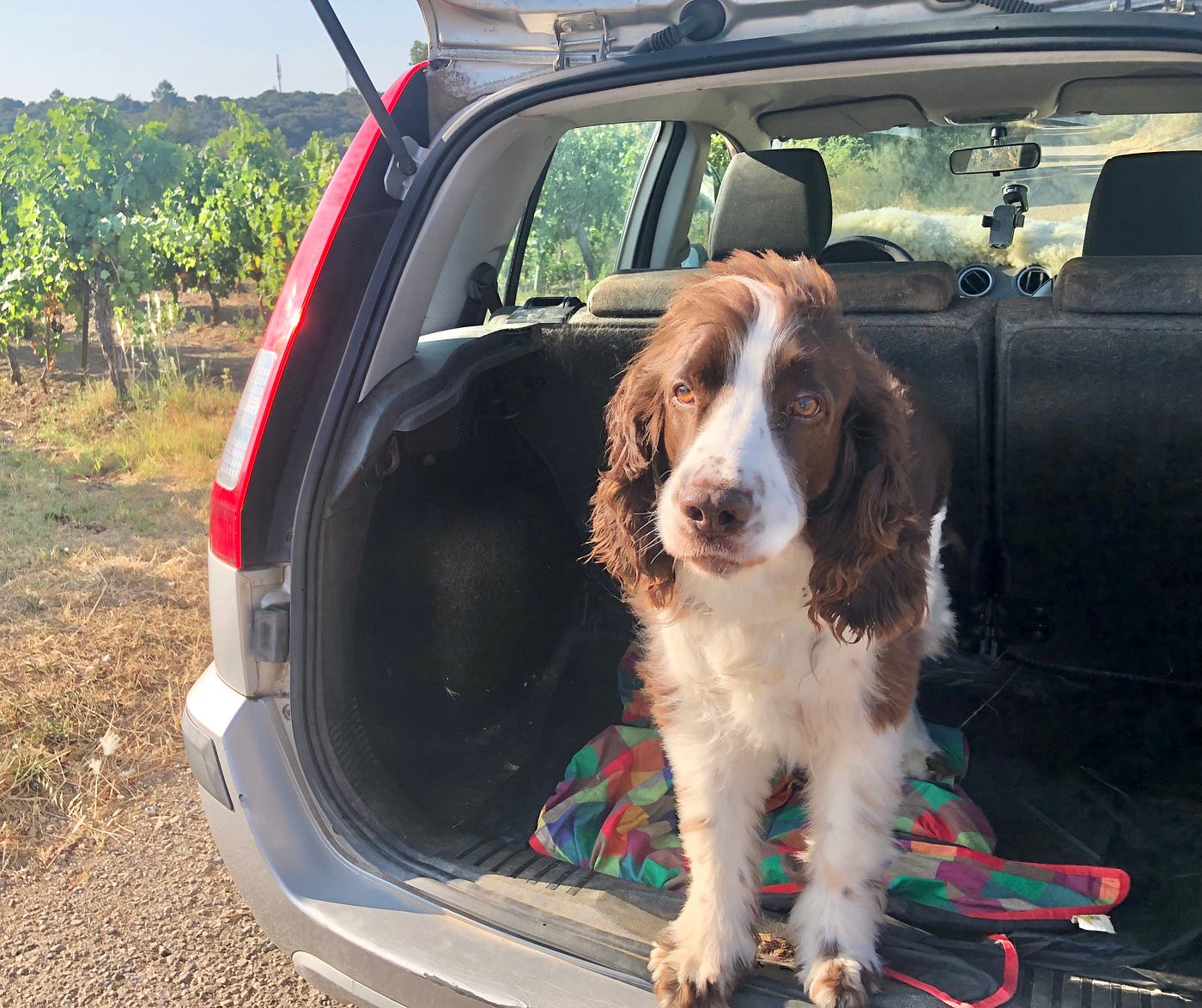
Languedoc. Sheep keep the vineyard mowed. (author’s photos)
Since 2022, I’ve published around 800 pieces and accumulated more than a thousand partial drafts. When my creative well dries like the stream at the bottom of my garden, I sometimes sift through the collection.
A few might initially inspire me, but when I return to them later, I feel nothing. Some weren’t great to begin with — maybe started on a low-energy day and easy to forget.
My abandoned novel and the memoir — not yet officially abandoned — but probably headed in that direction cause more angst. A lot of time and effort, flashes of inspiration, encouragement from editors and an agent. It’s hard to dismiss all that.
Skimming through Facebook recently, I read a post from a writer I’d known years ago. We were both working on books together; she’s still working on the same book, asking the same questions we’d explored so long ago. I don’t know how she maintains her enthusiasm. It’s admirable, I suppose. Or delusional, I’m not sure.

Languedoc vineyard
Thirteen years ago, when I moved from the US to France, there was no doubt in my mind that I’d finish the novel I’d started a few years earlier. When I wasn’t writing about new adventures, I was at the computer working on that book. But I was also living in a winemaking village — streets lined with cellars, oak barrels of wine in various stages of production. Surrounding the village, an endless sea of vineyards. Life revolved around winemaking — pruning, maintaining and harvesting: bottling and selling.
France alone was interesting, but this was a completely new and intriguing environment. In that first year, I met Brigitte, a vigneron who spoke excellent English and was willing to answer my endless questions about winemaking. On a cold and blustery day in early spring, we walked through her vineyard, where she pointed to some gnarled-looking vines that she called the ‘old ladies.’
Planted shortly after the First World War, Carignan vines like those were once the workhorse of the vineyards. The grapes produced a rough red wine that soldiers and farmers drank in great quantities. But tastes change, and eventually, Carignan fell out of favour. Winegrowers were paid by the French government to uproot their vines and plant more fashionable varieties.
Brigitte resisted. Carignan vines represented history and continuity, she told me. “They have a story to tell, these old ladies.” Lovingly tended for generations, they are the heritage of wine growers who once tended and sculpted them.
“They are old ladies,” she said, “But with so much still to give.”
I clearly remember the thrill I’d felt at hearing her words. If I’d previously had no focus for my French adventure, now I did. I was approaching 70, around the same age as some of Brigitte’s younger old ladies. The parallel to ageing was obvious. Why couldn’t modern society appreciate older people in the same way? Why did old age so often feel like a shameful secret? Why the need to lie about our age?
Back at the computer, I abandoned the novel and began drafting a memoir — working title: The Old Ladies of the Languedoc. Told over four seasons in the vineyard, the chapters would alternate between the realities of my life as an older woman in a foreign country and Brigitte’s work as she cared for these old vines —arthritic, gnarled and fragile in winter, bursting with new life in spring and in autumn putting forth fruit to make prize-winning wine.
I would make the case for not feeling diminished by age. For remaining creative and interested, open to new experiences. For taking risks, refusing to become discouraged. To live in the present rather than dwelling on the past. Our retirement years could be a period of growth, adventure and new opportunity.
I quoted the French dramatist, Jules Renard, It is not how old you are, it is how you are old.
After a year, although the book was still in draft stage, I wanted to test whether it would fly. A query to a London publisher of travel memoirs received an enthusiastic response and a request for the full manuscript. Instead of feeling encouraged, I froze.
Endless rewrites followed — my computer is full of different versions — none of them quite right. The chapters about me seemed flat and distant, the vineyard chapters overly technical. Three months later, I heard from the publisher again, wondering about the status of my project.
Years on, it remains unfinished. I don’t know why.
“I write entirely to find out what I’m thinking, what I’m looking at, what I see and what it means. What I want and what I fear.” Joan Didion.
메타데이터
- post_id
- ff0a11b7a7bd
- slug
- i-abandoned-my-novel-in-progress-ff0a11b7a7bd
- url
- https://medium.com/the-challenged/i-abandoned-my-novel-in-progress-ff0a11b7a7bd
- canonical_url
- https://medium.com/the-challenged/i-abandoned-my-novel-in-progress-ff0a11b7a7bd
- author_url
- https://medium.com/@janicemacdonald
- status
- ok
- fetched_at
- 2026-07-09 05:26:43