The Tiny LoFi Modular Drum Synth with Massive Character | Bastl Instruments KASTLE DRUM
I purchased the KASTLE DRUM, an ultra-compact modular drum synthesizer released in 2020 by Bastl Instruments, an electronic instrument…
The Tiny LoFi Modular Drum Synth with Massive Character | Bastl Instruments KASTLE DRUM

I purchased the KASTLE DRUM, an ultra-compact modular drum synthesizer released in 2020 by Bastl Instruments, an electronic instrument manufacturer based in Brno, Czech Republic, as part of their Kastle series.
In this article, I introduce the features of the KASTLE DRUM and share my impressions after using it, as well as the reasons that led me to buy it.
Please note that this article is based on my personal perspective and may contain errors. Thank you for your understanding.
Table of Contents
・Bastl Instruments
・KASTLE DRUM
— Key Features
・About Patching
・Searching for a Highly Random Machine
— Narrowing it down to two models
・Reasons for Choosing It
— Key Points I Focused On
・Session with Ambient Ø and KASTLE DRUM
— About the Sound — About sync
・Finally
Bastl Instruments
First, let me introduce Bastl Instruments.
The following is taken from the “The Story” section on their official website.
Back in 2011, the bandmates and artists Václav Peloušek and Ondřej Merta started a project called Standuino as a tribute to the DIY folks (“Bastlíři”) of former Czechoslovakia, namely Standa Filip.
Throughout workshops and various art exhibitions, the duo developed several instruments like the granular sampler microGranny 1.0 or the Arduino-based digital synth fraAngelico. Source: Official website of **Bastl Instruments**
Standuino 2pi — Noise Synthesizer
[embed]
In 2013, the company was officially founded under the name “Bastl Instruments” (where “bastl” in Czech means “DIY” or “hand-built/modified”). They released the Trinity series of synth modules, which received high praise.
DRUM 1.1 Trinity by Bastl Instruments
[embed]
In 2014, they released what would become one of their signature products, the microGranny 2.0. This marked a significant acceleration in the company’s growth.
microGranny 2.0 — handmade granular sampler
[embed]
In 2015, they opened their synth shop Noise.Kitchen and began releasing Eurorack modules featuring wooden panels.
In 2022, they introduced the Softpop SP2, an innovative model of analog modular synthesizer and sound processor.
BASTLxCASPER: SOFTPOP SP2
[embed]
Especially with their early products, I was struck by how distinctive they were both visually and sonically.
I remember that when the Standuino was released, it sold out immediately, and I couldn’t get one at the time. (Even now, listening to it, I still feel it has a unique charm and great sound.)
Since then, I’ve been interested in their new products whenever they came out. However, at the time, my activities were centered around keyboard performance, so I felt that their instruments might not suit my style, and I decided to pass.
Be local with the Planet in mind
We’re deeply rooted in the Do It Yourself culture (“bastl” in Czech), which inspires us to engage with tech hands-on.
However, we want to reshape it and use it to fit the needs of society without being blindly led by ready-made hardware. That’s why we invent our own instruments, offer DIY kits, and organize workshops and courses.
By teaching and running events, we encourage not only local folks’ individual involvement in music-making, but we also foster a sense of community and try to pass on our passion for electronic music-making. Source: Official website of **Bastl Instruments**
However, the more I looked at their products, the more I felt the thoughtfulness and philosophy that the company cherishes.
Above all, I was deeply attracted to the sound that conveys the charm of handcrafted work.
Although I am not very familiar with the Czech Republic, Bastl Instruments’ products give me a sense of a unique atmosphere and cultural background that you don’t find in other electronic instruments.
Speaking of the Czech Republic…
By the way, my favorite indie game developer, Amanita Design, is also based in the Czech Republic.
SAMOROST 3
[embed]
Machinarium
[embed]
I was greatly influenced by Floex, who is responsible for the music in those games, and the way he creates sounds that perfectly blend acoustic instruments with electronics, producing a synergistic effect with the game’s world.
The games’ stories and mechanics are also excellent and very engaging, and their hand-drawn visuals are extremely appealing.
KASTLE DRUM
The Kastle Drum is an ultra-compact semi-modular synthesizer specialized in glitch drums, without any buttons or sequencers. (Technically, it does not include a sequencer for programming beats manually.)
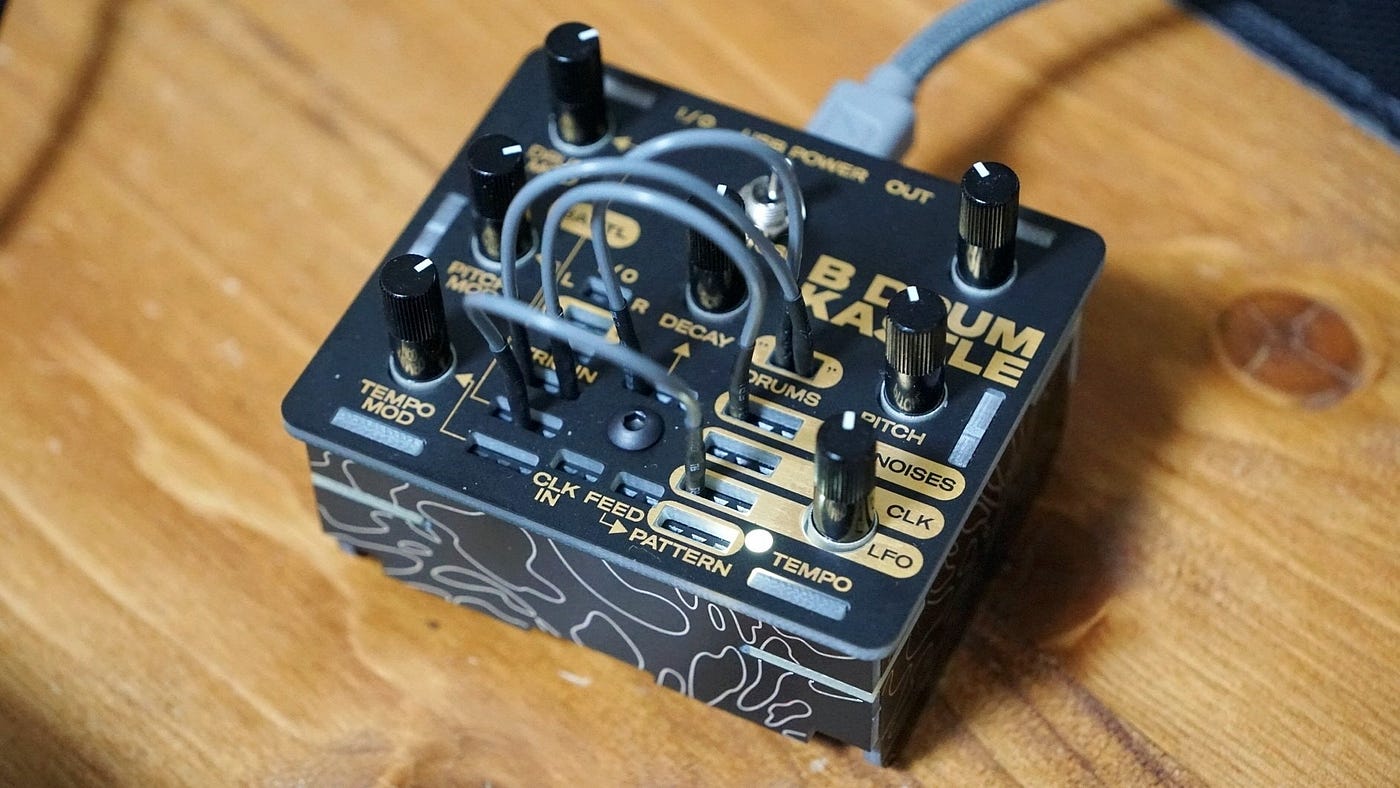
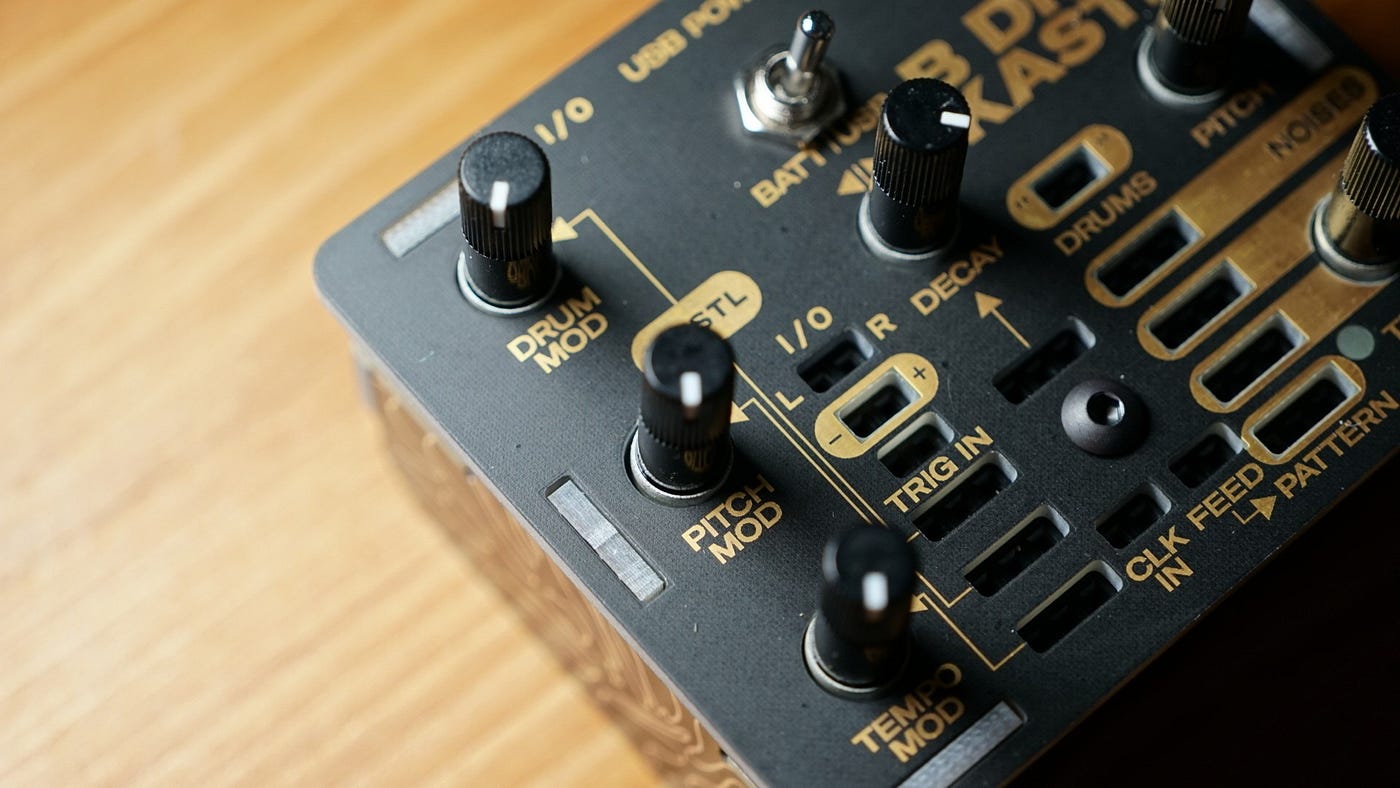
It produces sound through patching with jumper wires, and since it has no keyboard, you adjust pitch, note length, and other parameters by turning the knobs.
The manual explains each patch point, allowing you to create sounds while imagining how the connections will affect them to a certain extent.
However, unlike typical synthesizers where you can achieve a desired sound by following a set procedure, the basic approach with the KASTLE DRUM is to explore sonic possibilities while enjoying sounds that emerge by chance and unpredictable changes.
Key Features
- 8 types of drum synthesis Equipped with eight drum sound types that can produce a wide variety of tones.
- “Noises” output A dedicated output for noise-based sounds with little to no pitch.
- Sound selection with the “DRUM” knob The main knob allows you to choose the type of drum sound.
- Dynamic, accelerating envelope A charge-based dynamic envelope that enables moving and lively sounds.
- Decay time adjustment Allows control over the length of the sound’s tail.
- Pitch control and CV input The offsettable PITCH knob plus CV input (with attenuator) gives flexible pitch control.
- Voltage-controlled clock (LFO) Outputs square or triangle wave clock signals.
- Step voltage generator Generates voltage patterns capable of looped playback in random, 8-step, or 16-step modes.
- Two CV I/O ports I/O terminals that can be patched freely to any connection point.
- Headphone-ready output The main output can drive headphones directly.
- Power: Batteries or USB Operates with 3 AA batteries or 5V USB, switchable via a toggle.
- Open-source design Internal design information is publicly available, ideal for modifications or learning.
- Durable black & gold PCB case A minimal design using a beautiful and sturdy PCB chassis.
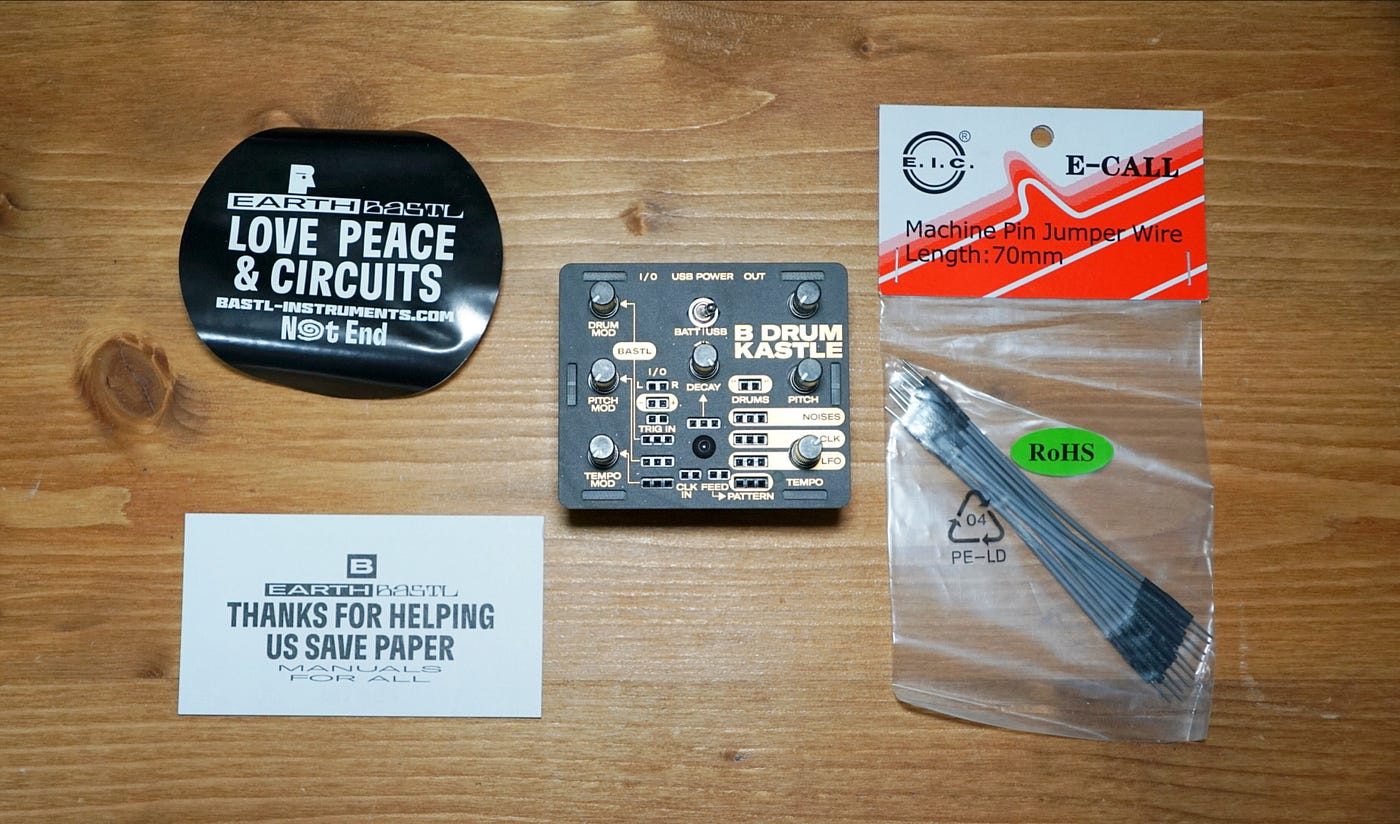
Included in the package
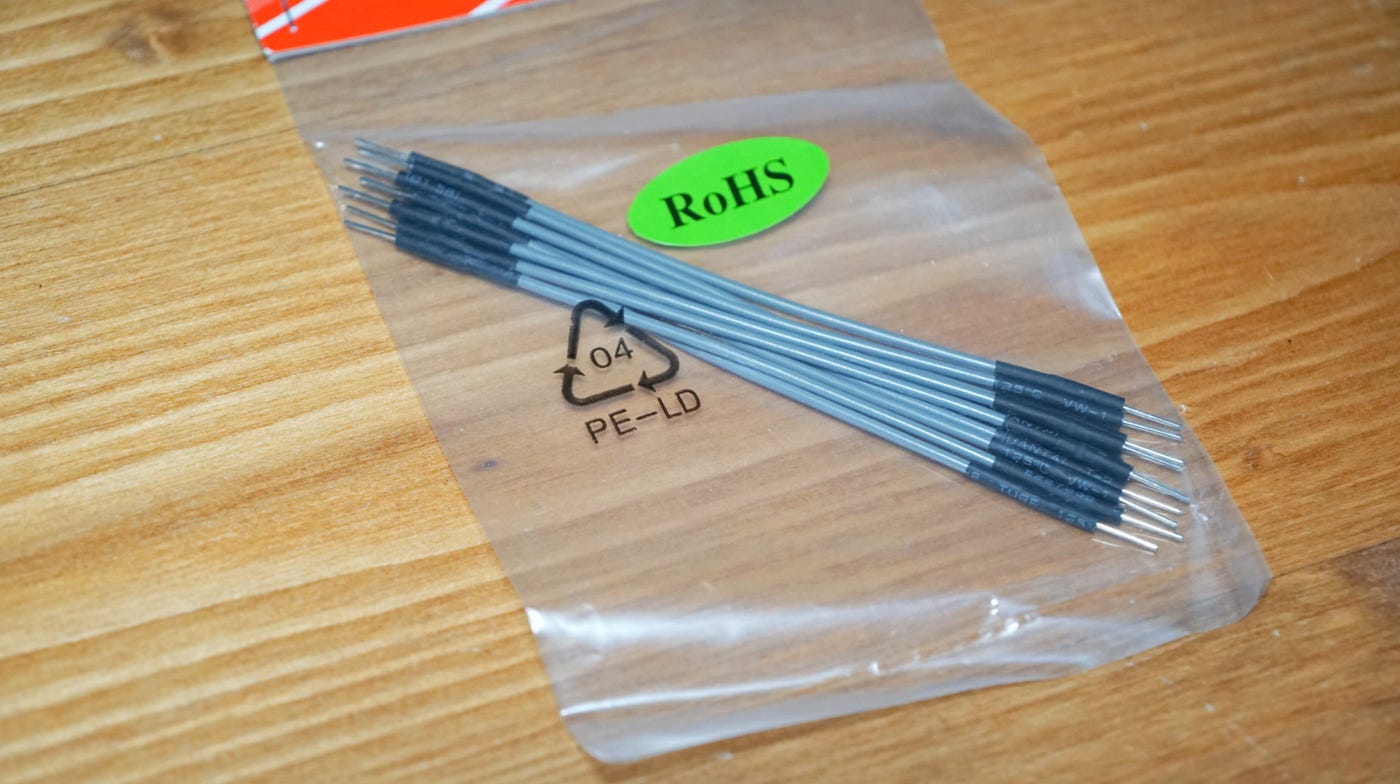
- 10 patch cables
- Stickers (Batteries are not included)
About Patching
The following is a partial excerpt from the official manual:
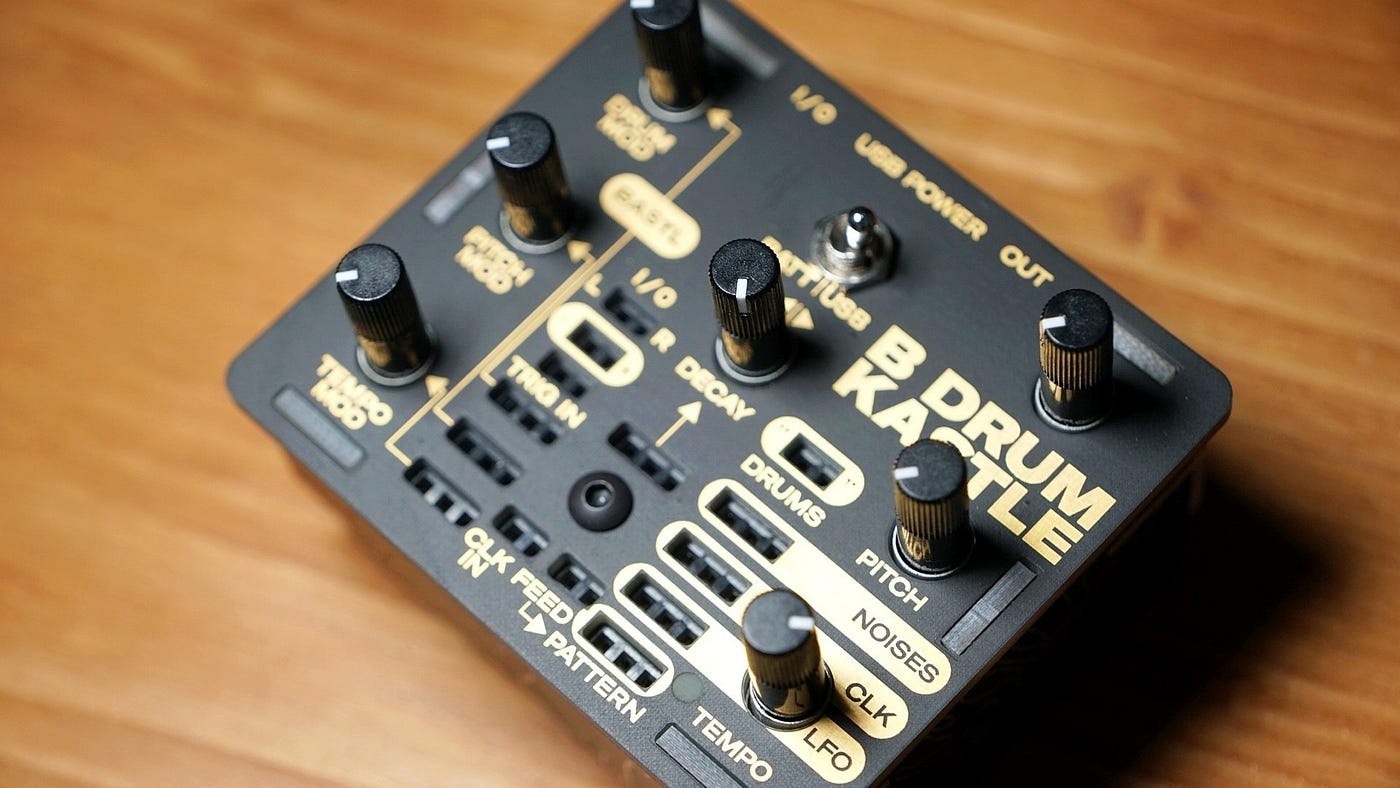
- Terminals with a gold frame are outputs.
- Terminals without a gold frame are inputs.
- You can freely connect input to input or output to output (there is no risk of damage from doing so).
OUT terminal
This is a line out for connecting to a mixer or similar device.
You can connect headphones directly (audio is mono), but to achieve sufficient volume, a headphone amplifier may be necessary.
Searching for a Highly Random Machine
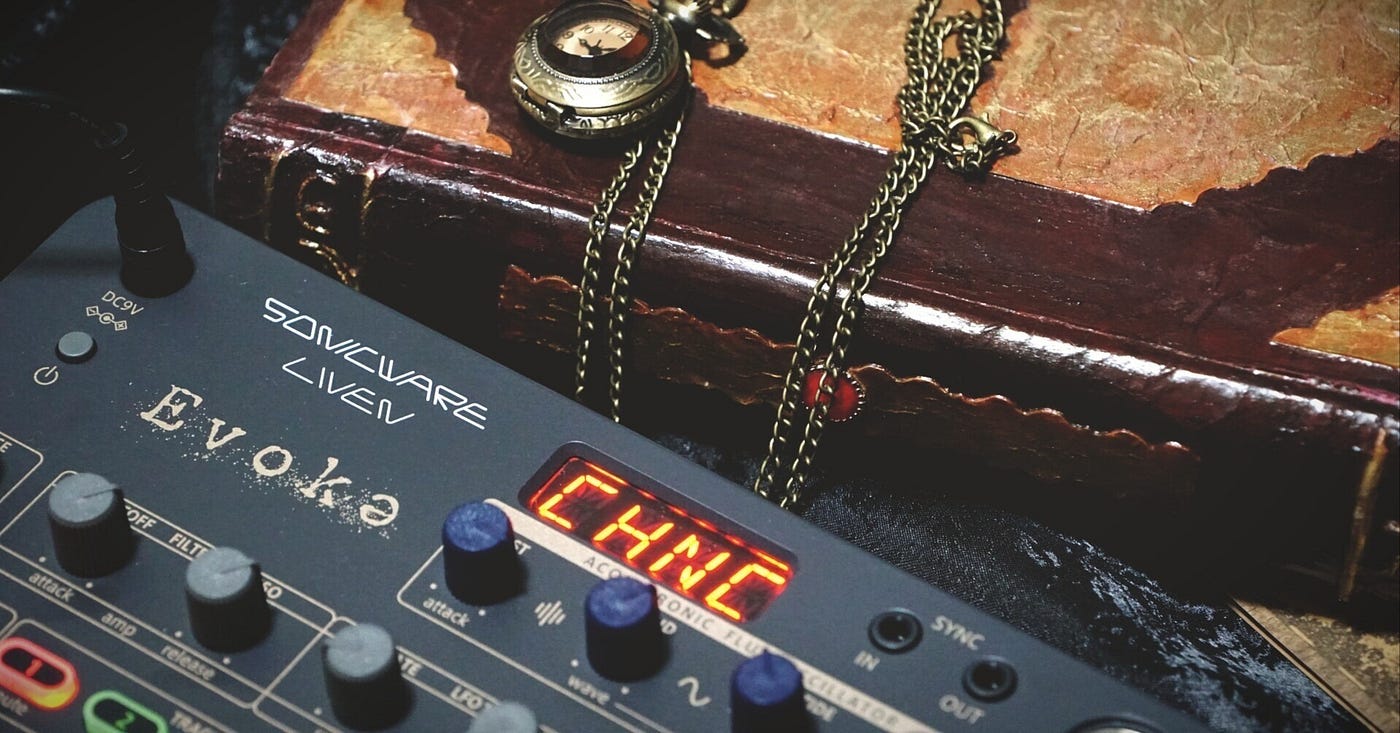
While producing a track with SONICWARE’s LIVEN Ambient Ø, I recently felt an increasing urge to “add a little rhythm track.”
Of course, I love ambient music without beats, but by adding rhythm to Ambient Ø’s sounds, I felt that the sonic possibilities would expand and track production could become even more fun.
Although Ambient Ø allows you to sample any sound onto Track 4, it is primarily intended for environmental sounds and cannot be controlled in detail.
Therefore, I decided to add rhythm with a different device.
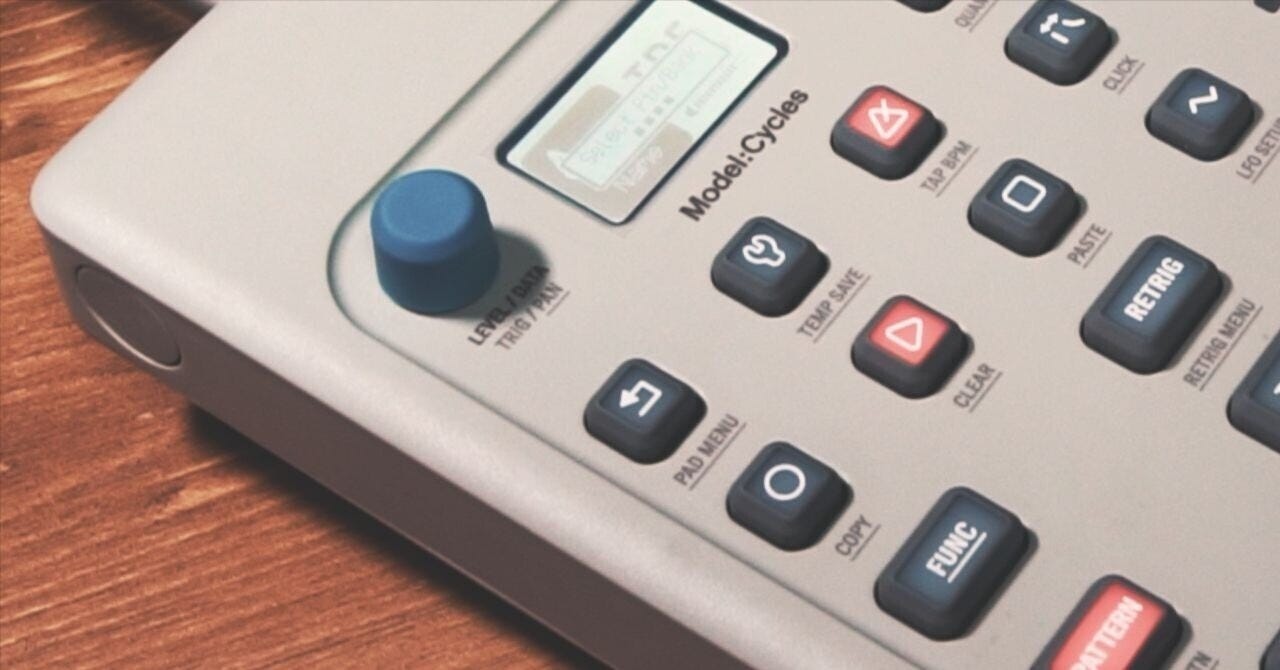
Among the hardware I own, Model:Cycles, Cydrums, and Digitakt were candidates, but there were some concerns, so I couldn’t decide immediately:
- I didn’t want the rhythm track to be too prominent.
- I wanted Ambient Ø to remain the main focus, so I didn’t want to program rhythm meticulously.
- For filming performance videos, I preferred a compact device.
- I wanted a rhythm with a sense of randomness.
Narrowing it down to two models
While exploring various devices, two candidates emerged: KASTLE DRUM and Crum Drum.
KASTLE DRUM
[embed]
Crum Drum
[embed]
However, I decided not to choose Crum Drum for the following reasons:
- It requires personal import.
- The DIY kit requires soldering (the completed version is expensive).
- There is no panel on the side of the unit, leaving the internal board exposed, which makes portability a concern.
In the end, I chose KASTLE DRUM.
Reasons for Choosing It
- I liked the lo-fi sound I heard in user videos — it matched my taste.
- Capable of producing random drum patterns (no sequencer included)
- Ultra-compact and lightweight (70×60×50 mm / approx. 300g).
- Patching with jumper wires allows for unpredictable and interesting results.
- Can sync with other devices (Ambient Ø has a sync OUT terminal).
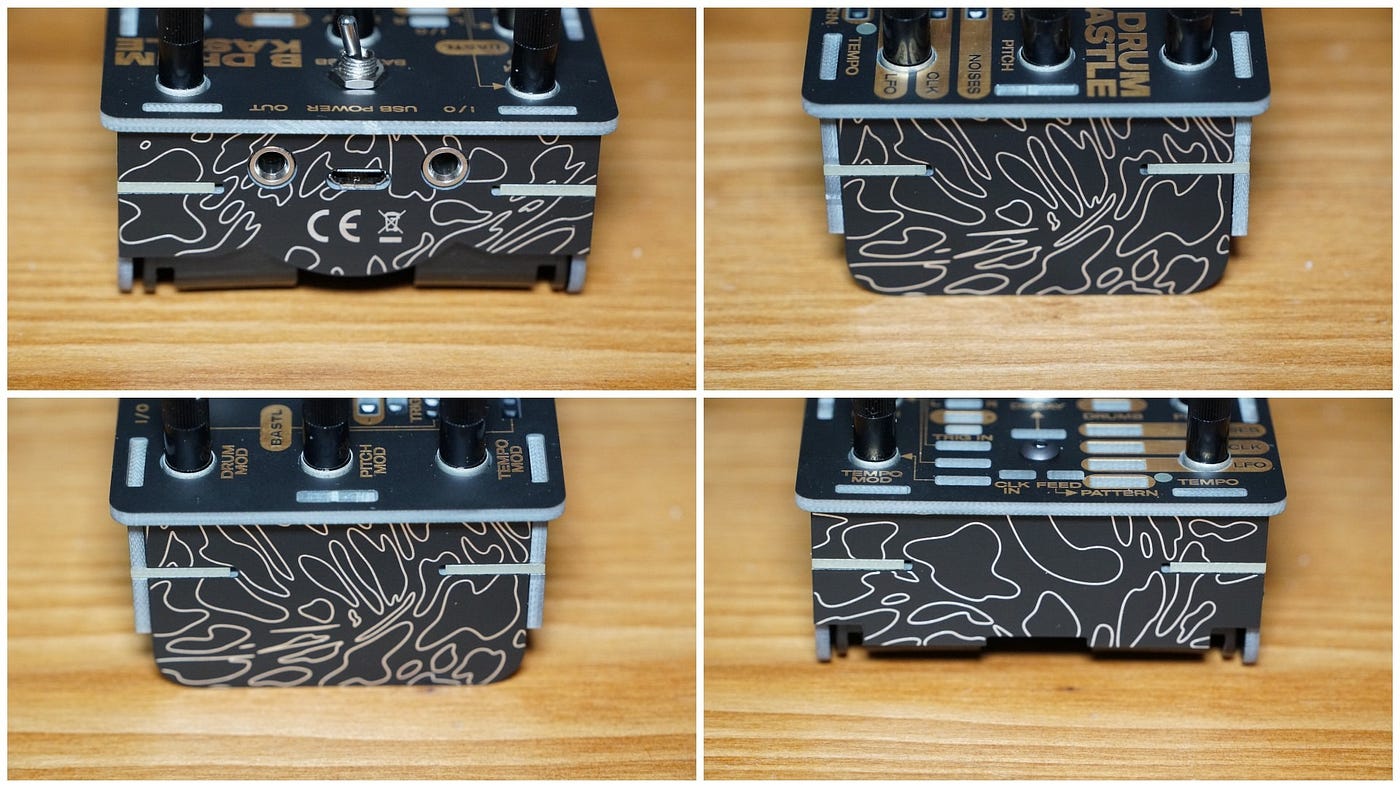
- The PCB is not exposed, so safe for transportation.
- Available for purchase domestically.
- The price is relatively affordable.
- Powered by Micro USB (5V) or 3 AA batteries.
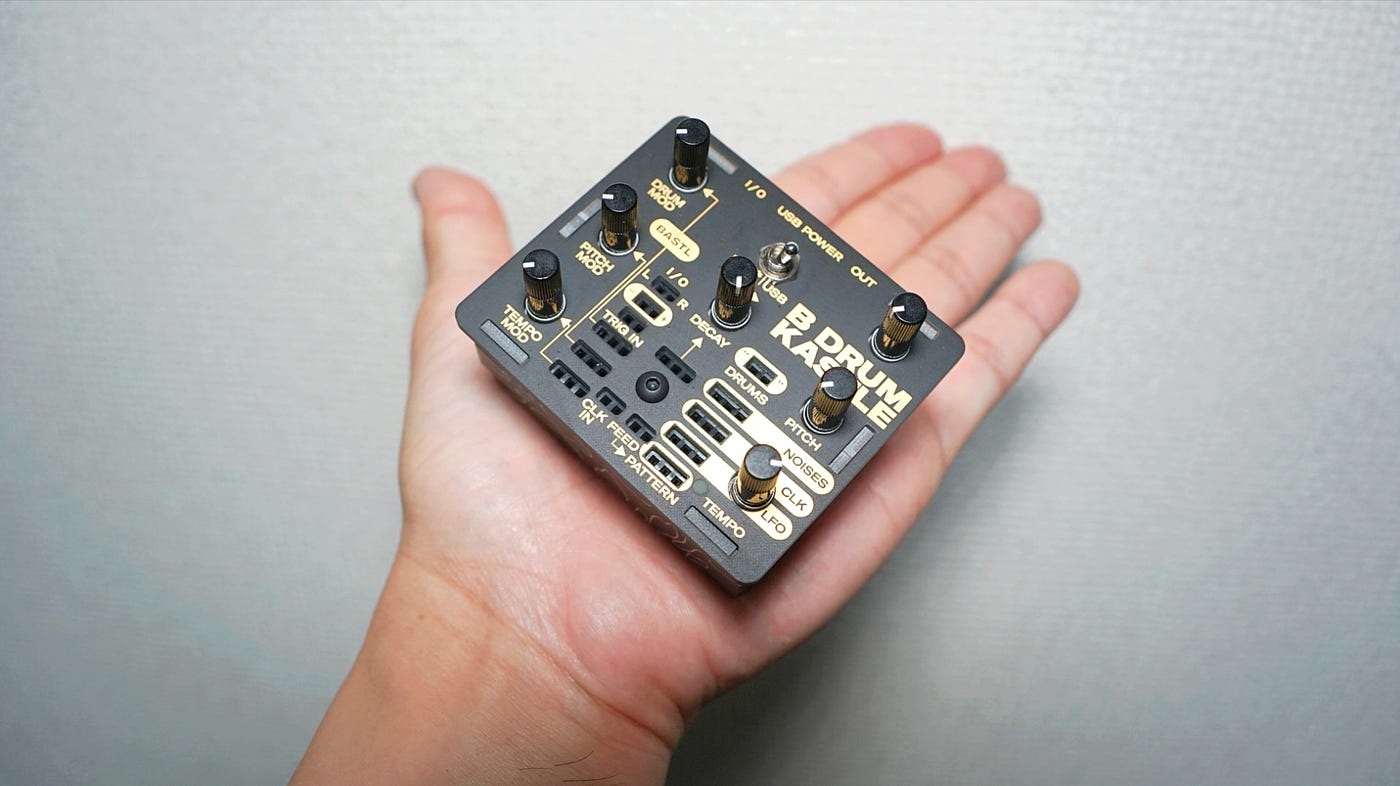
Fits in the palm of your hand!
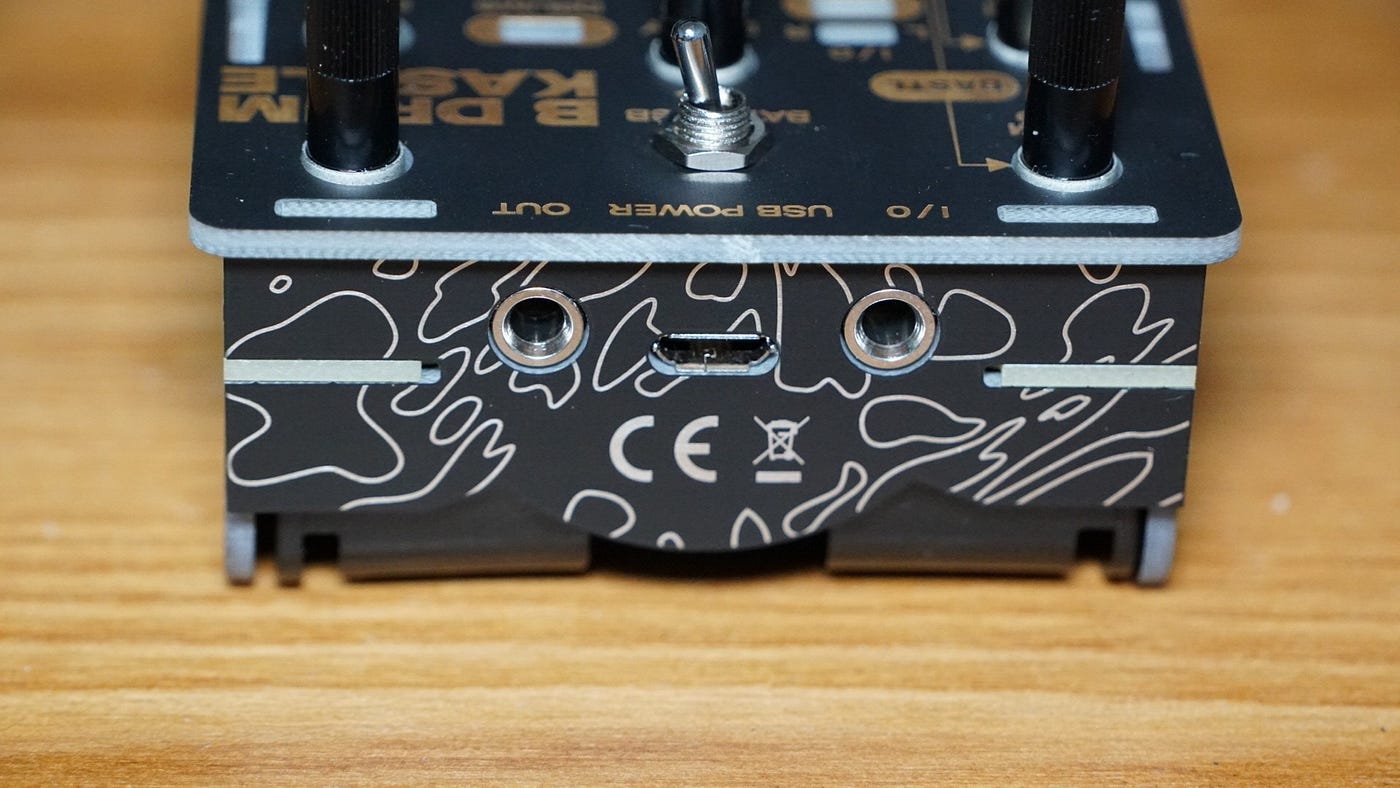
Powered via Micro USB (battery operation also possible).

Using the micro USB cable included with Model:Cycles.

MicroB — USB A cable.
Key Points I Focused On
- It could produce the sounds I like (electronic/IDM-style sounds).
- Able to generate random rhythms.
- Extremely compact.
The ability to sync was important, but since it’s not MIDI sync, I didn’t place too much emphasis on stability.
Session with Ambient Ø and KASTLE DRUM
After receiving the KASTLE DRUM, I conducted a trial session by using Ambient Ø as the master and syncing the KASTLE DRUM to it.
I wanted to add a highly random rhythm track to SONICWARE LIVEN Ambient Ø, so I purchased the Bastl Instruments micro-modular KASTLE DRUM. It fits perfectly with Ambient Ø, palm-sized and well-docked.
I really enjoy the LoFi charm that comes from patching with jumper wires. It has made my music production possibilities even more exciting 🙂👍 (Content of the post on X)
[embed]
Perfect Fit in the Ambient Ø Setup
First and foremost, I was delighted that the KASTLE DRUM fit perfectly in the space next to Ambient Ø.
In the video, I placed it near the VALUE knob of Ambient Ø, but it also fit comfortably in the space around the logo.
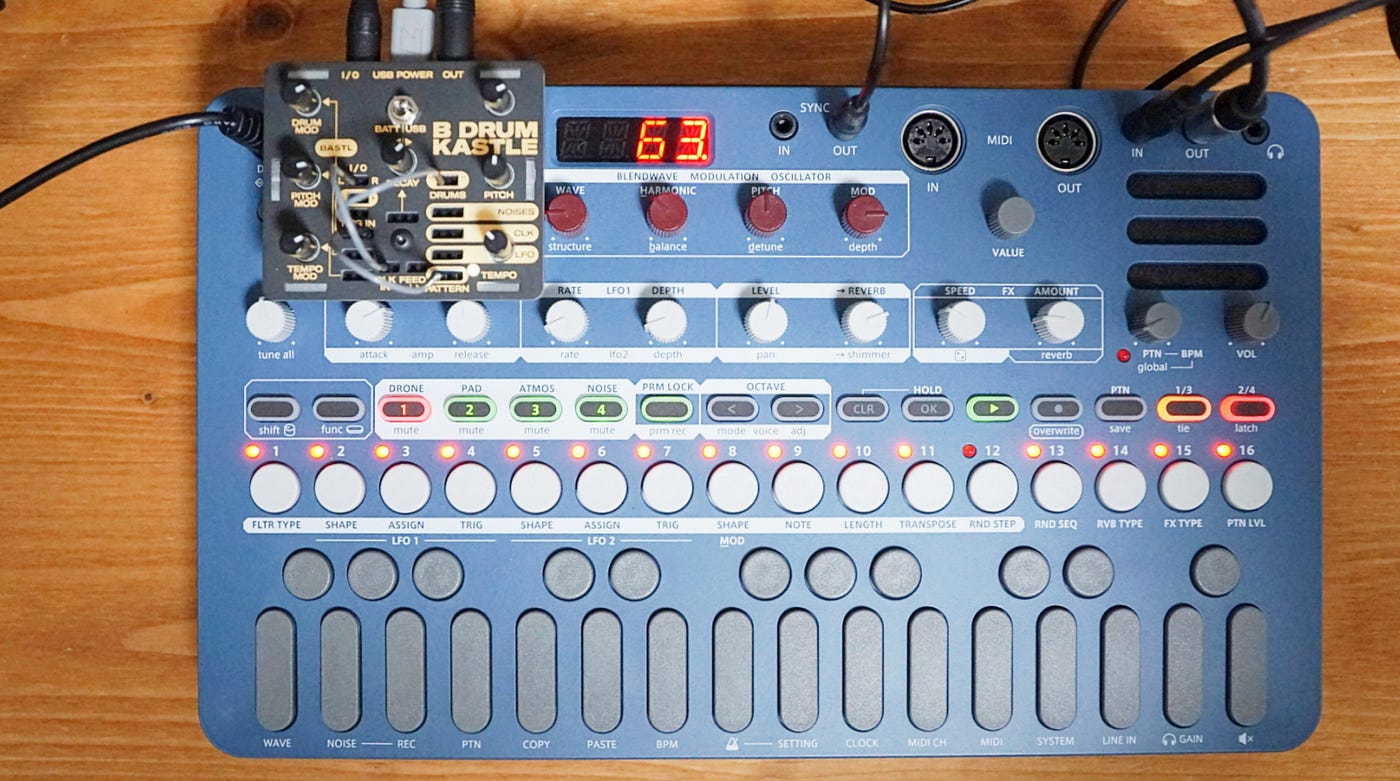
Looking ahead, when filming performance videos for my work, I feel that both devices will fit naturally into the composition.
About the Sound
Regarding the most important aspect, the sound, I am very pleased that it can produce LoFi, characterful noise and drum sounds.
Personally, it reminded me of the rhythm tracks in early-2000s múm and similar electronica, with a pleasantly random, organic texture.
After experimenting with various tones and patch combinations, I am considering sampling each sound and building a personal library.
About sync
This was my first time using sync, so there is still much to learn. However, while not perfect, I felt that it was controllable to a certain extent.
Powered via Micro USB (battery operation also possible).
From right: I/O terminals, micro USB port, output terminal The connection method is as follows:
- Connect Ambient Ø’s sync OUT to the KD’s I/O terminal (side) using a stereo mini cable.
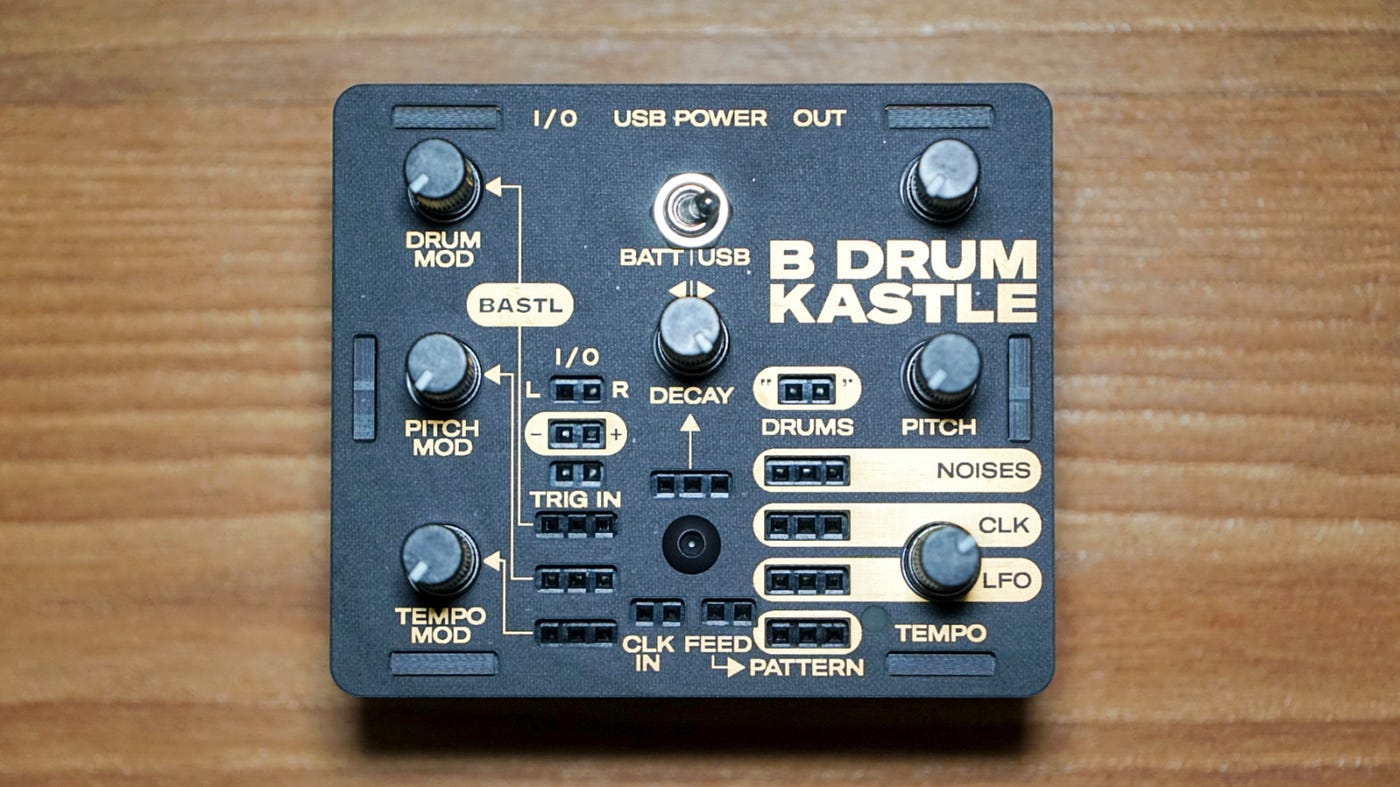
Connect from KD’s I/O “L” terminal to the CLK IN terminal using a jumper wire.
It felt a bit unstable, but with this method, it seems that the KD’s clock can sync to Ambient Ø.
Finally
When selecting equipment for performance, I also consider how it will appear in performance videos.
This is purely a personal preference, but when multiple devices appear in the frame, it can be hard to tell which is the main instrument. Therefore, I aim to keep the composition as simple as possible.
In this respect, the KASTLE DRUM I purchased this time is extremely small while complementing Ambient Ø as a rhythm track. This makes it easy to convey its position as a “sub-instrument” naturally in the video, which I find very appealing.
Although it cannot be programmed in detail like a typical groove box, its ability to generate random beats is a standout feature.
These unpredictable rhythms create a pleasant contrast with the calm and gentle sounds of Ambient Ø, adding a unique groove to the overall track.
Going forward, I want to continue exploring various production and performance possibilities using this combination.
When I release new performance videos, I also plan to post explanatory articles on Medium.
Thank you very much for reading until the end.
I created a performance video and wrote an article about “tips for filming”.
Index Page
[embed][**The Archive: where every idea lives
- Welcome to my story index -* Hi there! This is an index page where I’ve grouped my articles by category. Enjoy browsing!*medium.com](https://medium.com/@nicafelt/the-archive-where-every-idea-lives-welcome-to-my-story-index-189caa487f6e)
Unboxing
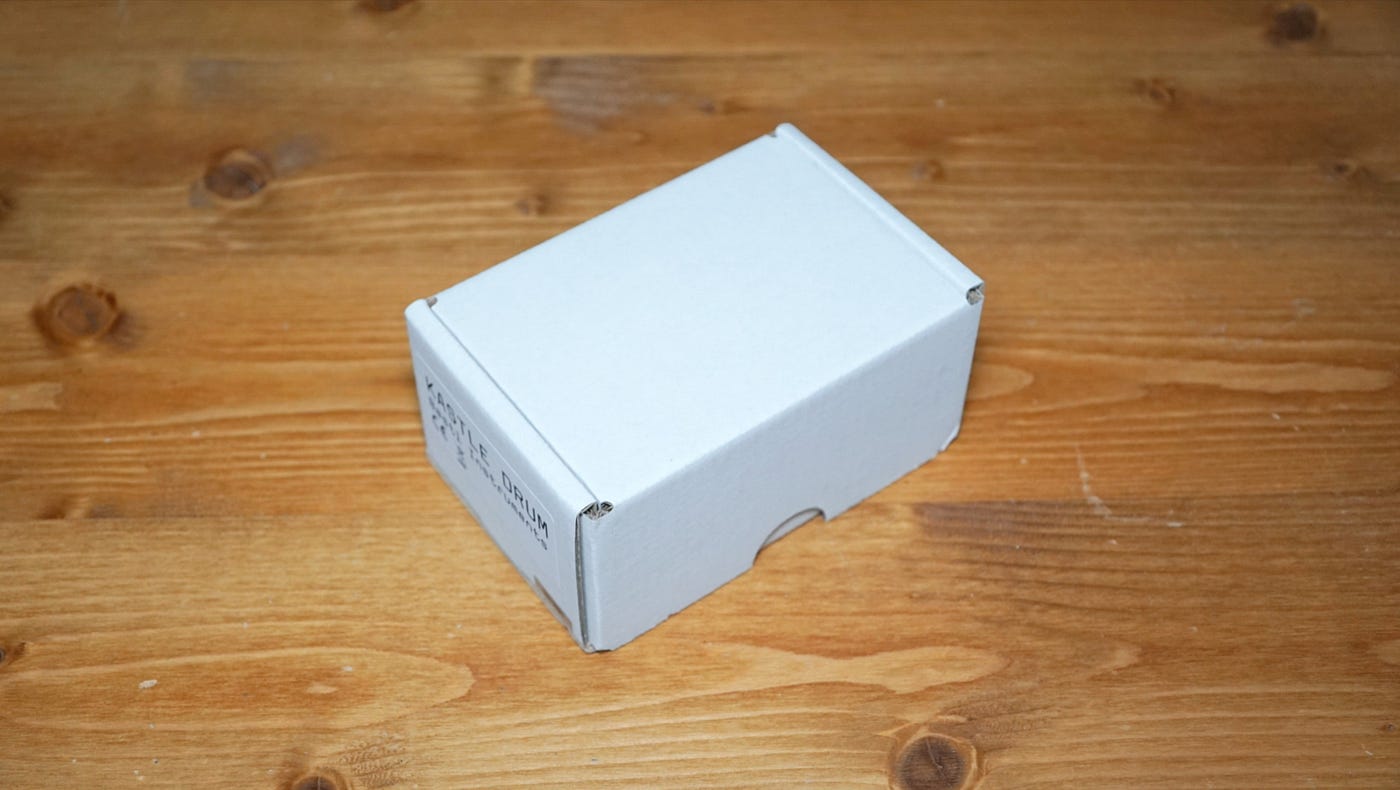
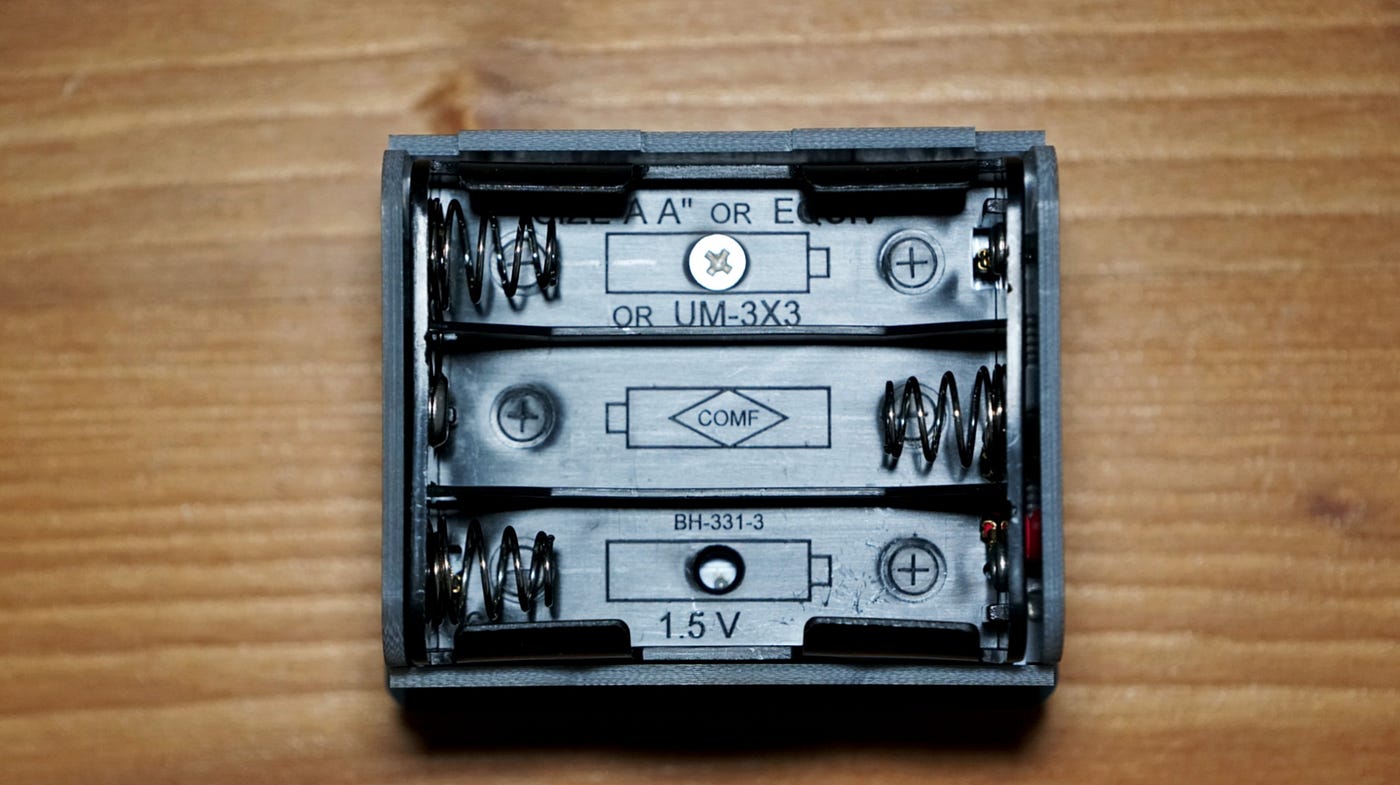
Can also be powered by 3 AA batteries
메타데이터
- post_id
- ff1f8c8cb2ff
- slug
- bastl-kastle-drum-the-tiny-lofi-modular-drum-synth-with-massive-character-ff1f8c8cb2ff
- url
- https://medium.com/@nicafelt/bastl-kastle-drum-the-tiny-lofi-modular-drum-synth-with-massive-character-ff1f8c8cb2ff
- canonical_url
- https://medium.com/@nicafelt/bastl-kastle-drum-the-tiny-lofi-modular-drum-synth-with-massive-character-ff1f8c8cb2ff
- author_url
- https://medium.com/@nicafelt
- status
- ok
- fetched_at
- 2026-07-15 08:22:34