THE NEPHELES OF THE BIBLE AND GREEK MYTHOLOGY PART I
Mediation, the Etheric Envelope, and Helen Who Never Went to Troy
THE NEPHELES OF THE BIBLE AND GREEK MYTHOLOGY
PART I
Mediation, the Etheric Envelope, and Helen Who Never Went to Troy

Dancer & Director: Maria Alexea
“I have told you these things, so that in me you may have peace. In the world you will have tribulation. But take courage; I have overcome the world.” — John 16:33
The cloud is one of the most familiar and, at the same time, most enigmatic images of the ancient and biblical world. It belongs to an in-between, yet it descends low; it has a visible form for certain beings whose opopa and ears are broad, who therefore have Europe and Eurotas; it possesses an etheric body, aithra; it can surround, conceal, penetrate, carry light, and alter the very appearance of things. It therefore exists by its nature between two states, between the visible and the invisible, between the dense matter of this world and the air, between presence and concealment. It is precisely this position within the “in-between” that seems to explain why both the Bible and Greek mythology repeatedly call upon it at those moments when a form passes from one field of existence into another. And also when someone crosses from one world and goes into another to which they do not belong, they are transported through the Nephele.
We observe an extraordinarily persistent architectural similarity: whenever a presence, a voice, an image, or a self must pass from one world into another, the Nephele is often situated precisely upon the boundary.
This idea of mediation already lay at the core of the previous decipherment of the Nephele: as a moving envelope between fields, as a subtle form capable of receiving and carrying that which descends toward the lower world. The biblical and Greek traditions now allow us to examine this hypothesis through a much broader series of images.
The Nephele as the Place of Divine Presence
The biblical cloud appears already in the Old Testament as something far more than a meteorological phenomenon. In Exodus, the cloud covers the Tabernacle at the very moment when the glory of the Lord fills the Tabernacle. The image is characteristic: the divine presence is not presented as a naked object of physical sight, but is accompanied by an envelope that simultaneously reveals and conceals. The cloud makes the presence perceptible without exhausting it within its image, since it bestows upon the image the radiance of the brilliance of Eos — that is, of a being of ether.
The same structure reappears with extraordinary clarity in the Transfiguration. The Gospel according to Matthew describes a “bright cloud” overshadowing those present, and a voice is heard from the cloud. Here the cloud has a double function: it surrounds the bodies and becomes the space through which the voice passes. It is not the source of the voice; yet it constitutes the field through which the invisible source becomes audible in the human world.
The Gospel according to Luke intensifies the image still further. The cloud overshadows those present, and the text speaks of entering “into the cloud.” The Nephele acquires an almost spatial substance: one can enter into it and, through it, disappear from immediate sight. To “enter” means that the anti-Nephele unites with the Nephele, insofar as it participates in the same etheric substance. Thus a function begins to emerge that we will encounter again: the Nephele forms an intermediate field in which presence does not cease to exist, but changes its mode of appearance.
The Nephele That Receives Christ
At the Ascension this function becomes still clearer. The Acts of the Apostles state that, while the disciples were watching, Jesus was lifted up and “a cloud received him” from their sight. The verb is particularly evocative: the cloud receives him. The text does not simply describe a form moving farther away until it becomes invisible; the boundary between visible presence and absence is marked by the entrance of the Nephele into the scene.
If we read the image through harmonious geometry, the Nephele stands precisely at the threshold of the change in the body of presence. On one side there is Jesus, still beheld by human eyes, and on the other there is the presence that is no longer accessible to physical sight. The Nephele bridges the two states. It does not necessarily constitute the “body” of transition in a theological sense; the image, however, allows us to think of it as the visible envelope of the boundary, as the form that appears when something leaves the dense field without it being stated that it ceases to exist.
What is interesting is that the reverse movement uses the same image. At the beginning of Revelation, the one who comes is presented “with the clouds.” The Nephele therefore accompanies both the departure from the field of immediate vision and the return toward manifestation. This places it, with remarkable consistency, upon the threshold between the two fields.
“We Shall Be Caught Up in the Clouds”
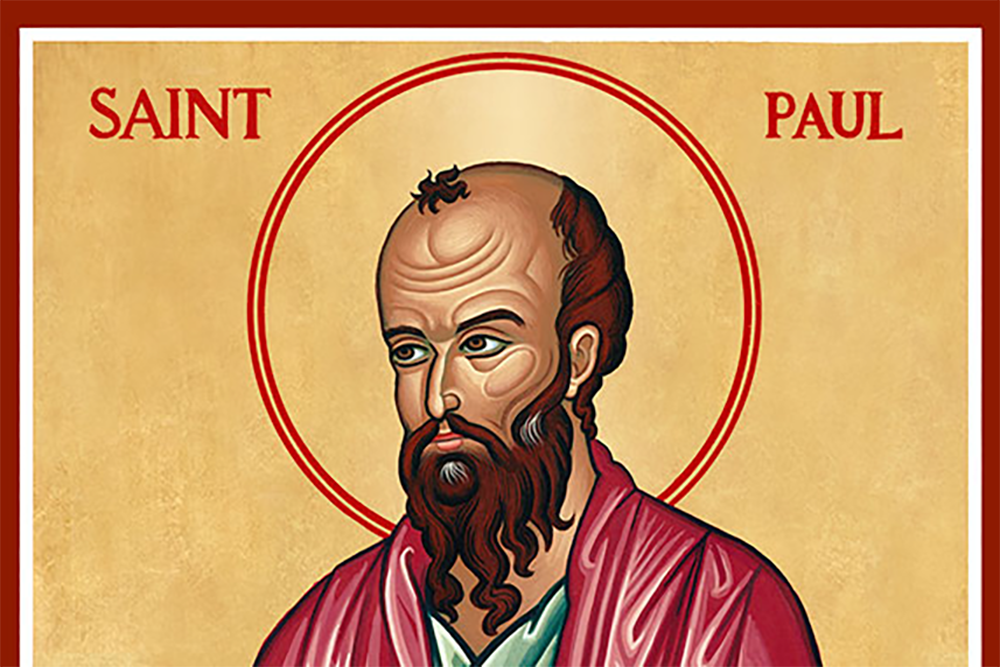
Perhaps the most striking formulation is found in the First Epistle to the Thessalonians. Paul does not simply say that the living will rise toward Heaven. He writes that “we shall be caught up in the clouds” for the meeting with the Lord “in the air.” The language itself unites three elements: harpagē — hypharpagē, that is, the snatching of HYFĒ, where HYFĒ is the being of ether — clouds, and air.
This is of particular importance for the concept of mediation, of the boundary. The meeting is situated “in the air” and the transition takes place “in the clouds.” Paul is of course using apocalyptic and eschatological language; nevertheless, the image he creates is precisely that of an intermediate place, a region between this Earth and the heavenly place — that is, another land of Gaia, higher than the pit into which we have fallen — where human flesh possesses its complete natural form, which is also imperishable.
Those who are caught up simply disappear from one point in order to reappear — to awaken — in another, to which the entirety of their natural existence belongs. The movement acquires a medium, a field, an intermediate envelope: the clouds.
The White Nephele of Revelation
The same motif appears within the Revelation of John. In the fourteenth chapter, John sees a “white cloud” and upon the cloud a form like a Son of Man. The cloud has now become a bearer of presence: the heavenly form does not simply appear beside it, but is projected upon it. It is the field upon which the image from above is projected.
The biblical sequence thus begins to acquire a remarkable consistency. The Nephele covers the space of divine glory, carries the voice, surrounds the Transfiguration, receives the ascended Christ — that is, the etheric member of his lower self — accompanies his return, becomes the mode of the Pauline catching-up and, in Revelation, bears the heavenly form itself. In all these cases it stands at the boundary where the state of presence changes.
For this reason, within the language of this decipherment, we could call it the body of the Passage. The phrase describes the common morphological function of etheric beings: the Nephele is that unstable yet visible envelope which allows what is invisible to earthly eyes to approach the visible, and allows the visible to withdraw toward what is invisible to earthly eyes.
And it is precisely at this point that the Bible encounters Greek mythology in an unexpected way.
Ixion and the Nephele That Became Hera
In Pindar’s second Pythian Ode, Ixion desires Hera. Zeus places before him a Nephele whose eidos resembles that of the goddess, and Ixion is deceived by this form. Pindar makes it clear that the man embraces a sweet falsehood: the likeness bears the appearance of the heavenly goddess without being Hera. Of course, IXION, whose very name defines him as such, is himself within his own mediation, and thus sees Hera as physical.
Here something fundamental occurs for the enigma we are examining. The Nephele is not simply a mist that conceals a body. It can take on the eidos of another person and become so convincing that it occupies the place of the original within the experience of the one who sees it. The form separates from its true bearer and is transferred into another, subtler body.
Apollodorus preserves the same tradition: Zeus creates a cloud “in the likeness” of Hera and places it beside Ixion. The idea, therefore, is not a modern metaphor that we impose upon the myth. Within the ancient narrative itself, the cloud is etheric material for a likeness. It can receive the form of a person who is elsewhere.
This Nephele of Ixion already constitutes a kind of etheric double. It possesses form without possessing the identity of Hera and, at the same time, possesses sufficient presence to enter the physical world of relations and produce consequences. The likeness is not simply an image painted upon a surface. It has a functional presence within the myth.
And here the road toward Helen opens.
Helen Who Never Went to Troy
In Euripides’ Helen, the great scandal of the Homeric tradition is overturned. The real Helen declares that she never went to Troy. Hera created for Paris a form resembling her, a “breathing eidolon,” a Phi-Helen-Nephele, assembled from the plasma of Eos, while Helen herself was transported by Hermes to Egypt.
This reversal is astonishing because it does not merely alter a detail of the myth. It changes the object of the entire Trojan War. The Greeks and the Trojans do not fight over Helen’s physical body, but over a form that possesses her face, her name, and her social identity without containing Helen herself.
When Menelaus encounters the real Helen in Egypt, he is initially unable to accept what he sees. He already has with him the Helen whom he brought back from Troy. The real woman is forced to explain to him that she herself never went there and that the other was a Nephele. The dialogue reaches the precise question of the substance from which such a living likeness can be constructed: the answer is ether, which holds all things together and mediates between all things.
The Nephele as the Etheric Envelope of Form
Here we can return to the concept of the Nephele as an etheric envelope with much greater precision. We are not claiming that Euripides uses a technical metaphysical term corresponding to the modern concept of the “etheric body.” What he says dramatically, however, is equally interesting: a form can exist that bears the visible identity of a human being without that person’s physical body, and the substance of this form belongs to Heaven, air, and cloud, in order to mediate between worlds.
The Nephele thus becomes the envelope within which the image of the self can be installed. As long as the envelope carries the true bearer himself, it functions as legitimate mediation. When, however, the form is detached from the one to whom it belongs and installed within another body of presence, the idol is born within a foreign body, in the image and likeness of the original. This distinction already lay at the heart of the previous formulation: the Nephele is the possibility of transmission and form-giving, while the fleshly idol arises when this power is used as a substitute for the true bearer.
The Nephele Between Presence and the Idol
The biblical and Greek images can now be viewed together without needing to be identified with one another. In the Bible, the Nephele accompanies primarily real transitions: the voice emerges from it, Christ is received by it, the living are caught up within clouds, and the heavenly form appears upon it. In Greek mythology, the same unstable substance acquires another possibility: it can receive the eidos of someone who is not within it.
The Nephele therefore stands precisely upon the line separating mediation from the idol. Its nature is not in itself false. It is form-giving and transitional. Whether it carries the true presence or a substitute for it depends upon the relationship of the form to its source.
Paul presents human beings passing “in the clouds” toward the air. Acts presents the cloud receiving the ascended Christ. John sees the Son of Man upon a white cloud. Pindar presents a man embracing a Nephele because it bears the appearance of Hera. And Euripides reaches the extreme point of this possibility: an entire war is fought around the etheric form of a woman, or even of a country, whose physical body never reached Troy.
The Nephele can therefore be considered, within the new reading based on harmonic geometry and the mathematics of the Greek Logos, the etheric plasmatic body of the in-between. It is the being that stands close enough to the body to shape form and to be shaped as form, and close enough to the air to abandon the stability of matter. It can receive, surround, transport, and imitate. It is the etheric boundary through which presence passes toward the image.
And for this reason, the enigma of Helen is deeper than the question of whether she did or did not go to Troy. The true enigma is how a form can separate from its self, retain its name, and continue to act in the world with the force of its identity while existing within a duplicate body.
메타데이터
- post_id
- ff23f62ddc8b
- slug
- the-nepheles-of-the-bible-and-greek-mythology-part-i-ff23f62ddc8b
- url
- https://medium.com/@mariaalexea/the-nepheles-of-the-bible-and-greek-mythology-part-i-ff23f62ddc8b
- canonical_url
- https://medium.com/@mariaalexea/the-nepheles-of-the-bible-and-greek-mythology-part-i-ff23f62ddc8b
- author_url
- https://medium.com/@mariaalexea
- status
- ok
- fetched_at
- 2026-09-15 17:17:08