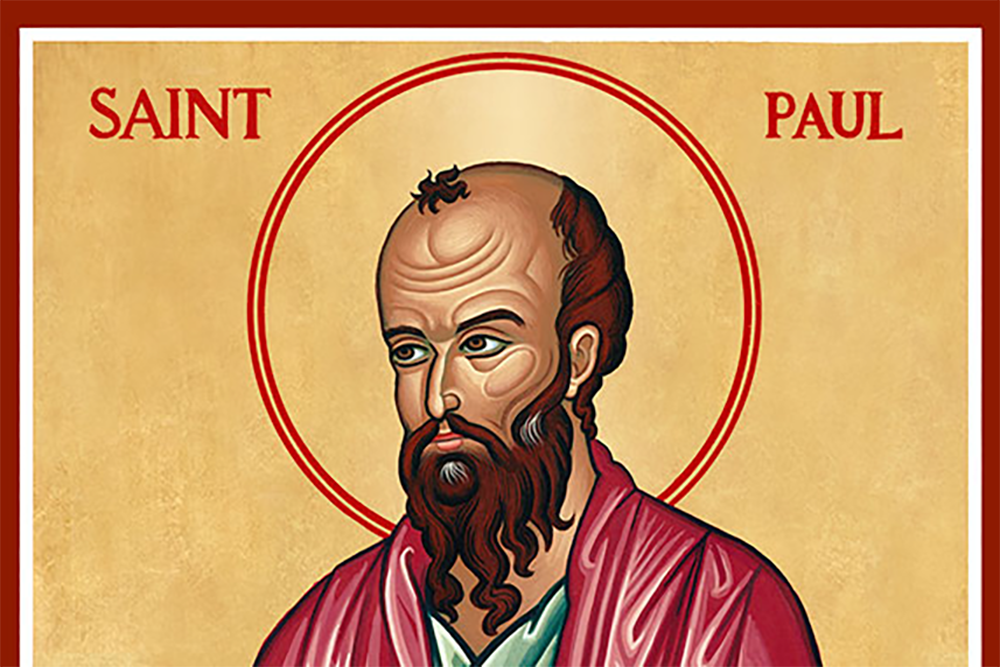
Being Led By The Living Spirit
It was credited to him as Righteousness
Being Led By The Living Spirit
It was credited to him as Righteousness
This document declares that righteousness before God is not produced by religious performance, legal precision, or outward conformity to the Law, but by living faith that hears God, trusts His word, and obeys the direct leading of His Spirit. The Law could reveal obedience and expose sin, but it could never create the final righteousness God requires. Like Abraham, whose belief was credited as righteousness, the true believer is called beyond rule-keeping into a living relationship with God Himself—where obedience becomes the fruit of faith, not the price of approval.
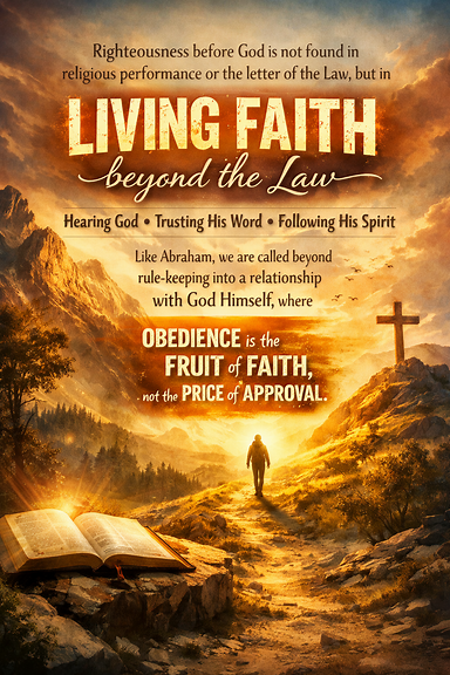
Created On Copilot Designer
Introduction
Within Christianity, there are those completely convinced of the importance of following the laws and statutes of Moses as a requirement for righteousness. These believers have a true zeal for God, but not one based on a direct relationship with God. I have written a series of articles on the importance of a direct relationship with the Spirit of God rather than laws, regulations, and including the written word—the Bible.
I understand this may seem offensive to some, but I strive to make clear what the apostle Paul and the elders in Jerusalem in Acts attempted to resolve and make clear. However, if it was then, it remains true now that some cannot see life without being shackled or bound under rules and regulations. Some actually seek to be enslaved and not experience the freedom Jesus came to the world to provide. Our humanity gets in the way.
Foundations
The true believer seeking to please God must ask, What does God require to be righteous?
The scriptures provide numerous contexts on this question and many examples, but none explicitly show that a righteousness before God could be obtained by attempting to follow laws, and that includes the Laws of Moses. Ultimately, even those that were found walking well within the laws faced a point when their faith was put to the test directly. Whatever they did before the test only opened the door for God to seek their obedience and belief in His direct commands outside and beyond the Law.
A careful reading of Scripture can appear to indicate that lawful obedience and righteousness are nuanced. In the covenant given through Moses, Israel could indeed be described as “righteous” when or if they carefully obeyed the commandments of the LORD. Deuteronomy 6:25 states, “And it shall be our righteousness, if we observe to do all these commandments before the LORD our God, as He hath commanded us.” This means that, within the covenant framework of Moses, obedience was recognized as the proper covenant response and could be spoken of as righteousness before God.
However, this too was the beginning of testing to determine if Israel genuinely loved and believed God by following His stipulations as given through Moses. If their obedience came as a response to believing God and acting in response to that belief, it was considered a form of righteousness. Not so much as directly following the rules but having the belief and trust in God as a reason to do so.
There are examples of individuals being called righteous or blameless while living within the Mosaic covenant. Luke describes Zechariah and Elizabeth as “righteous before God, walking in all the commandments and ordinances of the Lord blameless” (Luke 1:6). Paul could also say of his former life, “touching the righteousness, which is in the law, blameless” (Philippians 3:6). These passages show that a person could be recognized as covenant-faithful, upright, or blameless according to the standards and provisions of the law. Still, even these individuals only achieved righteousness when they were faced with unique decisions given directly to each of them. Paul received the vision of Jesus and a calling that thoroughly changed his life course. Zachariah was visited by Gabriel and told his aged wife, Elizabeth, would conceive a son.
While obedient to the ritual laws, he doubted Gabriel’s words and was made mute. You can read the rest of his story in Luke 15:2–20. The book of Job reveals a man determined to please God as to carefully abide under God’s rules and sacrifices. This opened the door for severe testing by Satan, which nearly broke him. Living lawfully alone was never enough; it led to more stringent and direct testing.
However, the New Testament makes a clear distinction between being regarded as righteous within the covenantal life of Israel and being justified before God in the ultimate sense. Paul argues from Abraham that righteousness was credited by faith before the Law of Moses was given: “Abraham believed God, and it was counted unto him for righteousness” (Genesis 15:6; Romans 4:3). He then explains that the promise did not come “through the law, but through the righteousness of faith” (Romans 4:13).
Likewise, Galatians teaches that “no man is justified by the law in the sight of God” because “the just shall live by faith” (Galatians 3:11). Paul does not present the Law as evil; rather, he says it served as a guardian or tutor until Christ (Galatians 3:24). The Law could define covenant obedience, expose sin, and guide Israel’s life with God, but it could not produce the final righteousness that comes from God by faith.
Therefore, the biblical evidence supports saying that living obediently under the Law of Moses could result in someone being called righteous, blameless, or upright in a covenantal and practical sense, but not by the obedience but by the motivation behind obedience is what counted. Scripture also teaches that ultimate righteousness before God is not earned through obedience to the Law but is credited by faith, fulfilled in Christ, and lived out by the Spirit. This is why Paul, after listing his law-based credentials, counts them as loss so that he may “be found in him, not having mine own righteousness, which is of the law, but that which is through the faith of Christ” (Philippians 3:9).
Covenantal Righteousness vs. Justifying Righteousness
Covenantal righteousness refers to being regarded as faithful, upright, or blameless within the covenant relationship God established with Israel through Moses. In this sense, passages such as Deuteronomy 6:25 and Luke 1:6 can speak of people as righteous when they walk carefully in the commandments and ordinances of the Lord. This does not mean they achieved sinless perfection; rather, their lives demonstrated sincere faith, reverence, repentance, and covenant loyalty before God. This was extremely burdensome, and few achieved a right to stand under it. Many who thought they did had deviated from the original intent through various loopholes and legalistic manipulations.
Justifying righteousness, however, refers to the deeper and final standing by which a person is declared right before God. Paul repeatedly teaches that this righteousness is not obtained by the works of the Law, but by faith. Romans 3:20 says that “by the deeds of the law there shall no flesh be justified,” and Galatians 2:16 states that a person is “not justified by the works of the law, but by the faith of Jesus Christ.” In this sense, the Law can reveal sin and define faithful conduct, but it cannot provide the final righteousness required for life before God.
The distinction matters because it prevents two opposite errors. On one side, it avoids dismissing the Law as though obedience never mattered; God did call His people to faithful obedience. On the other side, it avoids turning obedience into the ground of salvation. True righteousness begins with believing God, as Abraham did, and is fulfilled in Christ, whose Spirit then leads the believer into a living obedience that flows from faith rather than bondage.
What Does This Mean for Believers?
What is being tested is our attitudes and motivations in believing God and trusting Him on a personal level. Getting to the meat of this starts with the reception of the Holy Spirit of God. Jesus fulfilled the obedience of the legal requirements in life, and upon His death, He cleaned and removed the sin burden for those that believe and trust him. This belief also unlocks the reception of the Spirit of God Himself to reside inside the believer. We must start with the first principles before moving on to higher levels of knowledge.
The reception of the indwelling of the Holy Spirit of the Living God is the new birth that provides everything a believer needs for righteousness. This supersedes laws, writings, or proofs of obedience—provided the newborn believer listens and follows the words of the Spirit and does not get distracted by debates, cultural pressures, and conflicting ideas.
The Law is the Spirit, all righteousness is the Spirit, the creator of the Bible is the Spirit, the giver of eternal life is the Spirit, and the only thing required of a true believer is the Spirit—period! And that is what Jesus opened to those that believe in Him—not to return to the bondages of the laws attempting to act out a religion, but to have true religion living within.
True religion is demonstrated by our belief and our ability to be directed by the living Spirit within. Such direction will create a life of testing and challenges that are uniquely created by God for each person, meeting their needs and breaking their self-will and weaknesses. Unless that is done, nothing can be achieved trying to do good on your own or society's terms.
Righteousness must flow from within and not by outward actions or memorizations of written letters and long-dead languages. Sadly, these become snares used by evil to manipulate and control. No one on the earth can match wits with the devil and win, no matter how well you think you know the scriptures. The truth must be inside you and not somewhere or with someone else.
Examples of Listening and Obedience
Throughout scripture, those who listened to the voice of God and believed in it as to act on that belief were those called righteous and approved. No matter what they did under the law, there came a point they had to both listen and hear God’s voice and decide to act or to doubt. When the Lord speaks to a person, the willingness to believe and act on that belief is ultimately credited as righteousness and approval. The entire book of Acts is a written testimony of a vital church living by the guidance of the Holy Spirit. This is totally unlike Israel under the Mosaic Laws. They were not known or credited by their legal observations and, in fact, challenged as disobedient to the perceived laws of the time. Examples of true, trusting obedience included those listed in the Hall of Faith in Hebrews, chapter 11—not one of those was justified by following the rules of the law, but by believing, trusting, and being willing to suffer from the direct words of God given to them. The list of true working faith goes on:
· Mary trusted Gabriel’s words that she would give birth as a virgin (Luke 1:26–38).
· Abraham trusted God enough to offer Isaac, his son of promise (Genesis 22:1–19; Hebrews 11:17–19).
· David trusted God that he would become king of Israel after being anointed by Samuel (1 Samuel 16:1–13; 2 Samuel 5:1–5).
· Peter trusted the Spirit and went to the house of Cornelius, a Gentile, despite Jewish separation customs (Acts 10:9–48; Acts 11:1–18).
· Philip joined the chariot of the Ethiopian eunuch because the Spirit told him to do so (Acts 8:26–40).
· David trusted God that his son Solomon would build God’s temple and prepared the supplies for it (1 Chronicles 22:1–19; 1 Chronicles 28:1–21).
· Moses raised his staff to open the Red Sea because God told him to do so (Exodus 14:15–22).
· The disciples remained in Jerusalem according to Jesus’ command until the Holy Spirit came upon them (Luke 24:49; Acts 1:4–8; Acts 2:1–4).
The Law could technically reveal what obedience looked like within Israel’s covenant, but faith revealed whether the person truly trusted God Himself.
That is why Paul can say both:
- The Law had a real purpose, and final righteousness comes through faith, not the Law.
In short, righteousness is credited to faith because faith receives, trusts, and responds to God; obedience then confirms that faith is living and active.
Conclusion
The real purpose of living in faith is daily listening and walking under the directions of the Spirit of God, seeking to learn and listen to His voice and directions within, and experiencing the freedom from human religious restrictions, rituals, and customs. To partake in the very mind and heart of the Holy One and please Him directly, not in motions and repeated actions as to impress. There is no impressing the Lord; there is listening to His voice and acting on it.
메타데이터
- post_id
- ff2acf23d5fb
- slug
- being-led-by-the-living-spirit-ff2acf23d5fb
- url
- https://medium.com/the-dove/being-led-by-the-living-spirit-ff2acf23d5fb
- canonical_url
- https://medium.com/the-dove/being-led-by-the-living-spirit-ff2acf23d5fb
- author_url
- https://medium.com/@bobrussell27
- status
- ok
- fetched_at
- 2026-07-08 22:18:54