GAS PRICES ARE LYING TO YOU.
Let me explain this the way I would if we were sitting down having a real conversation, because most people are reacting to gas prices…
GAS PRICES ARE LYING TO YOU.
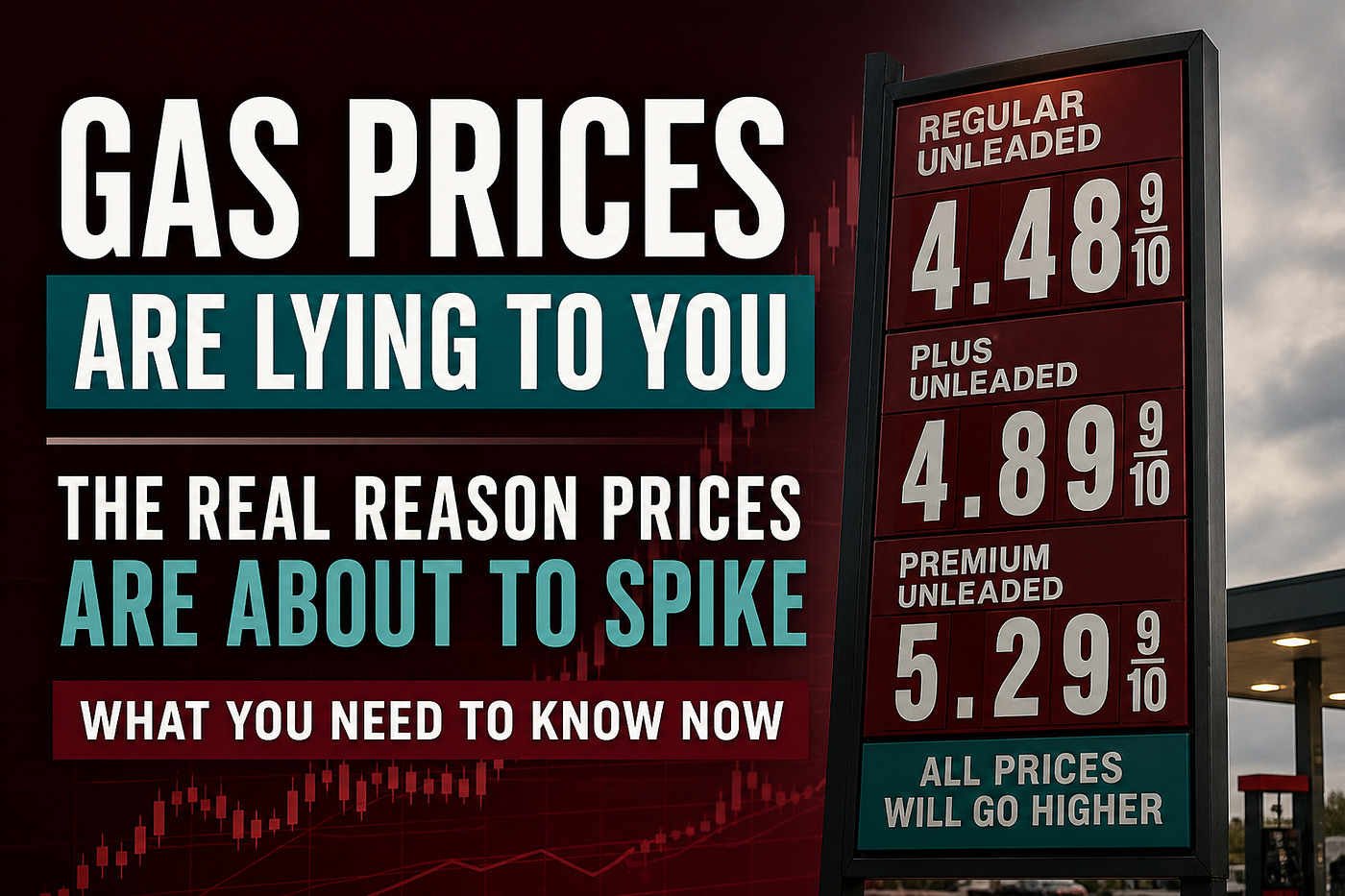
Let me explain this the way I would if we were sitting down having a real conversation, because most people are reacting to gas prices without actually understanding what they’re looking at. The number you see on that gas station sign in Las Vegas, Phoenix, Dallas, or anywhere else in the country is not current reality, it’s delayed reality. It’s based on what oil markets looked like four to six weeks ago, not what’s happening right now. That means everything unfolding today, global conflict, supply disruptions, shipping issues, none of it has fully hit your wallet yet, and that’s the part people aren’t prepared for.
Gas prices don’t move instantly because the system doesn’t work that way. Fuel goes through contracts, shipping timelines, refining processes, and distribution layers before it ever reaches a pump. So when oil prices spike, it takes weeks for that increase to show up. What you’re paying today is the cost of yesterday’s problems, not today’s. That delay creates a false sense of stability, and then it catches people off guard when prices suddenly jump.
Now here’s where pricing actually comes from, and it’s not your local gas station. The real control point is global, specifically a narrow waterway called the Strait of Hormuz, where a significant portion of the world’s oil supply flows through. The pricing benchmark tied to that flow is Brent crude, and that’s what ultimately drives what Americans pay at the pump. There’s a simple rule that connects the two. For every ten dollar increase in oil, gas prices rise roughly twenty three to twenty five cents per gallon, just delayed by those same four to six weeks. That gap between cause and effect is where most people misunderstand what’s happening.
Before the current tension started, the global oil market had a cushion, around five hundred eighty million barrels sitting in storage. That reserve is the only reason prices haven’t already spiked dramatically. But that cushion is shrinking, and it’s shrinking faster than expected. U.S. inventories alone dropped by millions of barrels in a single week recently, which signals the system is tightening. On top of that, markets are adding risk premiums simply based on uncertainty. Even the perception of instability can add five to fifteen dollars per barrel before actual shortages even occur.
And here’s something that comes from experience watching how these cycles play out. Infrastructure damage doesn’t resolve quickly. Energy facilities take years to repair, not weeks. Shipping lanes don’t instantly normalize, and supply chains don’t just snap back because tensions cool off. So even if headlines quiet down, the pressure underneath the system is still there, and it keeps pushing prices higher over time.
This is where it becomes real across the United States. If you’re in California, you’re already feeling higher prices because of added costs layered on top of supply. If you’re in Texas, Arizona, or Nevada, the increase might feel slower at first, but it still hits. In places like Chicago, Atlanta, or New York, the impact shows up in transportation and goods, not just fuel, but groceries, deliveries, and everyday expenses. This isn’t isolated to one region, it’s nationwide.
If current conditions hold, gas likely stays in the mid four dollar range nationally, which is uncomfortable but manageable. If supply pressure increases and key routes stay restricted, you’re realistically looking at prices moving into the five dollar range across much of the country. And if the storage buffer continues to shrink, that’s when things shift into a different category, with gas pushing toward six dollars and diesel moving above seven. That’s where it stops being a nuisance and starts becoming a real economic problem.
Diesel is the piece most people overlook, and it’s the most important one. Diesel fuels trucks, shipping, and logistics, meaning it touches every product people buy. When diesel spikes, everything gets more expensive at the same time. Food, retail, construction, all of it. That’s when inflation doesn’t just show up in numbers, it shows up in everyday life.
From a broader economic perspective, this creates a tough position. The Federal Reserve can’t easily lower interest rates to stimulate the economy while energy costs are pushing inflation higher. That means borrowing stays expensive while living costs rise, and that squeeze is something people feel directly.
This is where it connects to real estate across cities like Las Vegas, Phoenix, Miami, Austin, and beyond. Higher fuel costs increase construction costs, which pushes home prices. At the same time, higher interest rates reduce affordability. That combination slows demand while keeping prices elevated, which creates a very uneven market.
I’ve seen this pattern play out before. When fuel costs rise, people shift spending. Less money goes toward dining, travel, and discretionary purchases. That slows local economies over time, even if it doesn’t happen overnight. It builds, quietly at first, then more noticeably.
So if you’re trying to understand where things are going, you can’t just look at the number on the gas station sign. You need to look at what’s driving it. Oil prices, inventory levels, supply routes, those are the real indicators. Because what you’re seeing today is not the full picture, it’s just the delayed version of it.
What People Are Asking Right Now…
Why are gas prices delayed from global events? Because fuel pricing moves through contracts and supply chains that take weeks to adjust.
How do oil prices affect gas prices across the U.S.? Oil sets the base cost, and increases show up at the pump after a delay.
Why is the Strait of Hormuz important? It controls a major portion of global oil flow, making it critical to pricing.
Are gas prices expected to rise nationwide? Yes, if supply pressure continues, prices are likely to increase across multiple regions.
Why does diesel matter more than gasoline? Diesel powers supply chains, so it impacts the cost of nearly everything.
Deeper Questions Worth Thinking About…
How long can the current oil supply buffer last? It depends on demand and disruptions, but current trends show faster depletion than expected.
Why do global conflicts affect local economies so quickly? Because energy costs influence transportation, production, and overall pricing.
What happens if diesel prices surge further? Supply chains tighten and costs increase across multiple industries.
Is this a short-term issue or a longer shift? Current signals suggest longer-term pressure rather than a quick reversal.
How should buyers and investors think about this? Focus on long-term costs and understand the factors driving them.
메타데이터
- post_id
- ff41a28a6901
- slug
- gas-prices-are-lying-to-you-ff41a28a6901
- url
- https://medium.com/@raffidoumanian/gas-prices-are-lying-to-you-ff41a28a6901
- canonical_url
- https://medium.com/@raffidoumanian/gas-prices-are-lying-to-you-ff41a28a6901
- author_url
- https://medium.com/@raffidoumanian
- status
- ok
- fetched_at
- 2026-06-09 15:37:30