Zen’s Contradictions: Language, Direct Experience, and the Need for Reinterpretation
Introduction
Zen’s Contradictions: Language, Direct Experience, and the Need for Reinterpretation

The Legendary Sermon of the Flower
Introduction
Zen Buddhism has long enjoyed a reputation for radical simplicity: “a transmission outside the scriptures, no reliance on words and letters, direct pointing to the human mind, seeing one’s nature and becoming Buddha.” This famous formula has made Zen attractive to seekers tired of dogma and scholastic hairsplitting.
Yet beneath its appeal lie two deep contradictions. First, while Zen denounces language, it has produced an enormous body of literature. Second, while Zen promotes “direct experience” as the essence of awakening, modern neuroscience and Buddhist philosophy alike show that all experience is mediated and constructed. These contradictions do not mean Zen has no value — but they do suggest that Zen’s rhetoric must be critically reinterpreted if it is to remain relevant today.
1. The Rhetoric of “Beyond Words”
Zen rhetoric claims to reject reliance on scripture and verbal explanation. The famous four-line verse attributed to Bodhidharma states:
A special transmission outside the scriptures, Not established on words and letters; Directly pointing to the human mind, Seeing into one’s nature and becoming Buddha.
At face value, this dismisses all language. But historically, the formula functioned as a polemic against scholastic Buddhism, positioning Zen as a path of practice rather than bookish study.
2. Zen’s Mountain of Texts
In practice, Zen has been anything but silent. The tradition has produced a vast corpus:
- Dōgen’s Shōbōgenzō (13th c.) is a massive philosophical work filled with complex arguments. Ironically, Dōgen himself acknowledged the paradox of using words to critique words:
- Sheng Yen (1930–2009), a modern Chan master, wrote dozens of books. In Orthodox Chinese Buddhism, he openly admits the tension:
Though Zen says it does not rely on words and letters, without words and letters how could the teachings be passed on? Words are like a raft; though not the other shore, they help us reach it.
- Even koan collections like the Blue Cliff Record are accompanied by layers of commentary — master upon master adding words to supposed “wordless” encounters.
Far from transcending words, Zen depends on them for transmission and survival.
3. The Myth of “Direct Experience”
The second contradiction lies in Zen’s rhetoric of immediacy. D. T. Suzuki, who introduced Zen to many Western readers, insisted:
Zen is the ultimate fact of all philosophy, and as such it admits of no logical explanation. The truth of Zen must be grasped by direct intuition, not through discursive reasoning.” (Essays in Zen Buddhism)
For Suzuki, Zen offered an unmediated encounter with reality.
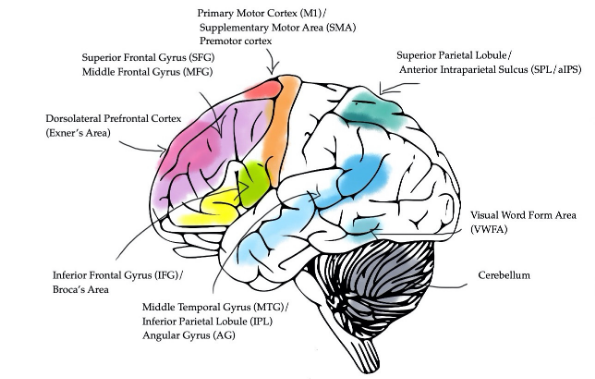
But neuroscience decisively challenges this view. Perception is not “raw data” but a construction: bottom-up sensory inputs are constantly filtered by top-down processes — memory, concepts, expectations. Seeing, hearing, and feeling are never “direct” but always mediated by the brain’s interpretive frameworks.
Ironically, Buddhist philosophy itself also undermines the notion of immediacy. The Buddha analyzed experience as the arising of the five aggregates (form, sensation, perception, mental formations, consciousness) — a process already structured and conceptualized. Dependent origination (pratītya-samutpāda) insists that nothing is “direct”: every experience arises through causes and conditions.
4. Why Zen Clung to These Rhetorics
Historically, both slogans — “beyond words” and “direct experience” — worked as rhetorical shortcuts.
- They distinguished Zen from Abhidharma scholasticism and Pure Land devotionalism.
- They encouraged practice, urging students to stop clinging to texts and seek realization in zazen and daily life.
But what worked as polemic in medieval China and Japan risks misleading modern practitioners today. To repeat these slogans without a critical context is to peddle romantic myths.
5. Toward a More Honest Zen
A more faithful restatement of Zen’s insights would be:
- Words are necessary but limited. As Sheng Yen admitted, they are like rafts — indispensable yet provisional.
- Experience is always mediated. Awakening is not about accessing raw data but about realizing how perception and conceptualization construct experience.
Such a reinterpretation would bring Zen back in line with both the Buddha’s original insights and modern cognitive science.
Conclusion
Zen has given the world great treasures: the freshness of practice, the brilliance of its dialogues, the beauty of its paradoxes. But its slogans of “beyond words” and “direct experience” are riddled with contradictions. Zen is a tradition that survives through words, and experience itself is never direct.
The true lesson of Zen is not that words are useless or that perception is immediate. The true lesson is that both words and perceptions are conditioned, empty, and provisional. Awakening is not the bypassing of mediation but the recognition of it.
To keep Zen alive in the modern world, we must reinterpret its rhetoric honestly — not as timeless doctrine, but as skillful means for an earlier age. Zen’s future depends not on silence or immediacy, but on clarity: seeing through both language and perception, not pretending we can transcend them.
메타데이터
- post_id
- ff609fb8283d
- slug
- zens-contradictions-language-direct-experience-and-the-need-for-reinterpretation-ff609fb8283d
- url
- https://medium.com/@kleong54/zens-contradictions-language-direct-experience-and-the-need-for-reinterpretation-ff609fb8283d
- canonical_url
- https://medium.com/@kleong54/zens-contradictions-language-direct-experience-and-the-need-for-reinterpretation-ff609fb8283d
- author_url
- https://medium.com/@kleong54
- status
- ok
- fetched_at
- 2026-07-10 08:43:10