Europe’s Quiet Superpower
Europe is rarely accused of being too practical. Bureaucratic? Sure. Slow? Often. Obsessed with regulations? Constantly. Yet one of the…
Europe’s Quiet Superpower
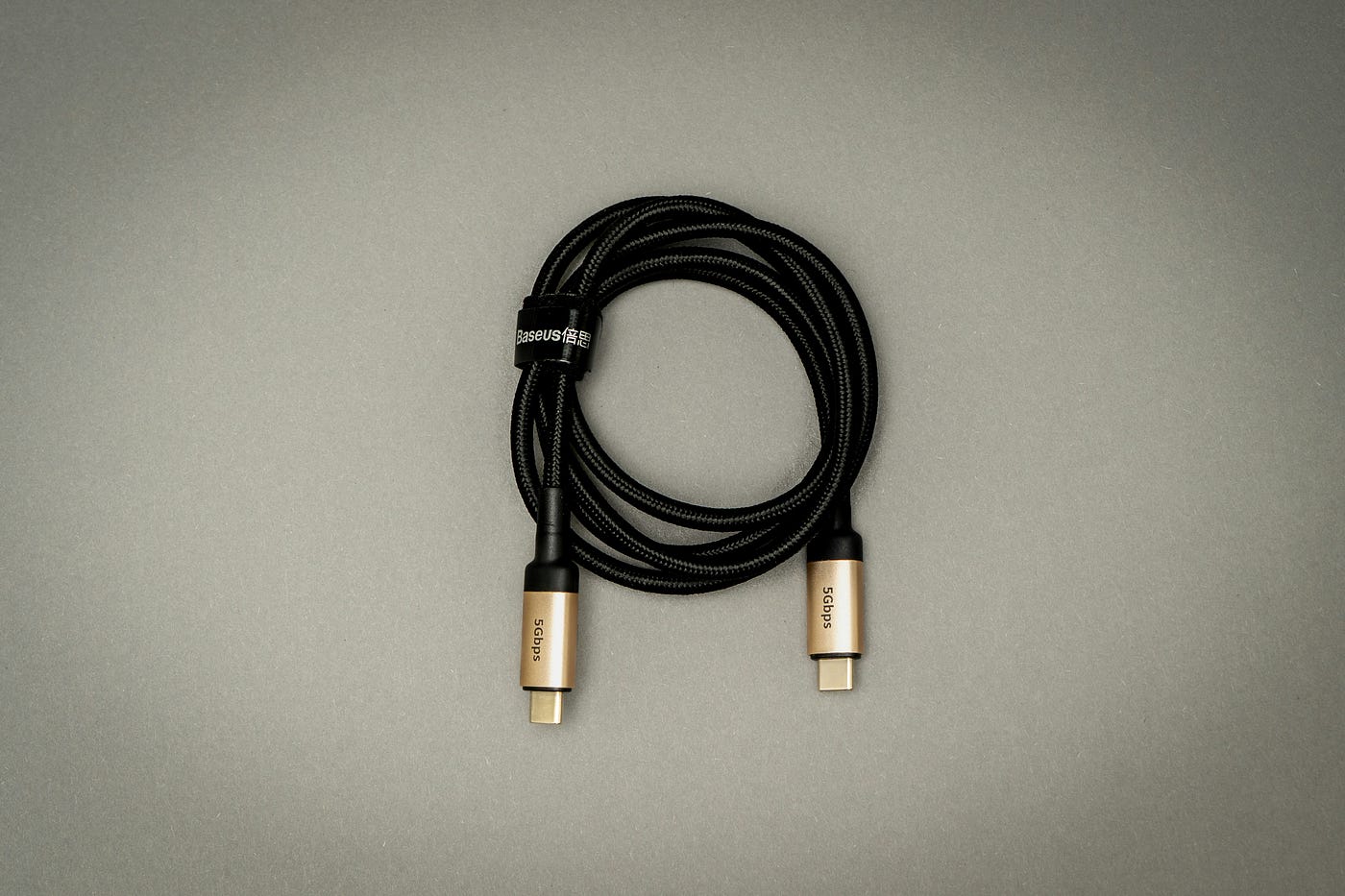
Photo by Mika Baumeister on Unsplash
Europe is rarely accused of being too practical. Bureaucratic? Sure. Slow? Often. Obsessed with regulations? Constantly. Yet one of the continent’s biggest strengths is hidden precisely there: in standards.
You notice it in the small things first. Like the absurd collection of charging cables that accumulates in every household drawer. Lightning, Micro-USB, USB-C, proprietary chargers from forgotten gadgets. A digital archaeology of corporate egoism.
The European Union finally stepped in and forced a common charging standard: USB-C. Predictably, tech giants fought it for years, especially Apple, which defended its proprietary ecosystem with the usual language about “innovation” and “consumer choice.” In reality, consumers were paying for fragmentation.
Now, one cable works for almost everything. Less waste, fewer chargers, less money spent on adapters nobody wanted in the first place. The EU estimates consumers will save hundreds of millions of euros annually. More importantly, it proved something increasingly rare: large American tech corporations do not always get to dictate the rules.
Europeans love mocking “Brussels regulations.” Entire generations of lazy commentators built careers joking about cucumber curvature and banana standards. What most people missed is that even after some of those regulations disappeared, industries kept using the standards voluntarily because standards make markets function better. They simplify logistics, improve quality control and reduce friction.
This is where Europe’s real geopolitical influence begins.
The EU no longer dominates the world through military power or giant tech platforms. But it still has something almost nobody else possesses: regulatory gravity. If companies want access to one of the world’s richest consumer markets, they adapt to European rules.
That applies far beyond charging cables.
European product safety standards, CE certification, chemical regulations, cosmetics rules and data privacy laws have become global benchmarks because producing one compliant product for Europe is often cheaper than manufacturing different versions for different regions. The result is what legal scholar Anu Bradford famously called “The Brussels Effect.” Europe regulates locally, but the consequences become global.
Even Chinese discount giants are discovering that reality now. The EU recently moved against platforms such as Temu and Shein over products that violate European safety rules. Investigations found dangerous chargers, insecure electronics and products transmitting on prohibited frequencies. The issue is not bureaucracy for its own sake. It is whether consumers are protected from toxic, unsafe or outright dysfunctional products flooding digital marketplaces.
This matters more than many politicians understand.
Consumer protection is not some secondary administrative detail. It is one of the few areas where citizens directly experience whether democratic institutions improve their lives. A charger that does not explode, cosmetics without harmful chemicals, safer toys, stronger privacy protections, interoperable systems — these things build trust far more effectively than endless speeches about “European values.”
And Europe needs that confidence now more than ever.
The continent is entering a period where sovereignty will increasingly depend on technical infrastructure. Artificial intelligence, cloud computing, digital payments, social networks, semiconductor supply chains and energy systems are no longer just business sectors. They are strategic territory.
The problem is that much of Europe’s digital infrastructure still depends heavily on American corporations. Cloud services remain vulnerable to US legal jurisdiction. Social media ecosystems are dominated by opaque algorithms designed in Silicon Valley. AI development is concentrated inside a handful of gigantic companies whose business models depend on locking users into closed systems.
That creates dependence.
Worse, it creates the kind of dependence the writer Cory Doctorow described as “enshittification”: platforms begin as useful, affordable and consumer-friendly, then gradually deteriorate once users become trapped inside the ecosystem. First customers lose flexibility, then business users lose leverage, and eventually everyone pays more for worse products.
Switching platforms becomes painful precisely because standards are absent.
Anyone who has tried moving from one social network to another understands the problem immediately. Your contacts disappear, your history vanishes, your playlists, archives and digital identity remain locked inside proprietary systems. You are not really a customer anymore. You are inventory.
That is why interoperability matters.
A good example already exists in Europe’s growing digital sovereignty movement. New initiatives such as EuroStack and the “European Social Stack” aim to create shared protocols and interoperable infrastructure that allow users to move more freely between services. Some European alternatives already make migration surprisingly simple. Music playlists, digital libraries and user data can increasingly be transferred in minutes instead of being imprisoned forever inside a single corporate ecosystem.
That is what actual digital freedom looks like.
Standards are not glamorous. Nobody celebrates interoperability at political rallies. Nobody waves USB-C cables as symbols of civilization. Yet standards quietly shape how economies function, how consumers are protected and how power is distributed.
The next battle will extend beyond consumer electronics. AI is already becoming an energy issue as much as a technological one. American tech giants are building enormous data centers while resisting transparency about their electricity consumption and environmental footprint. Gas-powered energy investments are rising again in the United States to sustain the AI race.
Europe should respond differently.
If global tech corporations want to build AI infrastructure in Europe, fine. But Europe should impose its own conditions: transparency standards, clean energy requirements, interoperability rules and strict data protections. AI, yes. But AI that fits European priorities rather than undermining them.
That is the point many critics still miss. Standards are not the opposite of competitiveness. In many cases, they are competitiveness.
Europe’s greatest strength may not be speed or disruption. It may be the ability to create rules that others eventually follow because the market is simply too important to ignore.
Quietly, almost invisibly, that has become one of the EU’s most powerful geopolitical tools.
메타데이터
- post_id
- ff65abb5a29d
- slug
- europes-quiet-superpower-ff65abb5a29d
- url
- https://medium.com/@boyopopov/europes-quiet-superpower-ff65abb5a29d
- canonical_url
- https://medium.com/@boyopopov/europes-quiet-superpower-ff65abb5a29d
- author_url
- https://medium.com/@boyopopov
- status
- ok
- fetched_at
- 2026-07-10 03:02:36