What Is Corrective Maintenance and How Does It Impact Business Productivity?
Imagine driving a delivery truck down a busy highway. Suddenly, the engine stops working and starts smoking. Here, you are forced to pull…
What Is Corrective Maintenance and How Does It Impact Business Productivity?
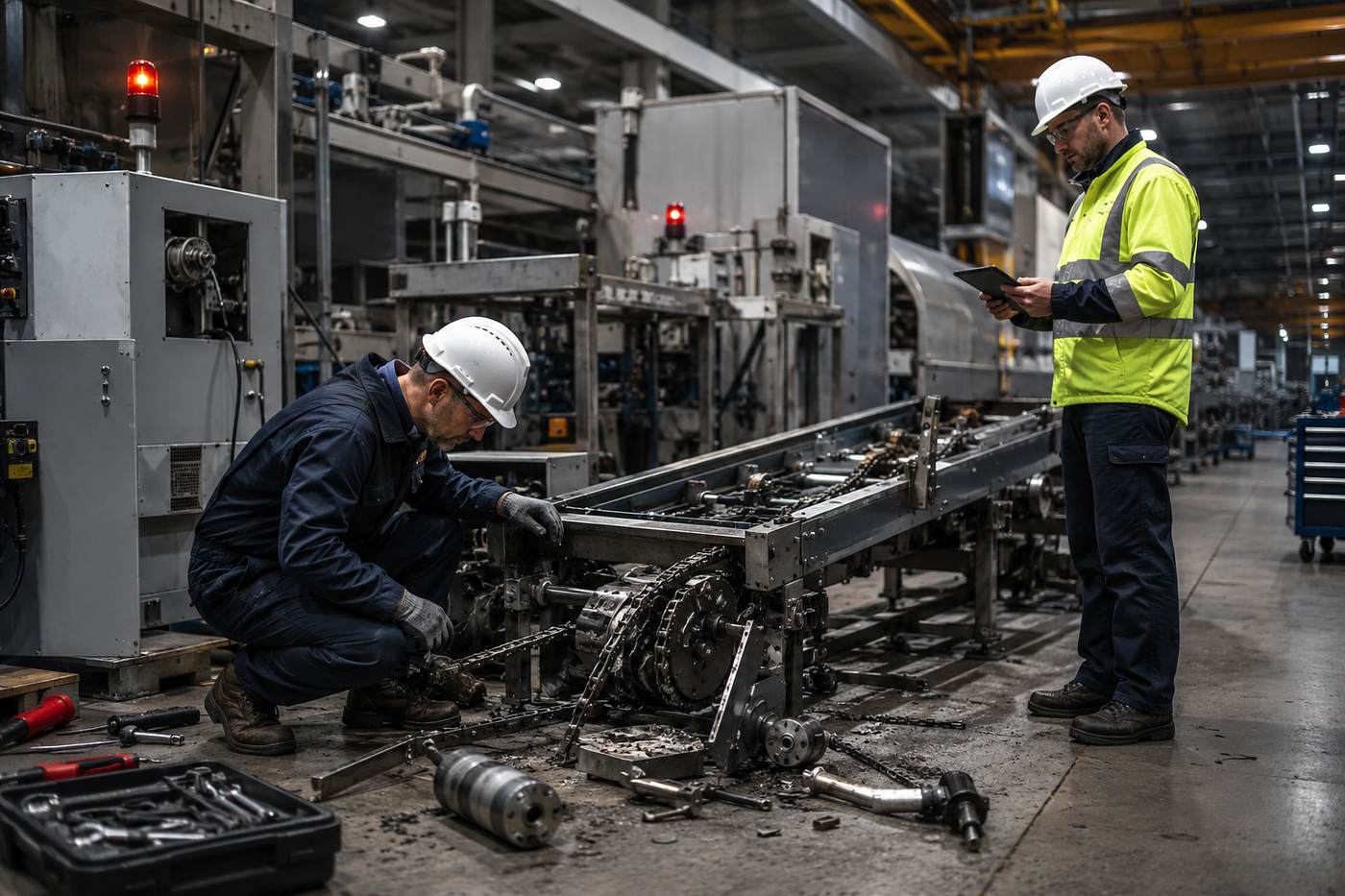
Imagine driving a delivery truck down a busy highway. Suddenly, the engine stops working and starts smoking. Here, you are forced to pull over, call a tow truck, and wait hours for a mechanic to identify and replace the broken component. In industrial operations and business management, this scenario represents the most basic, visceral form of **corrective maintenance**.
Every business, regardless of its industry, relies on physical assets to generate value. Whether it is a robotic assembly arm in an automotive plant, a fleet of delivery vans, data servers in an IT firm, or HVAC units in a retail storefront, equipment inevitably wears down, malfunctions, or fails. How organizations respond to these operational disruptions determines their baseline efficiency and profitability. While proactive strategies like preventive maintenance often steal the operational spotlight, corrective maintenance remains an inescapable reality.
So, let’s talk about it more!
Defining Corrective Maintenance: The Reactive Response
At its core, corrective maintenance (CM) is any maintenance task performed to identify, isolate, and rectify a fault so that a failed piece of equipment, machine, or system can be restored to its operational condition. Put simply, it is the work done to fix something that is either actively broken or performing significantly below its acceptable standards.
Unlike **preventive maintenance**, which is performed on a set schedule to keep failures from happening in the first place, corrective maintenance is inherently reactive. It is triggered by a specific event, such as a sudden asset breakdown, an error code on a dashboard, a noticeable drop in manufacturing output quality, or a routine physical inspection revealing an underlying defect.
Studies across global manufacturing industries reveal that despite the widespread push toward advanced predictive technologies, reactive and corrective tasks still account for approximately 35% to 45% of all maintenance activities in average industrial facilities.
The Three Stages of the Corrective Maintenance Cycle
To protect business productivity, corrective maintenance must follow a highly structured sequence of operational phases:
- Diagnosis (Fault Isolation): Technicians determine exactly why the asset failed or underperformed. This involves testing electrical components, analyzing software logs, or reviewing physical wear patterns.
- Elimination (Repair/Replacement): The faulty element is repaired, adjusted, or completely replaced. This is the hands-on maintenance execution phase.
- Verification (Functional Testing): The asset is run through a series of tests to confirm that it operates within its nominal parameters and that the initial fault is fully resolved before returning it to active production.
Planned vs. Unplanned Corrective Maintenance
A common misconception is that corrective maintenance is always an emergency. In reality, it falls into two distinct strategic categories based on how and when the fault is detected:
1. Unplanned (Emergency) Corrective Maintenance
This happens when an asset suffers a sudden, catastrophic breakdown that completely halts production, interrupts customer service, or poses an immediate safety hazard. There is no warning. The maintenance team must drop their current tasks and immediately fix the issue to minimize operational bleeding. This is the most expensive and stressful form of maintenance.
2. Planned (Deferred) Corrective Maintenance
This occurs when a fault is detected, but it does not cause an immediate shutdown. For instance, an operator might notice that a bearing on a conveyor belt is running hotter than usual or making a faint grinding noise. The machine is still running, but it is compromised. Management notes the issue and intentionally schedules the repair for a later date, such as during a scheduled weekend shutdown or a shift change. This allows teams to pre-order spare parts, organize labor, and minimize the impact on output.
The Quantifiable Impact on Business Productivity
Maintenance is often viewed as a back-office cost center, but it directly dictates a company’s bottom-line performance. Corrective maintenance has a massive, multi-faceted impact on business productivity, influencing everything from equipment uptime to workforce morale.
1. The Financial Downtime
When an asset fails unexpectedly, production stops, but fixed overhead costs do not. Workers sit idle, orders face delays, and supply chains back up. According to industry surveys, the true cost of unplanned downtime across all manufacturing sectors averages an astonishing $50,000 per hour, and for large automotive or oil and gas firms, it can exceed $500,000 per hour.
Corrective maintenance costs are inherently higher than preventive costs due to several factors:
- Expedited Shipping: If a critical spare part is out of stock during an unplanned failure, businesses must pay exorbitant overnight shipping fees to get the asset back online.
- Overtime Labor: Emergency breakdowns frequently require maintenance technicians to work late nights, weekends, or holidays, incurring premium labor rates.
2. Equipment Lifetime and Asset Depreciation
Relying heavily on unplanned corrective maintenance shortens the overall lifespan of industrial assets. When machines run to failure, the breakdown of one small component often triggers a domino effect, causing severe structural damage to adjacent parts. Over time, this accelerated wear and tear forces companies to prematurely retire expensive machinery, driving up capital expenditure (CapEx) requirements.
3. Labor Utilization and the “Firefighting” Culture
Productivity is deeply tied to human resources. When a maintenance department spends its days reacting to emergencies, it falls into a “firefighting” mindset. Highly skilled technicians spend their hours rushing from one crisis to another, leaving no time for root-cause analysis or reliability engineering. This chaos destroys labor productivity. Planned maintenance tasks can be completed in a fraction of the time because tools, documents, and parts are prepared in advance.
How To Optimize Maintenance Strategy?
Is corrective maintenance entirely bad? Absolutely not. Trying to completely eliminate corrective maintenance is a financial mistake known as “over-maintaining.” For non-critical assets (such as a standard office lightbulb, a basic breakroom microwave, or a redundant backup pump), it is far more cost-effective. Spending time and money inspecting a $20 asset every week is a waste of resources.
World-class organizations strive for an optimized balance. The widely accepted gold standard in maintenance management is the 80/20 Rule:

By keeping corrective maintenance constrained to roughly 20% of total maintenance hours (with only a tiny fraction of that being true emergencies), businesses can stabilize their operations and maximize throughput.
Conclusion
Corrective maintenance is an essential, permanent component of operational management. When managed strategically as a planned activity, it allows companies to run cost-effective run-to-failure strategies on low-risk assets. However, when left unchecked, an over-reliance on emergency corrective maintenance creates an unpredictable operational environment that erodes business productivity through expensive downtime, damaged machinery, and inefficient labor utilization.
To maximize productivity, forward-thinking organizations leverage **Computerized Maintenance Management Systems (CMMS) software to log corrective actions, trace failure trends, and build robust preventive frameworks. If you want to try this software, Maintainly CMMS is offering a [free trial ](https://app.maintainly.com/register)**for all users.
메타데이터
- post_id
- ff6cee18b84b
- slug
- what-is-corrective-maintenance-and-how-does-it-impact-business-productivity-ff6cee18b84b
- url
- https://medium.com/@maintainlyusa/what-is-corrective-maintenance-and-how-does-it-impact-business-productivity-ff6cee18b84b
- canonical_url
- https://medium.com/@maintainlyusa/what-is-corrective-maintenance-and-how-does-it-impact-business-productivity-ff6cee18b84b
- author_url
- https://medium.com/@maintainlyusa
- status
- ok
- fetched_at
- 2026-06-15 20:49:13