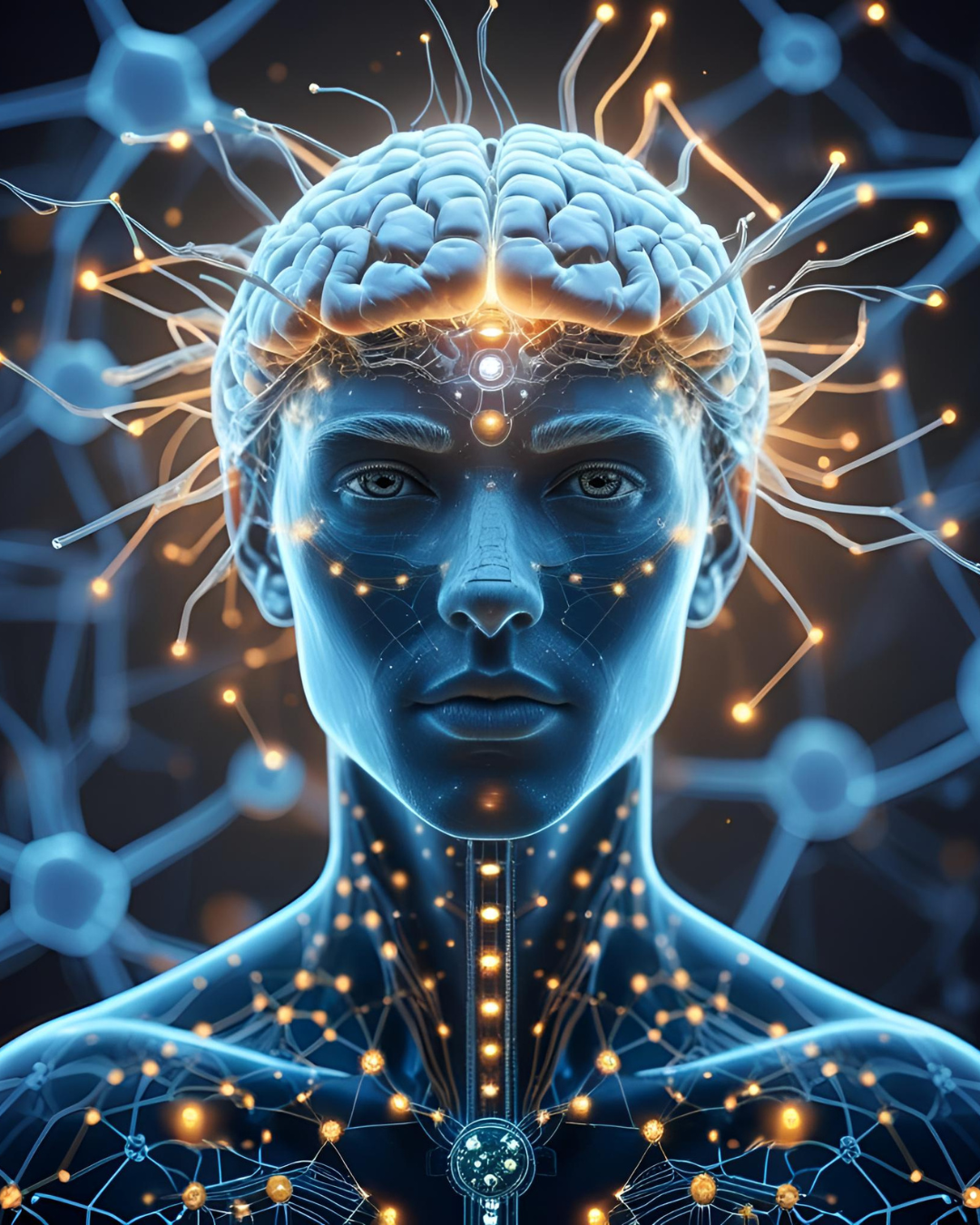
Self-Learning AI: The Autonomous Intelligence Revolution That Could Reshape Civilization
Artificial intelligence is entering a phase unlike anything humanity has experienced before. What began as simple automation has evolved…
Self-Learning AI: The Autonomous Intelligence Revolution That Could Reshape Civilization

Artificial intelligence is entering a phase unlike anything humanity has experienced before. What began as simple automation has evolved into systems capable of generating content, conducting research, analyzing complex data, and collaborating creatively with humans. Now the next frontier is emerging rapidly: self-learning AI and autonomous intelligence.
This is one of the hottest trends in technology today because it introduces the possibility of machines continuously improving themselves without requiring constant human intervention.
Traditional software follows static instructions created by programmers. Self-learning AI operates very differently. These systems learn dynamically from data, experiences, interactions, simulations, and changing environments. Instead of waiting for humans to update them manually, autonomous AI systems can refine strategies, optimize workflows, and improve performance continuously. This creates entirely new possibilities for business, science, healthcare, education, and global innovation.
The implications are enormous, as self-learning AI dramatically accelerates technological evolution. Businesses are already integrating autonomous AI systems into operations to improve efficiency, forecasting, customer experiences, cybersecurity, logistics, and decision-making.
Imagine intelligent systems capable of continuously adapting marketing strategies based on real-time customer behavior, or supply chain networks that optimize themselves dynamically without human oversight. This level of automation could fundamentally transform the global economy.
One of the most exciting areas for autonomous AI is scientific discovery. Researchers are increasingly using self-learning AI systems to process enormous datasets, identify hidden patterns, generate hypotheses, and simulate experiments at incredible speeds. Drug development, climate science, robotics, materials engineering, and quantum computing may all experience breakthroughs driven by autonomous machine intelligence. Some experts believe AI could help humanity solve scientific challenges that have remained unsolved for decades.
Healthcare may be transformed more dramatically than almost any other industry. Self-learning AI systems can continuously analyze patient outcomes, refine diagnostic models, personalize treatment plans, and dynamically adapt recommendations. Personalized medicine powered by autonomous intelligence could revolutionize disease prevention and treatment by tailoring healthcare strategies to each patient. AI systems capable of learning from millions of cases globally may dramatically improve medical accuracy and efficiency.
Education is also evolving rapidly because of autonomous AI. Personalized learning platforms are becoming increasingly sophisticated, adapting educational content based on each student’s progress, emotional state, and learning style. AI tutors capable of self-improvement may eventually create highly customized educational experiences for every learner worldwide. This could fundamentally reshape global access to quality education. At the same time, self-learning AI raises profound ethical and philosophical questions. Humanity is creating systems capable of autonomous adaptation and decision-making. That reality forces society to reconsider long-standing assumptions about intelligence, responsibility, and control. How much autonomy should machines have? Who is accountable when autonomous systems make mistakes? How do we ensure AI systems remain aligned with human values as they become increasingly sophisticated?
These questions are becoming increasingly important because autonomous systems optimized solely for efficiency may unintentionally cause harmful outcomes when ethical safeguards are weak. Alignment between AI objectives and human well-being is one of the greatest challenges facing the technology industry today. Compassion, transparency, accountability, and oversight are becoming essential principles in responsible AI development.
Leadership is changing dramatically because of this technological shift. Future leaders may spend less time analyzing operational data manually and more time making strategic, ethical, and emotionally intelligent decisions informed by AI-generated insights. Creativity, adaptability, communication, and empathy may become even more valuable in an economy increasingly driven by autonomous intelligence.
Interestingly, the rise of self-learning AI may actually increase the value of uniquely human traits as machines become more capable of performing analytical and repetitive tasks. Qualities such as emotional intelligence, creativity, ethical reasoning, intuition, and relationship-building become increasingly important. This creates a fascinating paradox. The more intelligent machines become, the more humanity itself becomes strategically significant.
Another major trend is the convergence between self-learning AI and robotics. Autonomous robotic systems capable of adapting to real-world environments may revolutionize manufacturing, transportation, agriculture, elder care, logistics, and healthcare assistance. Intelligent robots capable of dynamically learning from their environments could dramatically expand what machines can accomplish physically and digitally. The pace of innovation is accelerating at an extraordinary rate. AI systems today are evolving far faster than most people anticipated even a few years ago. Entire industries are being reshaped in real time as autonomous intelligence becomes more capable and more integrated into everyday life. Businesses that fail to adapt may struggle to remain competitive in an increasingly AI-driven economy.
What makes this moment so historic is that humanity is standing at the edge of a completely new relationship with intelligence itself. Self-learning AI represents more than another software upgrade. It represents the emergence of adaptive machine intelligence capable of evolving alongside humanity. This transformation may ultimately become one of the defining technological revolutions in the history of civilization.
The future will likely not involve humans competing against AI. Instead, it will involve humans collaborating with increasingly intelligent systems to solve global challenges together. Autonomous intelligence has the potential to improve healthcare, accelerate scientific discovery, optimize economies, expand education, and address problems previously beyond human capability.
The rise of self-learning AI is not simply changing technology. It is reshaping the future of humanity itself.
메타데이터
- post_id
- ff6edb45cee9
- slug
- self-learning-ai-the-autonomous-intelligence-revolution-that-could-reshape-civilization-ff6edb45cee9
- url
- https://medium.com/@gafowler/self-learning-ai-the-autonomous-intelligence-revolution-that-could-reshape-civilization-ff6edb45cee9
- canonical_url
- https://medium.com/@gafowler/self-learning-ai-the-autonomous-intelligence-revolution-that-could-reshape-civilization-ff6edb45cee9
- author_url
- https://medium.com/@gafowler
- status
- ok
- fetched_at
- 2026-06-20 20:29:01