Are Pre‑IPO Tokens Safe? The SPV Structure, Legal Risks, and Red Flags Explained
Pre-IPO tokens have become one of the most talked-about ideas in crypto. The pitch is easy to understand: own a slice of the next SpaceX…
Are Pre‑IPO Tokens Safe? The SPV Structure, Legal Risks, and Red Flags Explained
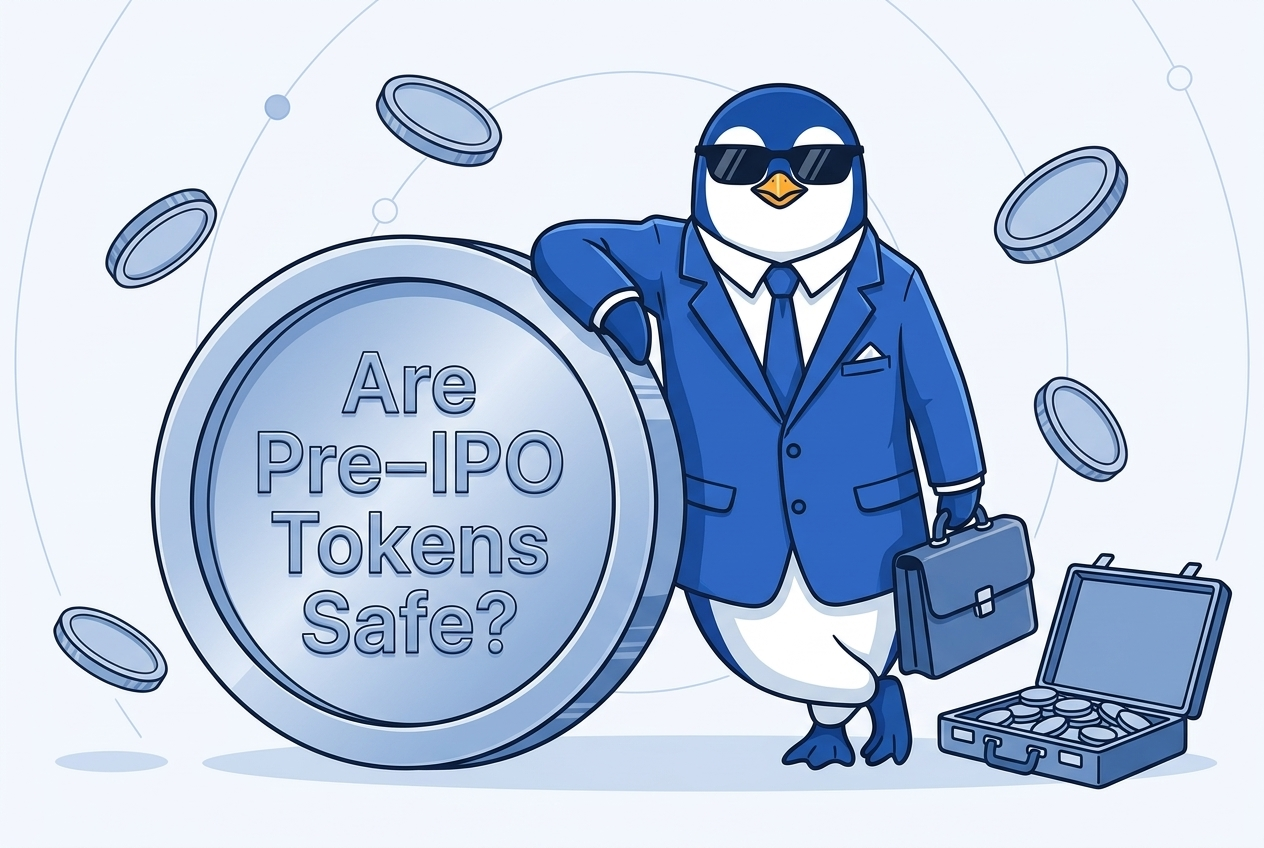
Pre-IPO tokens have become one of the most talked-about ideas in crypto. The pitch is easy to understand: own a slice of the next SpaceX, OpenAI, or Stripe before it lists, without writing a six-figure check or waiting for a venture fund to let you in. It is a genuinely powerful idea. But the first question any serious investor should ask is not “how much could this make me?” It is “how safe is this, really?”
The honest answer is that it depends almost entirely on how a given token is built. This guide breaks down the real risks, separates the dangerous products from the durable ones, and shows you what to look for before you commit a single dollar.
“Safe” doesn’t mean “risk-free”
No early-stage investment is risk-free, and pre-IPO exposure is about as early-stage as public-facing investing gets. The companies are private, valuations move in large, infrequent steps, and the timeline for any IPO is uncertain. That is true whether you access them through a venture fund, a secondary marketplace, or a token.
So “are pre-IPO tokens safe?” is really two questions hiding inside one.
The first is about market risk: will the company succeed, and will its valuation hold up? No structure on earth removes that risk, and you should never trust a platform that claims otherwise.
The second question is the one that actually separates good products from bad ones: structural risk. Given that the underlying bet is risky, is the instrument itself sound? Does it do what it says? Can you trust the issuer, the backing, and the exit?
The real risks you’re taking

Before looking at what makes a token safer, you need a clear picture of what can go wrong. Pre-IPO tokens carry several distinct risks that compound on one another.
Liquidity risk: A token is only worth what someone will pay for it when you want to sell. Thin markets mean wide spreads and the possibility that you simply cannot exit at the quoted price. A number on a screen is not the same as cash in your wallet.
Valuation opacity: Private companies do not report quarterly earnings or trade continuously. Their “value” is usually anchored to the last funding round, which may be months or years old. That makes pricing more of an estimate than a fact, leaving room for tokens to trade well above or below any reasonable mark.
Regulatory risk: Tokenized securities sit inside real securities law, and the rules differ sharply by country. The SEC’s January 2026 statement made the point bluntly: putting a security on a blockchain does not exempt it from the laws that govern the underlying instrument. In many jurisdictions, the status of these products is still unsettled, which is a risk in itself.
Structural risk: This is the big one, where most blowups happen. Many products give you only synthetic price exposure — a token that tracks a number with nothing real behind it. Others rely on opaque offshore wrappers with unclear redemption rules. If the issuer’s legal structure is weak or undisclosed, you are trusting a promise, not a position.
Rights risk: Most pre-IPO tokens give you no voting power, no dividends, no information rights, and no relationship with the underlying company. In many cases, the company has never endorsed the product at all. You need to know exactly how little or how much the token actually grants you going in.
In short, the safety of a pre-IPO token depends on how effectively the product mitigates all potential financial loss risks.
In short, the safety of a pre-IPO token depends on how effectively the product mitigates all potential financial loss risks.
The first thing to look at is who is actually behind the project. You want a specific company with a legal entity, not just an abstract protocol or an anonymous Telegram team. It is important that the team is showcased on the website, actively involved in the project, and participating in AMA sessions or podcasts. Also, pay attention to whether they participate in industry conferences and events.
Next, consider exactly what you are buying. The most crucial distinction in this segment is whether the token grants you a genuine right tied to the underlying share or merely mirrors its price. The difference is massive. In the first case, you hold an asset that offers legal protection. In the second, you are betting that the issuer could technically close out at any time.
You should also give specific thought to your exit strategy, something most people overlook until the moment comes to sell. Is there a secondary market? What happens to your position if the company goes public (IPO)? If the product documentation doesn’t answer these questions, that is a problem in itself, regardless of how attractive the asset looks.
Finally, consider the jurisdiction. It may sound dull, but it is critical: a properly structured product with robust compliance isn’t just unnecessary red tape; it is insurance against a regulator freezing the platform or classifying the tokens as unregistered securities overnight.
There are plenty of examples in the crypto market where exactly that has happened. You might not visit their office in person, but you can at least ask ChatGPT about them, feeding it their whitepaper or other technical and legal documentation while also researching them online.
Backed vs. synthetic: the distinction that matters most

If you remember one thing from this guide, make it this. The pre-IPO token market splits cleanly into two camps, and they are not equally safe.
Synthetic tokens replicate a private company’s estimated price using oracles and hedging. They are often quick to launch and easy to trade, but there is no real claim underneath. You are exposed to the issuer’s ability and willingness to maintain the peg, and you typically hold nothing if the structure fails.
Backed instruments are issued against a legal structure, usually a special purpose vehicle, or a warrant that holds actual shares or the contractual right to acquire them. These take more work to build and run, but they give you something concrete: a position tied to the equity rather than a number floating on top of it.
A strong company name on the label does not change which camp a token belongs to. Two tokens can both say “SpaceX” and be radically different in what they actually deliver. Always look past the logo to the structure.
Why is regulation part of safety
It is tempting to treat regulation as someone else’s problem, but for pre-IPO tokens, it is central to whether your investment survives contact with the real world.
Most compliant products are offered under Regulation S, the framework governing securities offerings made outside the United States. In practice, this limits access to non-US persons in offshore transactions, which is why credible platforms enforce KYC and eligibility checks at sign-up. Those checks can feel like friction, but they are a sign that the issuer is taking the law seriously, and a product that ignores them may be forced to unwind your position later.
The direction of travel is clear: regulators increasingly view tokenized securities as securities, full stop. The safer platforms are the ones building for that reality now, not the ones hoping to stay in the gray area until someone notices.
How PIPO is built for this

PIPO approaches pre-IPO exposure from the structural side of the problem rather than the synthetic shortcut.
PIPO issues Share Subscription Warrants (PSW) equity-linked tokens that represent a real right to purchase equity in a pre-IPO company, designed to convert into Nasdaq-listed shares when that company goes public. They are offered under SEC Regulation S to non-US investors, with KYC and eligibility checks applied at onboarding.
The warrants are issued on Base (Coinbase’s Ethereum Layer-2), which provides Ethereum-grade settlement security with low fees, plus on-chain transparency that lets holders verify issuance and transfers directly. Behind the tokens sits a multi-jurisdictional legal framework spanning the Cayman Islands, Costa Rica, and El Salvador, the kind of structure designed specifically to keep a security token compliant and durable, rather than improvised.
The result addresses the risks listed above point by point: an identifiable, regulated structure rather than an anonymous one; a real claim rather than a synthetic price feed; a defined exit through the secondary market or conversion at the listing event; and transparency you can verify on-chain.
Your due diligence checklist
Before buying any pre-IPO token or asking, “Is pre-IPO safe?”, run through five questions:
- Issuer: Who issues it, and are they regulated? Which broker is best for pre-IPO?
- Backing: Does the token represent a real right to the equity, or only its price?
- Liquidity: Is there a real market, and can you actually exit?
- Exit: What happens at IPO, and is the path defined in advance? Can I sell my pre-IPO shares?
- Eligibility: Are you legally permitted to hold it in your jurisdiction? Is it legal to buy pre-IPO shares?
If a platform cannot give you clear answers to all five, that is your answer.
The Final Button Line
Are pre-IPO tokens safe? Not inherently, and you should walk away from anyone who promises they are. But “risky” and “unsafe” are not the same word. The risk of backing an early company is unavoidable and is the whole point. The risk of a broken structure, an anonymous issuer, or a token with nothing behind it is entirely avoidable, and it is the difference between a sound investment and a costly mistake.
Safety, in the end, is not about avoiding risk. It is about knowing exactly what you hold, who stands behind it, and how you get out. Choose products built around real rights, real compliance, and real transparency, and size every position for the early-stage bet it is.
This article is for informational purposes only. It is not investment advice, nor an offer or solicitation to buy any security. Pre-IPO investments are illiquid and carry the risk of total loss. Regulation S offerings are restricted to non-US persons. Always do your own research and consult a qualified professional before investing.
*PIPO is building a compliant tokenized pre-IPO infrastructure designed to broaden access for eligible non-U.S. investors through structured security tokens, compliance controls, and a defined exercise pathway.*
More About the PIPO: Website | Twitter | Telegram Ann | Telegram chat| Linkedin | Blog
메타데이터
- post_id
- ff769072890d
- slug
- are-pre-ipo-tokens-safe-the-spv-structure-legal-risks-and-red-flags-explained-ff769072890d
- url
- https://blog.pipo.vc/are-pre-ipo-tokens-safe-the-spv-structure-legal-risks-and-red-flags-explained-ff769072890d
- canonical_url
- https://blog.pipo.vc/are-pre-ipo-tokens-safe-the-spv-structure-legal-risks-and-red-flags-explained-ff769072890d
- author_url
- https://medium.com/@romanwiligut
- status
- ok
- fetched_at
- 2026-07-09 13:13:48