My experience in the IASc Summer Research Fellowship Program
It was in the rainy days of August 2021 when I started searching for research internship opportunities on the internet. I was just in my…
My experience in the IASc Summer Research Fellowship Program
It was in the rainy days of August 2021 when I started searching for research internship opportunities on the internet. I was just in my 2nd semester, with the so-called burning fresher blood flowing in my veins. Then I found out about the opportunity for the Summer Fellowship Program 2022 conducted by the Indian Academy of Sciences along with two other participating institutes. I started preparing for how to make my application as I would hopefully be in my 2nd year by the time the application period began. However, I couldn’t apply that year because I hadn’t explored specific fields much and had very little knowledge of core concepts. So, I postponed my application to the next year, i.e., for the 2023 session. Hopefully, by this time, I have improved my skills, and I have gained some confidence in my area of interest, which is machine learning.
Application Process:
Before moving to the application process, check for eligibility here. The IASc Summer Research Fellowship application process is quite simple compared to other similar research internship programs. One needs to create an account in the SRFP portal, which asks for basic information like college details, address, etc. It also asks for your grades from the 10th class to the most recent semester you have completed. Don’t panic or worry if you have low grades, as they don’t solely weigh your application on GPA. The application also requires you to write a Statement of Purpose (SOP) and obtain an LOR from one of your professors. According to my observations, these two carry significant weight. In the SOP, you can write about your projects, any internship experiences you’ve had, or any research work you’ve done. Adding a specific research problem you want to work on as part of the program strengthens your application. Regarding the LOR, my personal advice is to obtain it from a professor who knows you well, as the LOR should be submitted by the professor using the credentials sent to them via email, which you provided in your application. There will also be a specific format for the LOR. Most of the time, the application period starts in the last week of September and ends in mid-November. Results are typically announced in the last week of February or the first week of March. In my case, they were announced in mid-March. I couldn’t find my name on the list of selected students, which was very disappointing. Later, I learned that the list is not final; they usually update it regularly. This gave me a glimmer of hope, and finally, after a couple of days, I found my name on the list, assigned to my guide at IIT Delhi.
Wonderful Journey:
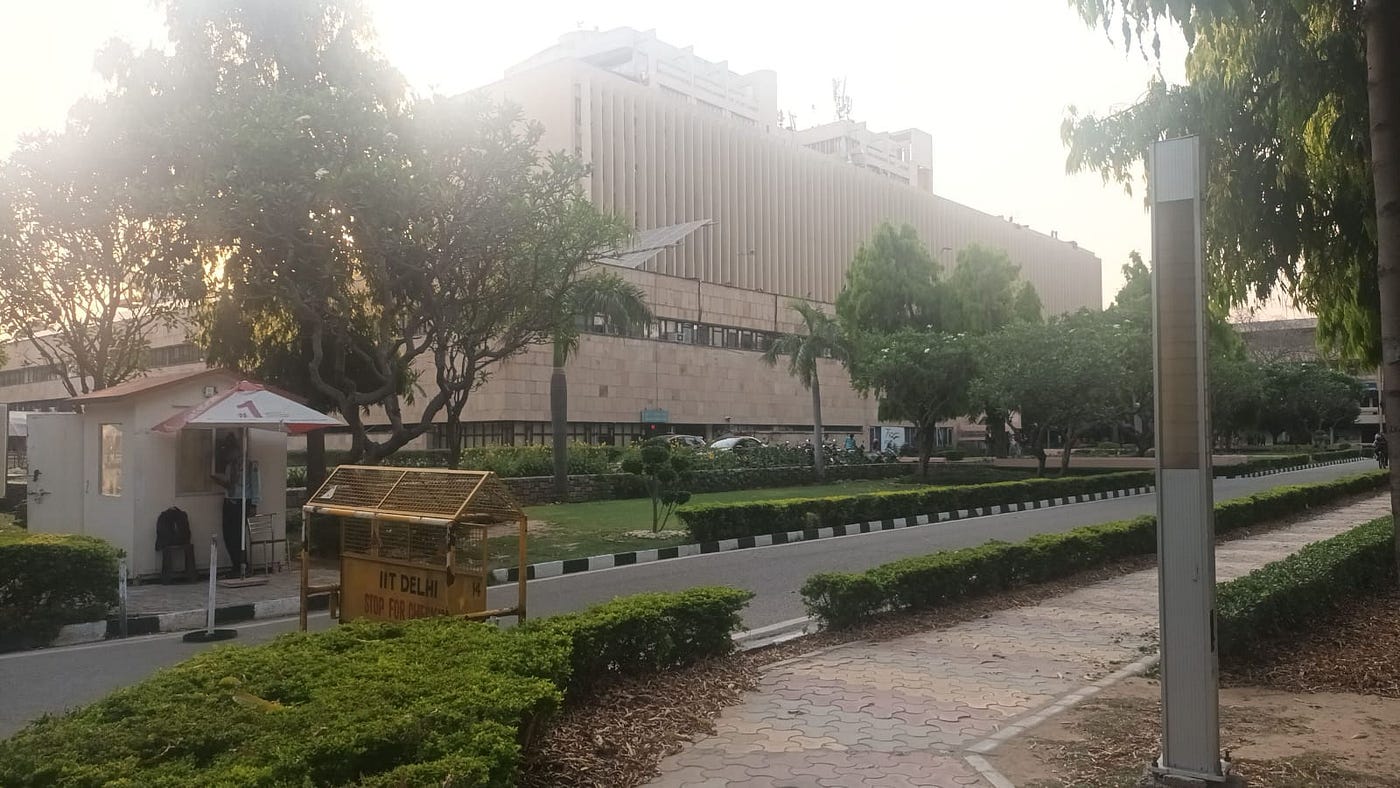


This type of research internship provides you with a lot of experience both academically and personally. If you have aspirations for a master’s degree, this kind of experience holds significant weight. Let’s discuss the academic benefits. I was assigned to a professor whose area of interest is in Learning on Graphs (Graph Neural Networks). It was a very new research field and very new to me as well. Through this program, I was able to explore such a cutting-edge technology. My professor was very kind, and he introduced me to a few of his Ph.D. students and gave me access to one of the research labs at IITD. As I mentioned, Graph Neural Networks were very new to me, and my professor provided me with some resources. It took me a couple of weeks to grasp the topic before I started working on the project. Overall, it was a wonderful learning journey.
Apart from the learning experience, it gave me many more experiences. In the last week of April, I headed to New Delhi to start my fellowship. I took a flight from Hyderabad to New Delhi via Mumbai; once again, it was my first flight journey. When I reached Delhi, I was a bit nervous because I wondered if I would be able to survive in Delhi for two months. At some point, I even considered going back home and leaving everything behind. However, all this nervousness disappeared when I met the professor. He was very welcoming and inquired about all my concerns, helping me to some extent to calm down my anxiety. As the days passed, I gradually became familiar with Delhi’s culture and environment, except for the food. As a South Indian, we all tend to have a mouthful of dal and sambar rice. The best part of the journey was meeting new friends and exploring Delhi with them. I could say this fellowship provided me with the opportunity to explore Delhi and live in a North Indian environment. I have visited places like Sarojini Market, Qutub Minar, and India Gate. Overall, those were some of the most memorable days of my life, especially for someone like me who rarely crosses state borders, let alone in such a different environment.
Perks:
Students usually receive a stipend of 12,500 per month to cover all boarding and lodging expenses. Additionally, they receive a travel allowance for third-class AC train for both the journey to their host institute and the journey back home. Furthermore, students typically receive an internship certificate. If the professor is impressed with your work, you can ask him for a letter of recommendation for your higher studies.
메타데이터
- post_id
- ff7f16ff886d
- slug
- my-experience-in-the-iasc-summer-research-fellowship-program-ff7f16ff886d
- url
- https://medium.com/@mithinkumarm2003/my-experience-in-the-iasc-summer-research-fellowship-program-ff7f16ff886d
- canonical_url
- https://medium.com/@mithinkumarm2003/my-experience-in-the-iasc-summer-research-fellowship-program-ff7f16ff886d
- author_url
- https://medium.com/@mithinkumarm2003
- status
- ok
- fetched_at
- 2026-07-25 03:32:15