DHCP Snooping: Understanding and Mitigating a Silent Network Threat
Dynamic Host Configuration Protocol (DHCP) is an essential component of modern networks, responsible for dynamically assigning IP addresses…
DHCP Snooping: Understanding and Mitigating a Silent Network Threat
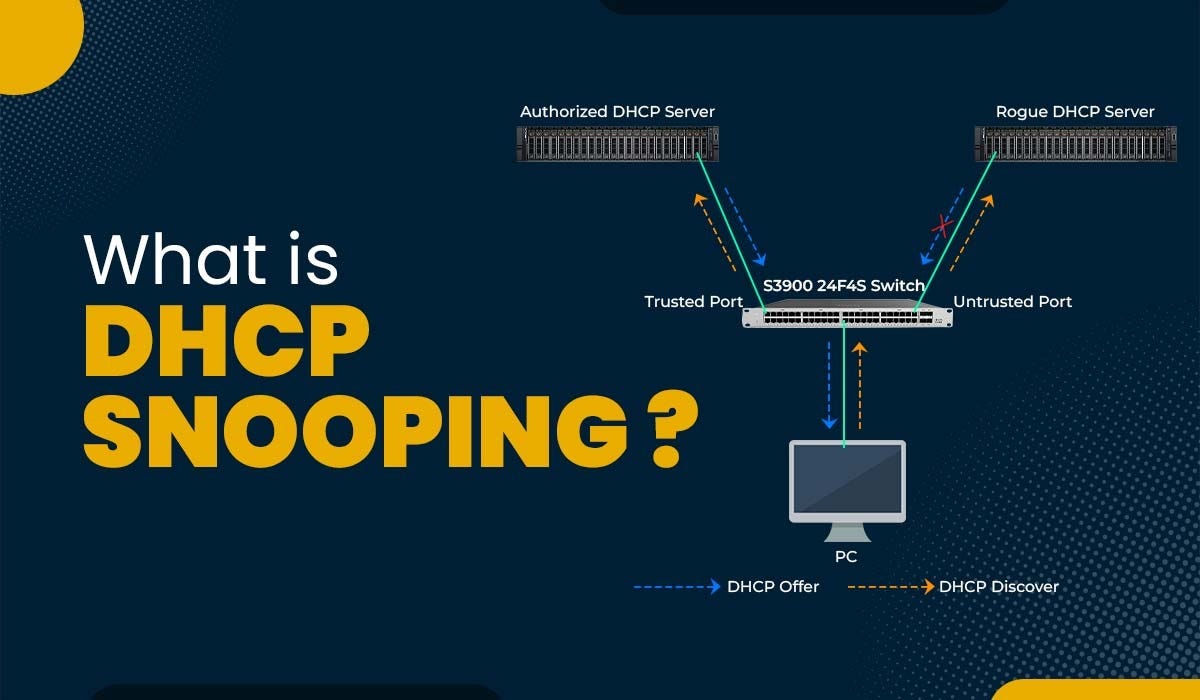
Dynamic Host Configuration Protocol (DHCP) is an essential component of modern networks, responsible for dynamically assigning IP addresses to devices, enabling seamless communication within the network. However, like many technologies, DHCP is not immune to exploitation. One such threat is the DHCP Snooping Attack, where a malicious entity manipulates DHCP to mislead legitimate users, potentially causing network disruptions, data theft, or unauthorized access.
In this comprehensive blog, we will delve into:
- What DHCP is and its role in networking.
- The mechanics of a DHCP Snooping Attack.
- Real-world implications of such attacks.
- Best practices and technologies to mitigate the risk of DHCP Snooping.
Understanding DHCP and Its Role
DHCP is a client-server protocol that automates the assignment of IP addresses, subnet masks, default gateways, and other critical network settings. Its primary purpose is to reduce the manual configuration of devices on a network, ensuring efficiency and consistency.
How DHCP Works:
- Discover: A device sends a broadcast query requesting network configuration.
- Offer: DHCP servers respond with an IP address and configuration details.
- Request: The device selects one offer and requests to lease the IP address.
- Acknowledge: The server acknowledges the request, finalizing the lease.
This process makes it easy for network administrators to manage large-scale networks. However, the open and broadcast nature of DHCP makes it susceptible to malicious exploitation.
What is DHCP Snooping?
DHCP Snooping is a network security feature that filters untrusted DHCP messages and builds a DHCP binding table, which helps to ensure network integrity. However, when malicious actors exploit vulnerabilities in DHCP, it leads to a DHCP Snooping Attack. Here’s how it works:
Mechanics of a DHCP Snooping Attack:
- Rogue DHCP Server: The attacker sets up a fake DHCP server within the network.
- Misleading Users: When legitimate devices request IP addresses, the rogue server responds with incorrect configurations.
- Man-in-the-Middle (MitM): The attacker redirects traffic through their device, intercepting sensitive information.
- Denial of Service (DoS): The rogue server can assign invalid IP configurations, causing devices to lose connectivity.
Real-World Implications
A DHCP Snooping Attack can have severe consequences for businesses, organizations, and individuals. Let’s explore some of the most critical implications:
1. Data Interception and Theft:
By redirecting traffic through their own device, attackers can capture sensitive data such as login credentials, emails, and confidential business information.
2. Network Disruption:
A rogue DHCP server can assign invalid IP configurations, rendering devices unable to connect to the network. This can lead to productivity losses and downtime in business environments.
3. Unauthorized Network Access:
Attackers can use DHCP Snooping to gain unauthorized access to network resources, potentially leading to further exploitation, such as lateral movement and privilege escalation.
4. Reputation Damage:
For organizations, a successful attack can harm their reputation, erode customer trust, and lead to regulatory fines, especially if sensitive data is compromised.
Case Study: The Impact of DHCP Snooping Attacks
Scenario: A mid-sized enterprise experienced intermittent network outages. Upon investigation, IT staff discovered that a rogue DHCP server was assigning incorrect IP configurations to devices, disrupting operations.
Outcome:
- The organization suffered a three-day outage, impacting service delivery.
- IT teams had to conduct extensive network audits to identify and eliminate the rogue server.
- The incident highlighted the need for robust DHCP Snooping configurations and network monitoring tools.
Mitigating DHCP Snooping Attacks
Preventing DHCP Snooping Attacks requires a combination of technical configurations, best practices, and employee awareness. Here are some steps to protect your network:
1. Enable DHCP Snooping on Switches:
Modern network switches often come with a DHCP Snooping feature. When enabled, it:
- Filters untrusted DHCP messages.
- Builds a binding table mapping IP addresses to MAC addresses and ports.
- Prevents rogue DHCP servers from operating within the network.
2. Define Trusted and Untrusted Ports:
- Trusted Ports: Allow DHCP server responses.
- Untrusted Ports: Block all DHCP server traffic.
Ensure that only ports connected to legitimate DHCP servers are marked as trusted.
3. Use Network Segmentation:
By segmenting your network into smaller, isolated zones, you limit the impact of a rogue DHCP server. For example, using VLANs can help contain attacks within a specific segment.
4. Monitor Network Traffic:
Employ tools to monitor for unusual DHCP traffic patterns, such as:
- Multiple DHCP Offer messages from unknown sources.
- Devices receiving incorrect IP configurations.
5. Regularly Audit Network Devices:
Conduct periodic audits of all devices connected to your network. Look for unauthorized or suspicious devices that could act as rogue DHCP servers.
6. Educate Employees:
Train employees to recognize signs of potential network issues, such as frequent disconnections or slow connectivity, which could indicate a DHCP Snooping Attack.
Advanced Mitigation Techniques
1. Use IP Source Guard:
IP Source Guard works alongside DHCP Snooping to ensure that only traffic from authorized IP-MAC-port combinations is allowed through a switch port.
2. Implement Dynamic ARP Inspection (DAI):
DAI validates ARP requests and replies against the DHCP Snooping binding table, preventing attackers from spoofing ARP responses to redirect traffic.
3. Deploy Intrusion Detection and Prevention Systems (IDS/IPS):
IDS/IPS solutions can detect and block DHCP-related anomalies, offering an additional layer of security.
4. Adopt Zero Trust Architecture:
A Zero Trust model ensures that all devices and users are continuously verified, minimizing the risk of rogue entities within the network.
Conclusion
DHCP Snooping Attacks are a silent yet potent threat to network security. By understanding how these attacks work and implementing robust defense mechanisms, organizations can significantly reduce their vulnerability.
Key takeaways include:
- Enable DHCP Snooping on all network switches.
- Define trusted and untrusted ports to control DHCP traffic.
- Monitor and audit network activity regularly.
- Educate employees about potential warning signs.
The digital landscape is fraught with evolving threats, but proactive measures and a commitment to security best practices can keep your network safe. Don’t wait for an attack to occur — fortify your defenses today and ensure seamless, secure communication for all users on your network.
Promote and Collaborate on Cybersecurity Insights
We are excited to offer promotional opportunities and guest post collaborations on our blog and website, focusing on all aspects of cybersecurity. Whether you’re an expert with valuable insights to share or a business looking to reach a wider audience, our platform provides the perfect space to showcase your knowledge and services. Let’s work together to enhance our community’s understanding of cybersecurity!
About the Author:
Vijay Gupta is a cybersecurity enthusiast with several years of experience in cyber security, cyber crime forensics investigation, and security awareness training in schools and colleges. With a passion for safeguarding digital environments and educating others about cybersecurity best practices, Vijay has dedicated his career to promoting cyber safety and resilience. Stay connected with Vijay Gupta on various social media platforms and professional networks to access valuable insights and stay updated on the latest cybersecurity trends.
메타데이터
- post_id
- ff86129ca1f5
- slug
- dhcp-snooping-understanding-and-mitigating-a-silent-network-threat-ff86129ca1f5
- url
- https://medium.com/@bevijaygupta/dhcp-snooping-understanding-and-mitigating-a-silent-network-threat-ff86129ca1f5
- canonical_url
- https://medium.com/@bevijaygupta/dhcp-snooping-understanding-and-mitigating-a-silent-network-threat-ff86129ca1f5
- author_url
- https://medium.com/@bevijaygupta
- status
- ok
- fetched_at
- 2026-06-27 23:56:40