Understanding Form W-9 for LLCs: A Comprehensive Guide
Learn how Form W-9 impacts LLCs, from tax reporting to avoiding backup withholding
Understanding Form W-9 for LLCs: A Comprehensive Guide
Learn how Form W-9 impacts LLCs, from tax reporting to avoiding backup withholding
Form W-9 for LLC
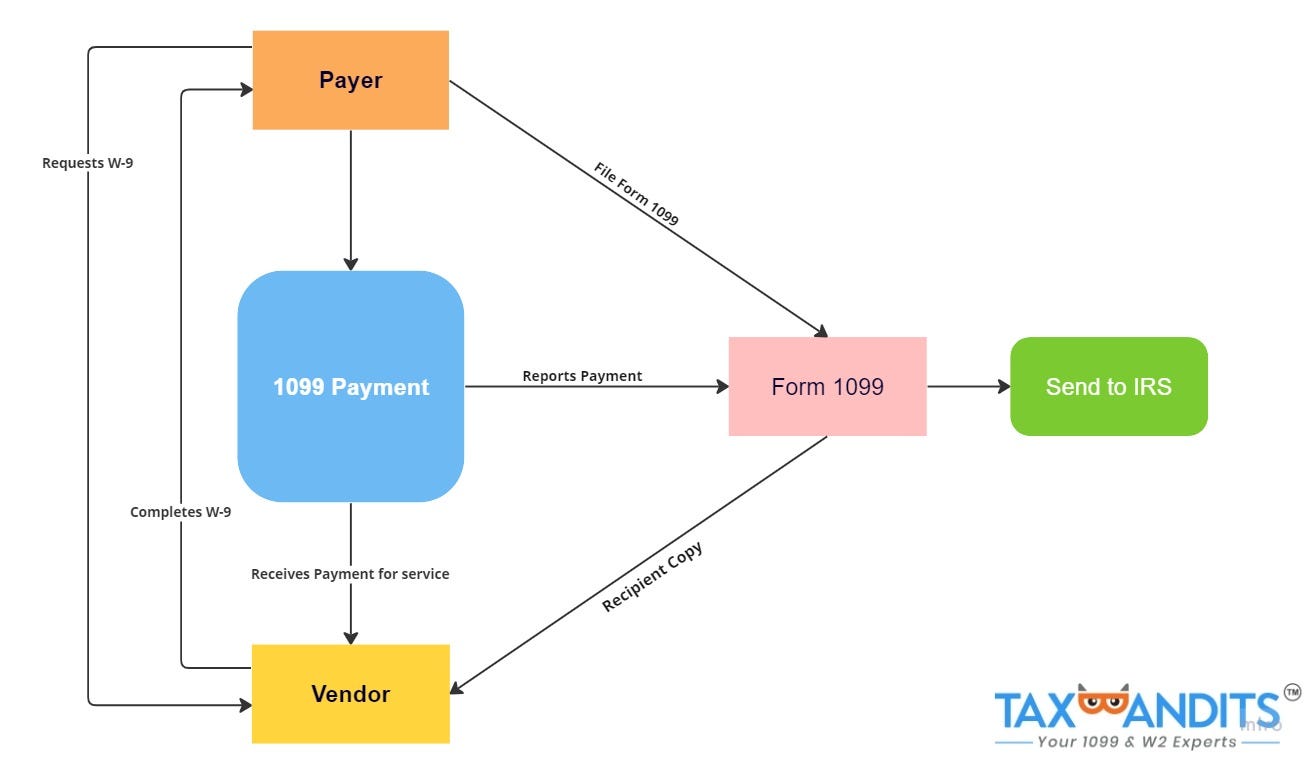
Form W-9, the Request for Taxpayer Identification Number and Certification, is essential for businesses and individuals. If you have hired and paid independent contractors as a limited liability company (LLC), you must request W-9 forms, gather them, and keep them organized in one place. This is important for various business transactions, such as reporting income and ensuring compliance with tax regulations.
In the same way, if another business asks your LLC for a W-9, you can fill out and provide your W-9 form to them, demonstrating that you are committed to compliance.
In this blog, we will delve into this topic to better understand Form W-9 for LLCs and explore secure options for your LLC to fill out, submit, and/or request the W-9 form.
Let’s get started with the basics.
What is a Limited Liability Company(LLC)?
A Limited Liability Company (LLC) is a type of business structure established by state laws. Since regulations can vary from state to state, you should check with your specific state if you’re considering starting an LLC.
As an LLC owner, you are referred to as a member. Most states do not restrict who can be a member, so individuals, corporations, other LLCs, and foreign entities can all be members. There’s no limit on the number of members you can have, and many states also allow for “single-member” LLCs, which just one person owns.
However, some types of businesses, such as banks and insurance companies, generally cannot be structured as LLCs. Review your state’s requirements and federal tax regulations for more detailed information, especially when dealing with foreign LLCs.
Understanding Form W-9 for Your LLC: In a Nutshell
Form W-9 is an IRS document you, as an LLC, can use to provide your Taxpayer Identification Number (TIN) to other businesses or individuals who pay you. These payers will use your information to complete 1099 Forms, which report their payments to your LLC.
Here’s what you need to include on your Form W-9:
- Name and Address: Enter your LLC’s legal name and address.
- Federal Tax Classification: Specify your LLC’s tax classification, such as C Corporation, S Corporation, or Partnership.
- Taxpayer Identification Number (TIN): Provide your LLC’s TIN, usually your Employer Identification Number (EIN). If you’re a single-member LLC, this might be your Social Security Number (SSN).
- Backup Withholding Requirements: Indicate if your LLC is subject to backup withholding.
- Exemption Code for FATCA Reporting: Include the exemption code for FATCA reporting requirements if applicable.
Federal Tax Classification of LLC
To complete the W-9 for your LLC, it’s essential to understand your federal tax classification clearly. When determining the federal tax classification of your Limited Liability Company (LLC), you have several options depending on your LLC’s structure and number of members. Here’s an overview to help you understand how LLCs are classified for federal tax purposes:
- Single-Member LLC: If your LLC has only one member, it is considered a disregarded entity for federal income tax purposes. This means the LLC is not separate from its owner, and its income and expenses are reported on the owner’s personal tax return (usually Form 1040-U.S. Individual Income Tax Return ). Despite this classification for income tax purposes, the LLC is still considered a separate legal entity, which can be important for liability protection.
- Multi-Member LLC: If your LLC has two or more owners or shareholders, you can choose to register it as one of the following business structures:
- Partnership: If your LLC has more than one member, it is taxed as a partnership by default. This means that, similar to a sole proprietorship, the taxes incurred by your multi-member LLC pass directly through to you and the other partners. As a result, all members report their share of the LLC’s profits and losses on their personal tax returns. You will file an informational return using Form 1065, which indicates the total gains and losses from the partnership. Additionally, each member will receive a Schedule K-1 tax form, which details their portion of the profit or loss.
- S Corporation: If you choose, your LLC can be classified as a corporation for tax purposes. By electing to have your LLC taxed as an S Corporation, any taxes resulting from the LLC’s business activities will be passed through to your personal tax obligations. As an S Corporation, your LLC will not pay federal taxes on its profits. Instead, you and the other owners will report the LLC’s profits and losses on your tax returns, which helps you avoid double taxation. To do this, you’ll file tax returns using Form 1120-S, and each owner will receive a Schedule K-1 to report their share of the profits and losses on their individual tax returns.
- C Corporation: When you structure your LLC as a C-Corporation, it can offer certain advantages. Taxing the LLC as a C-Corporation means that the business is taxed directly as a separate entity. This separates the business’s taxes from the owner’s personal taxes and allows the business to benefit from deductions. However, a significant downside is double taxation. Unlike a pass-through entity, an LLC with a C-Corp tax classification is taxed at corporate and personal levels. This means the LLC must file a separate income tax return for the business, and the owners must also file individual income taxes.
Information Required for LLC to Fill Out Form W-9
Form W-9
When completing Form W-9 for your LLC, you must provide specific information to ensure accurate and compliant reporting. Here’s a detailed list of the information required:
Name/Business Name: To complete the Form W-9 accurately, follow these guidelines for the name fields based on your LLC’s federal tax classification:
For a Single-Member LLC:
- Line 1: Enter your personal name (the individual owner’s name).
- Line 2: Enter the name of your LLC.
For a Multi-Member LLC (Partnership or Corporation):
- Line 1: Enter the LLC’s business name.
- Line 2: If applicable, you can leave this line blank or use it to enter any trade name or DBA (Doing Business As).
Federal Tax Classification: Line 3, which is for Federal Tax Classification, is divided into two sections: Line 3a and Line 3b.
Line 3a: On this line, you can specify how your LLC is classified for federal tax purposes.
- If your LLC is a Disregarded entity, you must check the box for ‘Individual/sole proprietor or single-member LLC.’
- If your LLC is treated as a Partnership or Corporation, you must check the box for ‘Limited liability company’ and enter the corresponding code to indicate the classification. [C = C Corporation, S = S Corporation, P = Partnership]
Line 3b: The new line was added to Form W-9 in 2024. You should check the box on Line 3b if you are part of a partnership, trust, or estate (including an LLC classified as a partnership for U.S. federal tax purposes) with foreign partners, owners, or beneficiaries. This requirement applies when you provide Form W-9 to another partnership, trust, or estate in which you have an ownership interest.
Taxpayer Identification Number (TIN): The most crucial part of completing Form W9 for your LLC is providing your Taxpayer Identification Number (TIN) information. You must include your TIN, which can be either a Social Security Number (SSN) or Employer Identification Number (EIN), depending on your LLC’s classification:
- You must use your Social Security Number (SSN) if your LLC is a Single Member LLC.
- If your LLC is a Multi-Member LLC classified as a partnership or corporation, you must use your Employer Identification Number (EIN).
In addition, your LLC should complete the other required fields, such as address and exemption codes, as applicable.
Manage Your W-9 Forms Efficiently with TaxBandits
Properly managing Form W-9 is critical to refining your LLC’s tax reporting and adhering to IRS rules. TaxBandits equips you with the necessary features and expertise to handle your W-9s efficiently.
Fillable W-9 Solution: TaxBandits, an authorized e-file service provider, simplifies the W-9 filing process with its Fillable W-9 solution. This feature enables you to complete Form W-9 and electronically submit it to the businesses (payers) that request it, ensuring a smooth and efficient submission process.
W-9 Manager: TaxBandits provides the W-9 Manager to further streamline your tax management. This tool allows you to request and collect W-9 forms from independent contractors and conveniently store them in one place. This centralized storage makes it easy to handle 1099 filings and maintain organized records.
Start filling out Form W-9 for your LLC today with TaxBandits!
메타데이터
- post_id
- ffa0ff669b33
- slug
- understanding-form-w-9-for-llcs-a-comprehensive-guide-ffa0ff669b33
- url
- https://medium.com/@TaxBandits/understanding-form-w-9-for-llcs-a-comprehensive-guide-ffa0ff669b33
- canonical_url
- https://medium.com/@TaxBandits/understanding-form-w-9-for-llcs-a-comprehensive-guide-ffa0ff669b33
- author_url
- https://medium.com/@TaxBandits
- status
- ok
- fetched_at
- 2026-06-14 11:28:49