The Murder Ballad as Protest Song: Biko and Telling the Truth through Music
“September ‘77
The Murder Ballad as Protest Song: Biko and Telling the Truth through Music
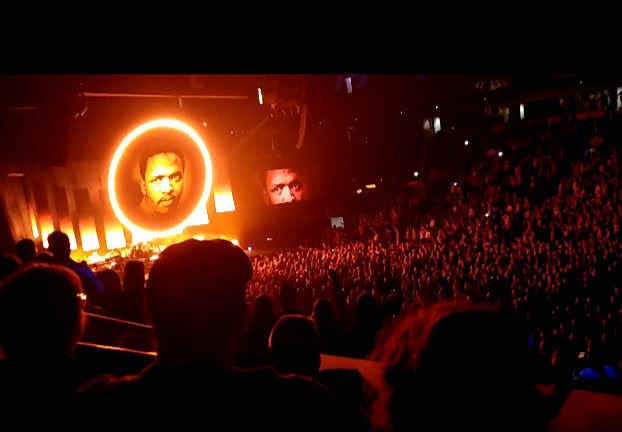
Biko portrait displayed at the Peter Gabriel concert. Photo by author.
“September ‘77
Port Elizabeth, weather fine
It was business as usual
In police room 619”
This is the opening verse of Peter Gabriel’s “Biko,” a song written in remembrance of South African anti-apartheid activist Stephen Biko, who was killed in police custody. “Biko”, released in 1980, was part of a cultural shift. The song “*had a huge political impact, and along with other contemporary music critical of apartheid, is credited with making resistance to apartheid part of western popular culture. It inspired musical projects such as Sun City and has been called “arguably the most significant non-South African anti-apartheid protest song”.*
It would be accurate to call “Biko” a protest song, but it also falls squarely into another musical category: murder ballad. Originally, the murder ballad subgenre sprung from the ballad tradition, a narrative song form that often depicted an event. In the case of murder ballads, the killing is the event. While many folk music aficionados know older murder ballads like “Omie Wise” and “Banks of the Ohio,” there are also many modern-day examples of murder ballads across various genres.
“Biko” depicts the murder of Stephen Biko and the fallout from it. It also does something equally important: It is a work of art that subverts the powerful political forces that led to Biko’s death. The song was banned in South Africa, where criticism of the government could result in censure and imprisonment. It is a song that dares to call out state-sanctioned violence. It dares to challenge that official narratives, the vetted, Orwellian press releases, and the outright lies told by the South African government in the wake of the torture and murder of Stephen Biko.
Gabriel’s song is a shining example of the power of music. Art has the ability to tell the truth, which can be a revolutionary act. It can be a reckoning with the unspeakable. It commands us to look straight into darkness and not turn away. It holds us accountable.
“Biko” is certainly not the only example of this. There have been many songs that have memorialized people killed by state-sanctioned violence. Some other examples include Bruce Springsteen’s “American Skin (41 Shots)”, “A.D. Diallo” by Erykah Badu, and “Ohio” by Crosby, Stills, Nash, & Young. The Springsteen and Badu songs were inspired by the shooting of unarmed student Amadou Diallo. Neil Young wrote “Ohio” after hearing about the Kent State shootings where four unarmed students were killed by National Guard soldiers.
With these songs, the tradition of the murder ballad continues. I believe one of the functions of art is to speak the unspeakable, both the awe-inspiring and the horrific parts of life that can be so hard to capture and bear witness to. This was true years ago when people sang about the murders of women like Pearl Bryan and Naomi Wise and it is true now when songwriters like Jesse Welles give voice to the horrors of current events. It is true now when Springsteen wrote and quickly released a new song, “Streets of Minneapolis,” inspired by the increasingly violent immigration raids of the Trump administration:
“In the winter of ‘26
We’ll remember the names of those who died
On the Streets of Minneapolis”
Unfortunately, state-sanctioned violence is a tale as old as some murder ballads. It is nothing new. That does not mean we should become desensitized to it. How do we keep our humanity in the face of inhumanity? Art. Make art. Share art. Remember.
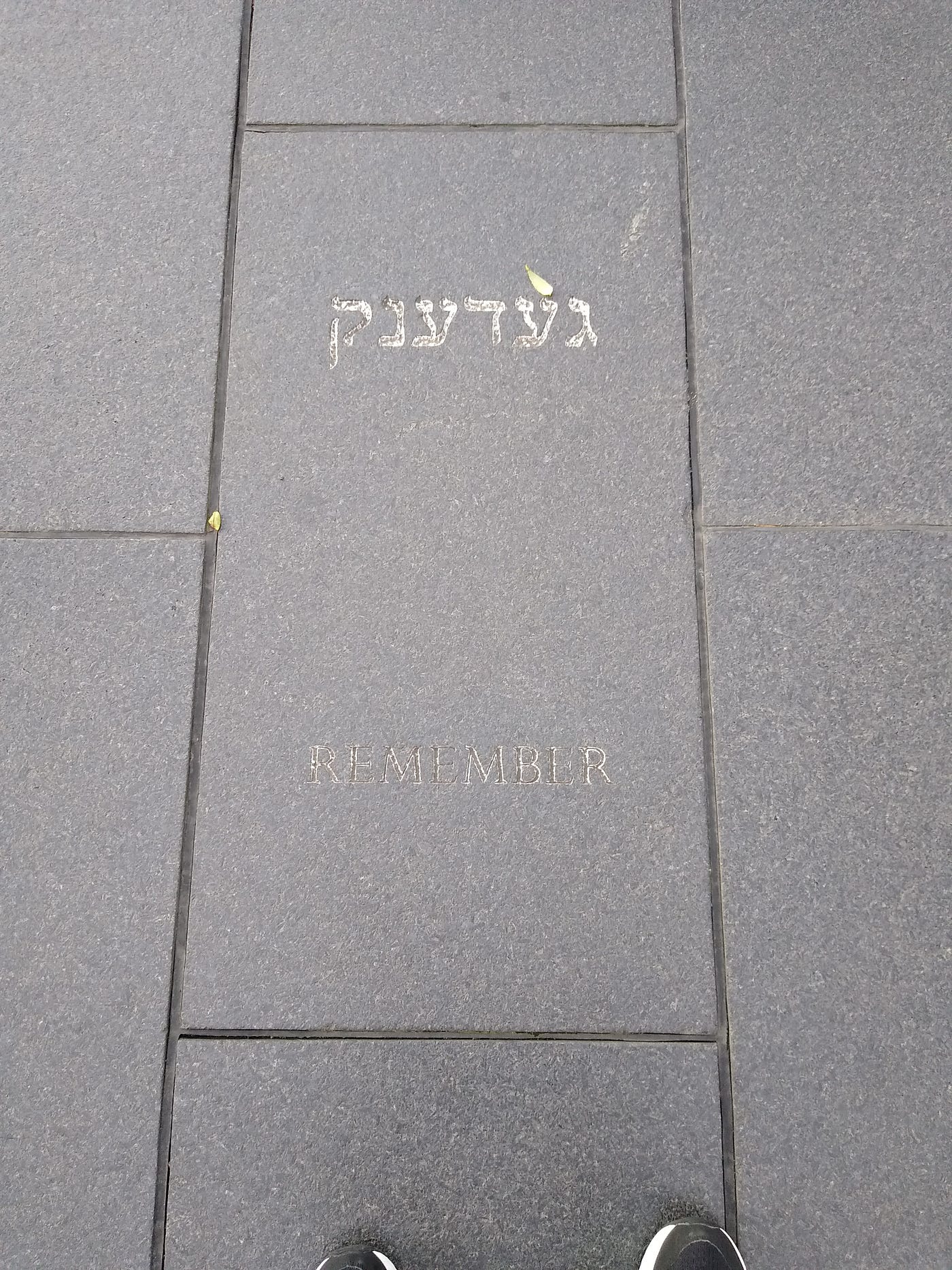
In 2023, in honor of my 50th birthday, a good friend got me tickets to see Peter Gabriel in Boston. We made the 3-hour drive to the city, getting there with time to spare before the concert. As we wandered around the area near the concert venue, we came upon a park that had an outdoor art installation. At first, I did not realize what we had stumbled upon. There were numerous tall, imposing glass towers that you could walk through. On each panel of glass, I could see what appeared to be an infinite array of numbers. Then, it hit me. This was a Holocaust memorial, and the numbers were the numbers given to the prisoners at the camps. We had accidentally stumbled upon the New England Holocaust Memorial. Even as I realized this, my brain kept grasping for ways to minimize what I was seeing, to make it less horrific. The thought crossed my mind that each of the six towers that I walked under must have the same numbers on each of them. That was not the case. Each tower had the numbers that were tattooed on people from six different death camps. These were six 54-foot towers with the numbers of millions of people killed. My mind went back to a memory from about 15 years before, sitting across from a Holocaust survivor that I knew, listening to the story he told about his neighbors killing his mother — another act of violence in the long line of state-manufactured, state-encouraged and state-sponsored evil. Finally, I looked down and saw one word on the ground, “Remember.”
My friend and I sat in silence for a bit and then made our way to the Peter Gabriel concert. The show was fantastic. As with all of his live shows, Gabriel closed with “Biko.” The drum beat began, simultaneously simple and powerful, like a heartbeat. The music insisted that we pay attention, and that we remember.
“You can blow out a candle
But you can’t blow out a fire
Once the flames begin to catch
The wind will blow it higher.”
The concert closed with a portrait of Biko shown on the big screen. The drum beat stopped. The screen went black and the lights went up. We were left to drive back home….and remember.
메타데이터
- post_id
- ffa2fd82ba79
- slug
- the-murder-ballad-as-protest-song-biko-and-telling-the-truth-through-music-ffa2fd82ba79
- url
- https://medium.com/@karenhogg/the-murder-ballad-as-protest-song-biko-and-telling-the-truth-through-music-ffa2fd82ba79
- canonical_url
- https://medium.com/@karenhogg/the-murder-ballad-as-protest-song-biko-and-telling-the-truth-through-music-ffa2fd82ba79
- author_url
- https://medium.com/@karenhogg
- status
- ok
- fetched_at
- 2026-06-09 14:34:10