The Conservator Who Became a Forger- Aishwarya Ch
The worlds of art conservation and art forgery may appear to stand at opposite ends of the ethical spectrum. One is dedicated to preserving…
**The Conservator Who Became a Forger- **Aishwarya Ch
The worlds of art conservation and art forgery may appear to stand at opposite ends of the ethical spectrum. One is dedicated to preserving cultural heritage, while the other seeks to deceive collectors, museums, and historians. Yet history has shown that the skills required for both disciplines are often remarkably similar.
Among the most fascinating stories in art crime is that of the conservator who crossed the line into forgery. Armed with an intimate understanding of historical materials, painting techniques, aging processes, and restoration practices, such individuals possess a level of technical knowledge that few artists — or investigators — can match.
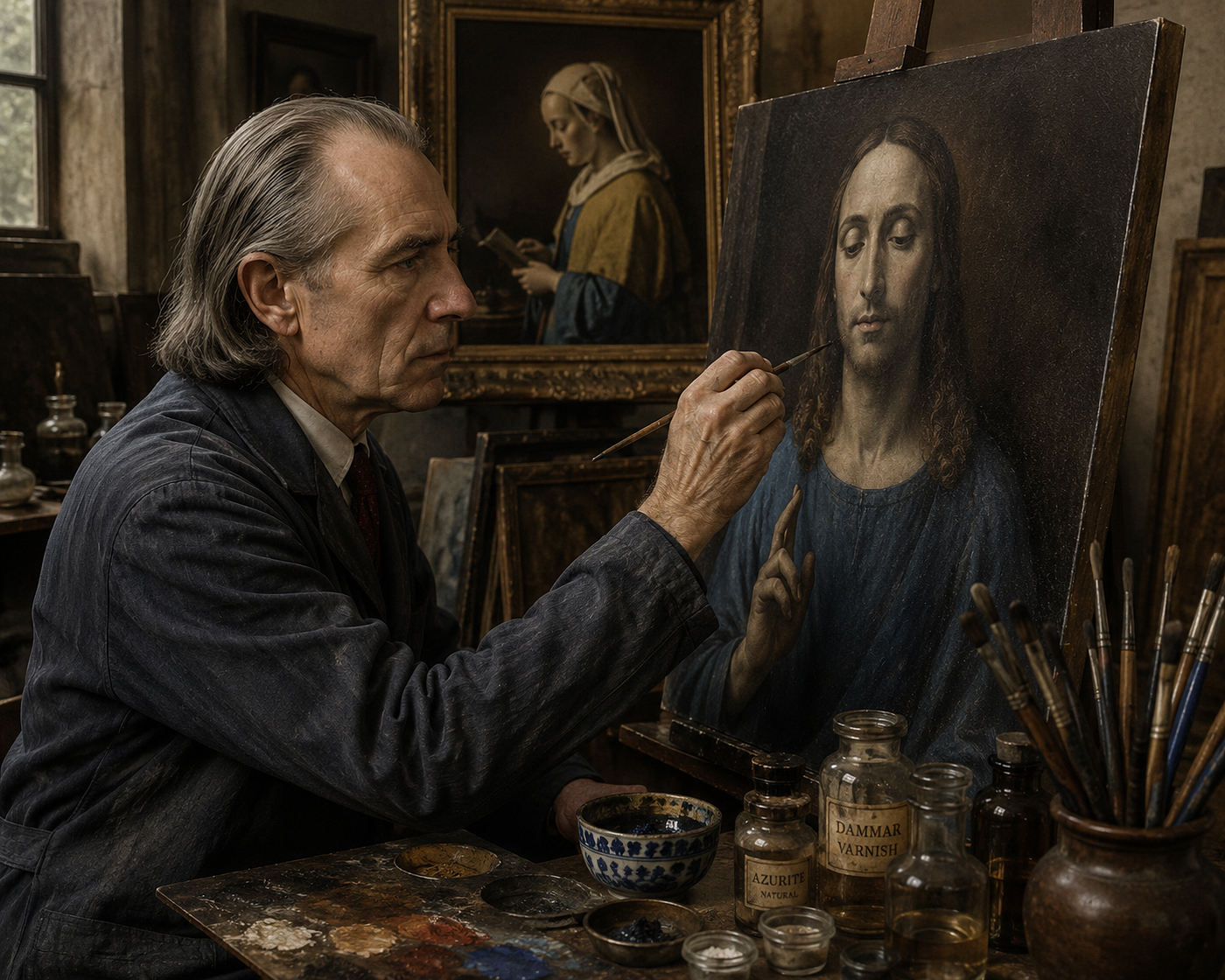
A conservator spends years studying pigments, varnishes, canvas preparation, craquelure patterns, and the chemistry of aging. They learn how paintings deteriorate over centuries and, more importantly, how to reverse or disguise those effects. This expertise, intended to preserve artworks, can also be misused to create convincing fakes.One of the most famous examples is the Dutch painter and forger Han van Meegeren. Although not formally trained as a conservator, Van Meegeren possessed an extraordinary understanding of historical painting methods. He meticulously recreated seventeenth-century techniques, manufactured pigments, baked his paintings to harden the paint layers, and artificially produced age-related cracking.
His forged works, presented as newly discovered masterpieces by Johannes Vermeer, fooled leading experts of his time.

What makes conservator-forgers particularly dangerous is their ability to exploit weaknesses in authentication methods. They understand where experts look for evidence and know how to manipulate those indicators. Old canvases can be sourced from damaged paintings, historical frames can be acquired from antique markets, and period-correct pigments can be carefully selected to pass scientific examination.
However, the rise of advanced technical analysis has made life increasingly difficult for forgers. X-radiography, infrared reflectography, ultraviolet fluorescence imaging, pigment analysis, dendrochronology, and spectroscopy now reveal hidden layers of information beyond what the naked eye can detect. The same scientific tools used by conservators to understand an artwork are employed by investigators to expose deception.

Ironically, some of the greatest breakthroughs in forgery detection have emerged from conservation laboratories. Conservators today are often the first line of defense against art fraud, combining historical knowledge with scientific investigation to authenticate works and uncover inconsistencies.
The story of the conservator turned forger serves as a reminder that expertise itself is neutral. The same knowledge that can preserve humanity’s artistic legacy can also be used to imitate it. Ultimately, the difference lies not in the skill, but in the intention behind its use.As authentication technologies continue to evolve, the contest between forgery and detection remains one of thmost fascinating battles in the art world — a struggle where science, history, craftsmanship, and deception intersect.

메타데이터
- post_id
- ffabfb6c7654
- slug
- the-conservator-who-became-a-forger-aishwarya-ch-ffabfb6c7654
- url
- https://medium.com/@aishwarya_12358/the-conservator-who-became-a-forger-aishwarya-ch-ffabfb6c7654
- canonical_url
- https://medium.com/@aishwarya_12358/the-conservator-who-became-a-forger-aishwarya-ch-ffabfb6c7654
- author_url
- https://medium.com/@aishwarya_12358
- status
- ok
- fetched_at
- 2026-06-16 19:09:56






