The World is Repricing America
In Cebu this spring, ASEAN leaders skipped the usual photo ops and moved straight to the hard questions. Behind closed doors, they were not…
The World is Repricing America
In Cebu this spring, ASEAN leaders skipped the usual photo ops and moved straight to the hard questions. Behind closed doors, they were not debating ideals or grand strategy. They were asking how much fuel they could get, how to keep food prices down, and what to do about a United States that had just detonated a fuel crisis by striking Iran.
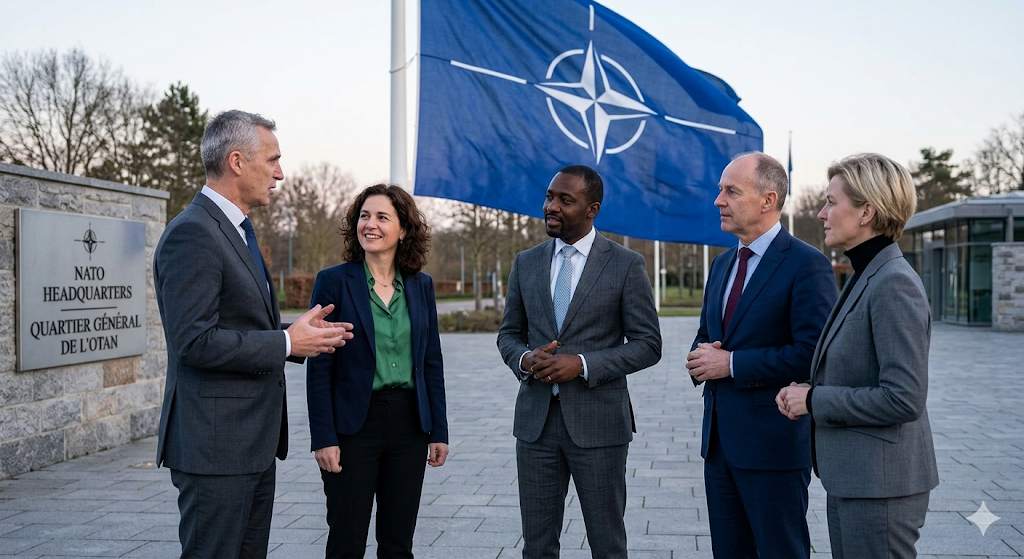
Across the ocean, in Berlin and Warsaw, the mood was different but the anxiety was the same. European leaders were weighing whether Washington would still honor its security guarantees when the next crisis hit — or whether Trump’s latest threats pointed to a real cutback in American troops and commitments.
The pattern is unmistakable. In Southeast Asia and Europe, the United States is still the most powerful country on Earth. But the world is no longer treating American power as a given. It is treating it as a variable, and one that must be priced, hedged, and guarded against.
Southeast Asia’s new mood
The ASEAN summit in Cebu was supposed to be a routine gathering. Instead, it became a barometer of frustration. Foreign Policy called it “ASEAN’s Angry Summit,” and the anger was not directed at each other. It was aimed at the ripple effects of U.S. foreign policy.
Trump’s strikes on Iran set off a chain reaction in global energy markets. Oil prices spiked, fuel supplies tightened, and Southeast Asia, a region that depends heavily on energy imports, felt the pinch immediately. The summit ended up bare-bones, with leaders focused on survival rather than symbolism.
That shift is telling. ASEAN countries have long prided themselves on consensus, diplomacy, and avoiding public confrontations. But the gap between their public statements and private conversations has widened. Publicly, they remain diplomatic and vague. Privately, they are talking about how to manage the economic fallout of American decisions.
The deeper wound is psychological. Many in the region had hoped Trump’s second term would bring a lighter touch: fewer moral lectures, fewer complications, more business. Instead, they got tariffs, war, and energy disruption. Washington now looks less like a stabilizer and more like a source of volatility. That is why the question in ASEAN capitals is no longer whether the United States is strong. It is whether that strength still serves their interests.
Europe’s uneasy hedge
Europe is arriving at a similar conclusion, though from a different direction. Foreign Policy reports that Europe is rethinking its ties to Washington after Trump’s latest outbursts and pressure tactics, including open threats to reduce U.S. troop levels in Germany and Poland.
For decades, the American military presence in Europe was treated as a strategic constant. That assumption now feels fragile. If Washington can alter the terms of the alliance on a whim, then dependence is a vulnerability, not a comfort. This is why defense planners and political leaders are talking more openly about self-reliance, even while acknowledging that the transatlantic relationship is still intact.
The irony is sharp. Europe still needs the United States. But it no longer trusts the old habit of assuming the United States will always be there in the same way, for the same price, under the same conditions. That is not a collapse of the alliance. It is a revaluation of its cost.
A common global pattern
The Asia and Europe stories are different in content but identical in structure. In both regions, the United States is seen as powerful but less predictable, essential but less dependable. In both, local leaders are trying to avoid an abrupt rupture while quietly building alternatives. And in both, Washington’s actions are producing second-order consequences far beyond the original target.
That is the key to understanding the global view of the United States in 2026. The problem is not that America is disappearing. The problem is that it keeps reminding allies and partners that it can act unilaterally, absorb the immediate cost, and leave others to manage the aftermath. That may preserve American freedom of action in the short term. But it also pushes the rest of the world toward diversification, skepticism, and strategic distance.
In practical terms, this means more hedging with China in Asia, more defense planning in Europe, and more conversations about resilience everywhere else. The United States is still the central actor in many global crises, but increasingly as the one that sets the fire, not the one everyone trusts to bring the water.
Why this matters now
International politics runs on expectations. Trust is one of the cheapest forms of power until it disappears. Once allies begin to assume that Washington’s choices may impose costs on them without warning, they start adjusting behavior: they diversify suppliers, deepen regional coordination, strengthen their militaries, and become more open to alternatives.
That does not mean the world is turning away from the United States overnight. It means the world is finally pricing America more accurately. And the price is higher than before — not because the United States is weaker, but because it has become harder to rely on.
In Cebu, leaders were worried about fuel. In Berlin and Warsaw, they were worried about security. But the underlying question was the same: in a world shaped by American power, how much of the bill can other countries afford to pay?
메타데이터
- post_id
- ffb9c0cc68ea
- slug
- the-world-is-repricing-america-ffb9c0cc68ea
- url
- https://medium.com/bastian-friborg-consulting/the-world-is-repricing-america-ffb9c0cc68ea
- canonical_url
- https://medium.com/bastian-friborg-consulting/the-world-is-repricing-america-ffb9c0cc68ea
- author_url
- https://medium.com/@iqulture
- status
- ok
- fetched_at
- 2026-06-15 20:49:13