Can Fat Replace Starch? A Modern Approach to Dairy Cow Energy Nutrition
By Mojtaba Razmi | June 4, 2026
Can Fat Replace Starch? A Modern Approach to Dairy Cow Energy Nutrition
By Mojtaba Razmi | June 4, 2026
Modern dairy cows are remarkable biological machines. A high-producing Holstein cow can generate enormous quantities of milk each day, but this level of production comes with a nutritional challenge: supplying enough energy without compromising rumen health.
One of the most common metabolic disorders in intensive dairy systems is rumen acidosis. Although often overlooked in its subclinical form, acidosis can silently reduce milk fat, impair feed efficiency, increase lameness, and negatively affect reproductive performance.
As dairy nutrition continues to evolve, nutritionists are increasingly turning to concentrated energy sources such as rumen-friendly fat supplements to reduce dependence on rapidly fermentable carbohydrates.
This article explores the relationship between rumen acidosis, dietary starch, milk fat depression, and the role of fat supplementation in modern dairy nutrition.
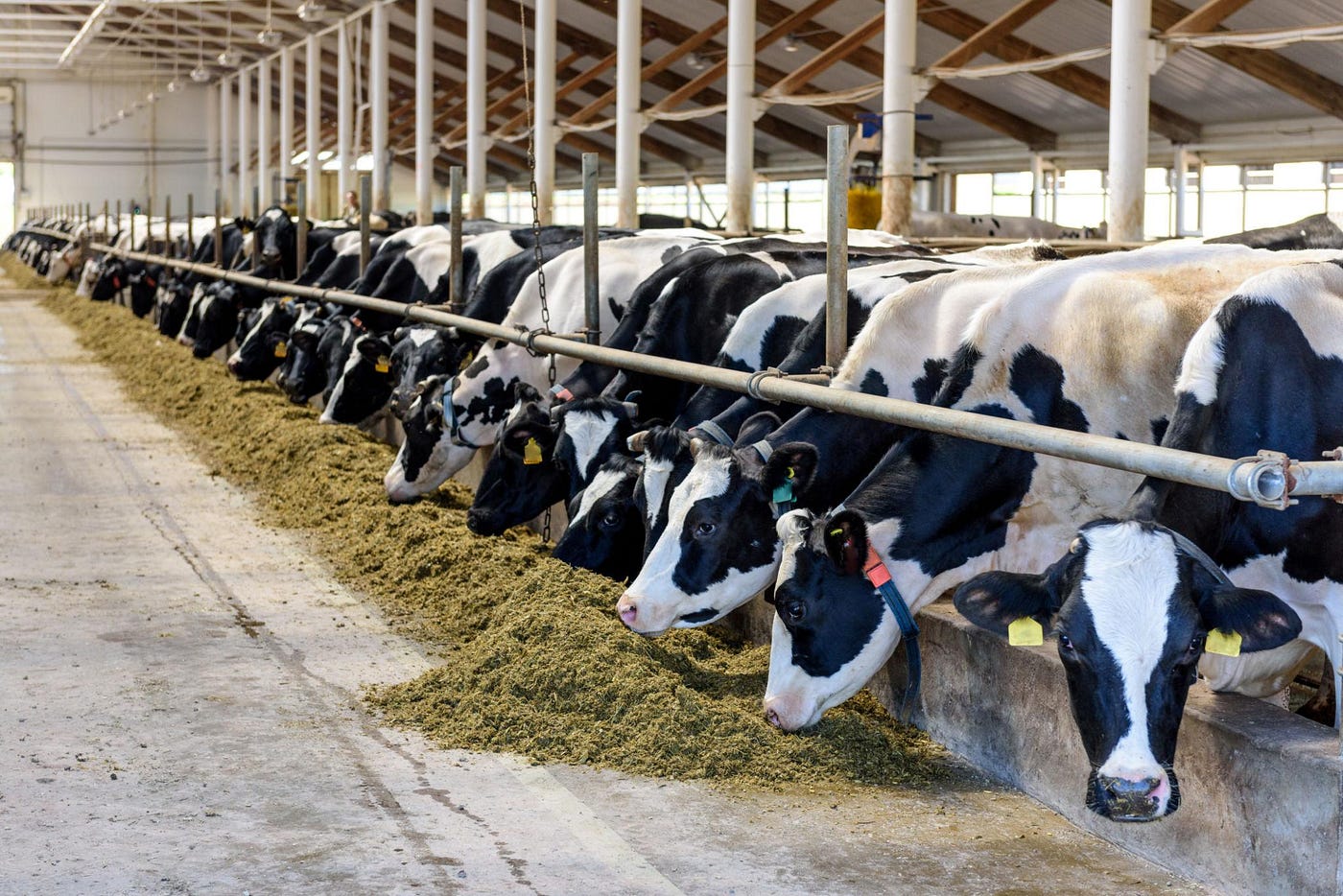
High-producing dairy cows require carefully balanced energy-dense rations to maintain milk yield and metabolic health.
What Is Rumen Acidosis?
Rumen acidosis occurs when the production of organic acids inside the rumen exceeds the animal’s natural buffering capacity.
In practical terms, rumen pH declines below its optimal range and remains low for extended periods.
Two forms are commonly recognized:
Subacute Ruminal Acidosis (SARA)
- Rumen pH falls below approximately 5.8 for several hours daily.
- Often presents without obvious clinical signs.
- Common in high-producing dairy herds.
Acute Acidosis
- Rumen pH drops below approximately 5.2.
- Severe clinical symptoms may appear.
- Requires immediate intervention.
Among these, SARA is considered one of the most widespread nutritional disorders in commercial dairy operations worldwide.
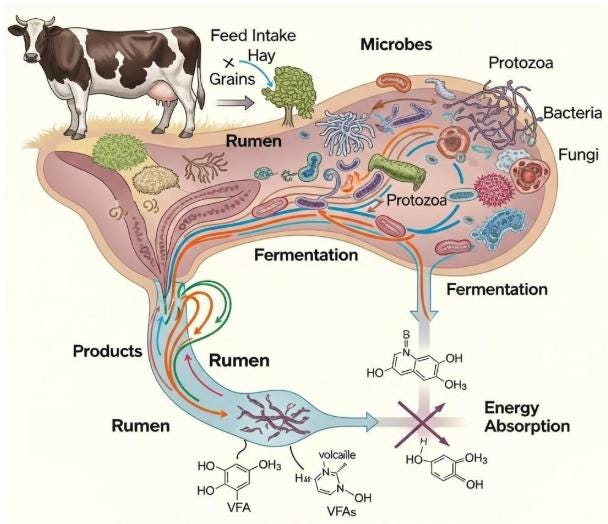
Rumen fermentation plays a central role in energy conversion, but excessive acid production can lead to metabolic disorders such as subacute acidosis.
Why Does Acidosis Develop?
The modern dairy cow requires enormous amounts of energy, especially during early lactation.
To meet this demand, producers often increase the proportion of cereal grains and concentrates in the ration.
While effective at supplying energy, rapidly fermentable carbohydrates can dramatically increase acid production inside the rumen.
Several factors increase the risk:
- Excessive dietary starch
- Low physically effective fiber
- Reduced chewing activity
- Sudden ration changes
- Inconsistent feed management
- Feed sorting behavior
When rumen pH remains chronically low, fiber-digesting bacteria become less active and rumen function begins to deteriorate.
The Hidden Cost of Subclinical Acidosis
Many dairy producers associate acidosis with digestive upset, but the economic consequences extend far beyond the rumen.
Subclinical acidosis has been linked to:
- Reduced milk fat percentage
- Lower feed efficiency
- Increased risk of lameness
- Inflammation and immune challenges
- Reduced reproductive performance
- Greater herd health costs
Because symptoms are often subtle, SARA can remain undetected while gradually eroding profitability.
The Connection Between Acidosis and Milk Fat Depression
One of the most recognizable consequences of SARA is reduced milk fat concentration.
When rumen conditions become excessively acidic, the normal biohydrogenation of fatty acids is disrupted.
This shift promotes the formation of specific fatty acid intermediates, including trans-10, cis-12 CLA, which are known to inhibit milk fat synthesis within the mammary gland.
At the same time:
- Acetate production decreases.
- Butyrate production decreases.
- Precursors required for de novo milk fat synthesis become limited.
The result is a noticeable decline in milk fat percentage, even when total milk yield remains relatively stable.
Can Dietary Fat Help?
The challenge facing nutritionists is straightforward:
How can energy density be increased without further increasing rumen fermentation?
Fat provides an elegant solution.
Compared with starch, fat contains significantly more energy per unit weight and does not contribute directly to ruminal acid production.
By replacing a portion of dietary starch with carefully selected fat sources, nutritionists can increase energy density while reducing fermentative pressure on the rumen.
How Fat Supplementation Supports Rumen Stability
Strategic fat supplementation may contribute to:
Lower Dependence on Starch
Reducing dietary starch can decrease excessive acid production and help maintain a more stable rumen environment.
Improved Energy Supply
Fat delivers concentrated energy without requiring rapid fermentation.
Better Milk Fat Production
Certain fatty acids can directly support milk fat synthesis while improving overall energy balance.
Reduced Risk of Milk Fat Depression
A more stable rumen environment helps maintain normal fatty acid metabolism and supports healthy milk fat production.
Practical Considerations
Fat supplementation is not a replacement for proper ration formulation.
Successful implementation requires:
- Adequate effective fiber
- Balanced starch levels
- Gradual dietary adaptation
- Monitoring of milk components
- Careful management of total dietary fat
In most dairy systems, nutritionists aim to avoid excessive total fat levels that could negatively affect fiber digestion.
The goal is balance — not simply adding more fat.
The Future of Dairy Energy Nutrition
The dairy industry continues to move toward nutritional strategies that maximize energy efficiency while protecting rumen health.
Rather than relying exclusively on grain-based energy, modern feeding programs increasingly incorporate specialized fat supplements as part of a broader approach to metabolic health and sustainable production.
This strategy becomes particularly important during early lactation when cows experience the greatest energy challenge and the highest risk of metabolic disorders.
Conclusion
Rumen acidosis remains one of the most significant nutritional challenges facing high-producing dairy herds.
While no single ingredient can eliminate the risk, increasing dietary energy through strategic fat supplementation can reduce reliance on highly fermentable carbohydrates and help maintain a more stable rumen environment.
When combined with proper fiber management, balanced ration formulation, and sound feeding practices, fat supplementation can support both rumen health and milk fat production.

Hydrogenated palm oil–based fat supplement used to improve energy density while maintaining rumen stability in dairy nutrition systems.
About Niko Roshd Paya
Niko Roshd Paya is a premium dairy fat supplement produced by Kimiya Roshd Sanat Alborz. Developed for modern dairy nutrition programs, it provides concentrated energy designed to support high-producing dairy cows while contributing to improved ration energy density and production efficiency.
For nutrition consultations, product specifications, and technical information, contact the Kimiya Roshd Sanat Alborz technical team.
About the Author
**Mojtaba Razmi** is an entrepreneur, engineer, and founder of Kimiya Roshd Sanat Alborz, the company behind the Niko Roshd Paya dairy feed supplement brand.
Driven by a passion for industrial innovation and livestock nutrition, he writes about dairy production, feed technology, energy supplementation, and practical solutions that help dairy farms improve efficiency and profitability. His articles combine industry experience, technical research, and real-world perspectives from the feed manufacturing sector.
When not working on new product development, he explores emerging trends in dairy nutrition, agricultural technology, and sustainable livestock production.
Need Technical Support?
If you are facing challenges such as rumen acidosis, low milk fat, or energy deficiency in dairy cows, our technical team is ready to help.
🌐 kimiyaroshd.com 📞 +98 912 051 5497 | +98 912 034 1031
Kimiya Roshd Sanat Alborz Specialized in dairy fat supplements and energy nutrition solutions.
메타데이터
- post_id
- ffc4d22da2a5
- slug
- can-fat-replace-starch-a-modern-approach-to-dairy-cow-energy-nutrition-ffc4d22da2a5
- url
- https://medium.com/@KimiyaRoshd/can-fat-replace-starch-a-modern-approach-to-dairy-cow-energy-nutrition-ffc4d22da2a5
- canonical_url
- https://medium.com/@KimiyaRoshd/can-fat-replace-starch-a-modern-approach-to-dairy-cow-energy-nutrition-ffc4d22da2a5
- author_url
- https://medium.com/@KimiyaRoshd
- status
- ok
- fetched_at
- 2026-06-09 15:37:30