Enterprise Architecture as a Strategic Driver for Digital Transformation and Agility (EA-Part 1)
Establish a new paradigm to future-proof your business against tomorrow’s challenges. Foster innovation and enhance business agility in…
Enterprise Architecture as a Strategic Driver for Digital Transformation and Agility (EA-Part 1)
Establish a new paradigm to future-proof your business against tomorrow’s challenges. Foster innovation and enhance business agility in your digital transformation with adaptive enterprise architecture.

In an era where digital transformation is not just an option but a necessity, organizations are increasingly looking for effective strategies to navigate the complexities of modernization. This white paper explores how Enterprise Architecture (EA) serves as a strategic driver in accelerating digital transformation and enhancing business agility.
By providing a structured approach to align technology initiatives with business goals, EA helps organizations streamline their operations, optimize resources, and foster innovation. A robust EA framework can guide organizations in achieving a cohesive digital strategy, ultimately leading to sustained competitive advantage and long-term success. This article is divided into following sections:
- Establishing Enterprise Architecture as a Strategic Driver (EA-Part 1)
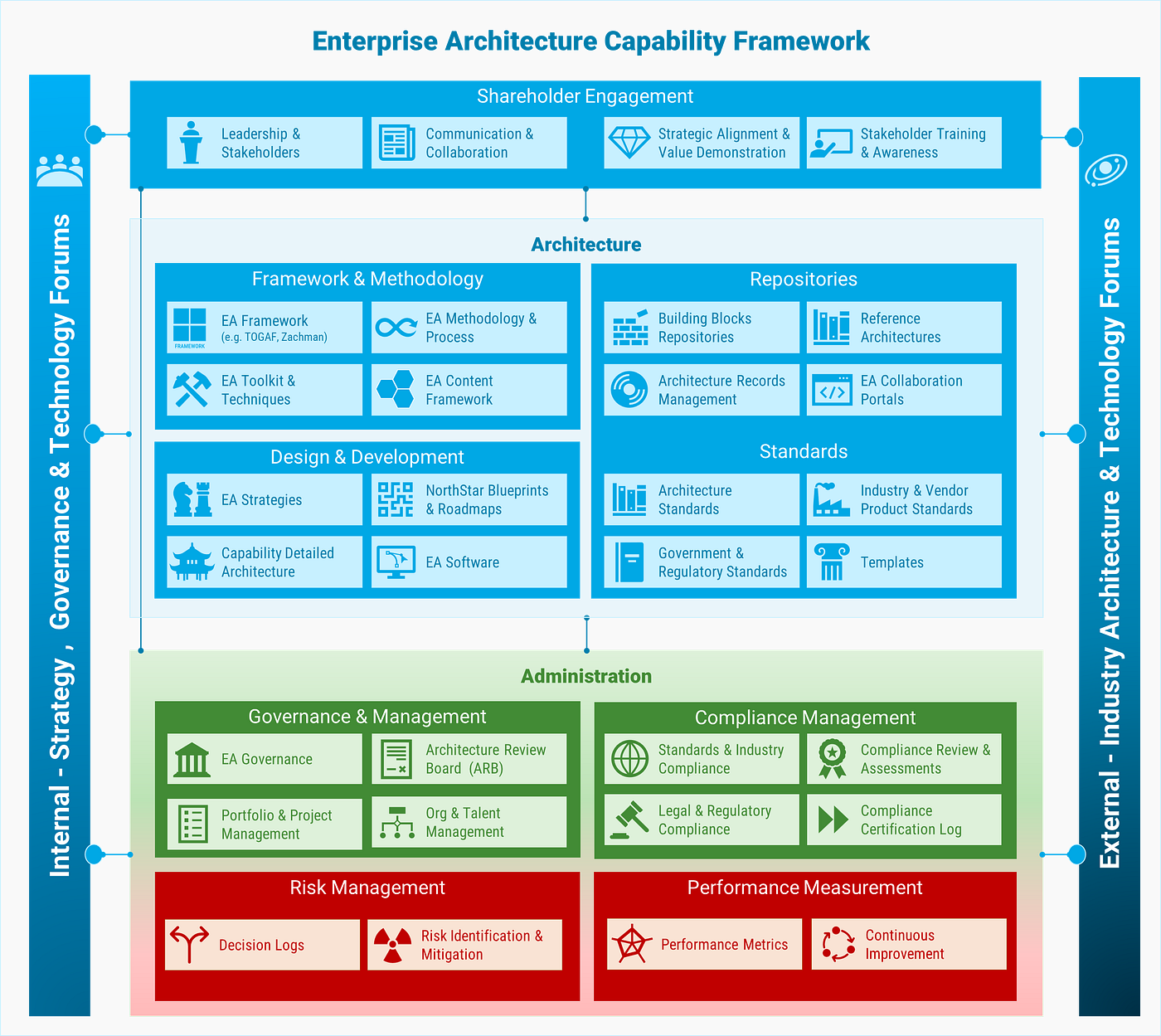
- Blueprint for an Enterprise Architecture Capability Framework (EA-Part 2)
- Evolution of Enterprise Architecture (EA-Part 3)
- Adaptive Architecture: A Framework for Evolving Systems (EA-Part 4)
- Customer-Centric Journey Architecture (EA-Part 5)
- Enterprise Architecture Patterns (EA-Part 6)
- Enterprise Architecture Anti-Patterns (EA-Part 7)
- Leveraging TOGAF to drive Digital Transformation Architecture (EA-Part 8)
- Modeling with ArchiMate (EA-Part 9)
Key Topics in this Section
- Background
- What is an Enterprise Architecture?
- Why do we need Enterprise Architecture?
- Why Enterprise Architecture is a strategic driver for Digital Transformation?
- Conclusions
Background
In today’s digital age and highly competitive market, an organization’s ability to rapidly bring products to market and adapt to changing conditions significantly enhances its chances of success.
An effective digital transformation requires a comprehensive, integrated approach that spans nearly every aspect of an organization, including strategy, leadership, vision, customer experience, product or service development, operations, fulfillment processes, funding models, modern architecture, technology, organizational culture, and talent. True digital transformation is an ongoing journey in which organizations continuously and rapidly adapt to evolving customer expectations and digital innovations. The ability to quickly respond to change is the first and most critical indicator of a successful transformation. Additionally, a hallmark of a digitally transformed enterprise is its evolution into an innovation hub, capable of swiftly generating new ideas to seize emerging market opportunities. Resilience to change and the capacity for innovation are key milestones in this transformation.
A well-optimized digital organization aims to avoid reinventing the wheel when faced with new business challenges that require system enhancements or replacements. Instead, it focuses on leveraging existing industry knowledge, proven processes, and modern technologies to create efficient and effective solutions. However, in the current paradigm of rapidly evolving technologies, the industry is experiencing a pace of change unlike anything seen before. This accelerated evolution raises new strategic questions, for example:
- How do we build technology solutions that are adaptive and future-proof?
- How do we ensure portability and embrace open standards in a landscape of fast-evolving technologies?
- How do we address resiliency, given that the COVID-19 pandemic highlighted the need for organizations to be battle-hardened and responsive to disruptions?
- How do we manage technical debt, particularly with legacy core systems that are already outdated?
- How do we provide agility and speed in risk-averse environments, maintaining a balance between operational continuity and innovation?
These questions challenge organizations to rethink their approach to digital transformation, focusing on adaptability, resilience, and long-term technological sustainability while navigating the risks inherent in a rapidly changing world.
Enterprise Architecture (EA) addresses the evolving technological landscape and organizational challenges by offering comprehensive strategies that tackle a range of critical concerns:
- Building Adaptive and Future-Proof Solutions: EA ensures systems are built with flexibility and modularity, leveraging microservices, cloud-native architectures, and scalable platforms. This allows organizations to evolve their digital infrastructure without frequent overhauls, ensuring long-term adaptability.
- Multi-Cloud Strategy: EA promotes a multi-cloud approach to avoid vendor lock-in and increase system resilience. By distributing workloads across multiple cloud providers, EA helps organizations gain flexibility, improve reliability, and negotiate better terms with vendors, ensuring they aren’t overly reliant on a single platform.
- Portability and Open Standards: EA encourages the adoption of open standards and interoperable technologies to enable seamless portability between systems and vendors. This ensures smooth integration of new technologies as they emerge, avoiding compatibility issues that can hinder innovation.
- Resiliency: EA incorporates resiliency into system design, ensuring business continuity during disruptions. Strategies such as disaster recovery planning, data replication, and security measures help mitigate risks posed by unforeseen crises like pandemics, cyberattacks, or natural disasters.
- Security in Heterogeneous Environments: In increasingly complex digital environments, EA prioritizes security by integrating robust, cross-platform security protocols and practices. This includes zero-trust architectures, real-time threat monitoring, and consistent security policies across diverse environments, protecting against emerging security threats.
- Managing Technical Debt and Legacy Systems: EA provides a framework for modernizing legacy systems and addressing technical debt. Through incremental modernization, such as migrating to cloud platforms or refactoring critical applications, EA helps future-proof technology while minimizing disruption to current operations.
- Right Technology Selection in a Rapidly Evolving Market: EA helps organizations navigate the competitive and fast-changing tech landscape by establishing guidelines for selecting technologies that align with business goals. It ensures that new technologies are evaluated not just for their features but for their long-term viability, ecosystem fit, and potential to drive business value.
- Balancing Agility and Risk: EA supports the integration of agile and DevOps methodologies, allowing businesses to innovate quickly while maintaining strong governance frameworks. This ensures that operational risks are minimized even as the organization pushes for rapid technological advancements.
- Build vs. Buy Decisions: EA provides a clear framework for making build vs. buy decisions. It helps determine when to invest in custom-built solutions for unique business differentiators and when to leverage off-the-shelf, commoditized applications to save time and resources. This careful balance allows organizations to focus on what drives competitive advantage while efficiently handling standardized needs.
In essence, EA is critical for ensuring that organizations can navigate the complexities of digital transformation, from selecting the right technology and managing security to fostering innovation and building resilience against future disruptions.
What is Enterprise Architecture
Enterprise Architecture (EA) is a term used interchangeably to refer to a business function, an architectural practice, or a strategic framework aimed at driving organizational change.
As a strategic framework it helps organizations align their business processes, information systems, technology infrastructure, and people with their overall business goals and objectives. It provides a structured approach for analyzing, designing, planning, and implementing changes to achieve effective and efficient operations and support future growth.
As an architectural practice, Enterprise Architecture (EA) provides a variety of services within an organization, serving a broad range of internal customers, including stakeholders, executives, and product owners. Enterprise Architect plays a pivotal role in aligning enterprise strategies and capability building to ensure long-term benefits. They also bridge the gap between business strategy and IT initiatives. It ensures that technology investments and capability development align with the broader business goals.
Enterprise architects work closely with departmental heads on a regular basis to understand their technology needs and help them develop a vision and strategy for their specific areas. They collaborate with product owners to design a North Star blueprint that guides long-term objectives and helps navigate the development of Minimum Viable Products (MVPs).
For effective capability building, a Solution Architect plays a key role in framing solutions by defining the overall structure and approach to meet specific business needs, ensuring alignment with both functional and non-functional requirements. They create detailed architecture blueprints that outline how various system components will interact, while adhering to enterprise standards and best practices. Additionally, they guide development teams by translating these designs into actionable technical plans, making critical decisions about technology stacks, integration patterns, and security. Acting as a bridge between stakeholders and developers, they ensure the solution is technically sound, delivered on time, and within scope, while providing continuous oversight throughout the development lifecycle.
This holistic approach ensures the delivery of cohesive, scalable, and sustainable technical solutions.
Beyond these collaborative roles, the EA function also ensures overall governance of architectural blueprints, enforces compliance with standards and regulations, and manages risks associated with technologies that support the organization’s operations. This comprehensive governance helps ensure that technology investments are strategically aligned, scalable, and secure, thereby driving sustainable business transformation.
The outputs of Enterprise Architecture include strategies, North Star blueprints, roadmaps, standards, reference models, guiding principles, maturity assessments and capability architectures, which collectively define and describe how to manage the structure, operations, or transformation within an enterprise. They provide a clear direction for transformation, optimization, and growth. It enables effective decision-making and helps guide the organization toward achieving its long-term goals.
“Enterprise Architecture (EA) is primarily aimed at driving organizational change. EA provides a holistic view of an organization’s structure, processes, information systems, and technology, aligning these components with the organization’s strategic goals and objectives.”
According to TOGAF, an open framework, Enterprise Architecture is a comprehensive approach that formally defines an organization’s core components, including its business processes, information systems, technology infrastructure, and their interrelationships. It offers a structured framework for designing, planning, implementing, and governing an enterprise’s IT architecture. This approach includes processes, principles, and methodologies for aligning IT infrastructure with business objectives, creating architectures that support organizational goals, drive change, and enhance overall efficiency and effectiveness.
Why do we need Enterprise Architecture?
Enterprise Architecture is essential for organizations as it offers a structured approach to understanding, designing, and managing the intricate connections between business processes, information systems, technology, and organizational structure. Its primary purpose is to provide a comprehensive framework that aligns IT infrastructure and processes with strategic goals and objectives. EA facilitates a clear understanding of the organization, supports strategic planning and capability development, and ensures systematic and controlled execution of changes.
Here are several key reasons why EA is needed:
- Alignment of Business and IT:
- Strategic Alignment: Statistical data indicated that a large proportion of technology transformation projects do not achieve their intended goals programs (Consulting firms like McKinsey reported high failure rate around 70%). This high failure rate is often attributed to factors such as inadequate planning, resistance to change, poor execution, and misalignment between technology and business objectives.
These insights emphasize the importance of careful planning, effective management, and alignment with business objectives to increase the likelihood of success in technology transformation projects.
EA ensures that IT investments, information systems, technology infrastructure, and IT initiatives are aligned with the organization’s business goals and strategy. This alignment maximizes the value of IT and ensures that technology effectively supports business objectives, thereby creating value and gaining a competitive advantage.
- Consistency: In addition, by providing a holistic view of the organization’s processes, information, and technology, EA helps maintain consistency across various systems and processes, reducing duplication and improving integration.
2. Improved Decision-Making
- Informed Decisions: EA provides a comprehensive understanding of the current state of the organization’s architecture, which supports better decision-making. It helps leaders understand the impact of changes and make informed decisions about investments, projects, and resource allocation.
- Risk Management: EA helps identify and mitigate risks associated with IT investments. This includes new technology infrastructure, integrations, or changes to existing platforms. EA provides visibility into potential issues and dependencies within the architecture. IT ensures that the architecture is resilient and can support business continuity.
3. Improve Operational Efficiency and Effectiveness
- Process Optimization: EA helps in identifying inefficiencies and areas for improvement in business processes. It provides a framework for streamlining operations and improving overall efficiency.
- Resource Management: By understanding the architecture, organizations can better manage their resources, including technology, data, integration, interoperability and personnel, leading to cost savings and more effective use of assets.
- Optimize Costs: Reduce costs through efficient use of technology and processes, and by avoiding duplication and rework across different parts of the organization.
- Facilitating Change and Transformation
- Change Management: EA supports organizational change to enable and guide both business and technology transformations by providing a structured approach for managing change within the organization, including the implementation of new technologies, processes, or organizational structures. It helps in planning and executing changes in a controlled manner, minimizing disruption and ensuring that changes are aligned with strategic goals.
- Digital Transformation: EA is essential for guiding digital transformation efforts. It helps organizations transition to new technologies, adapt to changing market conditions, and innovate effectively.
- Modernize or Transform Business Processes: Support the reengineering and modernization of business processes to enhance efficiency, effectiveness, and alignment with current business needs and opportunities.
5. Long-Term Planning and Future-Proofing
- Strategic Planning: EA supports long-term planning by providing a view of the organization’s current and future state. It helps in developing strategies for growth, innovation, and adaptation.
- Future-Proof Technological Investments: Ensure that technology investments are adaptable to future changes and innovations, thereby safeguarding against obsolescence and ensuring long-term viability.
- Resiliency and Adaptability: Enhance the organization’s ability to withstand and quickly recover from disruptions while adapting to changing conditions and market demands.
6. Emerging Technologies & Innovation
- Support Innovation: Enable the organization to adapt to emerging technologies and market trends by providing a flexible and scalable architecture that can accommodate new solutions and approaches. EA can provide a flexible and scalable architecture that can accommodate new solutions and approaches.
It facilitates innovation by promoting a clear understanding of existing systems and processes, identifying opportunities for improvement, and enabling rapid prototyping and experimentation.
- Develop Proof of Concept (POC): EA supports the development of Proof of Concept (POC) projects for new technologies by providing a structured framework that allows for testing and validation in a controlled environment, minimizing risk and ensuring alignment with business goals.
Additionally, EA also fosters collaboration across departments, breaking down silos and encouraging the integration of new ideas and technologies. By aligning technology initiatives with business objectives, EA ensures that innovative solutions are strategically implemented, reducing time-to-market and enhancing competitive advantage.
7. Improved Communication and Collaboration
- Common Language: EA provides a common language and framework for discussing and understanding the organization’s architecture. This common understanding facilitates communication and collaboration between different departments and stakeholders.
- Documentation: EA helps document the organization’s architecture, processes, and systems, making it easier to share information and maintain a clear record of the architecture.
8. Regulatory and Compliance Requirements
- Compliance: EA helps ensure that the organization’s architecture complies with industry regulations and standards. It provides a framework for managing compliance and addressing regulatory requirements effectively.
- Governance: EA supports governance by providing a structured approach to managing and controlling architecture-related activities and decisions.
9. Integration and Interoperability
- System Integration: EA helps in integrating different systems and technologies within the organization, ensuring that they work together seamlessly and support business processes effectively.
- Interoperability: It provides a framework for ensuring that different systems and applications can interoperate, which is essential for efficient operations and data sharing.
10. Mergers, Acquisitions & Technology Procurement
- Mergers & Acquisitions: EA plays a crucial role in mergers by ensuring that the integration process is smooth, strategic, and value-driven. It offers a framework for evaluating the target company’s IT infrastructure, systems, and capabilities, facilitating informed decision-making during due diligence. EA provides a clear roadmap for integration, minimizing disruption and ensuring effective harmonization of systems and processes. By mapping and comparing the architectural frameworks of both companies, EA identifies similarities, differences, and potential conflicts. It ensures consistent standards and practices across the merged organization, enhancing efficiency and reducing complexity. EA also identifies potential risks related to technology, systems, and processes, allowing for proactive risk mitigation. Additionally, EA helps manage and control costs by providing insights into the total cost of integrating the target company’s systems, ensuring that the financial impact is well understood and managed.
- Technology Procurement: EA supports the acquisition process by providing a structured framework that aligns technology with business objectives, ensuring that new technology or services align with organizational goals and integrate effectively with existing systems. It ensures that acquisition decisions support the organization’s strategic goals and provides guidelines and standards for technology and services, promoting consistency across the organization. EA aids in evaluating and selecting vendors based on their adherence to architectural standards and compatibility with existing systems. It offers insights into the total cost of ownership (TCO), considering factors such as integration, maintenance, and support. EA supports strategic sourcing by offering a framework for assessing suppliers based on architectural requirements and strategic fit. Additionally, EA ensures that procurement activities comply with internal standards and external regulations, and it assists in managing the lifecycle of technology and services from acquisition through to retirement, ensuring that they remain relevant, supported, and cost-effective over time.
In summary, Enterprise Architecture is essential for aligning business and IT, improving decision-making, enhancing efficiency, facilitating change, and ensuring compliance. It provides a structured approach to managing complexity, optimizing processes, and supporting strategic goals, making it a valuable tool for organizations seeking to achieve their objectives and navigate a rapidly changing business environment.
Why Enterprise Architecture is a strategic driver for Digital Transformation
In today’s dynamic technology landscape and hypercompetitive marketplace, change is increasingly unpredictable, and many organizations struggle to keep pace. Traditional value drivers and models no longer provide a sustainable competitive advantage.
Today successful organizations are structured to be adaptable to rapid market changes in all three areas of people, process, technology. Large global organizations have complex business processes, varying business and regulatory compliance needs. As a result, their systems and architecture are more complex to transform. The core of it is their architecture, which is fundamental structure of how these systems are designed and integrated. Technology’s influence on organizations is profound — it shapes business operations, drives effectiveness, unlocks new business models, and creates competitive advantages.
To stay relevant, organizations must adopt strategies that allow for a series of temporary advantages, driven by agile processes that enable rapid repositioning of strategies. The true differentiator lies in an organization’s ability to swiftly build new capabilities and seize opportunities faster than competitors. This agility requires a streamlined approach to experimentation, allowing organizations to test and learn from the market at a much higher velocity.
In contrast, traditional technology acquisitions and implementations often followed a more rigid, static approach. Enterprise Architecture (EA) has consistently played a crucial role in managing the complexity of business and IT collaboration, serving as a strategic “north star” that guides organizations through periods of change. EA has been instrumental in enabling successful business transformations by aligning technology with clearly defined strategic goals. As each technological revolution unfolded, the practice of EA has evolved to meet new challenges and opportunities.
Let us now take a brief look at the history of how EA has evolved over time.
- The digital revolution is an ongoing process that began in the 1950s with the first generation of computing. Each wave of technological innovation has introduced new ways of working, fostering innovation and opening opportunities to launch new products and services. Early information systems were centralized on in-house mainframes.
- By the 1980s, telecommunications and personal computing introduced a federated IT structure, enabling distributed processing and the rise of software vendors and outsourcing.
- The emergence of the internet in 1995 ushered in a commercial digital era, revolutionizing business models by reducing transaction costs, optimizing supply chains, and enabling online transactions, which transformed commerce globally.
As mentioned earlier, the foundation of modern digital transformation began taking shape during that era. Initially, organizations focused on digitizing existing business processes to provide self-service options for customers.
- By the early 2000s, eCommerce platforms like Amazon and eBay expanded online shopping, offering consumers shopping carts and payment systems.
- The launch of Apple’s iPhone in 2007 sparked a digital revolution in collaboration, social media, and global connectivity, followed by advancements in Cloud computing, Big Data analytics, and stronger global synergies.
Cloud technology reduced upfront costs for launching digital services, while mobile technologies and social media provided businesses with real-time customer access. New architectural patterns emerged, enabling businesses to break solutions into smaller, modular components, which allowed for faster, incremental development of products.
- By 2020, automation technologies such as DevOps and Infrastructure as Code (IaC) became widely adopted. The rise of Software-as-a-Service (SaaS) providers offered turnkey solutions, while the concept of a “platform ecosystem” further revolutionized business strategies, reshaping how organizations build and scale their technology capabilities.
- By 2024, we are experiencing a new wave of digital disruption, driven by advancements in cognitive technologies such as artificial intelligence (AI), machine learning, natural language processing, and robotics. Early implementations, such as Generative AI (GenAI), are already revolutionizing how we work and interact with technology.
Throughout these revolutionary digital eras, enterprise architecture frameworks have consistently adapted common patterns to address the specific challenges of each period. With every new technological advancement, new ways of working emerged, prompting IT to adopt innovative techniques for governing and managing the architecture of evolving technologies. These frameworks evolved to ensure that businesses could effectively align technology with their strategic objectives, while maintaining flexibility and scalability in response to ongoing digital disruption.
The new wave digital and disruptive market conditions continues to necessitate new innovative “ways of working,” prompting many organizations to transform their operating structures. This transformation extends to how Enterprise Architecture (EA) functions and operates. EA is evolving from its traditional role into a more dynamic, integral part of the organization, enabling greater agility, flexibility, and responsiveness to the rapid changes in today’s business environment. This shift is essential for organizations seeking to remain competitive and effectively navigate the complexities of modern markets.
In the previous era, capability-based planning was a crucial tool in enterprise architecture for steering large-scale business transformations. This approach focused on incrementally adding high-value capabilities to mature them over time. Although developing a complete capability took longer, it delivered tangible business value with a faster time to market and garnered sustained support and funding from executive sponsors.
As we enter a new wave of digital disruption, enterprise architecture is evolving to support the concept of the “Adaptive Enterprise.” The current market demands a different approach: businesses must now be more responsive to customer needs than ever before. With access to real-time customer and market data, businesses are required to operate in a “sense-and-respond” mode rather than the traditional “build-and-sell” model. The focus has shifted to developing “dynamic capabilities” that are adaptive and responsive to rapid changes.
Businesses must be able to timely sense market shifts, understand their impact, make data-driven decisions, and act swiftly to deploy modular capabilities within their digital ecosystem. Solutions are increasingly composed of smaller, specialized components implemented “as a service.” These components are loosely coupled through flexible integration layers, supported by modern technologies and standards.
As coordination between organizations becomes more complex, Enterprise Architecture (EA) plays a crucial role in managing interdependencies both within capabilities and between organizational units. EA should help define clear boundaries, manage these interdependencies, and sequence roadmaps effectively to ensure cohesive and strategic development.
This level of innovation and agility necessitates a transformative mindset, culture and process across both the business and IT communities. For instance,
- Supporting these “dynamic capabilities” requires a long-term commitment to specialized resources and sustained funding.
- Traditionally, Enterprise Architecture (EA) has been closely aligned with IT; however, it now needs to integrate more closely with business strategy and execution.
- EA must undertake an upfront effort to design these dynamic capabilities through adaptive architecture, offering a blueprint that highlights interdependencies within capabilities to support modular development.
- Segregate design decisions for architecture. Key decisions made early in the development cycle significantly impact the quality and maintainability of the software architecture, such as considerations for security, usability, integrations, modularization, and reuse. Developing EA blueprints early in the process helps avoid technical debt, decision paralysis, and sunk investments.
- Though in an enterprise not all capabilities are dynamic or transformative, however, business leaders must place greater emphasis on EA blueprints to mitigate the risk of failure in today’s complex technological landscape.
- Business leaders must pay special attention to dependencies and cascading impacts within their technology ecosystem. Software applications are often built in a hierarchical structure, where lower-level capabilities support higher-level functionalities. For example, applications rely on common libraries, frameworks, APIs, and databases. These applications are then built and deployed using automation tools, all of which sit on physical infrastructure, either on on-prem machines or in the cloud, each involving its own set of technologies and security considerations. Managing these dependencies requires clear boundaries and effective oversight, which can be achieved through a well-articulated enterprise architecture.
- One size doesn’t fit all. Apply the appropriate level of governance by distinguishing between capabilities that are transformative or disruptive and those that are operational or business-as-usual. Tailor governance strategies to ensure that innovative initiatives receive the necessary flexibility, while routine operations are managed with efficiency and consistency.
Conclusions:
Every era of transformation because of digital and technology revolution is becoming more complex that its predecessor. In today’s fast-evolving technological landscape, Enterprise Architecture (EA) has become a critical enabler of digital transformation. As businesses navigate the complexities of rapid market shifts, changing customer needs, and technological disruption, EA provides the strategic framework necessary to ensure agility, scalability, and alignment with business goals.
- EA plays a pivotal role in guiding organizations through the uncertainty of digital transformation by enabling them to build dynamic, modular capabilities that can respond to change in real time. It allows businesses to manage the complexities of their technology ecosystems, from infrastructure to software applications, and ensures that interdependencies are clearly defined and well-governed. This helps organizations avoid technical debt, decision paralysis, and costly sunk investments.
- Moreover, as organizations increasingly move toward “sense-and-respond” operating models, EA enables them to quickly identify market opportunities, make data-driven decisions, and deploy innovative solutions that keep them ahead of competitors. By ensuring that technology strategies are tightly integrated with business strategies, EA provides the blueprint that drives continuous innovation and sustainable competitive advantage.
- In a world where one size doesn’t fit all, EA helps tailor governance and operational strategies to the specific needs of both disruptive and business-as-usual capabilities. This flexibility empowers organizations to experiment and innovate while maintaining stability in their core operations.
Ultimately, Enterprise Architecture is more than just a technical tool — it is a strategic driver that enables businesses to thrive in the face of digital disruption, making it an indispensable asset in the ongoing journey of digital transformation.
The views expressed are my own and do not represent any organization. I aim to have respectful discussions that further positive change as we navigate unprecedented technological transformation. Change is constant, so my perspective may evolve over time through learning, testing, and adapting to new information.
메타데이터
- post_id
- ffcd60dcf598
- slug
- enterprise-architecture-as-a-strategic-driver-for-digital-transformation-and-agility-ea-part-1-ffcd60dcf598
- url
- https://medium.com/razi-chaudhry/enterprise-architecture-as-a-strategic-driver-for-digital-transformation-and-agility-ea-part-1-ffcd60dcf598
- canonical_url
- https://medium.com/razi-chaudhry/enterprise-architecture-as-a-strategic-driver-for-digital-transformation-and-agility-ea-part-1-ffcd60dcf598
- author_url
- https://medium.com/@razi_chaudhry
- status
- ok
- fetched_at
- 2026-08-18 18:53:59