Owanbe Olympics
Nigeria Has Owanbe. What Do You Have?
Owanbe Olympics
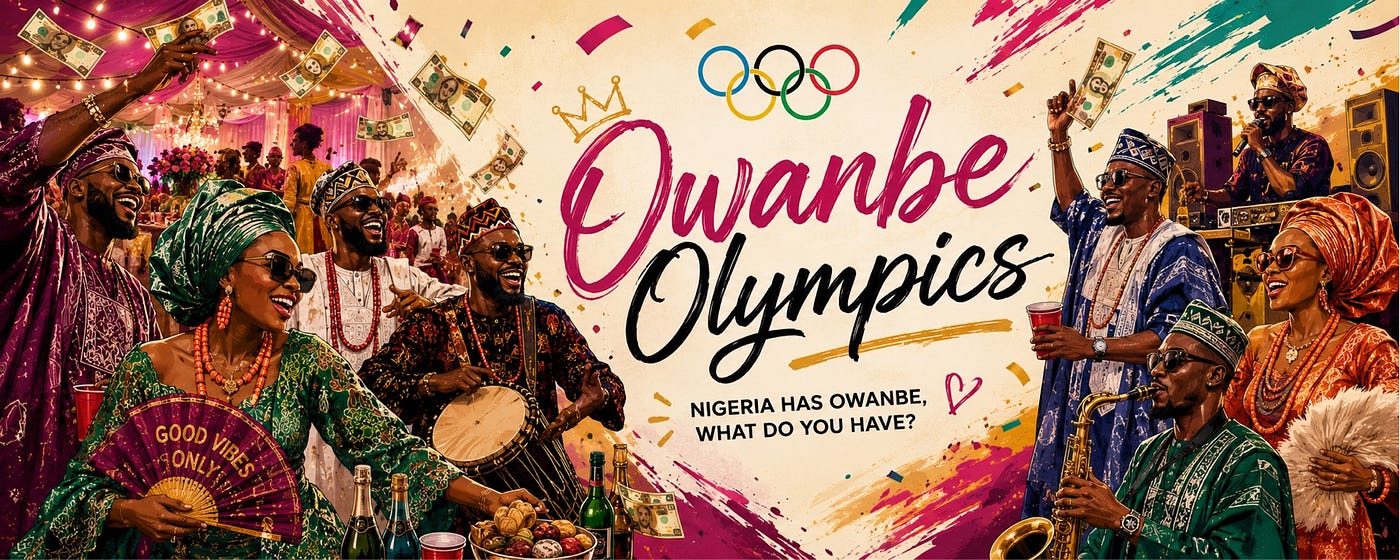
I’m in my 20s, and as you can imagine, I’ve been to my fair share of parties. Not enough, though. But I can say I’ve feasted on more online recaps than I can count, and honestly, nothing beats the actual experience.
The more “mature” I get alongside my peers, the more celebrations I witness. Suddenly, your old hostel mate is posting her proposal all the way from Canada, and now you have a wedding to attend. Your longtime friend has given birth to the cutest little boy, and you’re torn between:
“Aren’t we just babies ourselves?” and “Time don go o.” 🙆🏾♀️
On the flip side, your older friends tell you their aged parents/grandparents have passed, and burial preparations are in motion.
I say all this to say: there’s always a party brewing somewhere, for different reasons, in different places, at different stages of life.
My favorite has to be the undefeated, multi-day production that is a Nigerian wedding. A Yoruba wedding, to be precise.
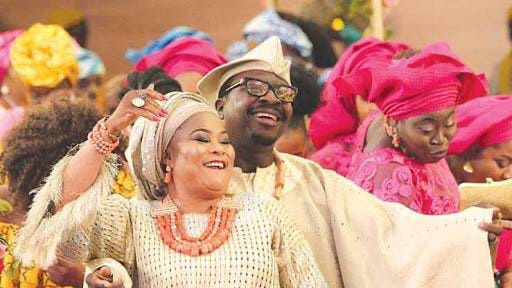
Picture credit: “The Wedding Party”
Now, my attendance record can still be counted on one hand, but let me tell you this: if I bump into your wedding reels on my feed and I see style, sophistication, grandiosity, classy romantic vibes, that energy? I’m sorry to say I instantly become a happy virtual attendee of your precious union.
I loveeeee a well-planned, coordinated, intentional wedding executed to perfection.
And ladies and gentlemen, that is when the stars aligned at my place of employment, and my humble self was given the responsibility of drawing up a fashion and styling mood board for an African-inspired fashion mobile game in production. I was so interested, I didn’t even mean it when I complained about the 1,000-image deliverable.
Ouuu, the fashion. The color. The culture. The couture. The history.
I fed my eyes shamelessly and made Pinterest my most-used app of the week.
Fast forward to more recent times: my mission to make this “game” as relevant and accurate as possible led me to a very interesting thought, one I could coin as:
Nigeria Has Owanbe. What Do You Have?
I almost giggled as I started wondering whether any celebration culture could truly compare to the production, community, chaos, spending, crowds, outfits, and drama of a quintessential modern-day Owanbe.
But alas, my research turned up a few celebration cultures around the world that may not compete… but definitely compare.
Let’s treat this as seriously as it deserves, shall we?
My professor hat is on, cane in hand, glasses askew, let’s proceed.
Although “Owanbe” originated from Yoruba social culture, it has evolved in Nigeria to describe grand, extravagant, socially significant celebrations broadly.
The word is derived from the Yoruba phrase “ó wà níbẹ̀” (or “ó wà n’bẹ́”), which loosely translates to: “It is there” or “It is happening there”
Basically, that’s where everybody wants to be.
Today, Owanbe is commonly associated with weddings, birthdays, funerals, housewarmings, chieftaincy ceremonies, and other milestone celebrations characterized by elaborate fashion, live music, dancing, food, and communal participation.
In recent years, Owanbe culture has gained global visibility through diaspora communities, TikTok, Instagram, Afrobeats, and the internet’s collective fascination with Nigerian weddings and fashion aesthetics.
And while every culture celebrates differently, I discovered that many societies around the world actually share similar traditions: coordinated fashion, music, dancing, gifting, prestige, community, and public joy
What Makes an Owanbe… Owanbe?
Aso Ebi and Coordinated Fashion
One of the defining elements of an Owanbe celebration is Aso Ebi, a coordinated fabric selected by the celebrant or family for guests to wear.
Aso Ebi can range from Ankara fabrics to lace, aso-oke, sequins, velvet…depending on the tribe, occasion, and social class of the hosts.
The choice of Aso Ebi is culturally significant because it visually symbolizes unity, belonging, family ties, friendship, and social support for the celebrant. In many cases, the fabrics are sold to invited guests before the event.
Aso Ebi culture also carries social implications. Guests wearing the designated fabric are often seen as part of the celebrant’s inner circle and may receive preferential treatment during the event, like better seating, easier access to souvenirs, food service, or participation in certain activities.
The fashion aspect of Owanbe has become one of its most globally recognized elements, especially online, where Nigerian party fashion and styling constantly trend across social media.
And honestly? This is the tea and the cup for me.

Because even though everybody has the same fabric, don’t be deceived, you can still stand out for all the wrong reasons 😭
Orrrr… you can deliver an iconic look.
Please aim for the latter. Or at least somewhere on that spectrum. It’s for the best 🙏🏾
Music and Dance
Traditional live bands performing genres such as Juju and Fuji music are especially popular at Yoruba celebrations, although contemporary Afrobeats, highlife, and DJ performances are now common.
If you’re extra, well-connected, or have the cash to spare, an artiste’s live performance is not totally out of place either. Who says you can’t have your favorite musician perform on your big day?
Personally, I might go for the likes of Segun Johnson (iykyk). Nothing makes your head swell more than a musician hyping you up live
There have genuinely been claims that people in this category use dark magic because tell me why you suddenly find yourself buying mint notes from overzealous money changers just because someone is singing your name in a way that scratches your brain perfectly 😭
And that drum? It will make anybody make mistakes.
As a Christian, praise and worship sessions sometimes replace secular performances, and trust me, the Holy Spirit moves freely. It can be so beautiful and humbling when couples dedicate parts of their reception to worshipping God with family and friends.
And who said Gospel can’t be fun too?
Think Bidemi Olaoba, Blessing Lopez, or Limoblaze: options upon options.
The interaction between musicians and guests is another huge part of the experience. People dance energetically, spray money, sing along, hype each other up, and suddenly everybody becomes a backup dancer 😄
Some Owanbe celebrations also feature traditional dancers showcasing indigenous Yoruba dance styles, attire, drumming, and storytelling traditions.
And of course, you might witness the bride and groom battling each other on the dance floor alongside their friends because apparently marriage starts with choreography now 😂
It’s a movie, and everybody has a role to play. Either sit respectfully on the sidelines or get up and dance!
Food and Hospitality
Food abundance is another major component of Owanbe culture. Guests expect variety, generosity, and proper hospitality.
Common dishes include jollof rice, fried rice, small chops, amala, pounded yam, assorted meats, and an endless rotation of soups and local delicacies.
This goes without saying, but for those at the extreme back of the line.
There is NO Owanbe without Nigerian jollof rice.

Picture credit: Zena’s Kitchen
Drinks and alcohol are also usually in surplus, adding even more energy to the atmosphere.
And honestly? The food game has leveled UP.
The last wedding I attended served:
- small chops (of course),
- mocktails,
- chin chin,
- an intercontinental main meal,
- Popcorn
- Ice-cream & cake
- Fresh juice
- Chicken and chips
- boli and fish…
…and the one that completely took me out: Garri.
With milk. Peanuts. AND ice blocks.
Garri at a wedding as dessert??? These are heights yet to be explored. Shock was genuinely the primary emotion in the room 😭
Money Spraying
This is one of the most internationally recognized elements of Owanbe culture.
Spraying involves guests placing or throwing cash on celebrants or dancers as a public expression of admiration, joy, support, and appreciation. It’s especially common during wedding entrances, dance performances, and interactions with live musicians.
And let’s be honest, a lot of people — especially the ladies m — look forward to the possibility of making their money back through sprays.
I mean, I’m sure some actually have 👀
At a proper Nigerian wedding, naira might not even be the only currency flying across the hall. Pounds and dollars full ground, literally.

Picture credit: Pinterest
Special roles are even assigned to people to secure the sprayed money because some guests are absolutely on a mission to swipe that cash.
Personally, I’ve never met anybody opposed to the idea of money raining from above and in Owanbe culture, we do it WELL 💃🏾
Beyond the performance aspect, spraying also symbolizes communal goodwill, celebration, and financial support for the celebrants.
However, the practice has become somewhat controversial in recent years due to Nigerian laws prohibiting the abuse or mutilation of the national currency. As a result, some events now use designated baskets, boxes, or collection bags to preserve the celebratory symbolism without getting into legal trouble. (You’ve been warned, my friend 🫢)
Why Owanbe Has Become Globally Popular
Owanbe culture has gained major international visibility in recent years for several reasons:
- The global rise of Afrobeats and Nigerian entertainment
- Nigerian weddings across diaspora communities, especially in the United Kingdom, the United States, and Canada
- Viral social media content showcasing Nigerian weddings and parties
Speaking of social media, wedding hashtags deserve their own paragraph ✨
I feel like they became especially iconic after Banky W and Adesua Etomi-Wellington gave us: #BAAD2017
WHEW.
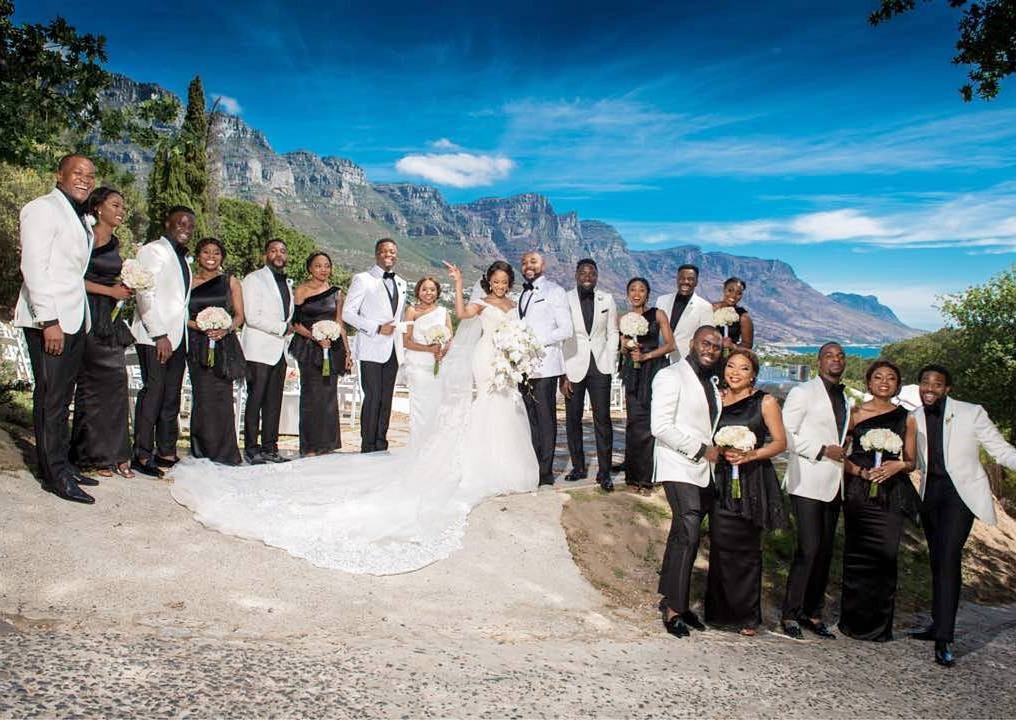
Picture credit: The Guardian Newspaper
A wedding for the history books. There was honestly no turning back after that one.
- The international popularity of Nigerian fashion, makeup, and Aso Ebi styling.
Nigerian designers are NOT playing around.

Picture Credit: #JP2025
I’ve saved too many posts to count, but some personal favorite Nigerian fashion designers include: Alonuko Bridal, Couture by Tabik, Veekee James, and Prudent Gabriel.
At this point, “masterpiece” is basically their default setting. You recognize their designs on sight.
- We can’t ignore the music, choreography, décor, and aesthetics.
If your friend group cannot dance even a little bit, I’m so sorry. It just might not work joking…but not really 😅.
Other Cultures That Said “Hold My Drink”
As it turns out, Nigerians are not the only people committed to dramatic levels of celebration.
Ethiopia: “Don’t Spray It, Pin It”
Ethiopian weddings feature a “money pinning” tradition where guests attach cash directly onto the bride and groom’s clothing while dancing.
And honestly? I hear it, and I support it 🤔
Like I said, everybody loves money rain.
Their celebrations also feature the energetic Eskista dance style, famous for intense shoulder movements and high-energy performances.
South Africa: Dance Battles Continue
Traditional Zulu wedding ceremonies, particularly the Umabo, involve energetic dance interactions between the bride’s and groom’s families.
So yes, the dance battles continue internationally.
Ghana: Are We Actually Cousins?
Ghanaian weddings immediately caught my attention because they also have coordinated fabrics, grand celebrations, dancing, gifting traditions, and beautifully elaborate ceremonies.
I also discovered their wedding suitcase tradition resembles Yoruba Eru Iyawo.
At this point, we’re basically cousins.
Kenya and Tanzania: The Maasai Blessing Tradition
One Maasai wedding tradition involves a father spitting on his daughter before marriage as a symbolic blessing for protection and prosperity.
Now listen…I will not comment on a culture I do not fully understand 🤫
But I definitely did not expect to read that during my research.
What did stand out to me, though, was how both Maasai and Yoruba weddings place huge importance on family blessing and communal approval.
And honestly? Yoruba bridal tears deserve their own honorable mention because that mini hand fan never seems strong enough and for the groom, all I’ll say is tell your boys to practice push-ups 🤭
India: “Big Fat Indian Weddings”
Now THESE people understand production.
Indian weddings are globally famous for being lavish, multi-day celebrations full of fashion, dancing, luxury, rituals, and family involvement.
The outfits? Stunning. The jewelry? Serious business. The choreography? Sharp.
And somehow, everybody involved already knows the dance routine. Very Owanbe-coded if you ask me.
Caribbean Carnival Culture
This one? I already know I’d love 🎇
Carnival culture across the Caribbean combines music, dancing, costumes, and community into one giant moving celebration.
A moving party sounds slightly stressful, but impossible not to enjoy.
Arab Weddings: Luxury on Another Planet
Many Arab wedding traditions are known for their luxury, large attendance, elaborate fashion, gifting traditions, music, and multi-generational family participation.
I HAD to mention Lebanese and Gulf weddings because every time I stumble onto that side of the internet, my jaw drops.
Disney needs to start taking notes because some of these wedding entrances are a dream 😍
The luxury, the décor, the live entertainment, the showmanship… absolutely incredible.
Latin American Quinceañeras: Main Character Energy
Latin American Quinceañeras celebrate a girl’s transition into womanhood through elaborate parties, gowns, dancing, family gatherings, and symbolic traditions.
And maybe it’s because I watched too much American TV growing up, but every time I hear “Quinceañera,” I immediately picture: a giant ballroom, a huge pink dress, a tiara, emotional parents, and a piñata waiting to burst.
So precious 💖
Conclusion
At its core, Owanbe culture for us is more than “just a party.”
It’s community. It’s identity. It’s celebration. It’s hospitality. It’s fashion.
Although the term originated from Yoruba culture, Owanbe has evolved into something much bigger within Nigerian social life; the world is catching on.
From music to fashion to dance to social media, Nigerian celebrations have become a global spectacle, and researching this made me realize something really beautiful:
Everybody celebrates differently… but somehow, we’re all trying to express the same thing.
Back to our gist, though…were you positively surprised or informed? Personally, I still think we remain undefeated 🇳🇬, but it definitely wouldn’t hurt to experience some of these celebrations for myself 🤷🏾♀️
So if you’re reading from Ghana, India, Ethiopia, South Africa, the Caribbean, or literally anywhere else in the world and you have a celebration coming up…
First of all:
congratulations 🤍
Secondly: Where do I RSVP?
I make a delightful guest.
Yours expectantly, Wade 💌✨
메타데이터
- post_id
- ffd0e7e4414b
- slug
- owanbe-olympics-ffd0e7e4414b
- url
- https://medium.com/@versedinfaith/owanbe-olympics-ffd0e7e4414b
- canonical_url
- https://medium.com/@versedinfaith/owanbe-olympics-ffd0e7e4414b
- author_url
- https://medium.com/@versedinfaith
- status
- ok
- fetched_at
- 2026-07-14 18:48:27




