A View From the Couch: Ben Wheatley’s ‘Normal’ and the Fatigue of Typified Violence
Rating: 7.5/10
A View From the Couch: Ben Wheatley’s ‘Normal’ and the Fatigue of Typified Violence
Rating: 7.5/10
Almost immediately when sitting down to Ben Wheatley’s action-comedy Normal, a distinct, inescapable wave of cinematic déjà vu washes over you.
The setting is an idyllic, run-of-the-mill Midwestern town called Normal, Minnesota, which serves as a postcard of regional charm while operating as a secret vault for systemic corruption.
If this premise feels remarkably familiar, it is because we have walked down this precise road with Bob Odenkirk before, most notably across the Nobody franchise.
While the script leaves the explicit details of the illicit operation somewhat ambiguous, the massive storage of cash inside the local bank vault strongly suggests a drug empire being funneled by the Yakuza.
The film operates on this fundamental subversion of small-town domesticity, turning an entire municipality into an armed criminal cartel just to keep their foreign assets safe.
Yet, while the pacing and narrative duration feel incredibly well-balanced — a major feather in the cap for the director — it is difficult to escape the lingering feeling that we are retreading old ground.
There is a genuine risk that the industry is beginning to typecast Odenkirk into this highly specific mold of the unassuming citizen pushed to his absolute limit.
The Spitting Image of Suppressed Trauma
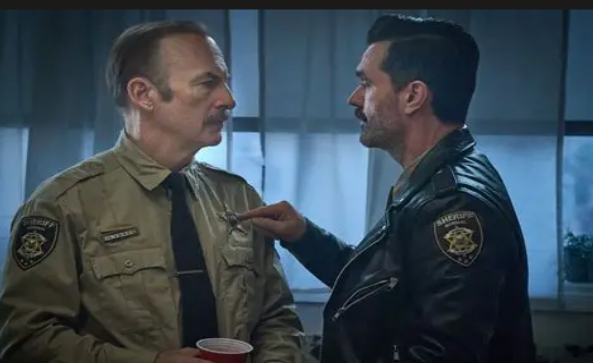
The central thematic engine of the movie rests entirely on the weary shoulders of Sheriff Ulysses Richardson (played with undeniable, grounded commitment by Bob Odenkirk).
Ulysses looks like a spitting image of Odenkirk’s past protagonist from Nobody, carrying the heavy, visible exhaustion of a man deeply traumatized by his history.
He takes the post in this sleepy town specifically to suppress the violent person he used to be, hoping to blend into the mundane background of traffic stops and community pleasantries.
The tragic irony is that the corrupt town council hired him for that exact reason, operating under the assumption that his internal numbness would make him look the other way.
But when a pair of bumbling, out-of-town bank robbers accidentally trigger a municipal war, Ulysses faces a critical threshold where he determines he cannot just stand by and do nothing.
The moment the penny drops, he unleashes a steady stream of highly choreographed, dark comedic violence that single-handedly fuels and sustains the film.
It is a spectacular display of physical action, but the execution feels somewhat regurgitated, utilizing a stylistic pace that feels all too familiar for anyone who has navigated the genre.
The Disruption of the Charming Postcard
When you watch a film like Normal, it forces an uncomfortable reflection on how modern media relentlessly exposes the underlying rot within isolated American communities.
This specific brand of narrative — where a snowy, polite landscape hides a mountain of bodies — was entertainingly mastered by the brilliant television adaptations of the Fargo franchise.
These stories are highly effective at completely erasing everything you think you know about small-town America, shattering the illusion that these spaces are inherently safe or charming.
Normal leans heavily into this subversion, contrasting folksy Midwestern politeness with sudden, hyper-violent outbursts from ordinary citizens trying to protect their illicit wealth.
From the grandfatherly, corrupt Mayor Stagg (played with deceptive warmth by Henry Winkler) to the local shopkeepers, the town operates like a fully armed militia.
Yet, where Normal manages to establish a genuinely unique, modern dimension is by what it chooses to leave out of the protagonist’s equation.
Unlike the domestic frameworks that anchored Nobody or even the complex criminal machinery of Ozark, we do not have a protective family dynamic operating behind Ulysses.
He is an isolated unit, completely untethered from domestic obligations, and in retrospect, this total lack of a traditional family anchor is precisely what makes his trajectory distinct.
The Ensemble Balance and the Final Verdict
While the overarching narrative arc does not offer many structural surprises, the film succeeds primarily as an incredibly useful timewaster that is deeply funny at times.
That success is a direct byproduct of Wheatley’s sharp directorial vision and the exceptional performance of the entire supporting cast.
Much like the ensemble balance that kept Nobody 2 afloat, actors like Lena Headey — playing the compromised, shotgun-wielding bartender Moira — provide the perfect counterweight for Odenkirk’s fatigue.
It is a highly collaborative production where every minor character plays their part perfectly, ensuring the chaotic violence never collapses into unreadable white noise.
Ultimately, Normal doesn’t reinvent the wheel, but it remains a highly entertaining, polished slice of dark comedy that delivers exactly what it promises from the couch.
This column exists to slice through the superficial layers of modern cinema, uncovering the cultural subtext operating beneath the screen. To support independent cultural critique, keep this public library workspace running, and ensure the reviews keep coming, consider leaving a tip via the options below:
메타데이터
- post_id
- 295726da01c4
- slug
- a-view-from-the-couch-ben-wheatleys-normal-and-the-fatigue-of-typified-violence-295726da01c4
- url
- https://medium.com/@heelextension/a-view-from-the-couch-ben-wheatleys-normal-and-the-fatigue-of-typified-violence-295726da01c4
- canonical_url
- https://medium.com/@heelextension/a-view-from-the-couch-ben-wheatleys-normal-and-the-fatigue-of-typified-violence-295726da01c4
- author_url
- https://medium.com/@heelextension
- status
- ok
- fetched_at
- 2026-06-23 17:05:31